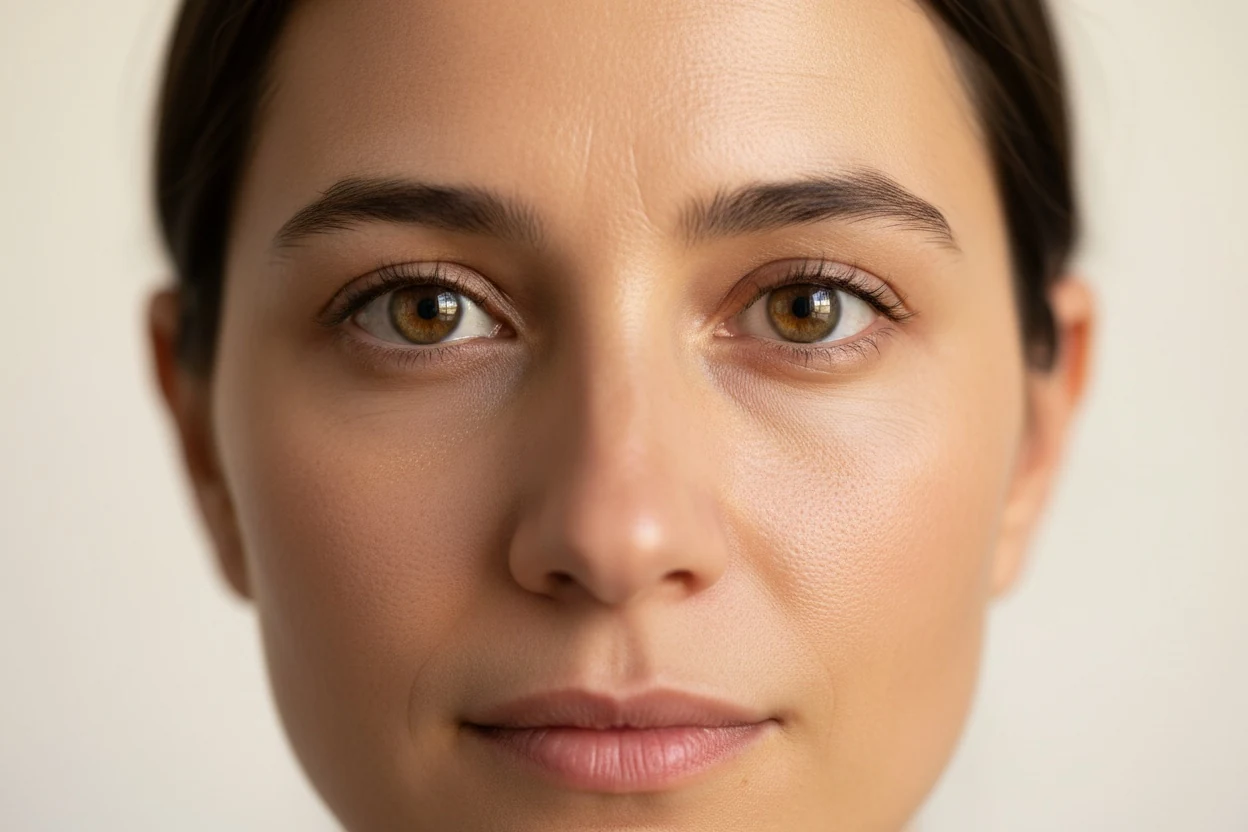
Neutral Canthal Tilt
A neutral canthal tilt sits at or just above level — the corners are close enough in height that the eye reads horizontal rather than lifted or dropped. This test reads a tilt from 0° up to +5° as neutral, measuring each eye separately from a straight-on photo.
- 0° to +5°
- neutral
- ≥ +5°
- positive
- 2
- eyes, measured separately
- Free
- photo not uploaded
0° up to +5°. The corners sit close enough to level that a photograph cannot call the eye clearly upturned or downturned.
The panel measures your tilt in degrees, each eye separately, and says whether it reads as neutral.
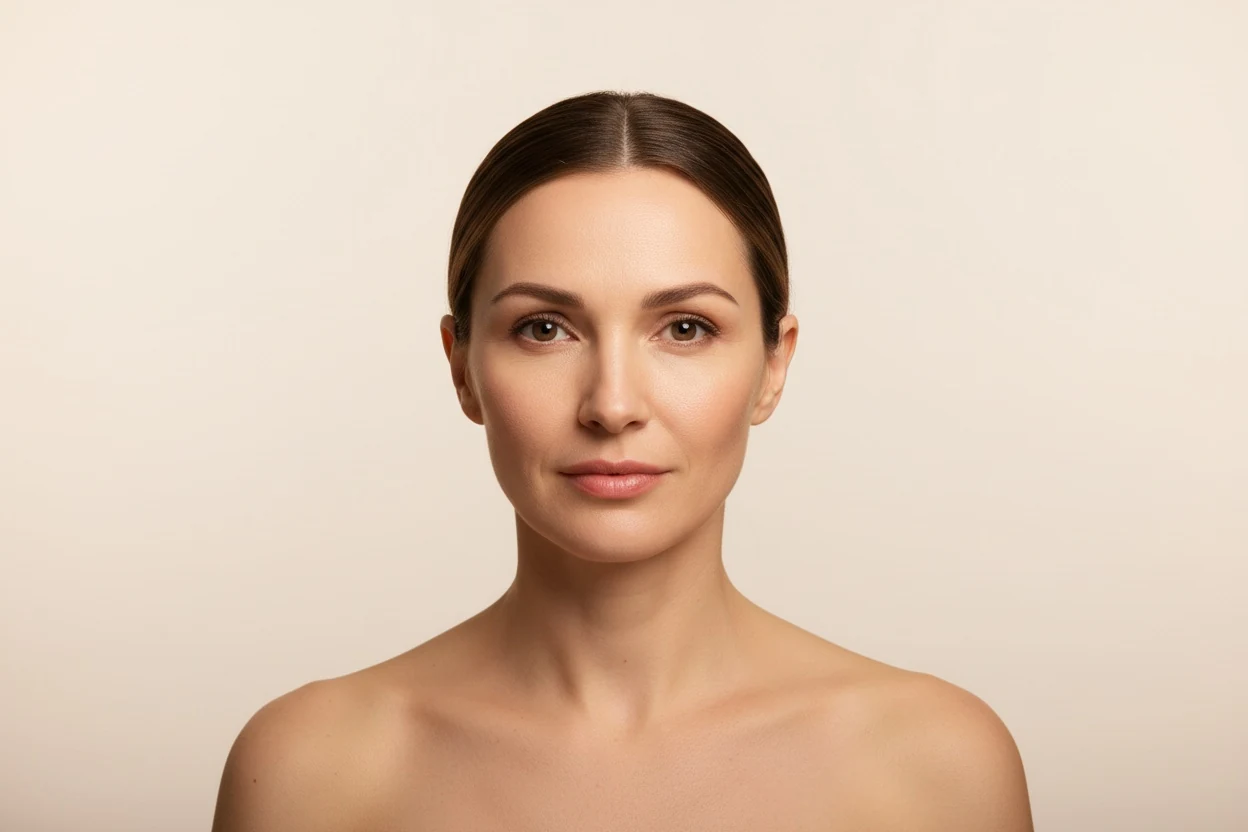 Example
Choose your own photo
Measure the angle of each eye.
Choose your own photoClick to choose a photo, or drop one here
Front-facing · Even lightingStraight-on, even lighting, at arm's length gives the most comparable reading.
Runs in your browser. Your photo is not uploaded.
What a neutral canthal tilt looks like
- Corners appear level at a glance
- The eye reads horizontal rather than lifted or dropped
- Small posture or camera changes flip the apparent reading
A neutral canthal tilt means the two corners sit close to level — from level up to 5 degrees. This is where most faces measure, which makes neutral the least interesting result to read about and the most common one to receive. The vocabulary around eye tilt is built almost entirely on the two extremes, so a neutral reading often arrives with no explanation attached to it at all.
Why photos get neutral canthal tilt wrong
A neutral result is the easiest one to lose to a bad photograph, because it sits between the two thresholds. A camera held above or below eye level, or a chin tipped up or down, is enough to push a neutral reading across either line. If your result sits within a degree of 0° or +5°, take the photo again at eye level before believing the label.
How to tell if you have a neutral canthal tilt
- The straight-edge test gives an ambiguous answer here, which is the point — if you cannot tell, you are probably neutral.
- Measure twice on separate photos. A neutral tilt is exactly the case where one badly angled photo produces a false negative reading.
What changes a neutral canthal tilt — and what does not
At the boundary, how the angle reads is influenced more by the surrounding features than by the angle itself.
Changes it
- Brow shaping, which changes the line the eye is read against
- Outer-corner makeup, which moves the apparent endpoint
- Canthopexy, for a small genuine change if it matters to you
Does not
- Re-measuring until you get the answer you want. Take the median of a few straight-on photos instead.
Neutral canthal tilt in men
Neutral is the result most men arrive at after reading about hunter eyes, and it is worth saying plainly: it is the ordinary case, not a failure of one. The distribution of canthal tilt clusters near level, which is precisely why the terminology needed two named extremes to talk about at all.
Neutral canthal tilt celebrities
There are no celebrity lists for neutral canthal tilt, which is itself informative — the label carries no aesthetic claim, so nobody assembles one. The measurement is still worth having, because it is the baseline the other two are defined against.
Neutral canthal tilt — frequently asked questions
Is a neutral tilt better or worse than a positive one?
Neither, in any sense the evidence supports. Positive tilt carries an aesthetic preference in some online vocabularies; no published work establishes a threshold, and the differences involved are a few degrees — smaller than the error a tilted head introduces into the photograph.
Can makeup make a neutral tilt read as positive?
It moves the read, not the measurement. A wing lifted from a point slightly inside the outer corner, depth placed above that corner, and lashes concentrated in the outer third all shift where the eye appears to end. The angle between your corners does not change.
Is a neutral canthal tilt common?
It is the most common reading of the three. Canthal tilt clusters near level across measured populations, which is exactly why the vocabulary needed two named extremes — the middle of the distribution is unremarkable enough that nobody named it until the two ends had names.
Can a neutral tilt become negative with age?
It can drift that way. The tendon that anchors the outer corner loosens slowly across adulthood and the lower lid descends with it, so a reading that was level at twenty can measure slightly negative decades later. It is gradual, and a sudden change is a different question.
Should I do anything about a neutral canthal tilt?
No, and there is nothing to correct. A neutral result means your corners sit level, which is the baseline the other two categories are defined against. The procedures that change tilt are eyelid surgery, and no surgeon operates on an ordinary measurement to move it a few degrees.
Why did my two eyes get different tilt readings?
Usually because they are different. The test measures each eye against the line through your inner corners, so leaning your head toward one shoulder no longer adds tilt on one side and subtracts it on the other — a gap that remains is in your face, and two or three degrees is ordinary. What a tilted head can still do is blur the corners themselves, so a level photo gives the cleanest reading.
What is a neutral canthal tilt?
One where the outer corner sits level with the inner corner or only slightly above it — from 0° up to +5° on this test.
Is a neutral canthal tilt negative?
No. Negative means the outer corner sits below the inner corner. Neutral is level or marginally above, and the two are frequently confused because the difference is a couple of degrees.