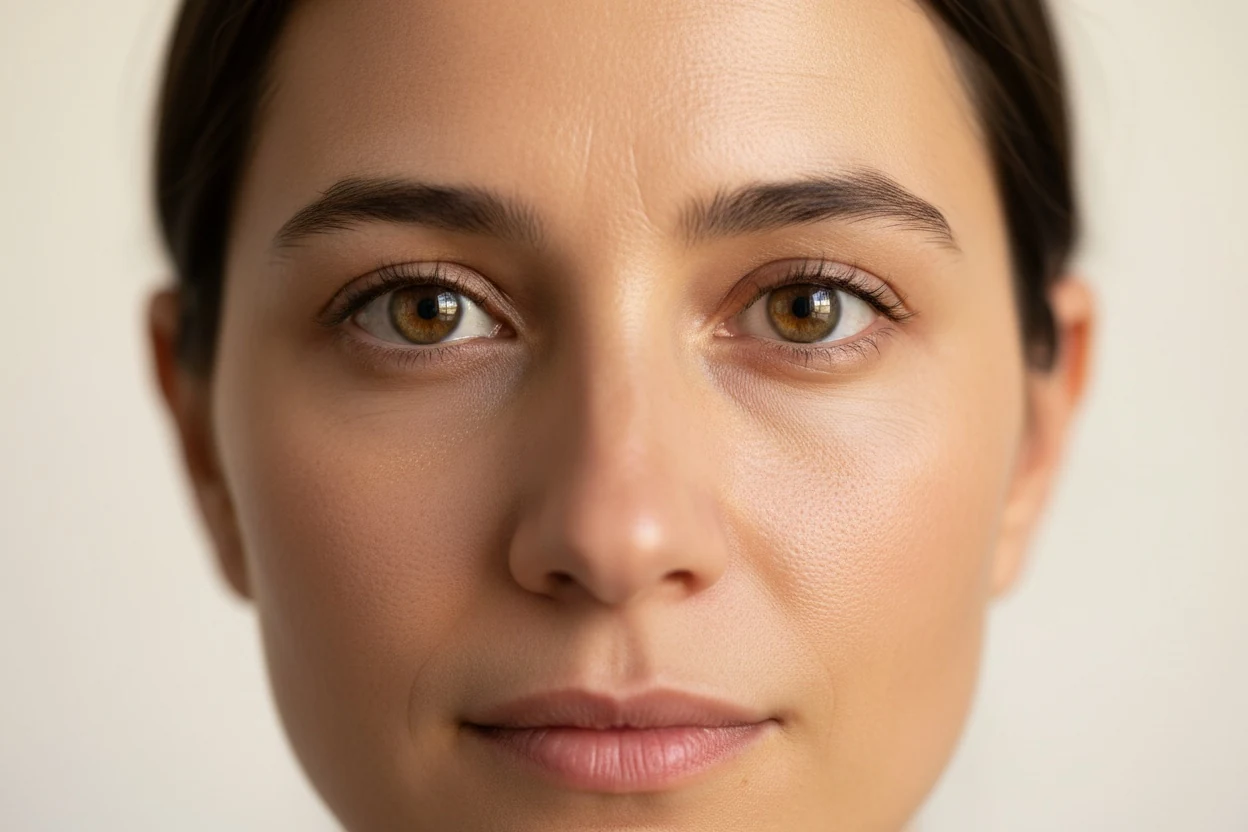
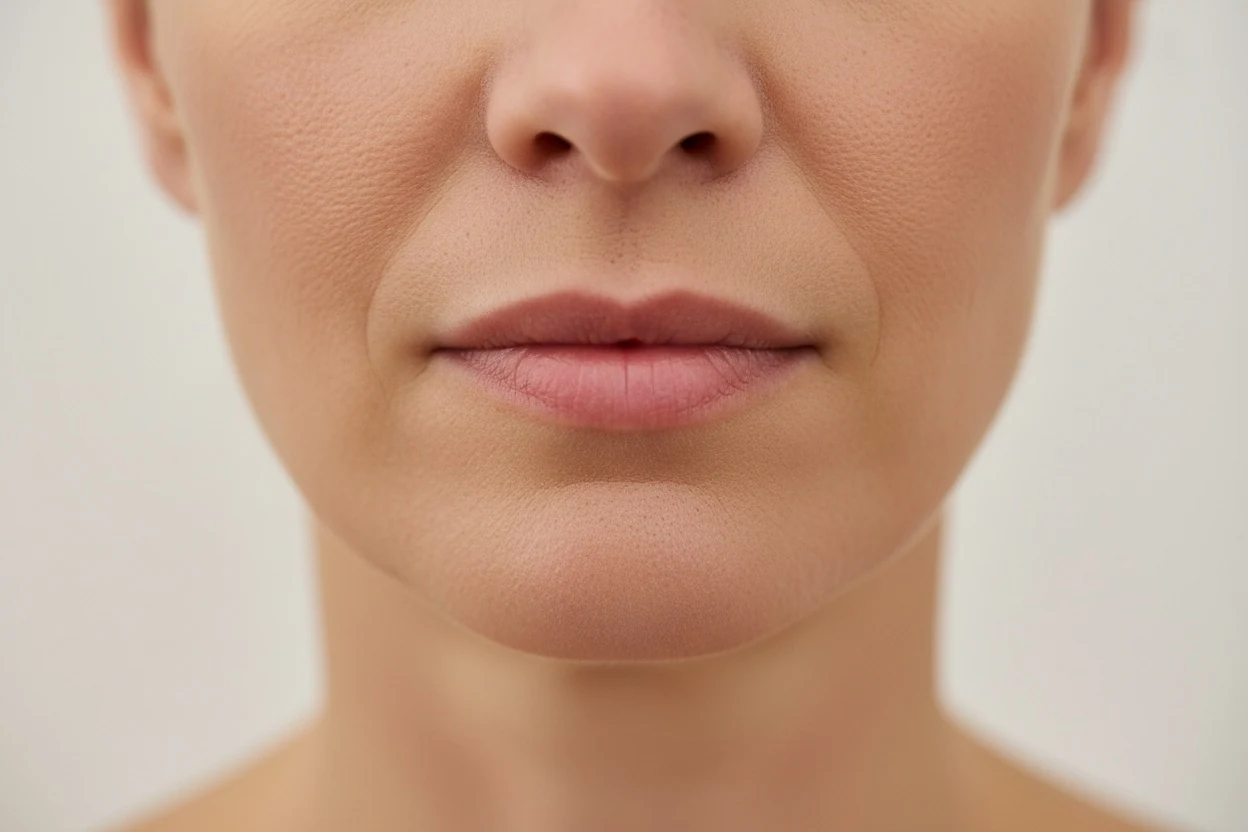
Types of Noses
7 named nose types, but Roman, Greek and Snub are profile traits a front photo cannot show, so the test measures width, length and the alar canon instead. On the 102 adults of the Face Research Lab London Set it read 11 noses as wide, 1 as narrow, 48 as short and 17 as long, with a median alar width of 0.25 of face width.
- 7
- nose types
- 3
- front ratios
- 1.17×
- median length ÷ width
- Free
- no signup, photo not uploaded
Face Research Lab London Set: 102 adults, neutral front photos. The long-nose threshold was set on this set, so the split shows how the detector divides faces, not how common each type is. How these numbers were made
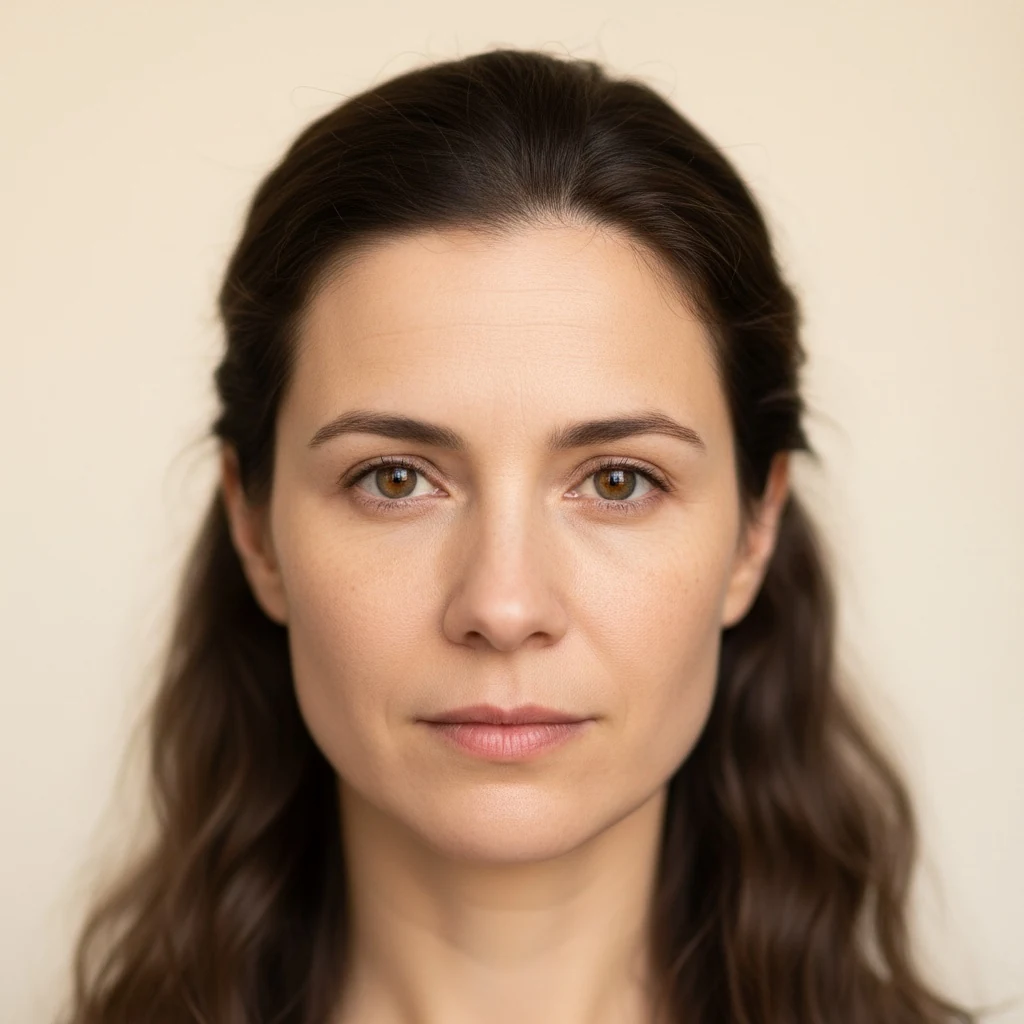 Example
Choose your own photo
Discover your nose shape and proportions.
Choose your own photoClick to choose a photo, or drop one here
Front-facing · Even lightingStraight-on, even lighting, at arm's length gives the most comparable reading.
Runs in your browser. Your photo is not uploaded.
What is my nose shape?
Three ratios are measurable from a front-facing photo: nose width against face width, nose length against that width, and nose width against the distance between your inner eye corners. The first two give a label — wide or narrow, long or short. The named types most people ask about — Roman, aquiline, Greek, snub — are defined by the profile line of the bridge and the rotation of the tip, neither of which a front photo contains.
- Roman, aquiline, hawk and hooked describe the same nose: a convex bridge, seen in profile.
- A Greek nose is a straight dorsal line — also a profile trait.
- Alar width above roughly 0.28 of face width reads as wide; below 0.22 as narrow.
- The classic canon that nose width equals the distance between the inner eye corners is a Renaissance drawing convention, not a measured norm.
- Button, bulbous and Nubian are the named types with definitions partly visible from the front.
Types of noses: the 7 shapes and their other names
Ordered by how often each is searched. Roman, aquiline, hawk and hooked share a page because they are the same nose under four names — Wikipedia files them under one entry for the same reason.
- profile onlyRoman nose →also aquiline, hawk, hookedA Roman nose has a bridge that curves outward — a raised ridge along the dorsum rather than a straight line from the brow to the tip. Aquiline is the same nose under a different name, from the Latin for eagle, and hawk nose — or hooked nose in everyday speech — is the term for a pronounced version with a downward-angled tip. ‘Hooked’ has also been used as a caricature of particular ethnic groups, which is a good reason to describe the profile by its anatomy rather than by the label.Not measurable from a front photo
- partly front-visibleButton nose →A button nose is short and small relative to the face, with a rounded tip and a bridge that does not project much. It is the one nose shape on this page with a partly front-measurable definition — shortness and narrowness both show from the front, even though tip projection does not.≤ 1.15×length ÷ width48 of 102research faces · 47%1.17×median length ÷ width
- profile onlyGreek nose →also straightA Greek nose has a straight bridge — a dorsal line running from the brow to the tip with no hump and no dip. The name comes from classical Greek sculpture, where the profile was idealised rather than portrayed, which is a meaningful difference from how the Roman nose got its name.Not measurable from a front photo
- partly front-visibleBulbous nose →also fleshyA bulbous nose has a tip that is round and wide relative to the bridge above it. It is one of the two shapes here with a partly front-measurable definition, and it is also the one with a genuine medical neighbour — a tip that has become progressively larger and thickened is a different finding from a tip that has always been round.Nobulbous label from landmarks0.25median alar ÷ face width
- profile onlySnub nose →also upturned, celestialA snub nose is short with a tip that rotates upward, so the nostrils become more visible from the front than usual. Upturned and celestial are the same shape described more kindly; the traits are identical and only the connotation differs.Not measurable from a front photo
- partly front-visibleNubian nose →also wide-basedA Nubian nose is described as long with a wide base and a broad, often downward-projecting tip. The name attaches an ancient African kingdom to a facial feature, which is worth pausing on: this is a description that came out of a tradition of classifying noses by ancestry, and that tradition has a bad history.≥ 0.28alar ÷ face width0 of 102research faces · 0%1.17×median length ÷ width
- partly front-visibleWide nose →also narrowWidth is the one nose property a front-facing photo measures cleanly, and it is the axis every other named shape gets confused with. A nose can be wide and Roman, wide and straight, narrow and bulbous — width is independent of the profile traits that name the other shapes on this page.≥ 0.28alar ÷ face width11 of 102research faces · 11%0.25median alar ÷ face width
Nose shape chart: every name and what defines it
Lists of nose types run anywhere from six to twenty-six names, and most of the extra names are the same few anatomical differences described again. This chart collapses them: every common name, the one trait that defines it, the view you need to see it, and whether the test on this page can read it.
| Name | Also called | Defined by | Seen from | Can the test here read it? |
|---|---|---|---|---|
| Roman | Aquiline, Hawk, Hooked | A convex bridge: a hump or ridge along the dorsum | Profile | No |
| Greek | Straight | A straight bridge with no hump and no dip | Profile | No |
| Snub | Upturned, Celestial | A short nose with the tip rotated upward | Profile (nostril show from the front is only a hint) | Length only |
| Button | — | Short and small, a rounded tip, little projection | Front and profile | Partly: length and width |
| Bulbous | Fleshy | A round tip that is wide relative to the bridge | Front | No: it measures the base, not the tip |
| Nubian | Wide-based | A wide base with above-average length | Front | Mostly: width and length, not tip projection |
| Wide or narrow | — | Base width against face width | Front | Yes |
| Concave | Scooped | A bridge that dips below the line from brow to tip | Profile | No |
| Long or short | — | Length against base width | Front | Yes |
| "Asian", "African" and other ancestry names | — | An ancestry label, not a shape | — | Not assigned on this site |
Concave (scooped) nose
A concave nose has a bridge that dips inward between the brow and the tip, the opposite of a Roman hump. A gentle scoop is an ordinary variation and often comes with an upturned tip, which is why it overlaps with the snub nose. It is a pure profile trait, so it has no page of its own here: nothing about it shows in a front photo. A bridge that has sunk markedly, especially after an injury or illness, is a different matter and is covered in the next section.
Nose names that are not shapes: saddle, crooked, deviated and boxer's nose
Some of the longest nose-type lists mix in names that describe something that happened to a nose rather than how it grew. They are worth separating, because the question they raise is medical or functional rather than aesthetic.
| Name | What it usually is | Typical cause | Who looks at it |
|---|---|---|---|
| Saddle nose | A bridge that has collapsed inward because the support beneath it was lost | Injury, earlier septal surgery, or inflammatory conditions such as granulomatosis with polyangiitis | An ENT or facial plastic surgeon |
| Crooked nose | The outside of the nose angled or curved off the midline | Most often an old injury, frequently with the septum inside bent too | An ENT or facial plastic surgeon |
| Deviated septum | The internal wall between the nostrils sitting off-centre | Usually developmental — a minor deviation is normal in most people | An ENT, if it affects breathing |
| Boxer's nose | A flattened, broadened bridge, often also crooked | Repeated blows to the nose | An ENT or facial plastic surgeon |
| Rhinophyma | A tip that has thickened, enlarged and become lumpy over time | Overgrowth of oil glands in the nasal skin, a form of rosacea | A dermatologist |
None of these can be diagnosed from a photograph, and this page does not try. The practical line is simple: a nose you have always had is a shape, while a nose that has changed — after an injury, or gradually over months — or that makes breathing difficult is worth an examination. The bulbous nose page covers the difference between a round tip and rhinophyma in more detail.
See what a change would actually look like
These are the renders that act on what this page measures. Each one below was generated by the same model that runs on your own photo — labelled examples on another face, so you can see what the procedure changes before you spend anything.
Rhinoplasty
AI glow-up · nose + styling
Rhinoplasty. A different possibility.
Tap the photo to enlarge. AI visualisation, not a prediction. Includes makeup, brow styling, hair and outfit changes. Both images are AI generated.
Changes the bridge, tip and nostril width of your nose.
What it does →Liquid Rhinoplasty
Liquid Rhinoplasty · AI example
Liquid Rhinoplasty. A different possibility.
Tap the photo to enlarge. AI visualisation, not a prediction. Both images are AI generated.
Changes the dorsal line of your nose with filler rather than surgery.
What it does →
Every “after” above is an AI simulation on a sample face, not a photograph of a surgical result — it shows the direction a procedure moves a face, not an outcome anyone achieved and not a prediction of yours. Where a frame reads “Before · AI example”, the before image is generated too: the same portrait with the condition that procedure treats added, because none of the source photographs had it. Run one on your own photo.
What a nose shape test can and cannot measure
From the front
- Alar width against face width
- Length against alar width
- Alar width against the distance between the inner eye corners
Profile only
- A dorsal hump — Roman, aquiline, hawk
- Bridge straightness — Greek
- Tip rotation — snub, upturned
- Tip projection — button, and every comparison of it
| Ratio on the result | How it is calculated | Label | What it cannot tell you |
|---|---|---|---|
| Width against face width | Alar width ÷ cheekbone width | 0.28 or above reads wide; 0.22 or below reads narrow | Whether the bridge is wide or the tip is round |
| Length against width | Bridge-to-tip length ÷ alar width | 1.28 or above reads long; 1.15 or below reads short | Tip rotation or how far the tip projects |
| Alar width vs eye spacing | Alar width ÷ distance between the inner eye corners | No label: 1.0 matches the classical canon | Whether 1.0 is better than any other number — it is a drawing convention |
This is why the results for these terms are full of surgeon blogs and contain no front-photo detectors. Profile tools exist, but they need a side view — the thing people are asking about is not in the selfie they would upload.
How to find your nose shape from a profile photo
- Take a true side view, ninety degrees, not three-quarters. A hump vanishes at any lesser angle and this is the most common reason people misjudge their own nose.
- Hold a straight edge along the bridge from between your brows to the tip. A Roman nose bulges away from it, a Greek nose follows it, a snub nose falls inside it.
- Look at the angle between the underside of your nose and your upper lip. The more open that angle, the more upturned the tip — the section on the two angles below gives the numbers surgeons use.
- Note how far the tip stands off the face. That is projection, and it separates a button nose from a merely short one.
The two angles behind every nose shape
Surgeons describe a nose in profile with two angles, and between them they account for most of the named types.
- The nasofrontal angle is where the bridge meets the forehead. A shallow angle, with almost no dip between brow and bridge, is what the Greek profile describes. A deeper dip sets the bridge back from the brow.
- The nasolabial angle is between the underside of the nose and the upper lip. It measures tip rotation: a more open angle means a tip that points further upward, which is what snub, upturned and celestial describe.
Textbooks often quote 90 to 120 degrees as the normal nasolabial range, a span one research group called arbitrary. When they showed raters profile photos with the angle changed in four-degree steps, the preferred angle averaged about 96 degrees for men and about 98 degrees for women — much closer together, and narrower, than the textbook range suggests. It was a small study of twenty faces and sixteen raters, so treat it as a reference point rather than a target.
What is the most attractive nose shape?
No study ranks the named types against each other, and the lists that claim a winner are opinion. What research actually tests is proportions and angles, one variable at a time, on a small set of faces — like the nasolabial angle study above, where raters' choices fell in a band only a few degrees wide.
That fits a much older and broader finding about faces in general: composite faces averaged from many photographs are rated more attractive than most of the individual faces that went into them. Averageness is not the whole story, but it is a better-supported starting point than any chart of named noses. The canon that nose width should equal the gap between the inner eye corners is often quoted as an ideal; it is a drawing convention from Renaissance proportion studies, and the ratio on the result above shows how far yours sits from it without implying that closer is better.
The most common and rarest nose shapes
There is no census of nose types, so any ranking by frequency is a guess. The "rarest nose shape" lists that circulate are usually built from celebrity photos or a single clinic's patients, neither of which is a sample of anyone.
What measurement does show is that people cluster near the middle of every axis. The most common nose is therefore an unremarkable one — average width, average length, a bridge close to straight — and the named types describe the ends of those ranges. A nose that sits at the end of two ranges at once, like a button nose that is both short and narrow, is less common simply because it needs both.
Why noses differ: climate and genes, not "ethnic nose types"
Several of the most-read nose pages sort noses into national or ethnic types. This page does not, and the reason is not only historical — the research on why noses vary points somewhere more interesting.
- Climate. One of the nose's jobs is to warm and humidify air before it reaches the lungs. A study of nose shape across populations found that nostril width and the width of the nasal base differ between populations more than random genetic drift would predict, and that nostril width tracks temperature and absolute humidity. The authors are careful to call that a simplified explanation, and say sexual selection may also have played a part.
- Genes. A genome-wide study of about 6,000 people found gene regions associated with the width of the nose bridge, the width of the nostrils and the angle of the columella — individual traits, not whole "types". That is the level at which nose shape is actually inherited.
- The history. Classifying noses by ancestry was a working tool of nineteenth- and twentieth-century racial pseudoscience. The Nubian nose page covers that history. Here, measurements describe a nose, and a nose does not describe a person's ancestry.
How nose shape changes with age
The bony upper part of the nose stops changing after growth. The lower part is cartilage and skin, and those keep changing slowly: the support under the tip weakens and the skin loses elasticity, so the tip tends to drop a little over decades. A tip that drops rotates downward, which is why a nose that read as upturned at twenty often reads less so at sixty. These changes are gradual. A nose that changes noticeably over months is a reason to see a doctor, not a sign of ageing.
Nose shape myths
- "Nose exercises reshape your nose." Nose shape is set by bone and cartilage. No exercise has been shown to change either, and the research on facial exercise in general has not found reliable effects.
- "Nose clips and shapers narrow the nose permanently." There is no published evidence of a lasting change from clips, shapers or taping. They press on cartilage while worn.
- "Your nose never stops growing." The bone stops. What changes in adulthood is soft tissue — tip support and skin — which is why the change shows up as a drooping tip rather than a bigger nose.
- "A liquid rhinoplasty is permanent." It is filler, and it lasts as long as the filler does. It also adds volume rather than removing any, so it can straighten how a bridge reads but cannot make a nose smaller. The liquid rhinoplasty simulation shows the kind of change it makes.
- "A wide nose breathes better or worse." The outside width of the nose and airflow inside it are largely separate. Breathing problems usually come from the septum or the tissue inside the nose, which is why they are assessed by an ENT rather than judged by shape.
Nose shapes in women and men
Men's noses are larger on average in absolute terms, and different nose shapes in female faces are written about far more often, which skews how the named types are pictured. The ratios on this page are relative — width against face width, length against width — so the same cut points apply to everyone. Preferences are closer between the sexes than the writing suggests: in the nasolabial angle study above, the preferred angles for men and women were only about two degrees apart. Each type page has a section on how that shape reads on male faces.
Nose shapes — frequently asked questions
How many nose shapes are there?
Charts list anywhere from six to twenty-six. The number is a naming convention rather than a finding: most of the names describe the same five traits — the bridge line, tip rotation, tip roundness, base width and length — and the chart above maps each name to the one it describes.
Which nose measurements can a front photo give me?
Three ratios, all reported above: width against face width, length against that width, and width against the distance between your inner eye corners. The first two produce a label. Everything else people want — the dorsal line, tip rotation, tip projection — sits in the profile, and no amount of processing recovers depth from a flat frontal image.
Why can a face analysis tool not tell me my nose type?
Because the defining traits of most named types live in the profile. A dorsal hump, a straight bridge, an upturned tip and tip projection are all invisible from the front. Any tool that reports them from a selfie is guessing.
How can I identify my nose shape?
In two steps. Use the test above for width and length, which a front photo measures. Then take a true side view and run the profile check on this page for the bridge line and tip rotation, which it cannot. Together they place you on the chart.
Is a hooked nose the same as a Roman nose?
Yes. Hooked, Roman, aquiline and hawk all describe a bridge that curves outward in profile; hawk and hooked usually mean a more pronounced curve with a tip angled down. Hooked has also been used in caricature, which is why the Roman nose page describes the profile by its anatomy.
Can you change your nose shape without surgery?
Not the underlying shape. Contouring changes how a nose reads in light and photos. Filler, used in a liquid rhinoplasty, can make a bridge look straighter or a tip look more lifted, but it adds volume rather than removing it, wears off, and is a medical procedure with its own risks.
Is there a nose shape chart by ethnicity?
Such charts exist, and this site does not publish one. Nose dimensions do vary between populations on average, and research links some of that to climate and genes, but sorting noses into ancestry types repeats the method of nineteenth-century racial classification without adding a measurement to it.
Does breathing depend on nose shape?
Mostly no. The outside shape and width of the nose are largely separate from the airflow inside, which depends on the septum and the tissue lining the nose. If breathing through your nose is difficult, that is a question for an ENT, whatever shape your nose is.
References
- 1.Armijo, B. S., Brown, M., & Guyuron, B. (2012). Defining the ideal nasolabial angle. Plastic and Reconstructive Surgery, 129(3), 759–764. PMID 22090249.
- 2.Zaidi, A. A., Mattern, B. C., Claes, P., McEvoy, B., Hughes, C., & Shriver, M. D. (2017). Investigating the case of human nose shape and climate adaptation. PLoS Genetics, 13(3), e1006616. PMID 28301464.
- 3.Adhikari, K., Fuentes-Guajardo, M., Quinto-Sánchez, M., et al. (2016). A genome-wide association scan implicates DCHS2, RUNX2, GLI3, PAX1 and EDAR in human facial variation. Nature Communications, 7, 11616. PMID 27193062.
- 4.Alghamdi, F. S., Albogami, D., Alsurayhi, A. S., et al. (2022). Nasal septal deviation: a comprehensive narrative review. Cureus, 14(11), e31317. PMID 36514566.
- 5.Ezzat, W. H., Compton, R. A., Basa, K. C., & Levi, J. (2017). Reconstructive techniques for the saddle nose deformity in granulomatosis with polyangiitis: a systematic review. JAMA Otolaryngology–Head & Neck Surgery, 143(5), 507–512. PMID 27978568.
- 6.Fink, C., Lackey, J., & Grande, D. J. (2018). Rhinophyma: a treatment review. Dermatologic Surgery, 44(2), 275–282. PMID 29140869.
- 7.Langlois, J. H., & Roggman, L. A. (1990). Attractive faces are only average. Psychological Science, 1(2), 115–121. doi:10.1111/j.1467-9280.1990.tb00079.x.
- 8.Van Borsel, J., De Vos, M. C., Bastiaansen, K., Welvaert, J., & Lambert, J. (2014). The effectiveness of facial exercises for facial rejuvenation: a systematic review. Aesthetic Surgery Journal, 34(1), 22–27. PMID 24327764.