Hair Transplant Before and After: See the New Hairline on Your Photo First
A hair transplant moves hair you already have to where you are losing it. Here is what actually changes between the before and the after, why the after takes a year, what drives the cost — and a render of a fuller hairline on your own photo before you sit in a consultation.
Hair Transplant simulator — example render
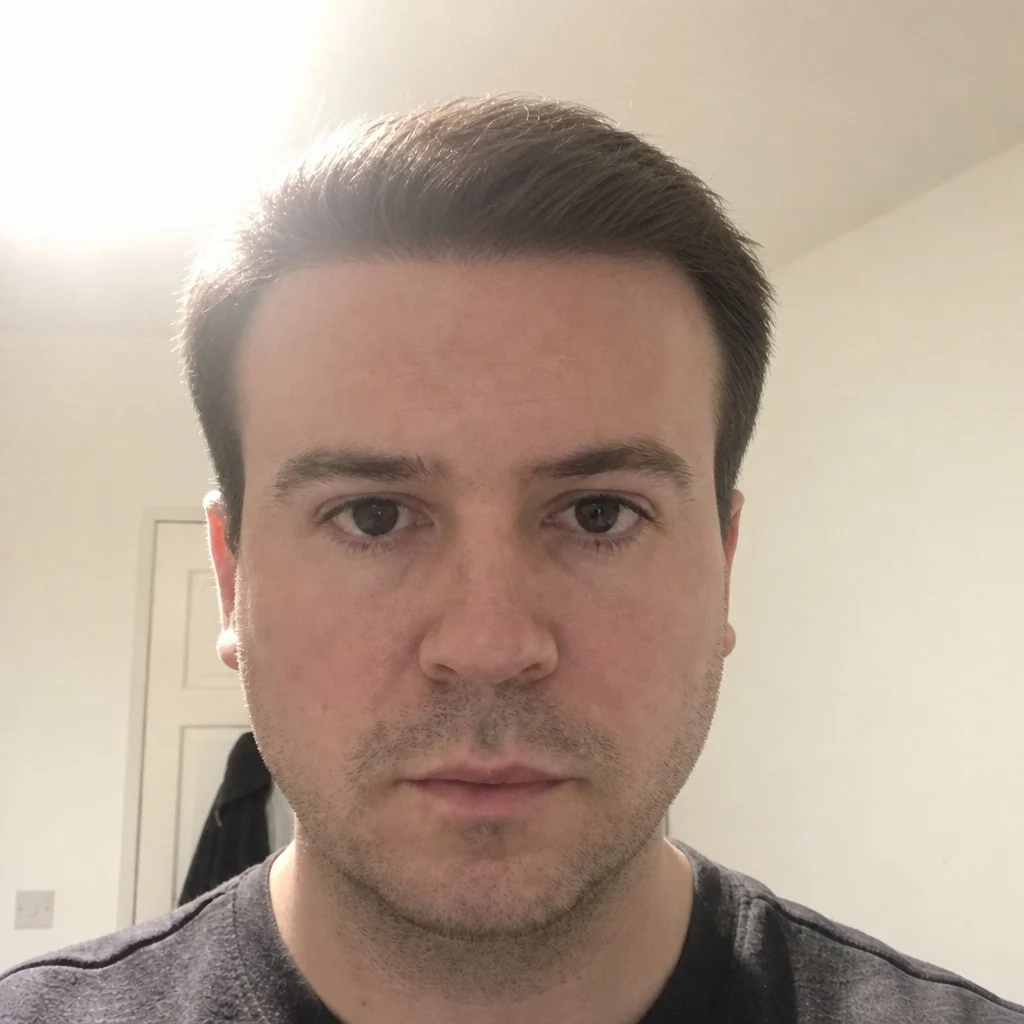
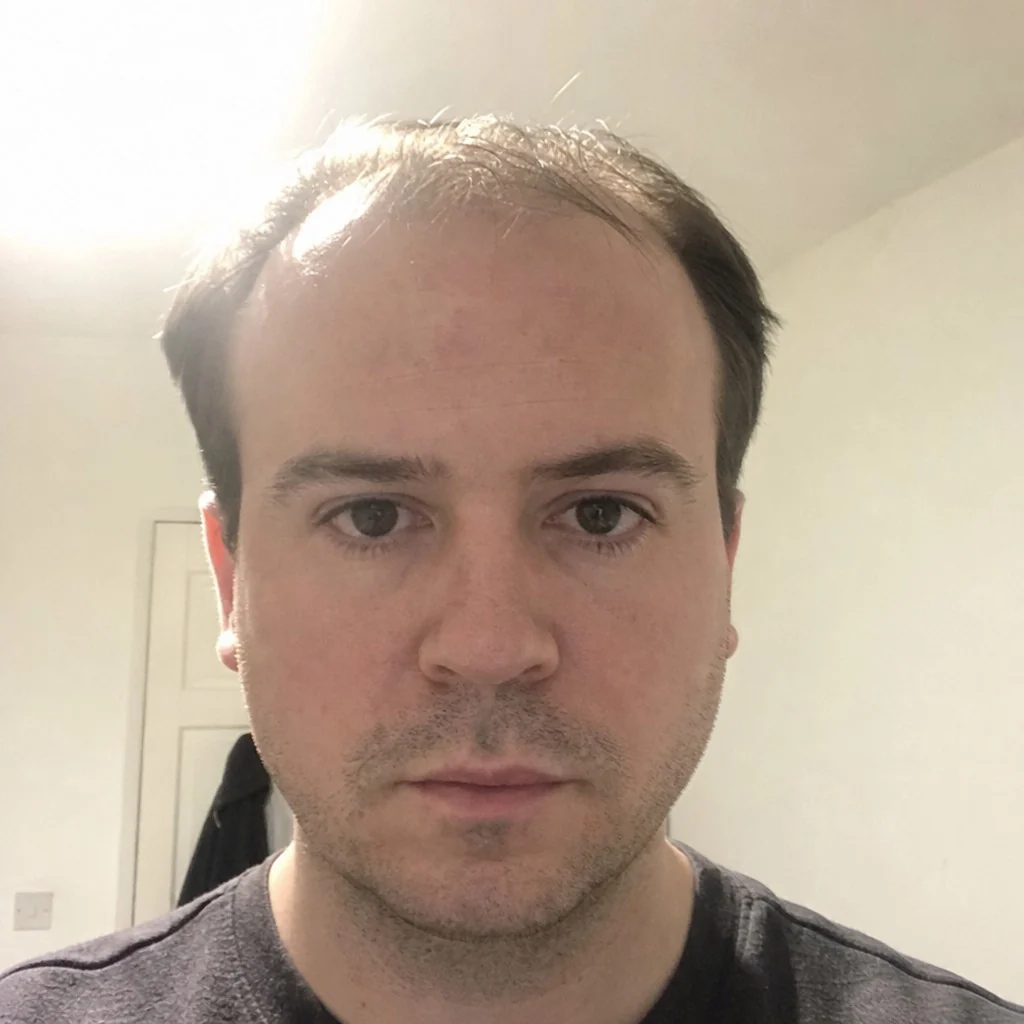
- Type
- Surgical; transplanted follicles are permanent
- Full result
- Around 12 months, the crown often longer
- Typical US cost
- Commonly $4,000–$15,000
- Recovery
- Crusts for about a week; shedding at 2–4 weeks
- Upload one front-facing photo
- The render changes hairline density and shape — and leaves the rest of your face alone
- Compare your before and after side by side
1 render = 1 credit
5 credits $4.99, no subscription · or Starter $7.99/month for 10. The face analysis is free.
Hair transplant before and after: what actually changes
A hair transplant does not grow new hair. It takes follicles from the back and sides of the scalp — the donor area, where hair is largely unaffected by the hormonal process behind pattern hair loss — and places them in the thinning area. The total amount of hair on your head stays the same; it is redistributed to where it shows. How far that loss has gone is usually described by a stage on the Norwood scale.
That single fact explains most hair transplant before and after photos. The front gets denser, the donor area gets slightly thinner, and the quality of the result depends less on the number of grafts than on where they went.
| What changes | Before | After, at about a year | What decides it |
|---|---|---|---|
| Hairline position | Receded temples or a high front | A lower, defined front edge | Donor supply, age, and what your loss will do next |
| Hairline edge | Thinning, see-through | Soft and slightly irregular | Single-hair grafts at the very front — the surgeon's design |
| Frontal density | Scalp visible under light | Scalp less visible | Graft count, hair thickness, curl and color contrast |
| Crown | Thinning spot on top | Partial fill | Usually the last priority when donor hair is limited |
| Donor area | Full at the back and sides | Slightly thinner; small dot scars or a line scar | FUE or FUT, and how much was harvested |
Hair transplant timeline: month by month
The most confusing part of a hair transplant is that it looks worse before it looks better. This is the timeline commonly reported by surgeons; individual pace varies, and the crown is typically slower than the front.
| Time after surgery | What is typically reported |
|---|---|
| Days 1–7 | Small crusts around each graft, redness, and swelling that can drift down onto the forehead for a few days |
| Weeks 2–4 | Most transplanted hairs shed. The follicles stay in place; the shed is expected |
| Months 1–3 | The "ugly duckling" phase — the area can look much like it did before surgery |
| Months 3–4 | New growth begins: fine, sparse, sometimes uneven hairs |
| Months 6–9 | Visible improvement, but hair is still thickening and filling in |
| Months 12–18 | Most of the final density and texture; the crown can take longer |
This is why a six-month after photo is a progress photo, not a result — and why the timeline matters when you compare galleries. Some people also shed native hair around the grafts in the first months (shock loss), which is commonly temporary.
FUE vs FUT: the two hair transplant techniques
Almost every hair transplant today is one of two methods. They differ in how the grafts are harvested; the placing of grafts into the recipient area is similar.
| FUE (follicular unit extraction) | FUT (strip) | |
|---|---|---|
| Harvesting | Individual follicular units punched out one by one | A strip of scalp removed and divided into grafts |
| Donor scar | Many small dot scars, spread out | One linear scar, hidden under longer hair |
| Short haircuts afterwards | Usually possible | The line can show with very short hair |
| Grafts in one session | Limited by time and donor density | Can often yield more in a single session |
| Donor-area recovery | Shaved donor area; dots heal within days to weeks | Stitches or staples; tightness at the back of the head |
DHI, robotic FUE and other names
Many brand and technique names — DHI, robotic FUE, sapphire FUE — are variations on how grafts are extracted or implanted. The name matters less than who performs each step. Ask directly which parts the surgeon does and which a technician does.
Who a hair transplant is usually considered for
A hair transplant is commonly considered for pattern hair loss that has a recognizable shape, with enough healthy donor hair at the back and sides to cover the area. Surgeons are usually more cautious when:
- Loss is young and still moving fast — a hairline built for today can look wrong once the hair behind it keeps receding.
- Thinning is diffuse across the whole scalp, including the donor area.
- The cause is not pattern loss — active alopecia areata, scarring scalp conditions, or shedding from illness, stress or medication.
- Donor hair is too sparse to cover the area the person wants covered.
Hair transplant for women
Female pattern hair loss usually thins diffusely across the top of the head rather than receding at the hairline, and the donor area can thin too — which is why fewer women are considered good transplant candidates. The cases more commonly discussed are a stable donor area with a localised problem: hair lost along the hairline from years of tight styles (traction alopecia), a naturally high hairline, or scars. For a high hairline specifically, hairline lowering is the surgical alternative.
Hairline design: the part of a hair transplant you see every day
Natural hairlines are not straight lines. They are slightly irregular, softer at the very front where single hairs grow, and they have temple points. A good hairline design copies that. The classic sign of an unnatural transplant is the opposite: a hard, straight, dense edge.
Height is the other decision. A low, straight hairline on a 25-year-old can look odd at 50 if the hair behind it keeps thinning and leaves an island of transplanted hair at the front. Where the hairline sits also sets the size of the upper third of the face — the facial thirds calculator measures the band a hairline change moves.
BeforeAfter — simulatedSee a hair transplant on your own face
Run this simulationHair transplant cost: what drives the price
The cost of a hair transplant is commonly quoted at roughly $4,000–$15,000 in the United States. It is often priced per graft, so the size of the area and the density you want move the number more than anything else.
| Cost factor | Why it moves the price |
|---|---|
| Number of grafts | The biggest driver; a full frontal restoration needs far more than a temple touch-up |
| Technique | FUE and FUT take different amounts of time and clinics often price them differently |
| Who does what | Surgeon-performed extraction and placement costs more than technician-led work |
| City and clinic | Prices in major US cities sit at the top of the range |
| What comes after | Medical treatment alongside, and a possible second session later |
Why hair transplant prices abroad are searched so much
Searches for hair transplant prices in other countries are among the largest in this whole topic, because quoted prices there are much lower. Whatever the location, the comparison that matters is the same: who performs the surgery, whether the graft number promised fits your donor capacity, and who handles aftercare or a problem once you are home.
How long does a hair transplant last?
Transplanted follicles are generally permanent, because they keep the resistance of the donor area they came from. The hair around them is the problem: native hair that was already thinning keeps thinning, so a result that looks complete at a year can look patchy years later.
That is why surgeons commonly pair a hair transplant with medical treatment for hair loss — minoxidil and finasteride are the two most discussed — and plan for the possibility of a second procedure. Donor hair also thins somewhat with age, like all hair.
Hair transplant side effects and risks commonly reported
- Swelling of the forehead, sometimes around the eyes, for a few days.
- Crusting and itching in the recipient area during the first week or two.
- Numbness in the donor or recipient area, commonly fading over weeks to months.
- Folliculitis — small pimple-like bumps as new hairs push through.
- Shock loss of native hair near the grafts, usually temporary.
- Donor-area scarring — a line after FUT, dots after FUE, and a patchy, see-through donor area if too much is harvested.
- Poor growth or an unnatural look, most often from hairline design or graft handling rather than the method itself.
Hair transplant simulator: a fuller hairline on your own photo
The hair transplant simulation restores a full, natural, dense hairline and fills the thinning areas on your photo, matching your existing hair color and direction. It works from front and three-quarter photos, which is what a hairline change is judged from in daily life.
Read the render as a ceiling, not a plan. It adds as much density as looks natural, not as much as your donor area can supply. It cannot see the crown from a front photo, cannot model graft survival or donor scars, and cannot tell what your loss will do over the next ten years — which decides whether one procedure is enough.
See how your current hairline sets the upper third of your face — the proportion a lower hairline would change.
Measure your facial thirdsQuestions to ask a hair transplant surgeon
- What is my likely long-term loss pattern, and how does this hairline still work if it continues?
- How many grafts do you plan, and what is my total donor capacity for a second session later?
- Which steps do you perform yourself, and which does a technician perform?
- Should I be on medical treatment alongside, and what happens to the result if I stop?
Alternatives to hair transplant
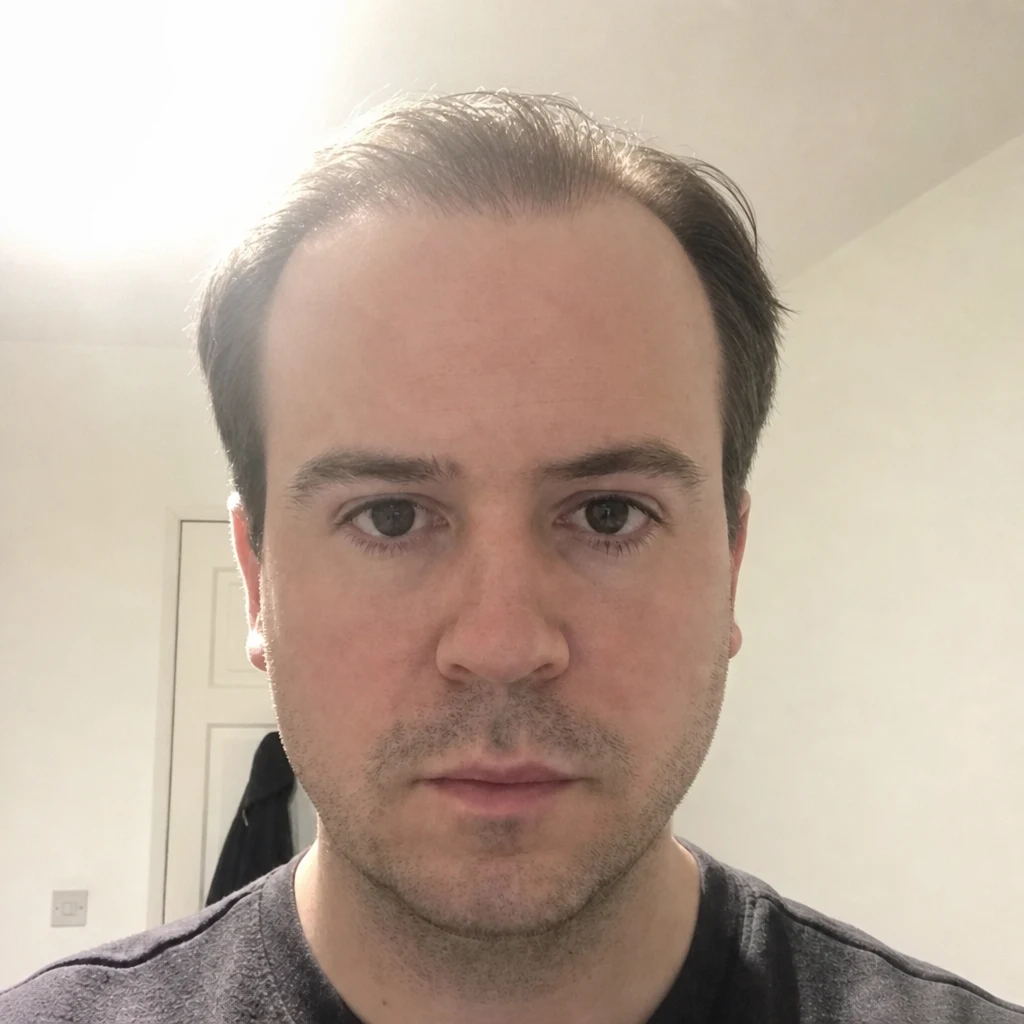
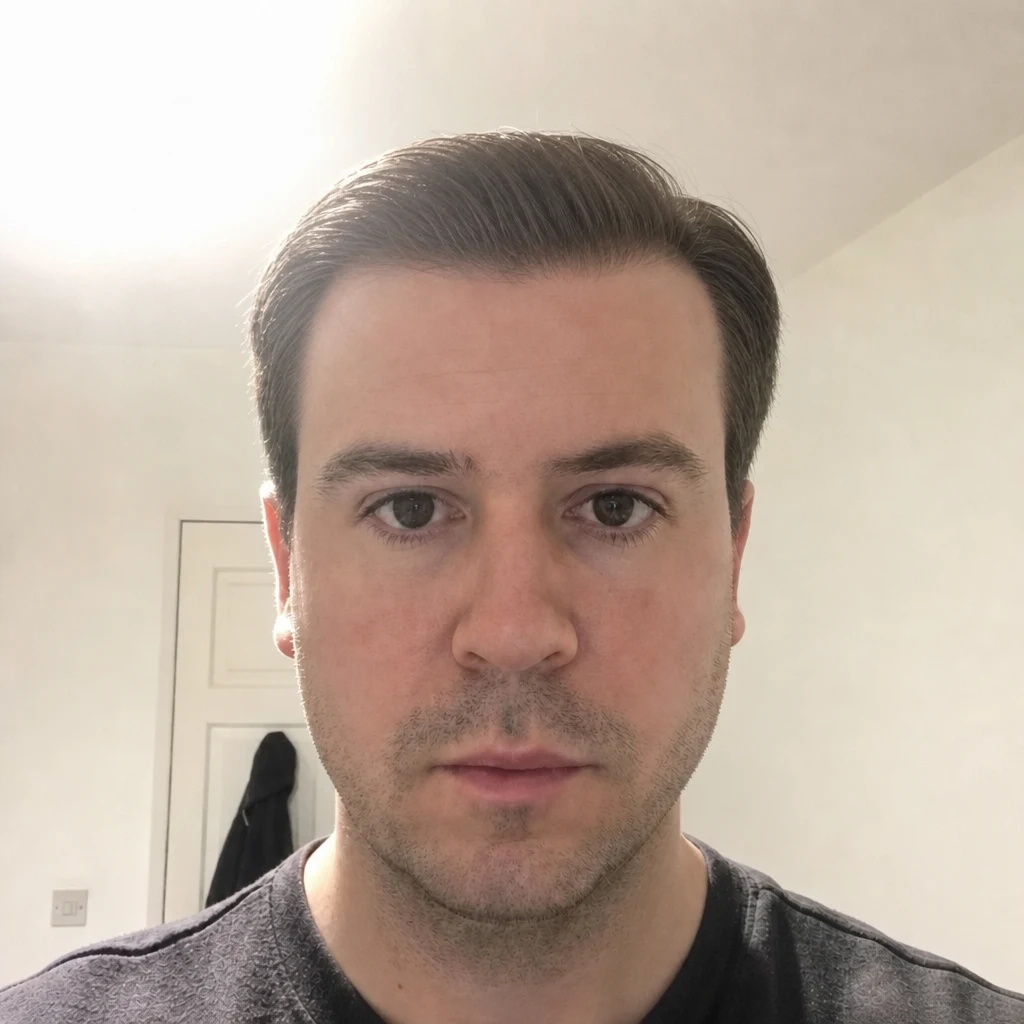
How the hair transplant simulation works
Your photo is analysed for the landmarks that matter to this procedure, and the render changes hairline density and shape while leaving the rest of your face alone. That constraint is the hard part — a generic image model will happily redraw your whole face and hand you a stranger who looks better.
The render adds density in a photograph. It cannot model graft survival, donor supply, or — most importantly — what your loss will do next, which is the factor that decides whether one procedure is enough.
It is an illustration of a plausible direction, not a prediction of your result and not a medical opinion. What it is genuinely good for is finding out whether you want the change at all — plenty of people render one, find the difference smaller than they imagined, and stop there.
Measure your face before a hair transplant simulation
The free analysis tools measure symmetry, facial proportion and face shape, and tell you which measurements sit outside the reference range. Choosing a procedure from that is a much better starting point than choosing one from a photo you saved.
Hair Transplant simulator — frequently asked questions
Do hair transplants look natural?
Modern transplants can, and the ones that do not usually fail on design rather than technique: a hairline that is too low, too straight or too dense at the edge. Single-hair grafts at the front and a height suited to your age are what make it read as natural.
How much do 3,000 grafts cover?
There is no universal answer. Coverage depends on the size of the area, how thick and curly your hair is and how much it contrasts with your skin. Surgeons map the area first and give a graft range for that map — ask to see it drawn on your scalp.
Will one hair transplant be enough?
Often not for life, because native hair keeps thinning around the grafts. Surgeons plan for progression, and that is the most common reason for a second procedure years later.
Is a hair transplant a good idea in your twenties?
Surgeons are commonly more cautious with young patients, because the eventual extent of pattern loss is still unknown. A hairline placed for today's loss can look wrong later, so medical treatment and a conservative design are often discussed first.
Does a hair transplant hurt?
It is done under local anesthetic, and the anesthetic injections are the part most people describe as uncomfortable. Soreness and tightness in the donor area for a few days afterwards are commonly reported.
What if there is not enough donor hair?
Then the plan usually prioritises the front, where density matters most, over the crown. Body or beard hair is sometimes used as an additional source, with less predictable results than scalp hair.
Is the hair transplant simulator free?
The face analysis is free and needs no account. A rendered simulation costs credits because it runs on a GPU — $4.99 buys five and does not require a subscription.
How accurate is an AI hair transplant simulation?
It is an illustration of a plausible outcome, not a prediction of your result. Real outcomes depend on your anatomy, the hair transplant surgeon and how you respond. Treat it as a conversation starter for a consultation, not a promise.
Do you keep my photo?
The free measurements never leave your browser. A simulation does send the photo to a rendering service, which is why it asks for explicit consent first, and you can delete the result from your dashboard at any time.
Can I show this to a hair transplant surgeon?
Yes, and that is the most useful thing to do with it. Bringing a picture of the direction you want is far more precise than describing it in words.
This page is not medical advice and we are not clinicians. A simulation cannot tell you whether a procedure is appropriate for you, what it costs, or what the risks are. Those questions belong with a qualified hair transplant surgeon.