Guides
Guides on how faces get measured — the proportion rules and where they came from, what the research supports, and the parts a photograph cannot answer. Every claim here is either cited or flagged as convention.

·17 min read
Hairstyles for Round Face Men: 20 Cuts and Why They Work
Twenty men's haircuts for a round face, short to long, each with the reason it adds length or takes width, plus fade height, beards and the cuts that backfire.
·16 min read
How to Looksmax: An Evidence-Based Guide to What Works
A looksmaxxing guide built on research, not forums: softmaxxing vs hardmaxxing ranked by risk, what to measure first, how long changes take, and what to skip.
·13 min read
Beard Styles for Your Face Shape: All 7, With Diagrams
A beard adds length or width wherever you let it grow. The beard styles that suit round, square, oval, heart, diamond, oblong and triangle faces, drawn.
·23 min read
Hairstyles for Your Face Shape: What Suits All 7 Shapes
The haircut that suits a face shape moves volume to where the outline is narrow. All 7 shapes, men and women, by hair type, with diagrams and a hair test.
·12 min read
Hairstyles for an Oblong Face: Women's and Men's Cuts
An oblong face needs width and less visible length. The cuts, fringes and fade heights that do it for women and men, and how much a fringe changes the ratio.
·13 min read
Looksmax AI Apps: How Umax and LooksMax AI Score Faces
What looksmax AI apps like Umax and LooksMax AI actually measure, what they cost, where your photo goes, and why two apps give the same face two different scores.
·14 min read
Norwood Scale: Hair Loss Stages 1–7, With Diagrams
The Hamilton-Norwood scale stage by stage with diagrams: Norwood 2 vs 3, the vertex and A variants, how to photograph your hairline, and what treatment evidence shows.
·13 min read
Eyebrow Shape for Your Face Shape: Round, Oval and More
The eyebrow shape that suits a round, oval, square, heart, diamond or long face, the three-line mapping method, and what brows can and cannot change.
·22 min read
High Cheekbones vs Low: How to Tell and What Changes Them
High cheekbones peak near the eye, low ones near the nostrils. How to tell yours, why bone decides it, and what fat loss, filler or exercise really change.

·18 min read
Asymmetrical Face: Causes, What Fixes It, When It's Medical
Every face is asymmetrical, and most of it sits under the 3 mm anyone notices. The causes, which fix matches each one, and the signs that make it medical.
·16 min read
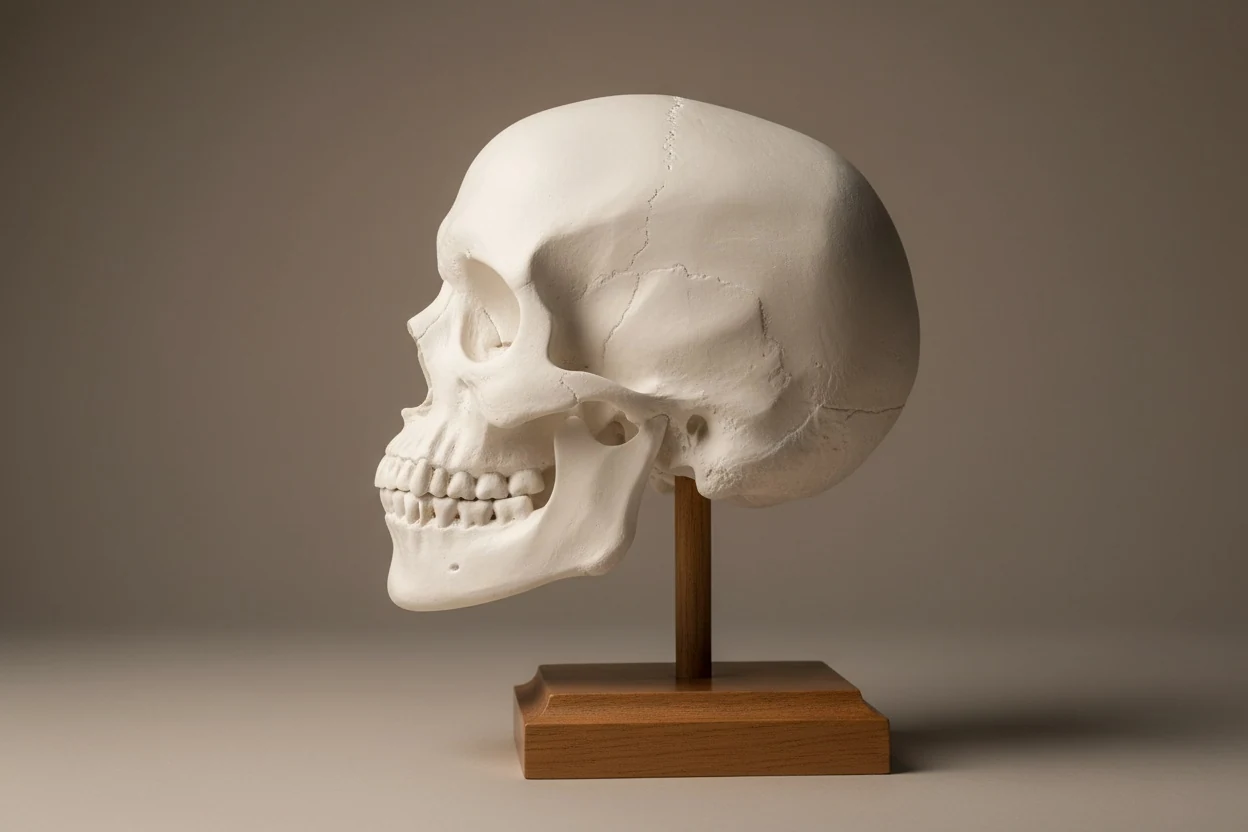
Gonial Angle: Typical Values, Ideal Angle & How to Measure
What the gonial angle is, what studies measured in real jaws, what two jaw-angle surveys found about the ideal, and how to estimate yours from a side photo.

·16 min read
How to Glow Up: Tips Sorted by How Fast They Actually Show
How to glow up, sorted by time: what shows tonight, in a week and in 90 days, which glow up tips have real evidence, and how to tell a change from good light.

·12 min read
How to Be Prettier: What Changes How a Face Is Seen
How to be prettier without changing your face: what studies show people respond to — rested eyes, even skin, facial contrast, brows, expression — and how fast.
·17 min read
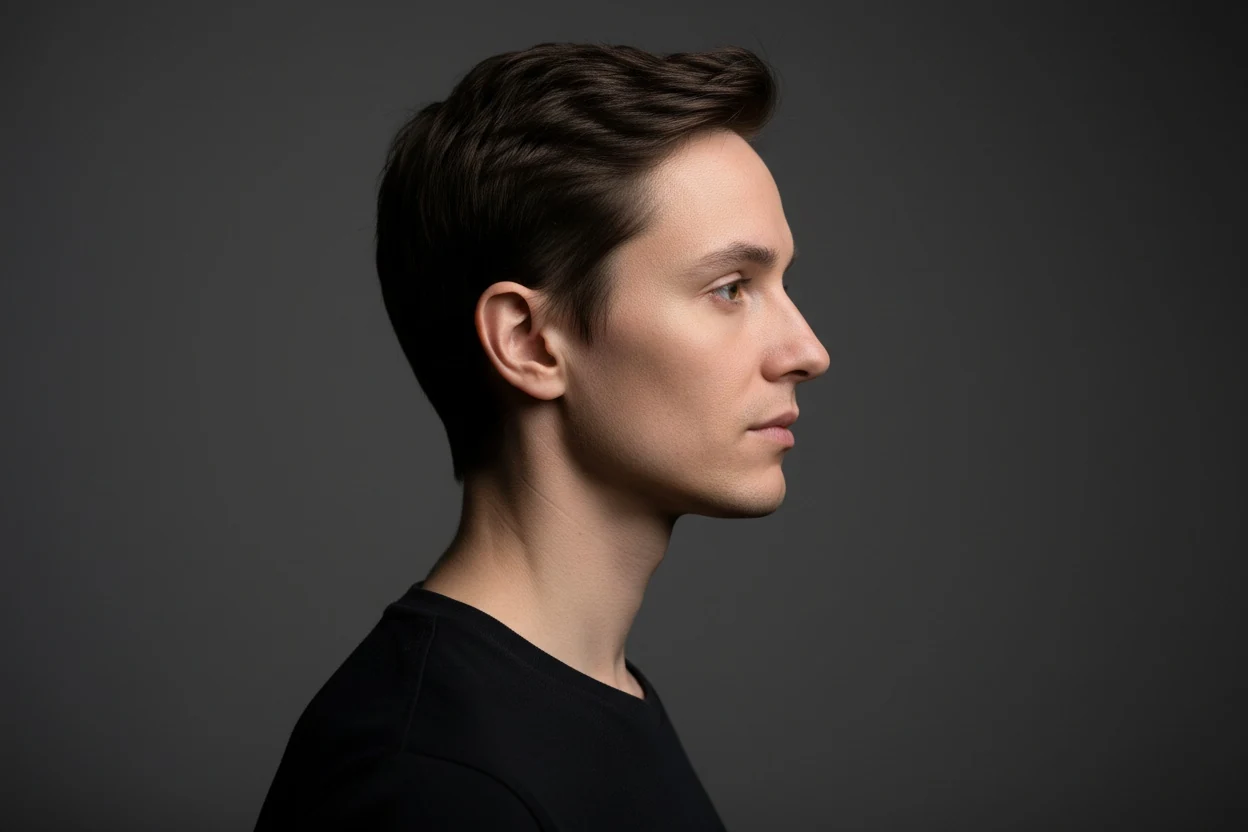
How to Get a Sharper Jawline (and What Exercises Can't Do)
A sharper jawline sits on four layers: bone, muscle, fat, skin. What jawline exercises were tested for, what posture fixes in a day, and what never moves.
·23 min read
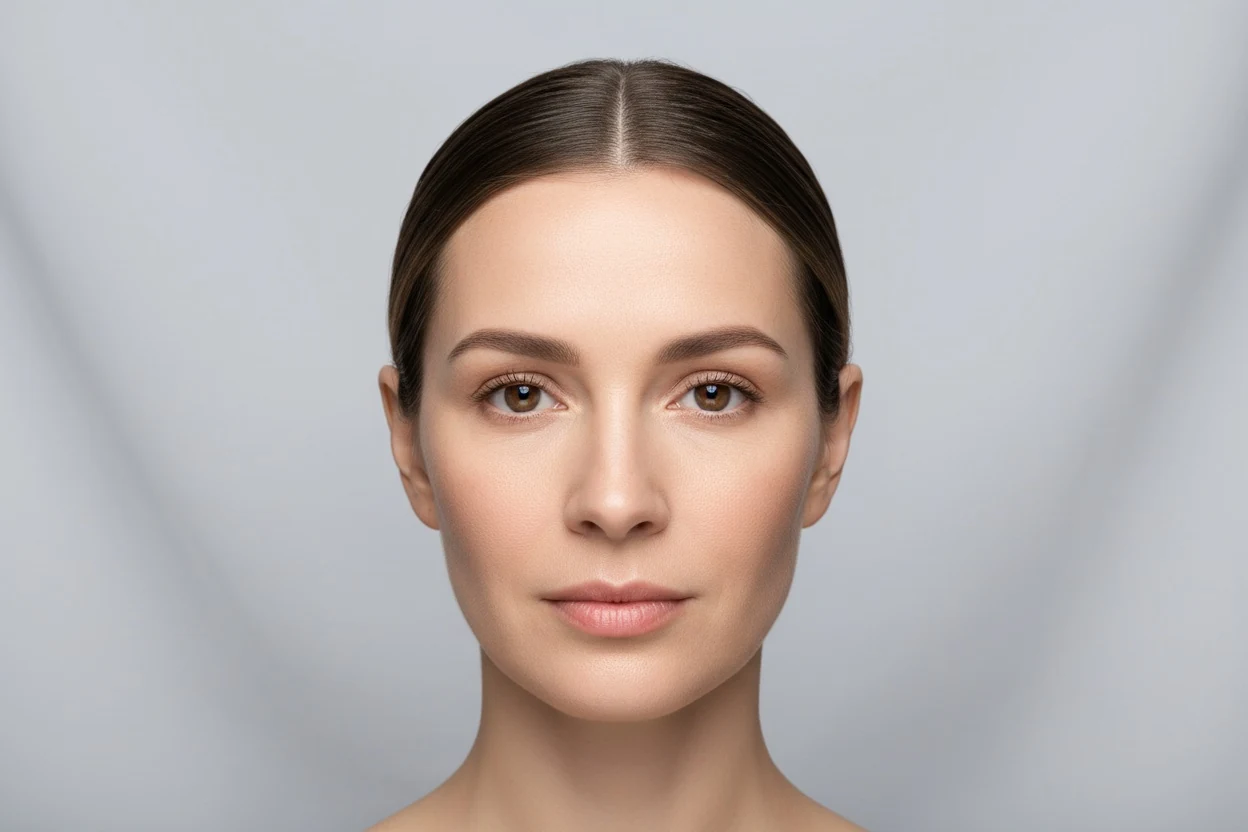
Facial Asymmetry Exercises: 8 Moves and What They Can't Fix
Only one of four kinds of facial asymmetry responds to exercise. How to tell yours apart, what the trials measured, and 8 targeted moves with limits.
·21 min read
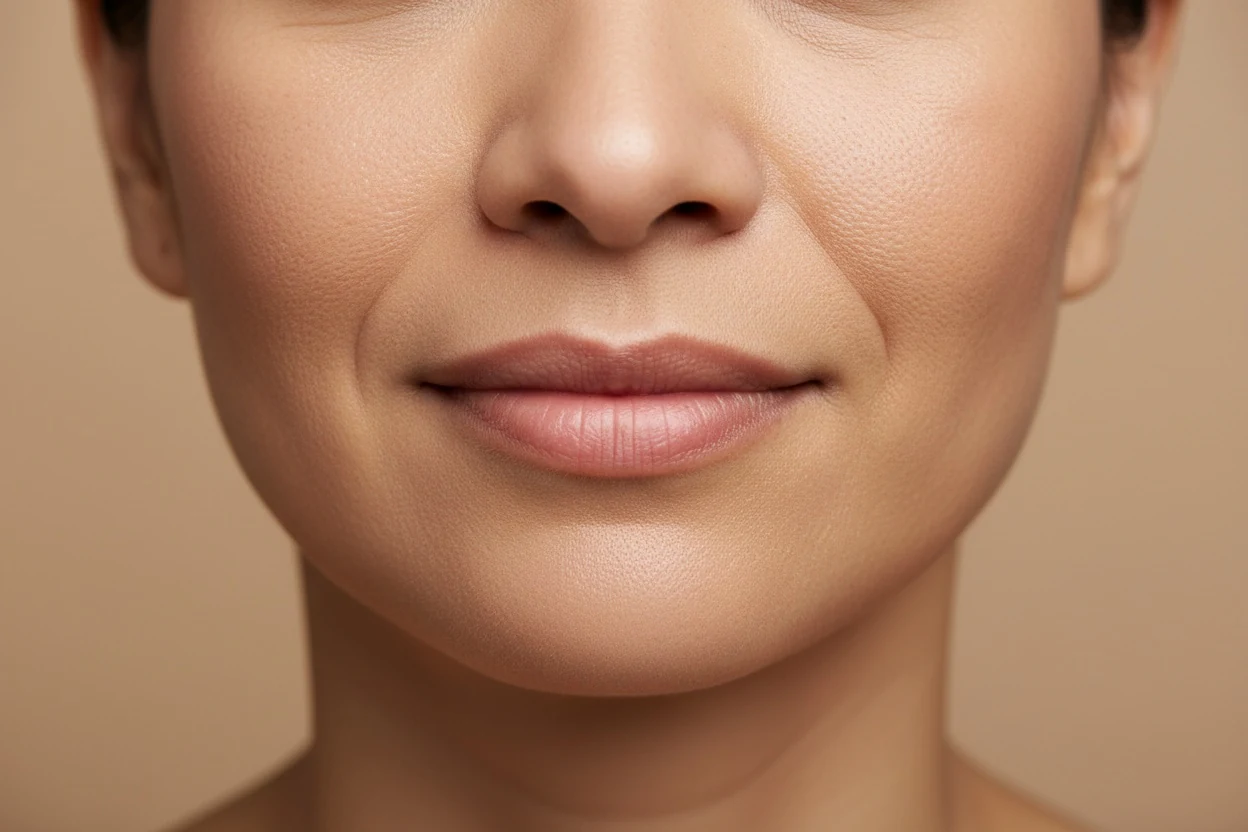
Nasolabial Folds (Smile Lines): Causes and What Changes Them
Nasolabial folds are anatomy, not damage. Why they deepen, why they show in your 20s, and what filler, Botox, retinoids and exercise were shown to do.

·15 min read
Qoves Review 2026: Price, Controversy, and What Is Free
Qoves costs $150 a year for one reviewed facial analysis. What the report contains, the Guardian controversy, what buyers report, and which half is free.
·15 min read
FaceIQ Labs Review: The Real Price, the Refund Trap, and Which FaceIQ You Mean
FaceIQ Labs does not publish its price on its sales page. It is $24.99 or $49.99 a month, written into its own terms. Here is what that buys, why the free trial is not available to you, what the refund clause really means, and how to tell the five unrelated products called FaceIQ apart.
·15 min read
Facial Proportions: Thirds, Fifths & What Real Faces Measure
The rule of thirds, fifths and the golden ratio against what anthropometry measured on real faces, by sex and ancestry, plus which proportions a photo can check.
·7 min read
How to Know If You're Attractive: The Measurable Part
The signs listicles cannot be checked. Four things about a face can be measured, and the research says less than you would expect. Here is the difference, and how to measure yours.
·8 min read
How to Be Photogenic: The Four Variables That Actually Change Your Face
Being photogenic is mostly not about your face. Lens distance, camera height, the mirror flip and light change measurable facial proportions — here is how much, and what to do about each.
What these guides are for
The measurement pages on this site answer one question each: what is my face shape, what is my canthal tilt, how symmetrical am I. They are built to give a number and get out of the way. These guides exist for the questions underneath those — where the rule being applied came from, what the research actually supports, and why two tools measuring the same face disagree.
That division matters because most of what is written about facial proportion quotes conventions as though they were findings. The rule of thirds is a Renaissance drawing convention. The golden ratio was applied to faces in the 1990s and the mask it produced has a documented fit problem. The canthal tilt vocabulary comes from oculoplastic surgery and the ideal built on top of it comes from a forum. All three are worth knowing about; none of them is a measured population norm, and a guide that does not say which is which is not much use.
How they connect to the measurements
Every guide points back at the tool that measures what it discusses, and every tool page carries the limits that the guides explain at length. If you read the facial proportions guide and then run the facial thirds calculator, the calculator will tell you the same thing the guide does about the upper third being unreliable — because both are built from the same engine and the same thresholds.
The four clusters the guides draw on are face shape, eye shape, nose type and lip shape, each with a hub explaining the measurement and a page for every named type underneath it.
What gets cited and what gets flagged
Where a guide makes a claim about research, the reference is listed at the foot of the article with author and year, so you can look it up rather than take the sentence at face value. The papers that recur are the ones that actually carry this subject: Langlois and Roggman on averageness, Grammer and Thornhill on symmetry, Fink and colleagues on skin, Rhodes' review of the whole area, and Holland's critique of the phi mask.
Where a claim is a convention rather than a finding, it is labelled as one in the sentence that makes it. And where something is genuinely unknown or unmeasurable from a photograph, the guide says so instead of producing a plausible number — which is the same rule the tools run on.
Questions these guides answer
Between them, the pieces above cover the questions that come up most often once someone has a measurement and wants to know what it means. Where the rule of thirds and the rule of fifths came from, and which of them a photograph can actually check. Why a face photographs differently from how it looks in a mirror, and how much of that is lens distance rather than the face. Which of the popular signs of attractiveness can be verified at all, and which are unfalsifiable by construction. What the published research supports — averageness, symmetry, skin — and how modest those effects actually are.
What they deliberately do not cover is styling galleries. Hairstyle and glasses recommendations sit on the face shape pages where they belong, next to the measurement they follow from, rather than as separate photo collections — that format is a different kind of publishing and a measurement site does it badly.
Guides — frequently asked questions
How often do you publish?
Irregularly, and deliberately so. A guide here only exists when there is something to say that the measurement pages do not already cover, and where the SERP for the question is not already owned by a format we cannot produce — a sixty-photograph gallery, for instance, is not something a measurement site should attempt.
Who writes these?
They are written in-house against the same engine the tools run on, and every claim about a measurement is one the tools actually make. Where a guide cites research, the citation is listed at the foot of the article so you can check it rather than take it on trust.
Why do the guides keep saying what cannot be measured?
Because that is the part almost everything else in this subject skips, and it is where most wrong answers come from. A front photograph carries no depth, so orbital depth, nose profile, lip and chin projection are all outside what any selfie-based tool can report — including this one.
Can I use these articles as a medical reference?
No. They summarise published work and name conventions for what they are, but nothing here is medical advice and no measurement on this site is a diagnosis. Where a question crosses into medicine — a lid that has started drooping, eyes that have become more prominent, a facial asymmetry that appeared recently — the guides say so and point you to a clinician.
Do I need to read a guide before using a tool?
No. Every measurement tool on this site runs on its own page without an account, without an upload and without any reading — that is the point of it. The guides are for afterwards, when the number has raised a question the result card is too small to answer.
Can I quote these guides or cite them elsewhere?
Yes, with a link back. There is also a machine-readable version of the whole site at /llms.txt and /llms-full.txt, written specifically so that a language model summarising this material gets the limits along with the claims rather than only the headline number.
Why are there so few of them?
Because a guide is only written when the measurement pages leave a real gap, and there are not many of those. Another article restating ground the tool pages already cover would cost the site more in duplicated material than it gains in pages.