Midface Ratio Calculator
The midface ratio is pupil distance divided by the height from the pupils to the upper lip, a looksmax convention rather than a clinical index. On 102 research faces the median was 1.06, and four in five fell between 0.96 and 1.15. It was not linked to men's rated attractiveness, and was negatively linked for women.
- 1.06
- median midface ratio
- 102
- reference faces
- Free
- photo not uploaded
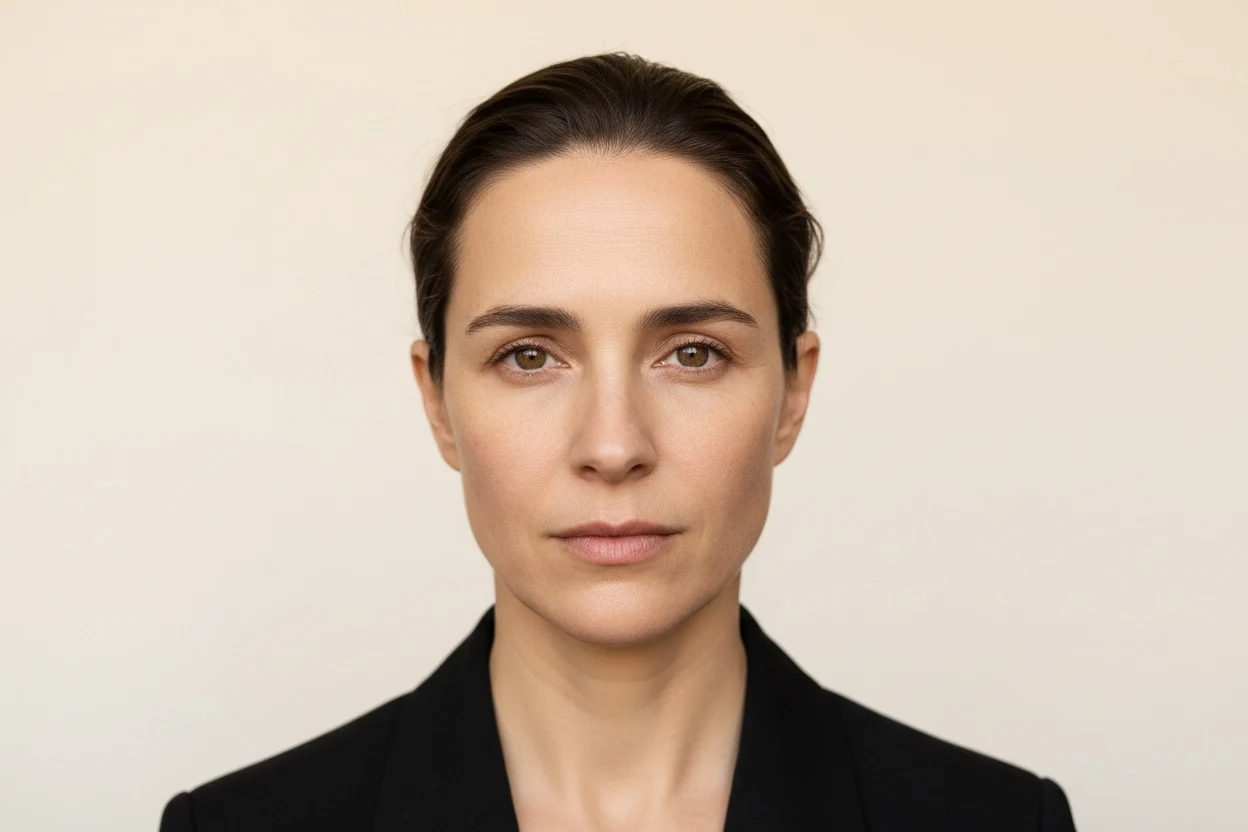 Example
Choose your own photo
See your midface ratio, pupils to lip.
Choose your own photoClick to choose a photo, or drop one here
Front-facing · Even lightingStraight-on, even lighting, at arm's length gives the most comparable reading.
Runs in your browser. Your photo is not uploaded.
What is a normal midface ratio?
- Median midface ratio 1.06 in the Face Research Lab London Set, with no difference between men and women.
- Correlation with attractiveness ratings: ρ = −0.04 in men, ρ = −0.45 in women (2,513 raters).
- A smile shifts the ratio by about 0.03; face-to-face rankings stay stable (ρ = 0.86).
See what a change would actually look like
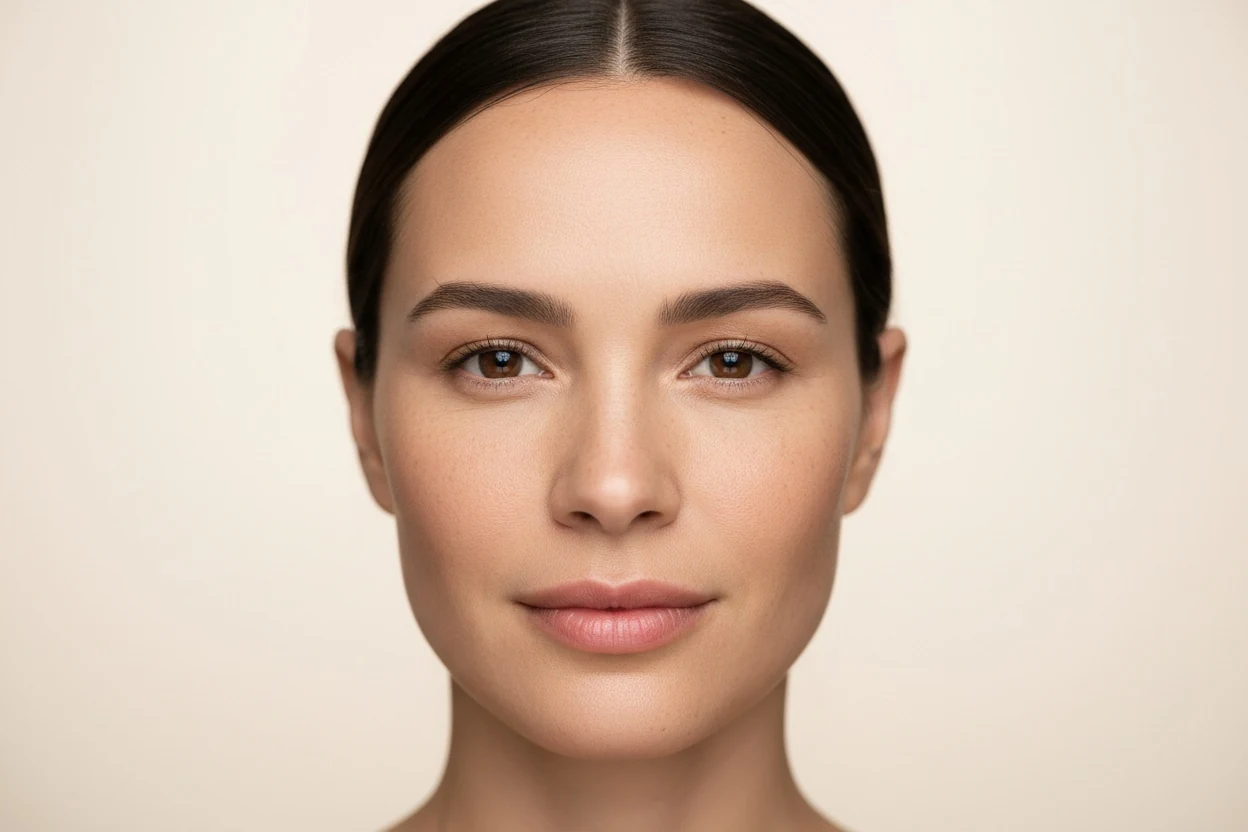
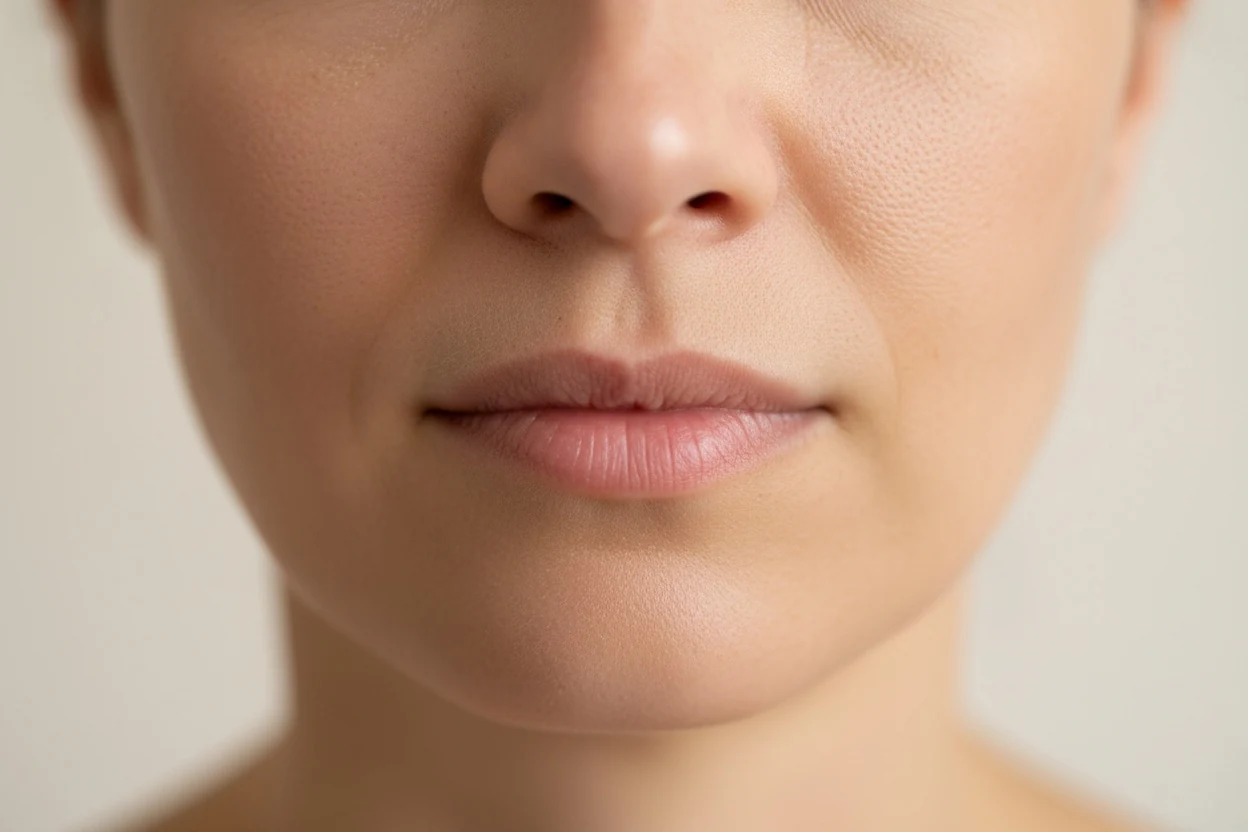
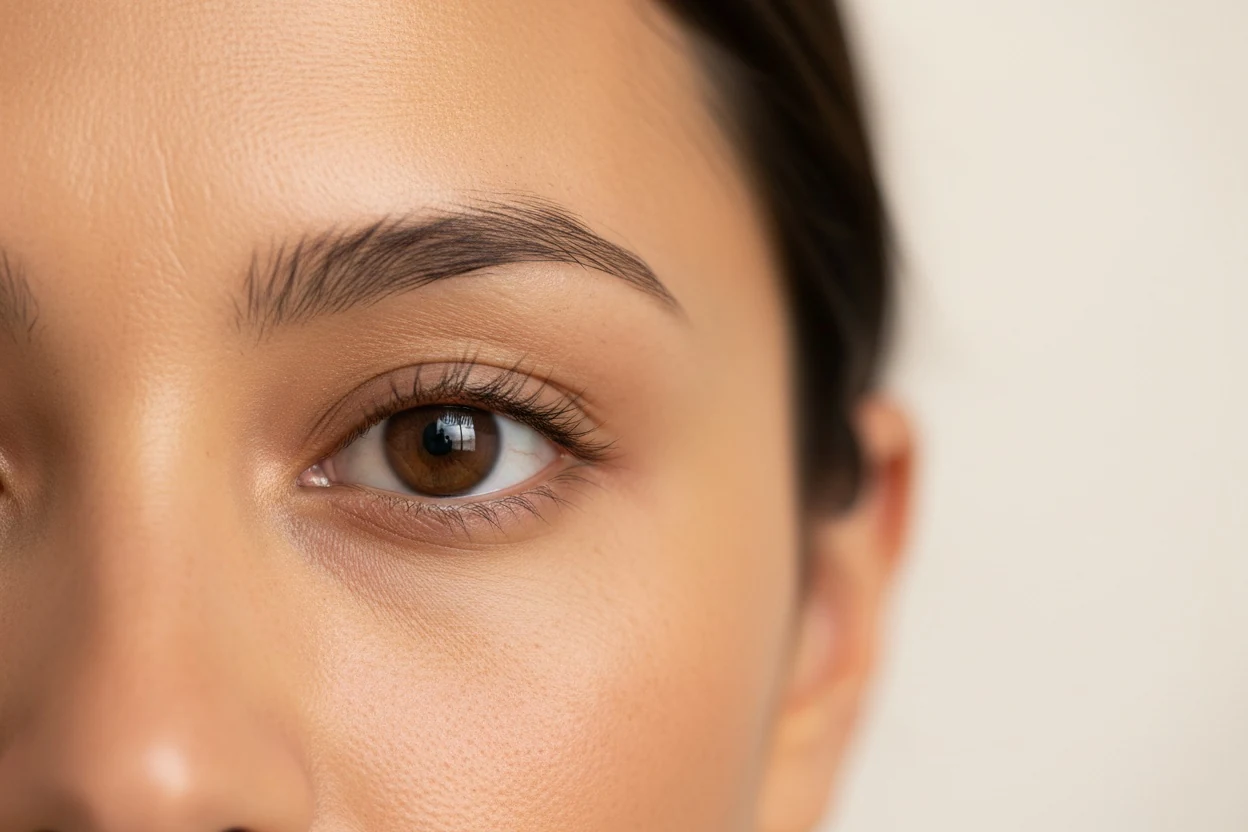
These are the renders that act on what this page measures. Each one below was generated by the same model that runs on your own photo — labelled examples on another face, so you can see what the procedure changes before you spend anything.
Lip Lift
Lip Lift · AI example
Lip Lift. A different possibility.
Tap the photo to enlarge. AI visualisation, not a prediction. Both images are AI generated.
Changes the distance between your nose and upper lip.
What it does →Cheek Filler
Cheek Filler · AI example
Cheek Filler. A different possibility.
Tap the photo to enlarge. AI visualisation, not a prediction.
Changes cheekbone projection and midface volume.
What it does →Buccal Fat Removal
Buccal Fat Removal · AI example
Buccal Fat Removal. A different possibility.
Tap the photo to enlarge. AI visualisation, not a prediction.
Changes cheek fullness below the cheekbone.
What it does →
Every “after” above is an AI simulation on a sample face, not a photograph of a surgical result — it shows the direction a procedure moves a face, not an outcome anyone achieved and not a prediction of yours. Where a frame reads “Before · AI example”, the before image is generated too: the same portrait with the condition that procedure treats added, because none of the source photographs had it. Run one on your own photo.
What is the midface ratio?
The midface ratio compares how wide-set your eyes are with how tall the middle of your face is. It is the distance between your pupils divided by the vertical distance from your pupils down to your upper lip. A higher number means a shorter, more compact midface for the eye spacing; a lower number means a longer one.
It is worth being clear about where this comes from. The midface ratio is a convention from online looksmax communities, not a clinical index. Anthropometry measures midface height in other ways. The ratio is still a real, reproducible measurement of two distances, which is what this calculator gives you.
| Part | Landmarks used here | What it is |
|---|---|---|
| Width | Iris centres 468 ↔ 473 | Interpupillary distance |
| Height | Pupil line ↔ upper lip (0) | Midface height, pupils to the top of the upper lip |
| Midface ratio | Width ÷ height | A unitless ratio, so photo size does not matter |
How this midface ratio calculator works
The calculator places 478 landmarks on your photo in your browser, including the centres of both irises. It measures the distance between the pupils along the eye line, then the perpendicular height from that line down to the top of your upper lip, and divides one by the other.
Some tools use the same name for something else. One popular calculator measures brow-to-nose height as a share of total face height, which gives numbers around 0.4. That is a different quantity, so compare your result only with figures that use the pupil-to-lip definition.
Ideal midface ratio: what 102 research faces measured
Forums usually call a ratio of about 1.0 ideal. We measured the Face Research Lab London Set with this calculator. It contains 102 adults (49 women, 53 men) photographed face-on under studio conditions. The median was 1.06, and four in five faces fell between 0.96 and 1.15. None were below 0.9.
Men and women measured almost exactly the same: medians of 1.06 and 1.07. So the idea that a compact midface is a male trait does not show up in this set.
| Midface ratio | Faces out of 102 |
|---|---|
| Below 0.90 | 0 |
| 0.90 – 0.99 | 26 |
| 1.00 – 1.09 | 50 |
| 1.10 and above | 26 |
Is a compact midface attractive? Testing the looksmax claim
The looksmax belief is that a higher midface ratio, meaning a compact midface, is more attractive, especially in men. We tested it. Every face in the London set was rated for attractiveness by 2,513 people, and we compared those ratings with each face's midface ratio.
For men there was no relationship at all: ρ = −0.04, 95% CI −0.30 to +0.23. For women the relationship ran the opposite way from the claim. Women with a higher midface ratio were rated as less attractive, ρ = −0.45, 95% CI −0.65 to −0.18. That is one dataset of 102 faces, so treat it as evidence against the simple rule rather than a new rule.
It fits a broader pattern in the research. Single proportions tend to predict attractiveness poorly, and how attractive a face looks depends heavily on who is judging it.
| Group | Correlation with attractiveness ratings | 95% CI |
|---|---|---|
| Men (53) | ρ = −0.04 | −0.30 to +0.23 |
| Women (49) | ρ = −0.45 | −0.65 to −0.18 |
| Within sex, all 102 | ρ = −0.23 | −0.42 to −0.04 |
The composite attractiveness test runs the same comparison for this site's overall score, and the fWHR calculator does it for facial width.
Midface ratio meaning: long vs compact midface
A long midface means the height from the eyes to the upper lip is large compared with the eye spacing. That gives a low ratio. A compact midface means the height is small, giving a high ratio. Neither is a medical finding. Both are normal variations of the same two distances.
Two things change the reading without changing your face. Eye spacing counts as much as height: wide-set eyes raise the ratio even when the midface is long. And the upper lip is soft tissue, so expression and age move it.
Mid face ratio: how to fix it, and what actually changes it
Most of what sets the midface ratio is bone: the position of the eyes in the skull and the height of the upper jaw. Nothing you do at home changes those. Claims that mewing or facial exercises shorten the midface in adults have no good evidence behind them.
The part that can change is soft tissue at the bottom of the measurement, the distance from the nose to the top of the upper lip. The upper lip tends to lengthen with age. A lip lift shortens that distance surgically, which would raise the ratio. Mentioning it is region information, not a recommendation. A number from one photo is not a reason for a procedure.
How to measure your midface ratio accurately
Use a straight-on photo at eye level with your mouth relaxed and your eyes open. In our test the same 102 people photographed smiling moved their ratio by a median of 0.03, because a smile lifts the upper lip. Their ranking stayed stable (ρ = 0.86), so the measurement is repeatable if you keep conditions the same.
A camera held below eye level stretches the lower half of the face and lowers the ratio. A camera held close exaggerates the centre of the face. Take two or three photos and read the spread as your range.
Midface ratio calculator online, with nothing uploaded
The face mesh model runs on your device. Your photo is held in local memory and never sent to a server. You can check this in your browser's network tab: the model downloads, and nothing containing your image goes up.
Tips for an accurate midface ratio
- Look straight at the camera with both eyes open, so both irises are detected.
- Keep the camera at eye level and at arm's length. A low camera lengthens the lower face and lowers the ratio.
- Relax your mouth. A smile lifts the upper lip and raises the ratio.
- Take off glasses with strong reflections; glare can hide the iris.
- Use even front light. Shadows under the nose can shift the upper-lip point.
Midface Ratio Calculator — frequently asked questions
Is this midface ratio calculator free?
Yes, with no account. The ratio, your percentile among the research faces and both measurements are free. Paid credits apply only to the optional simulation feature.
What is a good midface ratio?
There is no research-backed good value. In 102 research faces the median was 1.06, with four in five between 0.96 and 1.15. In that set a higher ratio was not rated more attractive for men, and was rated less attractive for women.
Is midface ration the same as midface ratio?
Yes. "Midface ration" is a common misspelling of midface ratio. Both refer to pupil distance divided by the height from the pupils to the upper lip.
How do you calculate the midface ratio?
Measure the distance between the centres of your pupils, then the vertical distance from the line between your pupils down to the top of your upper lip, and divide the first by the second. This calculator does both from face landmarks.
What is the ideal midface ratio for men?
Forums say about 1.0 or higher, but the data does not back an ideal. In our test, men's midface ratio had no relationship with how attractive 2,513 raters found them (ρ = −0.04).
What does a bad midface ratio mean?
Nothing medical. A low ratio means the midface is long relative to eye spacing; a high one means it is compact. Both are normal. The label "bad" comes from forums, not from any clinical standard.
Can you fix a long midface?
Not without surgery, because the height is mostly bone. The soft-tissue part is the nose-to-lip distance, which lip lifts shorten. Mewing and exercises have no good evidence of changing adult midface height.
Does mewing change the midface ratio?
There is no good evidence that it does in adults. The ratio depends on eye position and upper jaw height, which are set by bone.
Why is my midface ratio different in another app?
Many tools use the same name for different measurements. One popular calculator divides brow-to-nose height by face height and reports numbers around 0.4. Only pupil-to-lip versions are comparable with this one.
Is the midface ratio a real medical measurement?
No. It is an online looksmax convention built from real distances. Clinical anthropometry measures midface height differently and does not use this ratio to judge faces.
Does smiling affect my midface ratio?
Yes, a little. A smile lifts the upper lip and shortens the height, which raises the ratio. In our test the median change was 0.03. Use a relaxed mouth.
Do men and women have different midface ratios?
Not in our data. In the 102-face research set the medians were 1.06 for men and 1.07 for women, effectively identical.
Does the midface get longer with age?
The upper lip tends to lengthen with age, which increases the pupil-to-lip height and lowers the ratio. The bone-based part changes much less in adulthood.
What is midface length?
The vertical height of the middle of the face. In this ratio it is measured from the pupil line to the top of the upper lip; other definitions run from the brow or the nasion to the base of the nose.
Why does the calculator say iris points were not found?
The ratio needs the centres of both irises. A blurry photo, closed eyes or strong glare on glasses can stop them being detected. A sharp, straight-on photo with both eyes open usually works.
References
- 1.DeBruine, L., & Jones, B. (2021). Face Research Lab London Set [Data set]. figshare. doi:10.6084/m9.figshare.5047666.
- 2.Farkas, L. G. (1994). Anthropometry of the Head and Face (2nd ed.). Raven Press.
- 3.Iblher, N., Kloepper, J., Penna, V., Bartholomae, J. P., & Stark, G. B. (2008). Changes in the aging upper lip — a photomorphometric and MRI-based study. Journal of Plastic, Reconstructive & Aesthetic Surgery, 61(10), 1170–1176. PMID 18639513.
- 4.Rhodes, G. (2006). The evolutionary psychology of facial beauty. Annual Review of Psychology, 57, 199–226. PMID 16318594.
- 5.Hönekopp, J. (2006). Once more: is beauty in the eye of the beholder? Relative contributions of private and shared taste to judgments of facial attractiveness. Journal of Experimental Psychology: Human Perception and Performance, 32(2), 199–209. PMID 16634665.
- 6.Holzleitner, I. J., Lee, A. J., Hahn, A. C., et al. (2019). Comparing theory-driven and data-driven attractiveness models using images of real women's faces. Journal of Experimental Psychology: Human Perception and Performance, 45(12), 1589–1595. PMID 31556686.