Pupillary Distance Measure
Use a known-size feature already on your face. The horizontal visible iris diameter averages about 11.7 mm across adults, so a photo containing your irises contains its own scale: the pixel distance between your pupils, divided by the pixel width of your iris, multiplied by 11.7, gives PD in millimetres. This tool does it in your browser, within an honest ±3 mm band.
- 11.7 mm
- iris scale
- ±3 mm
- honest band
- No card
- or ruler needed
- Free
- photo not uploaded
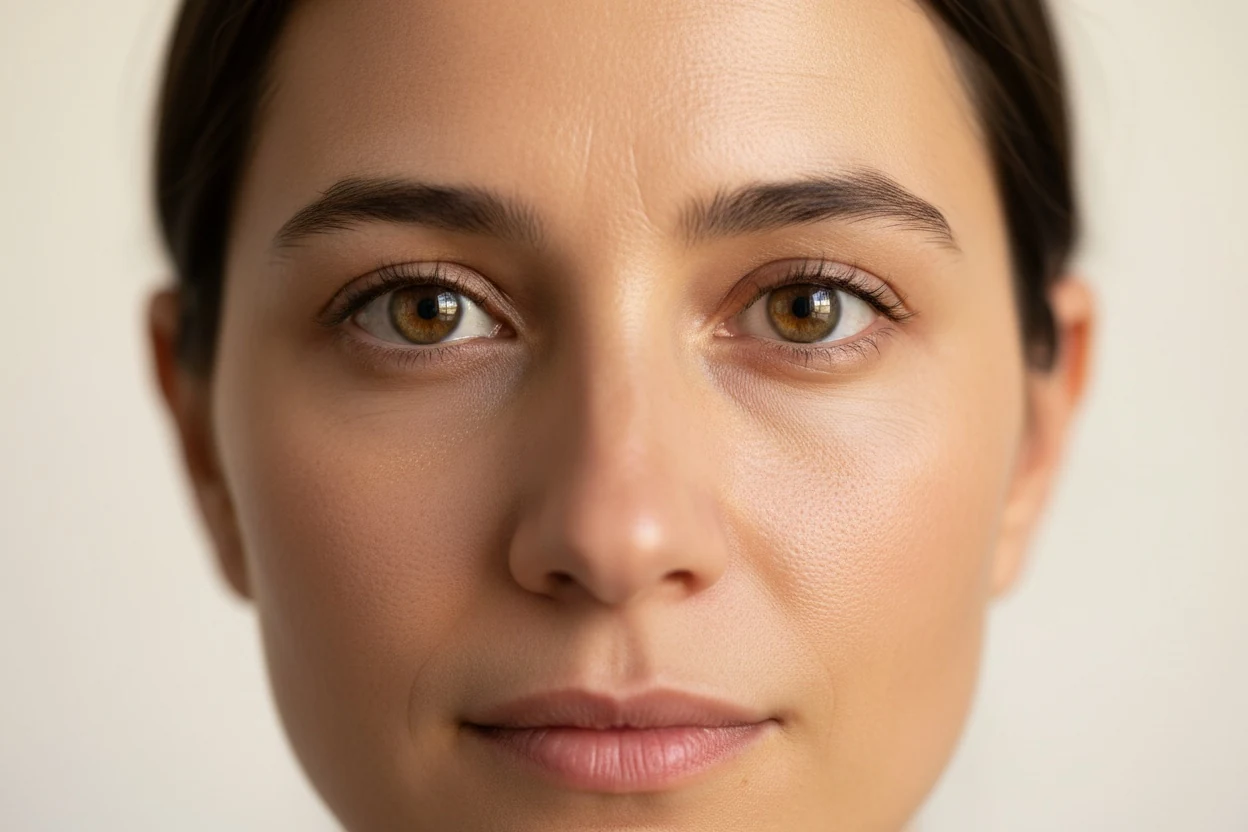
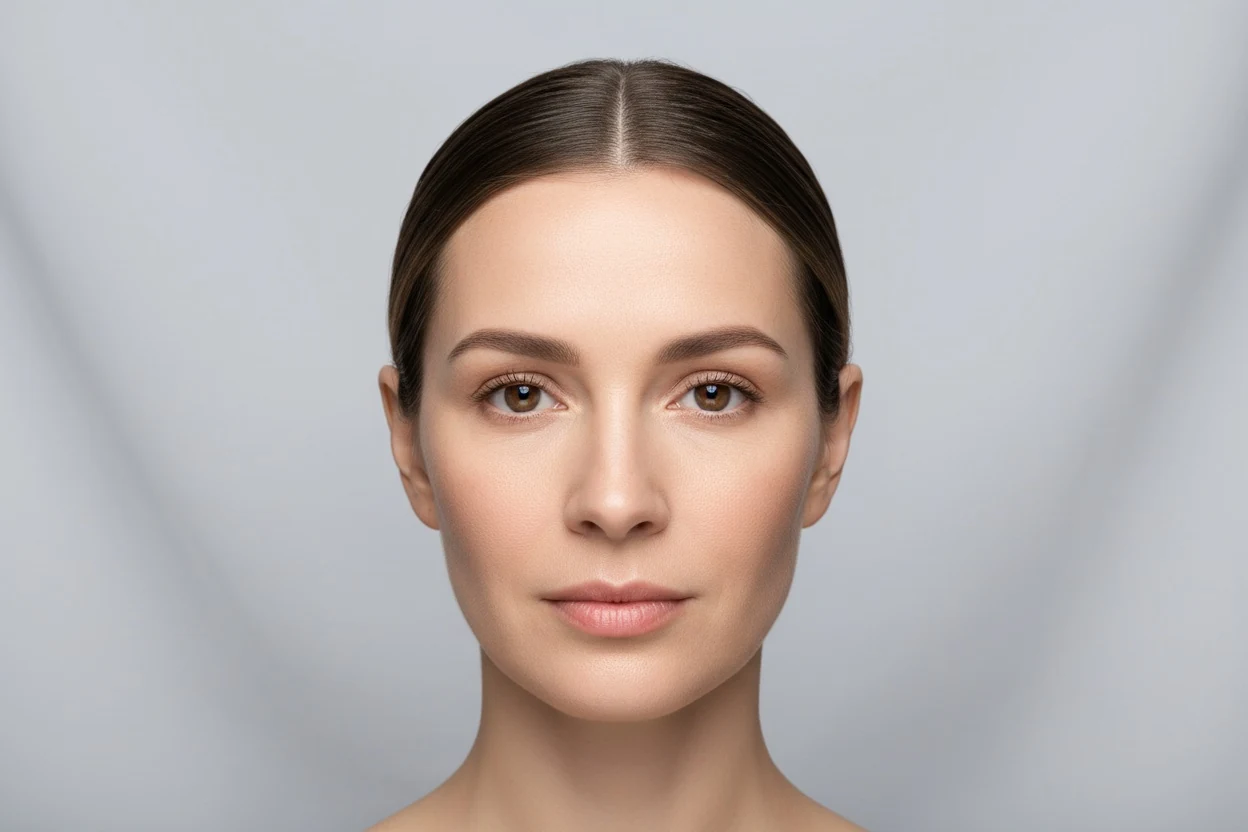
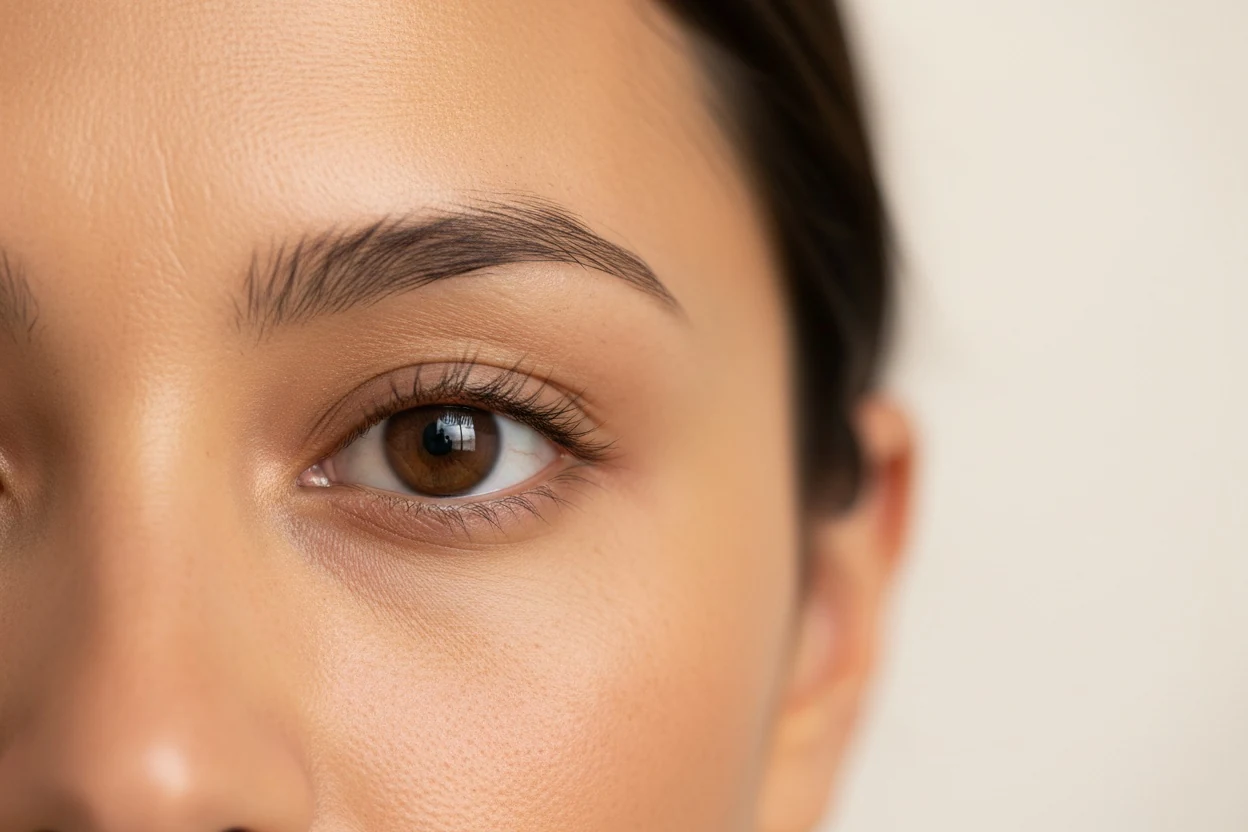
 Example
Choose your own photo
Measure the distance between your pupils.
Choose your own photoClick to choose a photo, or drop one here
Front-facing · Even lightingStraight-on, even lighting, at arm's length gives the most comparable reading.
Runs in your browser. Your photo is not uploaded.
How do you measure pupillary distance without a ruler?
- Average adult PD is roughly 54–74 mm, with about 63 mm typical for men and 60 mm for women.
- Monocular PD — each pupil to the centre line of the face — is what progressive and high-prescription lenses are made from, and the two sides are often unequal.
- Iris diameter varies between roughly 11.0 and 12.5 mm, which sets a floor on how precise any photo-based method can be.
- A realistic error band for photo measurement is about ±3 mm, checked against 102 hand-annotated research photos; low single-vision prescriptions often tolerate that, progressives do not.
See what a change would actually look like
Your PD is a fitting measurement — it is what an optician needs, and it does not point at any procedure. These are simply the renders that act on the eye area, if you came here curious about that rather than about glasses.
Tear Trough Filler
Tear Trough Filler · AI example
Tear Trough Filler. A different possibility.
Tap the photo to enlarge. AI visualisation, not a prediction. Both images are AI generated.
Changes the hollow under your eyes.
What it does →Blepharoplasty
Blepharoplasty · AI example
Blepharoplasty. A different possibility.
Tap the photo to enlarge. AI visualisation, not a prediction. Both images are AI generated.
Changes upper and lower eyelid skin.
What it does →Fox Eye Lift
Fox Eye Lift · AI example
Fox Eye Lift. A different possibility.
Tap the photo to enlarge. AI visualisation, not a prediction.
Changes the outer corner angle of your eyes.
What it does →
Every “after” above is an AI simulation on a sample face, not a photograph of a surgical result — it shows the direction a procedure moves a face, not an outcome anyone achieved and not a prediction of yours. Where a frame reads “Before · AI example”, the before image is generated too: the same portrait with the condition that procedure treats added, because none of the source photographs had it. Run one on your own photo.
What is pupillary distance and why do glasses need it?
Pupillary distance is the distance between the centres of your pupils, in millimetres. A lens has an optical centre, and that centre needs to sit in front of your pupil. If it does not, you look through the lens off-axis, which introduces prism — the practical result is eye strain, headaches, or a subtle sense that the glasses are wrong that people often cannot name.
The stronger your prescription, the less error it takes to matter. At a low prescription a couple of millimetres is usually unnoticeable. At a high one it is not.
How to measure pupillary distance from a photo, without a ruler
The obstacle with any photo measurement is scale: a picture tells you how many pixels apart your pupils are, not how many millimetres. Every retailer's tool solves this by asking you to hold a reference object of known size — usually a credit card, since they are a standard 85.6 mm wide — against your forehead.
There is a simpler reference, and it is already on your face. The horizontal visible diameter of the human iris is remarkably consistent: about 11.7 mm across adults, varying between roughly 11.0 and 12.5. A face mesh that detects the iris ring therefore has a ruler in every photo. Pupil-to-pupil distance in pixels, divided by iris width in pixels, times 11.7, gives millimetres.
That is what this tool does, which is why it does not ask you to find a card first.
Binocular and monocular PD: which number your optician wants
Binocular PD is the single number between your two pupils — the one most online retailers ask for, and the only one single-vision lenses usually need. It is written as one figure, for example 63.
Monocular PD is the distance from each pupil to the centre line of your face, written as two figures, for example 32/31. Most faces are slightly asymmetric, so those two numbers are frequently unequal. Progressive lenses, high prescriptions and lenses with significant prism are made from the monocular pair, because centring each lens separately is the whole point.
This tool reports both, and flags a left–right difference above about a millimetre, since that is the point where it stops being noise.
Average pupillary distance, and where yours is likely to fall
Adult PD spans roughly 54 to 74 mm. The commonly quoted averages are around 63 mm for men and 60 mm for women, and children's are smaller and change as they grow, which is why a child's PD should be remeasured rather than reused.
If your measurement lands far outside that range, the likeliest explanation is the photo rather than your face. A head turned even slightly shortens the apparent distance, and a photo taken very close introduces perspective that pulls the eyes together.
How accurate is a photo-based PD measurement?
Honestly: around ±3 mm. We checked this tool against 102 faces from an open research set whose irises and pupils were marked by hand, and there are four separate sources of error.
The scale reference itself varies — iris diameter is consistent across people but not identical, and that alone contributes most of a millimetre. The landmark model also reads the iris edge slightly wide: on the research set its iris diameter was about 6 per cent larger than the hand-marked one, which made PD read about 3 mm low until we corrected for it. After the correction the typical offset was a fraction of a millimetre, but individual faces still varied by around 3 mm either way. Head rotation shortens the measured distance by the cosine of the angle, so ten degrees of turn costs about one and a half per cent. And a photo taken close to the face has perspective distortion that pulls the eyes inward relative to the nose.
For single-vision lenses at a low prescription, an error of that size is often tolerated. For stronger prescriptions, progressive lenses, or anything with prism, it is not — have those measured in person by an optician with a pupillometer. That is a real limit, and a tool that does not tell you about it is not being straight with you.
Getting the most accurate reading from this PD tool
Take the photo at arm's length or further, straight on, with your head level and your eyes open and looking directly at the lens. Distance matters more than most people expect — the further back the camera, the less perspective distortion, and using a rear camera at arm's length beats a front camera held close.
Take three photos and compare. If the readings agree within a millimetre, the measurement is stable. If they scatter, something in your setup is moving, and the answer is more distance and a more level head rather than more attempts.
Tips for an accurate pupillary distance measurement
- Arm's length or further, and use the rear camera if you can. Close-up perspective pulls the eyes together and shortens the reading.
- Head level and square to the camera. Rotation shortens the measured distance by the cosine of the angle.
- Look directly at the lens, not above or beside it.
- Eyes fully open and in even light — the iris edge is the scale reference and it needs to be visible.
- Take three photos. Readings within a millimetre of each other mean the measurement is stable.
- No glasses on. Lenses refract and move the apparent position of your pupils.
Pupillary Distance Measure — frequently asked questions
How do I measure my PD at home?
Take a straight-on photo at arm's length and let the tool above measure it. It uses your iris as the scale reference, so you do not need a ruler or a credit card in the shot.
What is the average pupillary distance?
Adults range roughly 54 to 74 mm, with about 63 mm typical for men and 60 mm for women. Children's are smaller and change as they grow.
Is a photo PD measurement accurate enough to order glasses?
For low single-vision prescriptions, often yes — the error band is about ±3 mm. For progressive lenses or high prescriptions, no; have those measured in person.
What is the difference between binocular and monocular PD?
Binocular is one number between your two pupils. Monocular is two numbers, each pupil to your facial midline, and it is what progressive and high-prescription lenses are made from.
Why are my two monocular PD numbers different?
Because most faces are slightly asymmetric. A difference of a millimetre or less is ordinary; more than that is worth mentioning to your optician.
Can I get my PD from my prescription?
Sometimes. Opticians are not universally required to include it, but many do, and asking for it is reasonable — it is your measurement.
Does the photo get uploaded?
No. The face mesh runs in your browser and the measurement happens on your device. Nothing is transmitted or stored.