fWHR Calculator
fWHR, the facial width-to-height ratio, is the distance between the cheekbones divided by the height from the upper lip to the brow. On 102 research faces measured with this calculator the median was 1.78. Wider faces were rated slightly less attractive (within-sex ρ = −0.23), matching a 2015 meta-analysis (r = −.26).
- 1.78
- median fWHR
- 102
- reference faces
- Free
- photo not uploaded
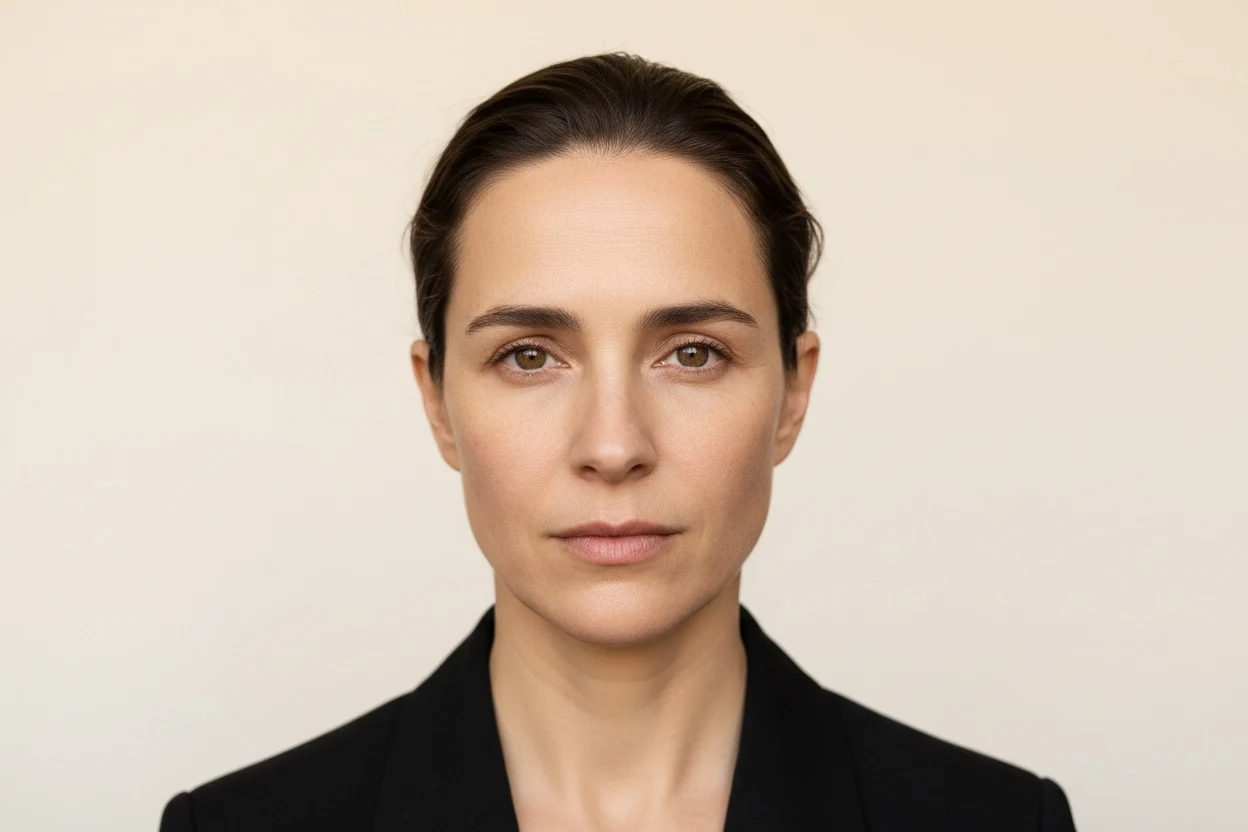 Example
Choose your own photo
See your facial width-to-height ratio.
Choose your own photoClick to choose a photo, or drop one here
Front-facing · Even lightingStraight-on, even lighting, at arm's length gives the most comparable reading.
Runs in your browser. Your photo is not uploaded.
What is fWHR and how is it measured?
- Median fWHR: 1.78 overall, 1.82 for men and 1.72 for women in the Face Research Lab London Set.
- Across studies the sex difference in fWHR is small (d = .11).
- fWHR correlates with body mass index (r = .31), so facial fat raises it.
See what a change would actually look like
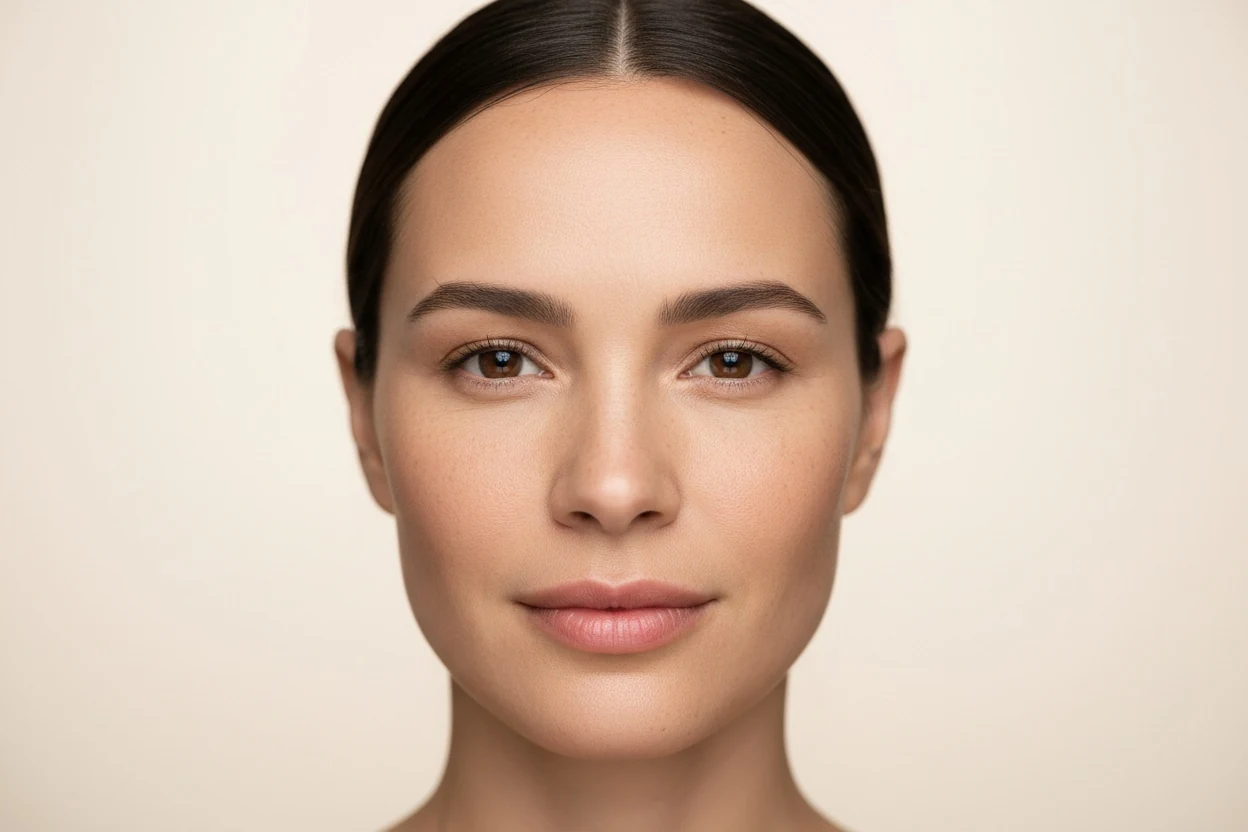
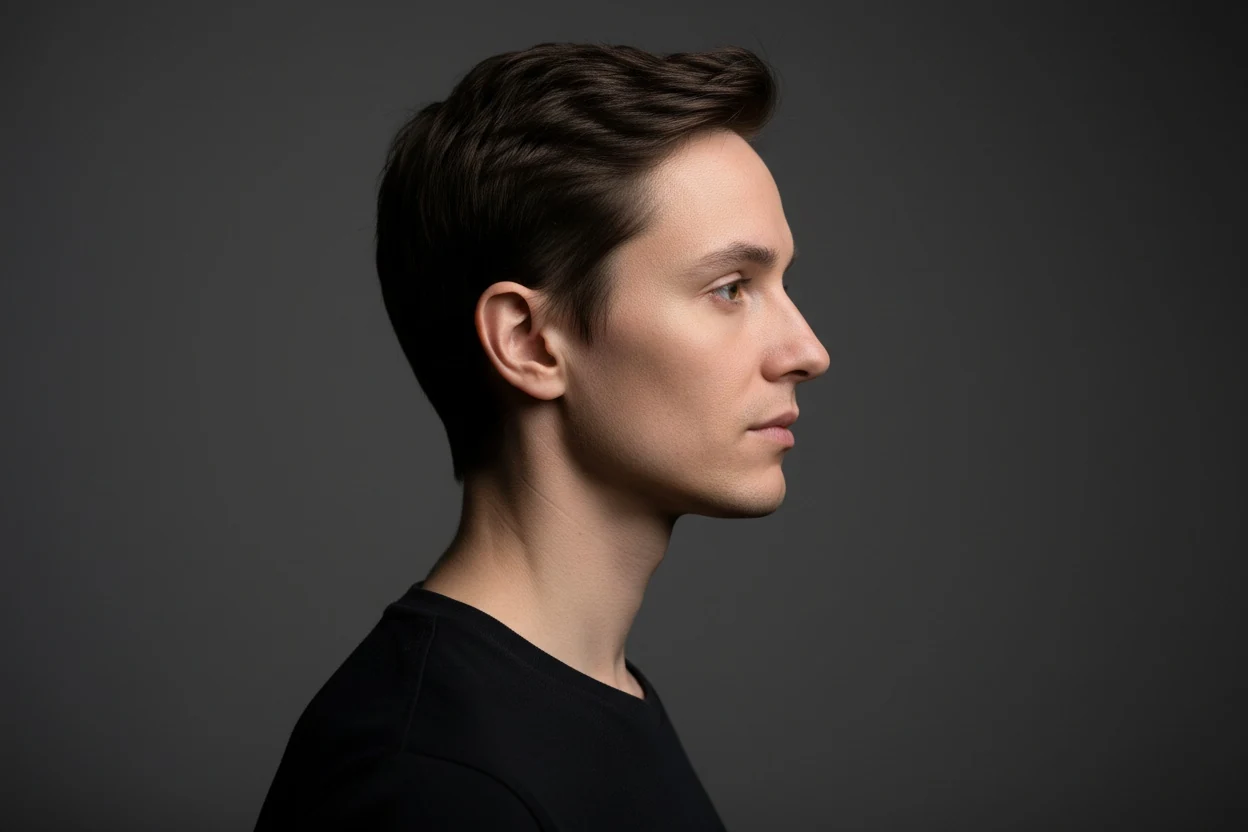
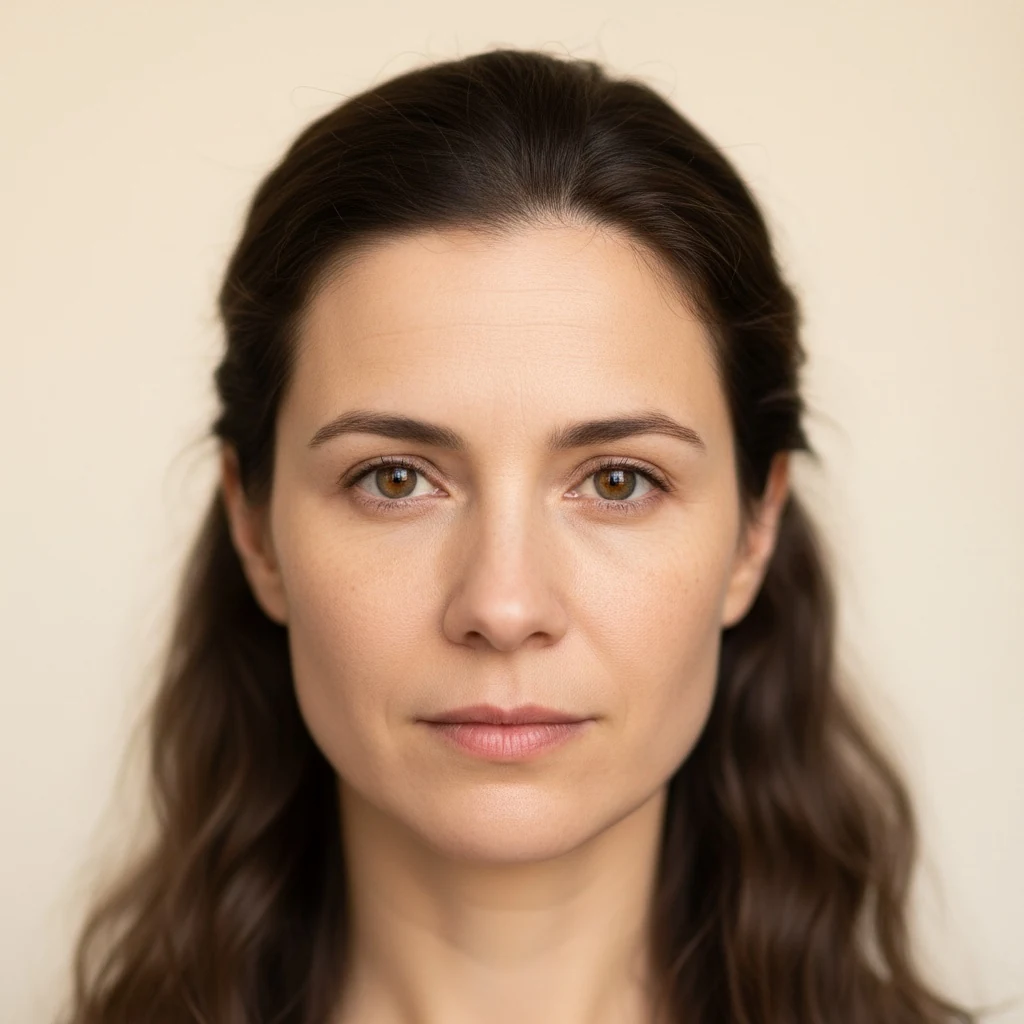
These are the renders that act on what this page measures. Each one below was generated by the same model that runs on your own photo — labelled examples on another face, so you can see what the procedure changes before you spend anything.
Cheek Filler
Cheek Filler · AI example
Cheek Filler. A different possibility.
Tap the photo to enlarge. AI visualisation, not a prediction.
Changes cheekbone projection and midface volume.
What it does →Buccal Fat Removal
Buccal Fat Removal · AI example
Buccal Fat Removal. A different possibility.
Tap the photo to enlarge. AI visualisation, not a prediction.
Changes cheek fullness below the cheekbone.
What it does →Temple Filler
Temple Filler · AI example
Temple Filler. A different possibility.
Tap the photo to enlarge. AI visualisation, not a prediction. Both images are AI generated.
Changes hollowing at the temples.
What it does →
Every “after” above is an AI simulation on a sample face, not a photograph of a surgical result — it shows the direction a procedure moves a face, not an outcome anyone achieved and not a prediction of yours. Where a frame reads “Before · AI example”, the before image is generated too: the same portrait with the condition that procedure treats added, because none of the source photographs had it. Run one on your own photo.
What is fWHR? The facial width-to-height ratio
fWHR is the width of your face at the cheekbones divided by the height of your upper face. Width is measured between the two zygions, the outermost points of the cheekbones. Height is measured from the top of your upper lip to your brow line. A face that is wide relative to that band has a high fWHR; a narrower or longer one has a low fWHR.
The ratio comes from anthropology, where it was first described on skulls. It became widely known after a 2008 study reported that men with wider faces played more aggressively in ice hockey. Since then it has been studied as a possible cue of dominance, threat and trustworthiness, with mixed results, which the sections below go through.
| Part | Landmarks used here | What it is |
|---|---|---|
| Width | 234 ↔ 454 (face mesh) | Bizygomatic width: the widest point of the face at cheekbone level |
| Height | Upper lip (0) ↔ brow line (midpoint of 52 and 282) | Upper facial height: lip to brow |
| fWHR | Width ÷ height | A unitless ratio, so photo size does not matter |
How this fWHR calculator measures your face
The calculator places 478 landmark points on your photo in your browser, then takes the two distances in the table above. It follows the research definition used by Carré and McCormick in 2008: the brow line, not the top of the eyelid. Some tools measure to the eyelid instead. That shortens the height and gives a larger number, often 1.8 to 2.1, so fWHR figures from different tools are not directly comparable.
Your result is shown two ways: the ratio itself, and where it falls among 102 adult research faces measured with this exact method. A percentile avoids the usual trap of comparing your number with a published average that used a different definition or camera.
Average fWHR: what 102 research faces measured
We ran the Face Research Lab London Set through this calculator. It contains 102 adults (49 women, 53 men) photographed face-on under the same studio conditions. The median fWHR was 1.78. Four in five faces fell between 1.64 and 1.95.
In this set men's faces measured wider than women's: a median of 1.82 against 1.72. That difference is larger than the average across the literature, which is a reminder that fWHR varies a lot between samples.
| Group | Median fWHR | 10th percentile | 90th percentile |
|---|---|---|---|
| All 102 faces | 1.78 | 1.64 | 1.95 |
| Women (49) | 1.72 | 1.59 | 1.88 |
| Men (53) | 1.82 | 1.73 | 2.00 |
Is a high fWHR attractive? What we found, and what research says
Every face in the London set was also rated for attractiveness by 2,513 people. Wider faces were rated as less attractive. Across all 102 faces the correlation was ρ = −0.41. Part of that is simply that men had wider faces and were rated lower on average. Comparing people only within their own sex, the relationship was smaller but still there: ρ = −0.23, 95% CI −0.42 to −0.04.
That matches the published evidence closely. A 2015 meta-analysis found that people with larger fWHRs were judged less attractive (r = −.26), especially by women. The same analysis found wider faces were judged more threatening (r = .46) and more dominant. The looksmax idea that a high fWHR is simply better does not survive the data: it reads as more intimidating, not more attractive.
| Relationship | Result | Source |
|---|---|---|
| fWHR × rated attractiveness, within sex | ρ = −0.23 (CI −0.42 to −0.04) | Our test, 102 faces, 2,513 raters |
| fWHR × rated attractiveness | r = −0.26 | Meta-analysis, 721 faces |
| fWHR × judged threat | r = 0.46 | Meta-analysis, 1,691 faces |
| fWHR × body mass index | r = 0.31 | Meta-analysis, 2,506 people |
| Sex difference in fWHR | d = 0.11 (small) | Meta-analysis, 10,853 people |
fWHR meaning: aggression, testosterone and the claims that don't hold
The popular story is that a wide face signals testosterone and aggression. The evidence is weaker than that story. The 2008 hockey study found fWHR predicted penalty minutes in men, but not reactive aggression in women. In the 2015 meta-analysis, fWHR predicted threatening behaviour in men only weakly (r = .16).
Three findings cut against the stronger claims. The sex difference in the face is small across studies (d = .11), and one study measuring faces three different ways found none at all. A study of adolescent boys found fWHR did not track testosterone during puberty, the period when the hormone would have to shape it. And fWHR correlates with body mass index, so part of a wide face is simply facial fat, not bone.
A 2010 study did find that men with wider faces were more likely to exploit trust in an economic game, and that others trusted them less. Read that as a statistical tendency across groups. It says nothing reliable about any one person's character.
Ideal fWHR: is there one?
No. There is no research-backed ideal fWHR. Looksmax forums often quote a target around 1.9 or 2.0 for men, but those figures are usually measured to the eyelid, not the brow, and nothing in the literature treats a wider face as healthier or better. Our data points the other way for attractiveness ratings.
What a single number can tell you is where your face sits among others measured the same way. That is what the percentile on your result shows. A low fWHR is a longer or narrower face, not a flaw, and a high fWHR is a broader one, not an achievement.
How to measure fWHR accurately from a photo
fWHR from photographs is noisy. A 2016 study of the same men across different photos found that the choice of photo changed who ranked higher, even though identity still mattered more than the image. Focal length and camera distance alone had a relatively small effect; uncontrolled photos had a larger one.
In our own test the same 102 people photographed smiling moved their fWHR by a median of 0.04, because a smile lifts the upper lip and shortens the height. Their ranking stayed very stable (ρ = 0.90). Take the photo straight on, at eye level, with a relaxed mouth, and compare like with like.
fWHR calculator online, with nothing uploaded
The face mesh model runs on your device. Your photo is held in local memory and is never sent to a server. You can confirm this in your browser's network tab: the model file downloads, and nothing containing your image goes up.
Tips for an accurate fWHR measurement
- Face the camera straight on. Turning your head narrows the measured width on one side.
- Keep the camera at eye level and at arm's length. A camera below eye level stretches the lower face and changes the height.
- Relax your mouth. A smile lifts the upper lip and shortens the lip-to-brow height.
- Keep your brows neutral. Raised eyebrows lengthen the height and lower your fWHR.
- Pull hair away from the cheekbones so the widest point of the face is visible.
fWHR Calculator — frequently asked questions
Is this fWHR calculator free?
Yes, with no account. The ratio, your percentile and both underlying measurements are free. Paid credits apply only to the optional simulation feature.
What is a good fWHR?
There is no good or bad fWHR in the research. The median in our 102 research faces was 1.78, and four in five fell between 1.64 and 1.95. Wider faces were rated slightly less attractive, not more.
What is the average fWHR for men and women?
In the London research set measured by this calculator, the median was 1.82 for men and 1.72 for women. Published averages differ because studies use different landmarks and cameras, so compare your result with the percentile rather than with a number from another source.
How do you calculate fWHR?
Divide the width between the two cheekbones (bizygomatic width) by the height from the top of the upper lip to the brow line. This calculator does both measurements from 478 face landmarks and corrects for head tilt.
Why does another fWHR calculator give me a higher number?
It probably measures height to the top of the eyelid instead of the brow. A shorter height gives a larger ratio. Both are used in research; this calculator uses the brow definition from the original 2008 study.
Does a high fWHR mean high testosterone?
The evidence is weak. A study of adolescent boys found fWHR did not track testosterone during puberty, and across studies the difference between men and women is small. fWHR also rises with body mass index.
Is a high fWHR attractive?
Not in the data. In a 2015 meta-analysis, wider faces were judged less attractive (r = −.26), and in our own test on 102 faces the within-sex correlation was −0.23. Wider faces were judged more dominant and threatening instead.
What does low fWHR mean?
A face that is relatively long or narrow between the brow and upper lip compared with its cheekbone width. It is a proportion, not a problem, and the research does not link it to lower attractiveness.
Is fWHR important for looksmaxxing?
Forums treat a high fWHR as a goal, but the research does not support that. A wider face reads as more intimidating, not more attractive, and much of the variation comes from facial fat and bone structure you cannot train.
Can you increase your fWHR?
Not meaningfully. Width is mostly cheekbone structure, and height is set by the skull and soft tissue. Weight gain widens the face and raises fWHR, which is one reason the ratio correlates with body mass index.
Does smiling change my fWHR?
Slightly. In our test a smile raised the median fWHR by about 0.04, because it lifts the upper lip and shortens the measured height. Use a relaxed mouth for a reading you can compare.
Is fWHR used in science or just online?
It is a genuine research measure with a large literature, from skull anthropology to a widely cited 2008 study and a 2015 meta-analysis. The online versions borrow the name but often change the landmarks.
Is there an fWHR calculator app?
This page works as one: it runs on your phone's browser with the camera or a photo, no install and no upload. Save the page to your home screen if you want app-style access.
How accurate is an fWHR measured from a selfie?
Less accurate than a studio photo. A close phone camera and a tilted head both move the landmarks. Take two or three straight-on photos at arm's length and read the spread as your real range.
Does fWHR say anything about personality?
Not about any individual. Some studies find small group-level associations with aggression or trust behaviour, but they are weak and inconsistent, and they are not a basis for judging a person.
References
- 1.Carré, J. M., & McCormick, C. M. (2008). In your face: facial metrics predict aggressive behaviour in the laboratory and in varsity and professional hockey players. Proceedings of the Royal Society B, 275(1651), 2651–2656. PMID 18713717.
- 2.Geniole, S. N., Denson, T. F., Dixson, B. J., Carré, J. M., & McCormick, C. M. (2015). Evidence from meta-analyses of the facial width-to-height ratio as an evolved cue of threat. PLoS One, 10(7), e0132726. PMID 26181579.
- 3.Kramer, R. S., Jones, A. L., & Ward, R. (2012). A lack of sexual dimorphism in width-to-height ratio in white European faces using 2D photographs, 3D scans, and anthropometry. PLoS ONE, 7(8), e42705. PMID 22880088.
- 4.Kramer, R. S. S. (2016). Within-person variability in men's facial width-to-height ratio. PeerJ, 4, e1801. PMID 26989634.
- 5.Hodges-Simeon, C. R., Hanson Sobraske, K. N., Samore, T., Gurven, M., & Gaulin, S. J. C. (2016). Facial width-to-height ratio (fWHR) is not associated with adolescent testosterone levels. PLoS One, 11(4), e0153083. PMID 27078636.
- 6.Stirrat, M., & Perrett, D. I. (2010). Valid facial cues to cooperation and trust: male facial width and trustworthiness. Psychological Science, 21(3), 349–354. PMID 20424067.
- 7.Foo, Y. Z., Simmons, L. W., & Rhodes, G. (2017). Predictors of facial attractiveness and health in humans. Scientific Reports, 7, 39731. PMID 28155897.
- 8.DeBruine, L., & Jones, B. (2021). Face Research Lab London Set [Data set]. figshare. doi:10.6084/m9.figshare.5047666.