Find Your Type: Which Faces Are You Attracted To?
Your type is the pattern in the faces you are drawn to: a hair colour, a smile, glasses, fuller lips. People often cannot describe it, but their choices are consistent enough to learn from. This quiz shows you grids of AI-generated faces, fits a small model to your taps across 29 features, and names the features that predict them. Research suggests about half of attraction judgements reflect personal rather than shared taste.
- 100
- AI-generated faces
- 29
- features the model reads
- 3
- grids to a first result
- 0
- photos of you
Updated
Which faces do you want to see?
Free, no sign-up, no photo of you. Your taps stay in this browser tab.
What is my type, and can a quiz find it?
- Hönekopp (2006) found private taste and shared taste contribute about equally to individual judgements of facial attractiveness.
- Germine and colleagues (2015), in a twin study, found individual face preferences are shaped mostly by each person's own environment rather than by genes.
- The quiz uses 100 AI-generated faces, 50 women and 50 men, and never asks for a photo of you.
- Face width and lip fullness are measured on each face with a 478-point face mesh; the other features are how the face was generated.
How the find your type quiz works
Choose women, men or everyone, confirm you are 18 or older, and start. Each grid shows 12 faces. Tap every face you find attractive; tap again to undo. When you are done with a grid, press next. Faces you did not tap count too: they tell the model what you pass over.
The first grid is random. From the second grid on, half of the faces are the ones the model expects you to like and half are drawn at random to test that guess. That mix stops the quiz from only ever showing you more of what it already thinks you want.
After 3 grids you can see a first result. Keep going for a sharper one; with 50 faces per group, finishing every grid takes about two minutes.
What your type result shows
Your type, named after the feature that moves your taps most (the Bookish Charmer, the Sunny Smile, the Bearded Type) with three words for the pattern. Then the features you go for, ranked by how strongly each one predicts a tap, and the features you skip.
How picky you are: the share of faces you tapped, from very selective to very open. How consistent your taps are: how often the model, trained on your other grids, ranks a face you liked above one you skipped in a grid it has not seen. 50% is a coin toss. And the four faces in the set that fit your type best.
| Group | Features | Where it comes from |
|---|---|---|
| Hair | Black, dark brown, light brown, blonde, red; short, medium, long; straight, wavy, curly | How the face was generated |
| Eyes | Brown, hazel, green, blue | How the face was generated |
| Details | Glasses; beard, stubble, moustache or clean-shaven; natural or bold makeup | How the face was generated |
| Expression | Neutral, soft smile, big open smile | How the face was generated |
| Face proportions | Wider or narrower face, fuller or finer lips | Measured with the 478-point face mesh |
What is my type? Why it is hard to say in words
Ask people to describe their type and they reach for a list: tall, dark hair, kind eyes. Their choices often say something else. A quiz that asks questions only hands your answers back to you. A quiz with pictures can find the pattern you never put into words.
There is a real pattern to find. Hönekopp (2006) separated shared taste, the part everyone agrees on, from private taste, the part that is yours, and found they contribute about equally to how attractive a person rates a face. Germine and colleagues (2015) compared identical and non-identical twins and found that personal face preferences come mostly from each person's own experiences, not from genes.
So a type is not a fixed trait you were born with, and it is not just the faces everyone likes. It is the personal half of attraction, and it can be read from what you tap.
The shared half is what a measurement can speak to: the attractiveness test scores proportions against 102 rated research faces, and how to know if you are attractive explains what such a score can and cannot say.
The faces in the my type test, and what it leaves out
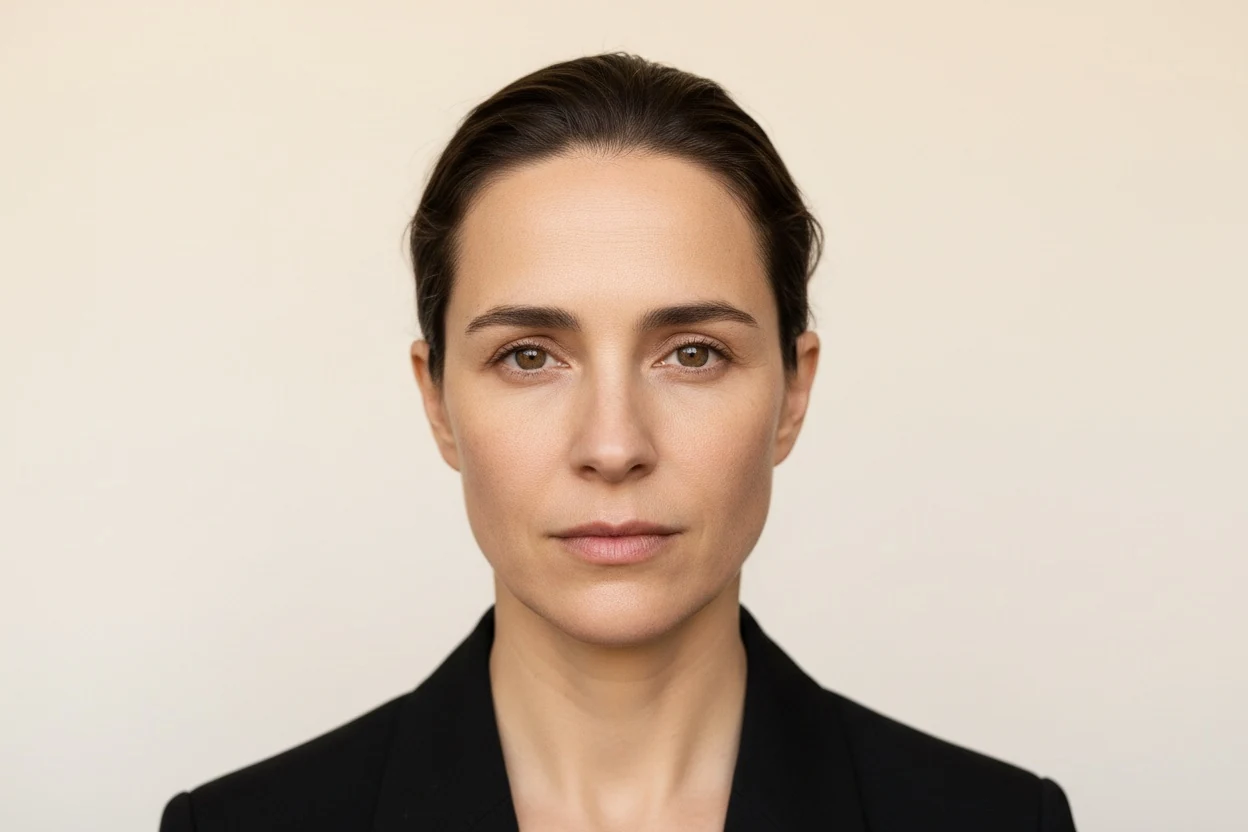
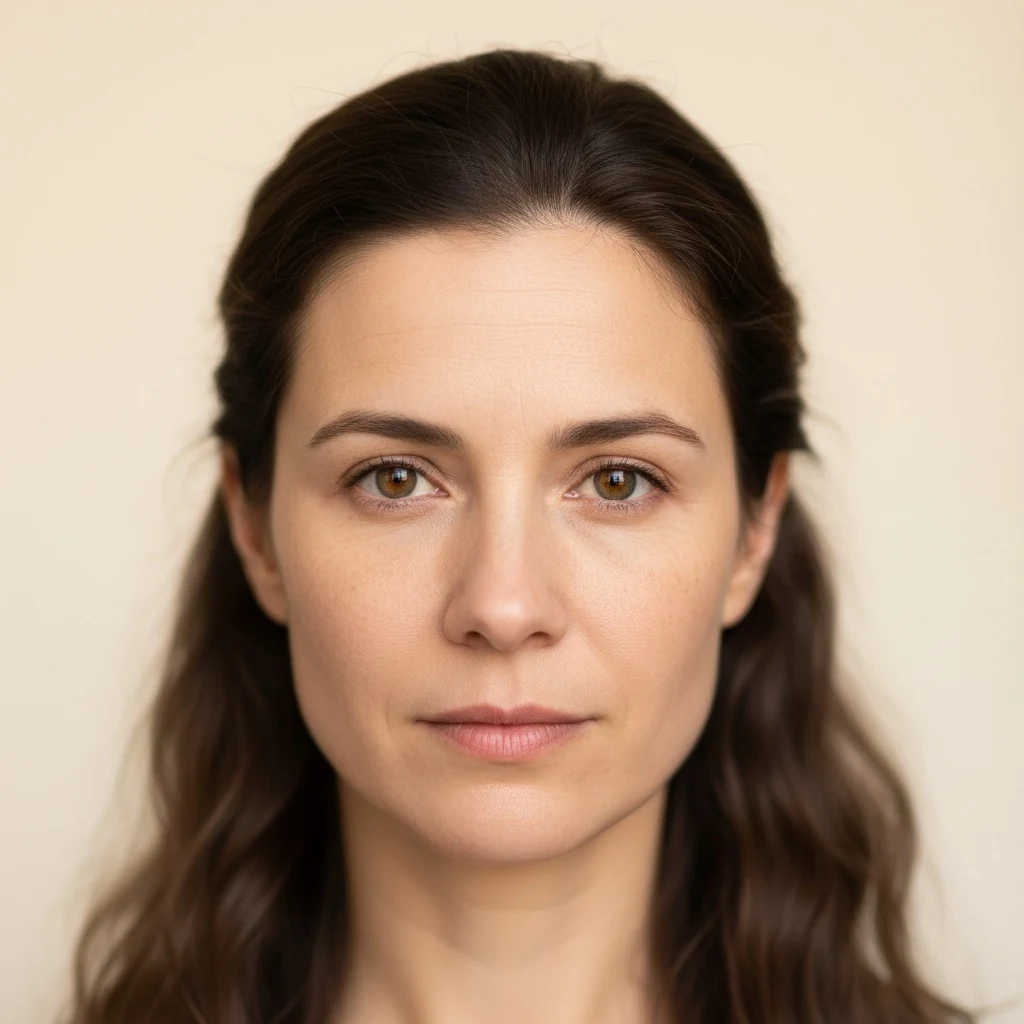
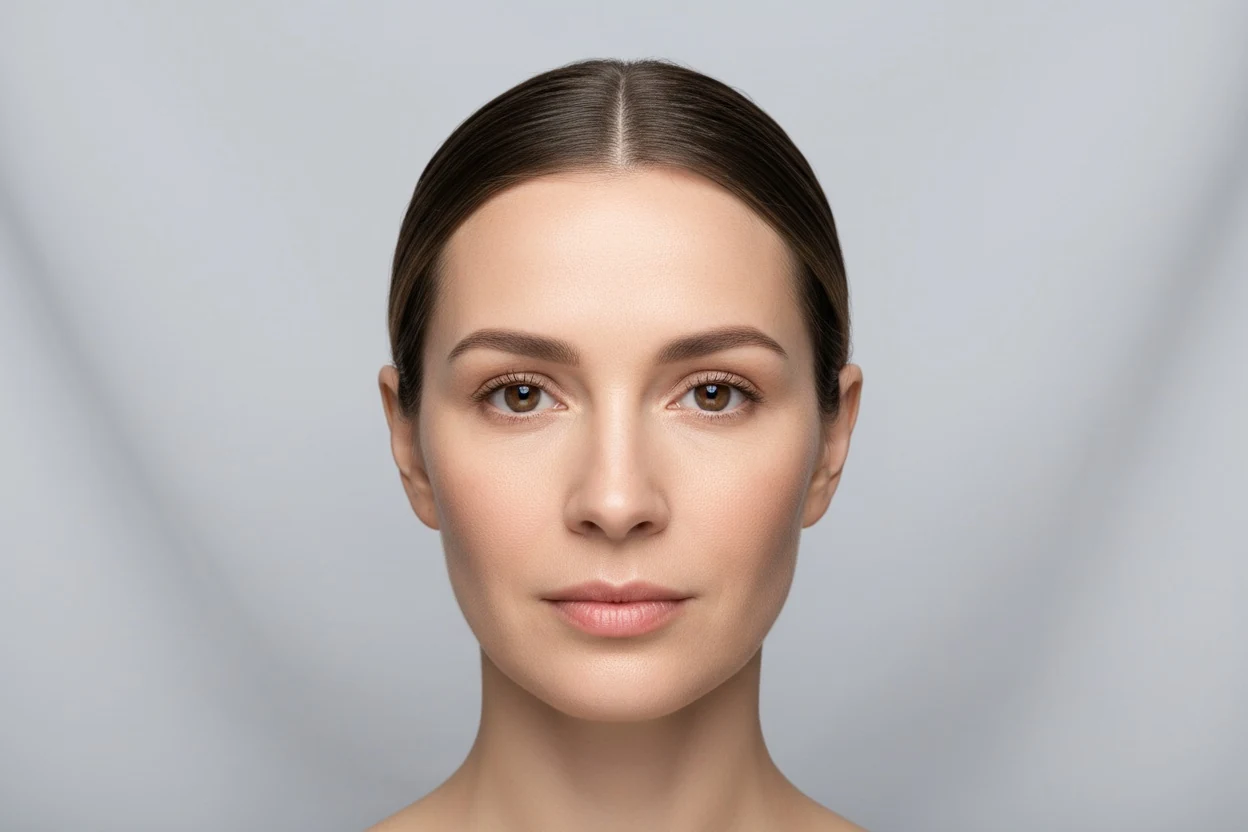
All 100 faces are AI-generated head-and-shoulders portraits in the same studio set-up, so your taps respond to the face rather than the lighting or the background. Each was generated to look clearly adult, and none shows a real person.
The set is deliberately diverse, but the model does not read heritage or skin tone, and the result never names them. Turning heritage into a “type” quickly becomes a ranking of groups of people, and that is not something this quiz should hand back to you.
Two features are measured rather than described: face width (the facial width-to-height ratio) and lip fullness. They come from the same 478-point face mesh our measuring tools use, sorted into the top and bottom thirds within women and within men. Both are left out on faces with a big open smile: smiling stretches the lips and lifts the upper lip, which would make the face read wider than it is.
Jaw width was measured too, and left out. AI image generators draw nearly the same jaw on every face: across the set, the top and bottom thirds differ by about 3%, which is within measurement noise and too small to see. Reporting “you go for strong jaws” from that would be inventing a finding.
How accurate is a find your type quiz?
The consistency figure is the honest answer for your own result. It holds each grid out in turn, trains on the others, and checks whether the faces you liked in the held-out grid rank above the ones you skipped. Around 50% means your taps follow no pattern the model can see; 70% and above means a clear one.
Two limits are worth knowing. The set is small, 50 faces per group, so a feature that appears on only a handful of faces is not reported. And the model is linear: it can learn “beards” and “smiles”, but not “beards, but only with short hair”. Both make the quiz cautious rather than wrong, and the result says so when no single feature stands out.
Find your type with a friend and compare
Share and compare creates a link that carries your taps, not a photo or a name. Your friend sees your type card first, then takes the quiz; at the end they see how much of your type they share, as a percentage.
There is no account and no server copy: the taps are encoded in the part of the link after the # sign, which browsers never send to a website. Whoever has the link can see the type; nobody else can.
Find Your Type: Which Faces Are You Attracted To? — frequently asked questions
What is my type, and can a test really find it?
Your type is the pattern behind the faces you stop at. Most people cannot put it into words, but their taps are consistent enough to learn from. This quiz fits a small model to your taps and names the features that predict them. It describes your taps, not you.
How does the find your type quiz work?
You see grids of 12 AI-generated faces and tap the ones you find attractive. The model learns from both the faces you tapped and the ones you skipped, picks half of the next grid from faces it expects you to like, and names your type after 3 grids or more.
Are the faces real people?
No. Every face is AI-generated and shows no real person; any resemblance is coincidental. They were generated as adult studio portraits so your taps measure the face, not the photo.
Do I need to upload a photo or make an account?
No. The quiz only needs taps. No sign-up, no email and no photo of you. Your taps stay in the browser tab and are gone when you close it, unless you create a share link.
How many faces do I need to tap before I get a result?
You can see a first result after 3 grids of 12 faces. The result gets steadier the more grids you finish; each group has 50 faces, and you can go through all of them in about two minutes.
What does the consistency figure mean?
It is how often the model, trained on your other grids, ranks a face you liked above a face you skipped in a grid it did not see. 50% is a coin toss. Higher means your taps follow a clear pattern.
Does it work if I like women, men or both?
Yes. Choose women, men or everyone before you start. With everyone, the result can also tell you which way your taps lean.
Why is my type different from what I would have said?
Because the quiz learns from what you tap, not from what you say. People say brunette and tap blondes, or say tall and dark and tap every warm smile. If a result looks off after only 3 grids, keep tapping: early reads are provisional.
Is this a what is my type quiz with pictures?
Yes. Most type quizzes ask questions and give your answers back as a type. This one shows faces and learns from your taps, so it can find patterns you would not have described, such as glasses, a beard or a big open smile.
Is this a who am I attracted to test?
Yes, for faces. It shows which facial features you are drawn to and which you pass over. It says nothing about personality, and nothing about who is attractive in general.
Is this the my type test going round on X and TikTok?
It is the same kind of test: pictures, taps and a named type. This version uses AI faces only, needs no account, keeps your taps in your browser and shows a first result after 3 grids.
Does the result include race or ethnicity?
No. The faces are diverse, but heritage and skin tone are not features the model can see, so the result never names them. It reads hair, eyes, glasses, facial hair, makeup, expression and two measured face proportions.
Is this test suitable for everyone?
It is for adults only; you confirm you are 18 or older before the first grid. The faces are generated to look clearly adult.
What happens to my taps?
They stay in your browser tab. The site's analytics count how many grids were completed and how many faces were tapped in each, never which faces. If you create a share link, the taps are encoded in the link itself and nowhere else.
Can I find out what my own face type is?
Yes, with a different tool. The face shape detector measures your own photo with the same 478-point face mesh and tells you which of seven face shapes you are, in your browser.
References
- 1.Hönekopp, J. (2006). Once more: is beauty in the eye of the beholder? Relative contributions of private and shared taste to judgments of facial attractiveness. Journal of Experimental Psychology: Human Perception and Performance, 32(2), 199–209. doi:10.1037/0096-1523.32.2.199. PMID 16634665.
- 2.Germine, L., Russell, R., Bronstad, P. M., Blokland, G. A. M., Smoller, J. W., Kwok, H., Anthony, S. E., Nakayama, K., Rhodes, G., & Wilmer, J. B. (2015). Individual aesthetic preferences for faces are shaped mostly by environments, not genes. Current Biology, 25(20), 2684–2689. doi:10.1016/j.cub.2015.08.048.
- 3.Langlois, J. H., & Roggman, L. A. (1990). Attractive faces are only average. Psychological Science, 1(2), 115–121. doi:10.1111/j.1467-9280.1990.tb00079.x.
Other free face analysis tools
Every tool below runs from the same photo. For all of them at once, start with the free AI face analysis.