Philtrum
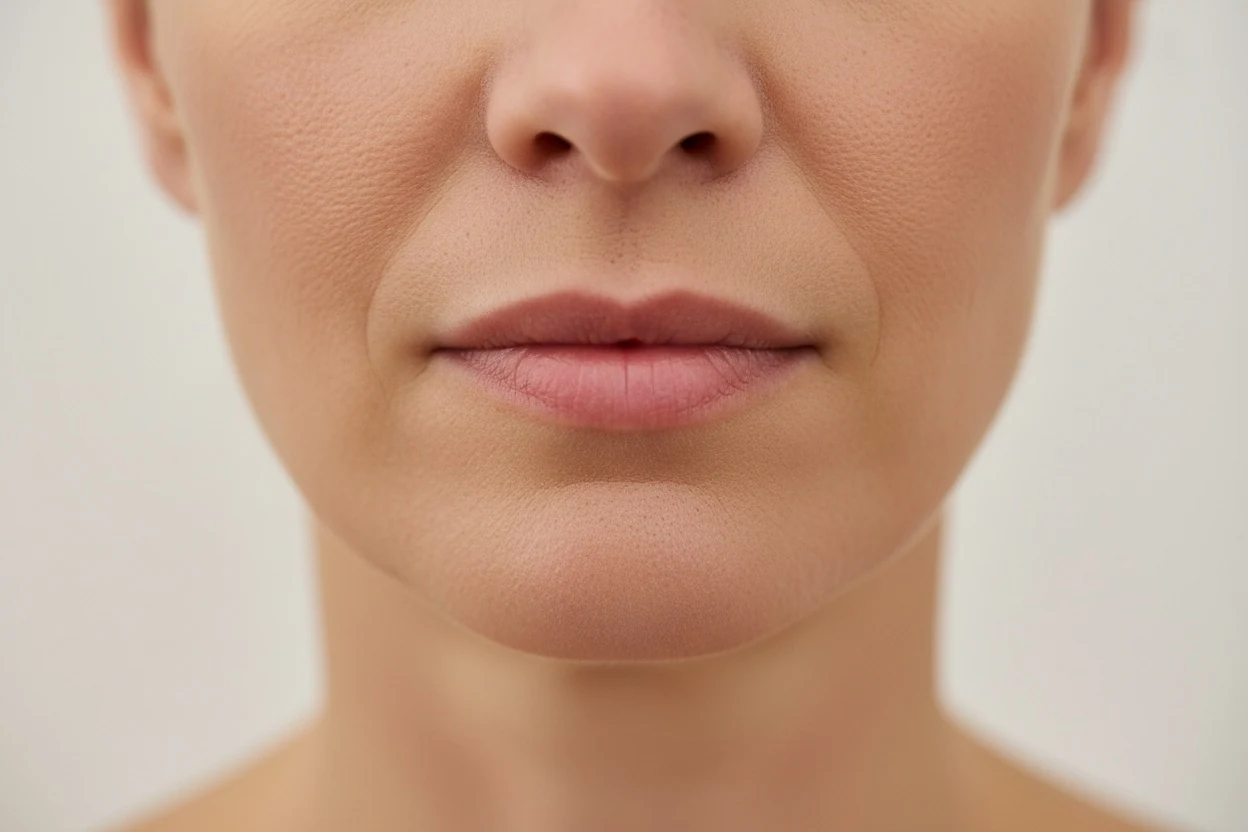
The philtrum is the vertical groove between the base of the nose and the middle of the upper lip, bounded by two raised ridges called the philtral columns. This test measures its length against the height of the upper lip: 3× or more reads as long, 1.8× or less as short. It forms when the facial processes fuse in early development, which is why its shape is also used as a developmental marker.
- ≥ 3×
- long
- ≤ 1.8×
- short
- Ratio
- not millimetres
- Free
- photo not uploaded
 Example
Choose your own photo
Measure your philtrum and lip proportions.
Choose your own photoClick to choose a photo, or drop one here
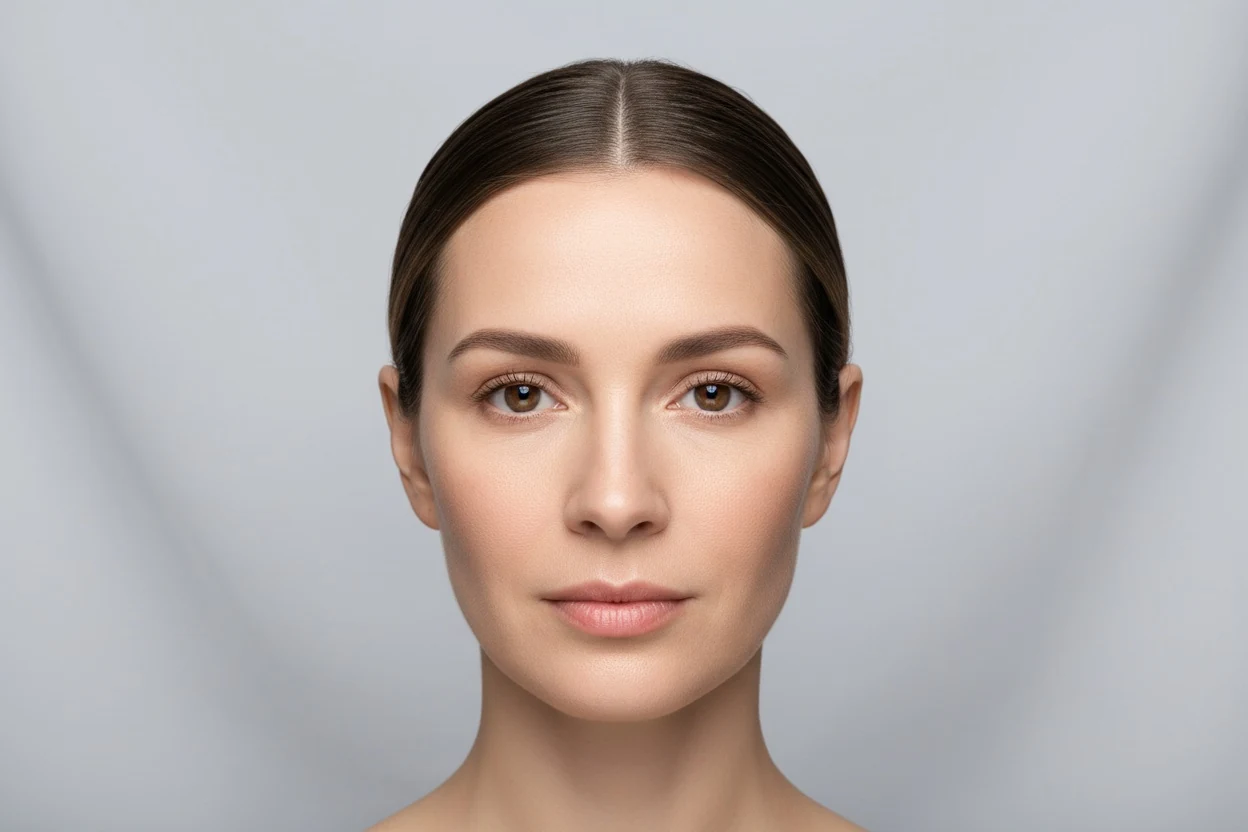
Front-facing · Even lightingStraight-on, even lighting, at arm's length gives the most comparable reading.
Runs in your browser. Your photo is not uploaded.
What is the philtrum?
- The philtral columns end at the two peaks of the Cupid's bow.
- The philtrum lengthens gradually through adult life as the upper lip descends.
- A smooth philtrum with no visible groove is one of the recognised facial features in fetal alcohol spectrum disorder assessment.
- A lip lift shortens the philtrum surgically; filler and makeup do not change its length.
See what a change would actually look like
These are the renders that act on what this page measures. Each one below was generated by the same model that runs on your own photo — labelled examples on another face, so you can see what the procedure changes before you spend anything.
Lip Lift
Lip Lift · AI example
Lip Lift. A different possibility.
Tap the photo to enlarge. AI visualisation, not a prediction. Both images are AI generated.
Changes the distance between your nose and upper lip.
What it does →Corner Lip Lift
Corner Lip Lift · AI example
Corner Lip Lift. A different possibility.
Tap the photo to enlarge. AI visualisation, not a prediction. Both images are AI generated.
Changes the upward angle of your mouth corners.
What it does →Lip Filler
Lip Filler · AI example
Lip Filler. A different possibility.
Tap the photo to enlarge. AI visualisation, not a prediction. Both images are AI generated.
Changes the volume and shape of your lips.
What it does →
Every “after” above is an AI simulation on a sample face, not a photograph of a surgical result — it shows the direction a procedure moves a face, not an outcome anyone achieved and not a prediction of yours. Where a frame reads “Before · AI example”, the before image is generated too: the same portrait with the condition that procedure treats added, because none of the source photographs had it. Run one on your own photo.
What the philtrum is for, and why it exists
The philtrum is the vertical channel between the base of your nose and your upper lip, framed by two raised ridges — the philtral columns — that end at the peaks of your Cupid's bow. In most mammals the groove carries moisture from the nose to the mouth and matters for the sense of smell. In humans it has no known function; it is a leftover of how the face assembles itself.
That assembly is the reason the philtrum turns up in medicine as often as in aesthetics. It forms early in development, where the two halves of the upper lip fuse in the midline, and its shape ends up recording something about that process.
How philtrum length is measured
Clinically it is measured in millimetres, from the subnasale — the point where the base of the nose meets the upper lip — down to the top of the vermilion border. Published averages sit in the region of 11 to 15 mm depending on sex and population, and the variation between populations is substantial enough that a single number is not very informative.
This tool reports a ratio instead: philtrum length against the height of the upper lip's vermilion. That is deliberate. A photograph contains no scale, so any millimetre figure produced from one would be a guess dressed up as a measurement. The ratio is scale-free and is close to what surgeons actually look at when assessing a lip lift.
Long philtrum: what it means and what changes it
A long philtrum means more distance between the nose and the vermilion border, which shows less upper lip at rest and can make the mouth read as further from the nose. It is a normal variation, it is heritable, and it lengthens in everyone over decades as the upper lip gradually descends.
One procedure changes it: a lip lift removes a strip of skin under the nose and raises the upper lip, shortening the philtrum and rolling more vermilion into view. Filler does not shorten a philtrum — filler adds volume to the lip, which is a different thing and sometimes makes the philtrum look longer by comparison. Makeup can only change where the lip border appears to be, by a very small amount.
Short philtrum, and why the ratio matters more than the length
A short philtrum shows more upper lip vermilion at rest and places the mouth closer to the nose. It is searched far less than the long version, largely because current aesthetic fashion runs toward it.
The reason a bare length is not very useful is that the same philtrum reads completely differently against a full upper lip and a thin one. That is why the measurement here is a ratio against vermilion height rather than a raw distance — and why a lip lift consultation looks at both numbers rather than one.
When philtrum shape is a medical question
One philtrum finding is not cosmetic. A philtrum that is smooth — with no visible groove and no defined columns — is one of three facial features used in the assessment of fetal alcohol spectrum disorder, alongside a thin upper lip and short palpebral fissures. Clinicians assess it against a standardised photographic guide, not from a selfie and not from a tool like this one.
A smooth philtrum on its own does not mean anything by itself; it is a normal variation in plenty of people and the assessment is a clinical one involving history and other findings. But it is the reason this page exists in a medical vocabulary at all, and leaving it out to keep the page purely cosmetic would be a real omission.
Separately, a philtrum that has changed in appearance — rather than one that has always looked a particular way — is worth mentioning to a doctor, as facial nerve function affects the muscles around the mouth.
Tips for an accurate philtrum measurement
- Relax your mouth completely. Any expression moves the upper lip and changes the ratio.
- Chin level and camera at eye height — tilting the head foreshortens the distance between nose and lip.
- No lipstick or liner, which shift the vermilion border the measurement depends on.
- Even, flat lighting so the philtral columns are visible rather than shadowed.
Philtrum — frequently asked questions
What is the average philtrum length?
Published figures sit around 11 to 15 mm depending on sex and population, with substantial variation between populations. This tool reports a ratio instead, because a photo has no millimetre scale.
What causes a long philtrum?
Mostly heredity. It also lengthens gradually with age in everyone as the upper lip descends.
How do you shorten a philtrum?
A lip lift removes a strip of skin beneath the nose and raises the upper lip. It is the only thing that shortens the distance; filler adds lip volume without changing it.
Does a smooth philtrum mean something?
On its own, no — it is a normal variation. It is also one of three facial features used in fetal alcohol spectrum disorder assessment, which is a clinical evaluation involving history and other findings, done against a standardised guide rather than from a photo.
Why do humans have a philtrum?
In humans, nothing known. In most mammals the groove carries moisture from the nose to the mouth and supports the sense of smell.