Jawline Rating Test
From one front photo it measures bigonial width against bizygomatic width (wide from 0.92, narrow at 0.78 or below), the taper from jaw to chin, and how evenly the two jaw corners sit around your midline, plus the jaw angle as it projects onto the front of the face. The projected angle is not the gonial angle, which sits between the ramus and the body of the mandible and is read from the side, on a radiograph.
- 0.78–0.92
- average jaw-to-cheek
- 4
- measurements
- Free
- photo not uploaded
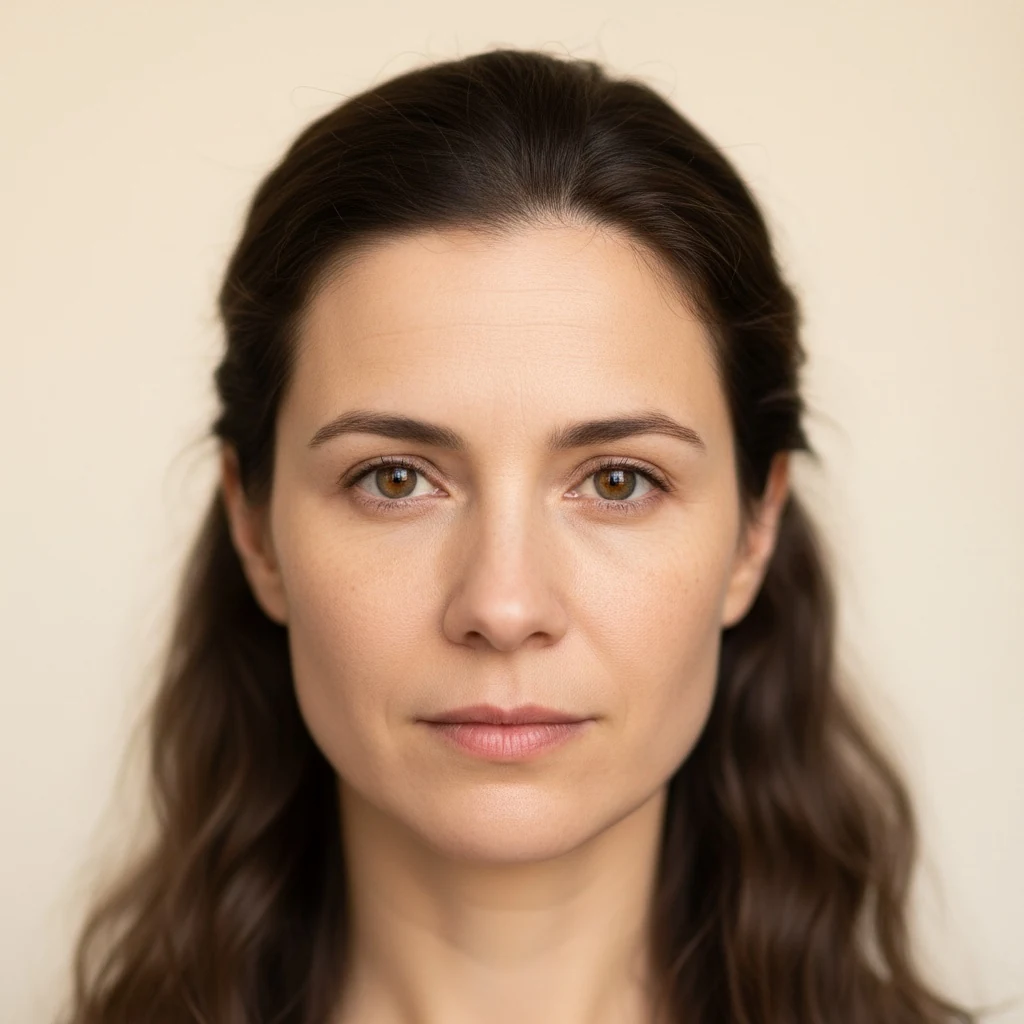 Example
Choose your own photo
Explore your jawline shape and proportions.
Choose your own photoClick to choose a photo, or drop one here
Front-facing · Even lightingStraight-on, even lighting, at arm's length gives the most comparable reading.
Runs in your browser. Your photo is not uploaded.
What does a jawline rating measure?
- The gonial angle is read from a lateral cephalogram in orthodontics, not from a photograph.
- The same jaw reads wider from the front than from the side: an online survey put the preferred female jaw angle at 125.5 degrees in profile and 142 degrees in front view.
- Bigonial width — the distance between the two jaw corners — is a standard anthropometric measure and does read from the front.
- Soft tissue over the jaw varies with body fat, so two people with identical bone can have visibly different jawlines.
See what a change would actually look like
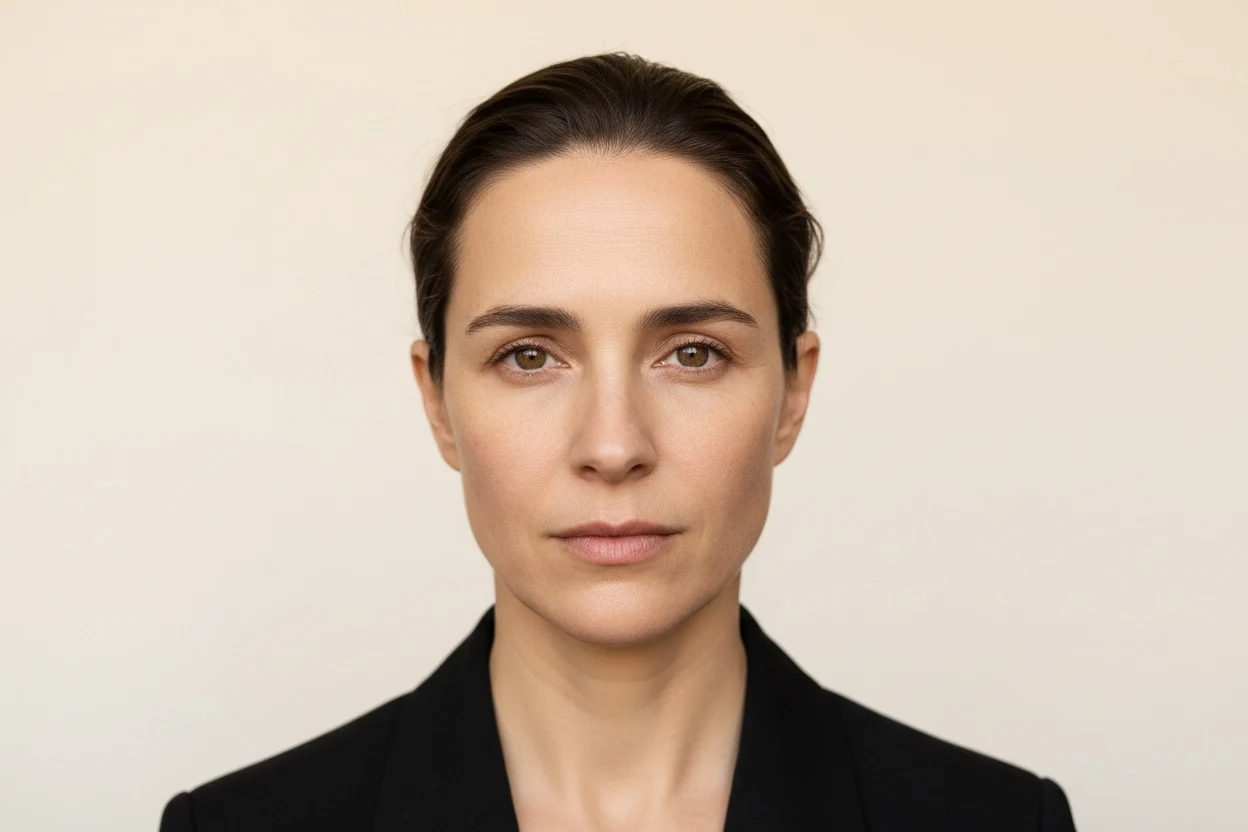
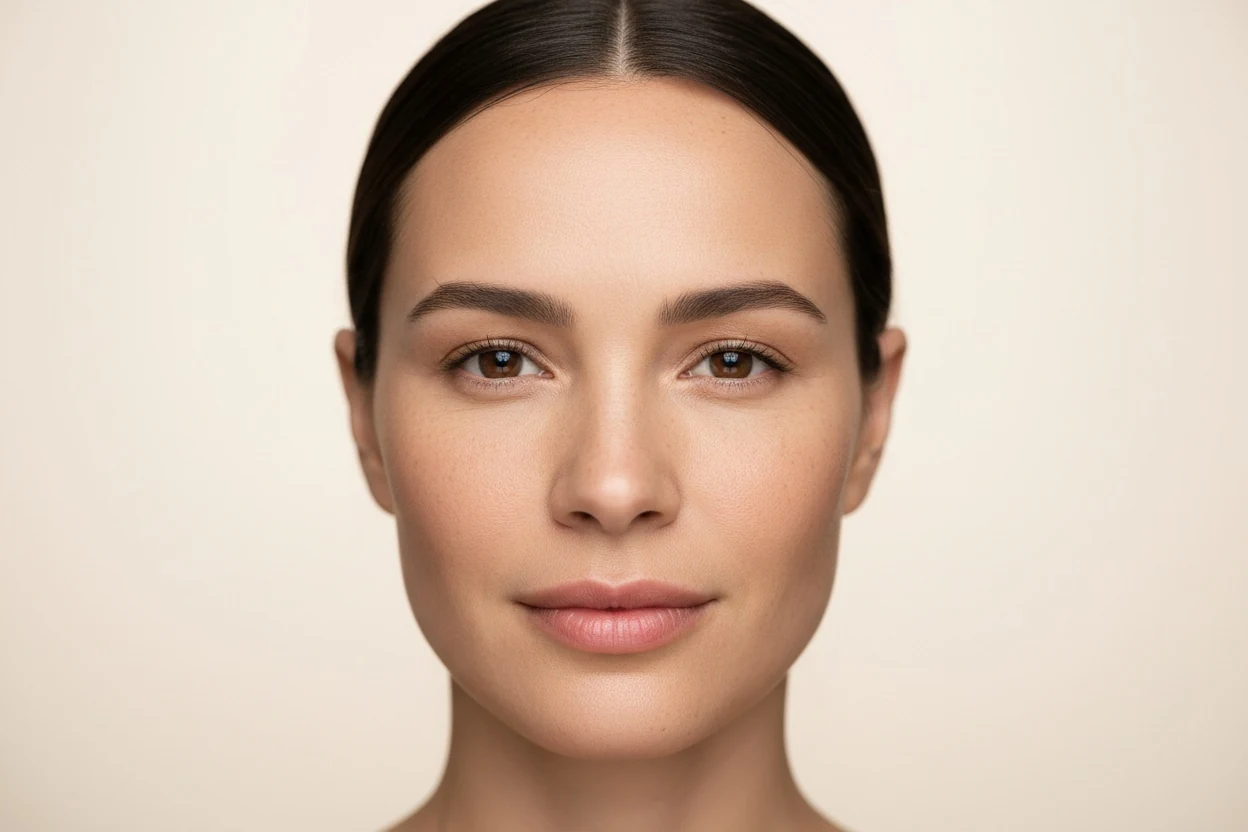
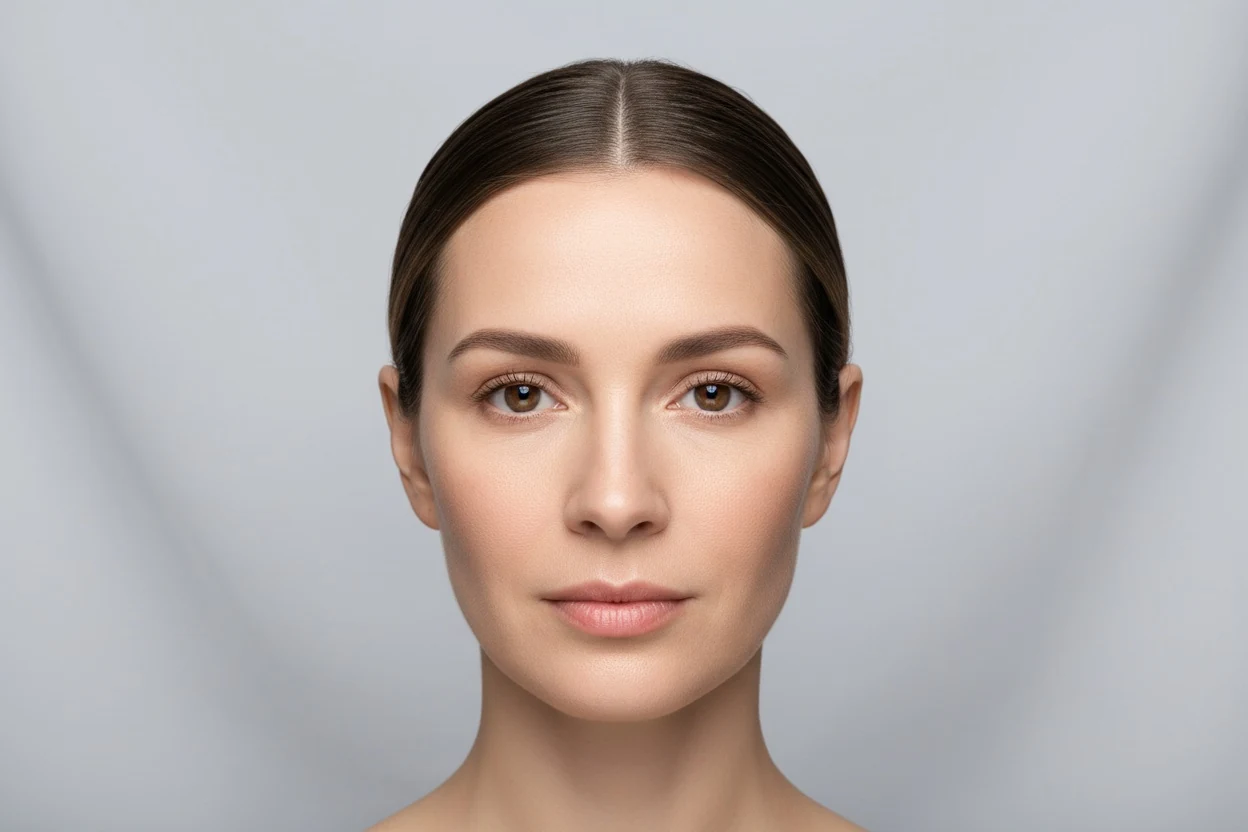
These are the renders that act on what this page measures. Each one below was generated by the same model that runs on your own photo — labelled examples on another face, so you can see what the procedure changes before you spend anything.
Jawline Filler
Jawline Filler · AI example
Jawline Filler. A different possibility.
Tap the photo to enlarge. AI visualisation, not a prediction.
Changes definition along your jaw.
What it does →Masseter Botox
Masseter Botox · AI example
Masseter Botox. A different possibility.
Tap the photo to enlarge. AI visualisation, not a prediction. Both images are AI generated.
Changes the width of your lower face at the masseter.
What it does →Chin Augmentation
Chin Augmentation · AI example
Chin Augmentation. A different possibility.
Tap the photo to enlarge. AI visualisation, not a prediction. Both images are AI generated.
Changes chin projection and length.
What it does →
Every “after” above is an AI simulation on a sample face, not a photograph of a surgical result — it shows the direction a procedure moves a face, not an outcome anyone achieved and not a prediction of yours. Where a frame reads “Before · AI example”, the before image is generated too: the same portrait with the condition that procedure treats added, because none of the source photographs had it. Run one on your own photo.
How this jawline rating is measured
Four numbers come out of your photo. The first is bigonial width against bizygomatic width — the distance between your two jaw corners divided by the distance across the widest part of your face. This is a standard anthropometric ratio and the single most useful thing a front photo gives you about a jaw, because both endpoints sit on the same plane as the camera.
The second is the taper: your chin width divided by your jaw width, which separates a V-shaped lower face from a square one. The third is asymmetry, the difference between how far each jaw corner sits from your facial midline. The fourth is the jaw angle as it projects onto the front plane — useful, comparable between your own photos, and not the same thing as a gonial angle. The rating combines the angle and the width ratio, weighted toward the angle, because visible corner definition is what people mean when they say a jaw is sharp.
Why a photo cannot give you a true gonial angle
The gonial angle is the angle between the ascending ramus of the mandible — the vertical part that runs up to the joint in front of your ear — and the body of the mandible, the horizontal part that carries your teeth. Both of those live in a plane that runs front to back through your head. A camera pointed at your face records the plane at right angles to that one, so the angle it can see is a projection: the shadow of the real angle cast onto the front of your face.
Projections are not stable. Turn your head five degrees and the projected angle changes, while the real one obviously does not. Raise the camera and it changes again. That is why the number this page reports is labelled a projected jaw angle and reported for each side separately — if the two sides differ by more than a few degrees, your head was turned, and the reading is telling you about your pose rather than your mandible. The real measurement is taken from a lateral cephalogram, a side-on radiograph, and any tool offering you a gonial angle from a selfie is quoting a projection under a borrowed name.
Typical values, what the jaw-angle surveys found and how to estimate yours from a side photo are in the gonial angle guide.
Jaw width against cheekbones: the measurement that does work
Bigonial width divided by bizygomatic width is the number worth reading, and it needs no depth. It describes whether your jaw carries the width of your face down past the cheekbones or falls away beneath them. Values around 0.78 to 0.92 read as a jaw that follows through; below that the lower face narrows sharply, and above it the jaw is as wide as the cheekbones and the corner stops reading as a corner at all.
This is also the number that changes with the procedures people search for. Masseter botox reduces the muscle bulk at the jaw corner and lowers the ratio. Jaw or chin filler raises it, as does a genioplasty at the front. Nothing about the ratio is a verdict — wide, average and narrow jaws are all common and all normal — but it is the measurement a consultation will start from, and having your own number before you walk in is worth more than a rating out of ten.
Does mewing change your gonial angle?
Not measurably in an adult, and this is the honest answer rather than the popular one. Mewing describes holding the tongue against the palate with the lips closed. In growing children, tongue and lip posture genuinely influences how the jaws develop — this is uncontroversial in orthodontics and is the basis of myofunctional therapy. After the growth plates close, the mandible is bone, and posture does not remodel bone shape on the timescale the internet claims.
What can change in an adult is everything sitting on top of the bone. Body fat over the jaw and under the chin changes the visible line substantially. Masseter size responds to heavy clenching and grinding. Fluid retention moves the jawline within a single day. A person who starts mewing and also loses weight, sleeps better and stops clenching will see a different jawline in the mirror, and will reasonably attribute it to the tongue. If you want to test it, measure with this tool from the same distance and the same light on two dates and compare the width ratio, which does not depend on your pose the way the angle does.
What changes a jawline measurement
The answers divide cleanly into three, and confusing them is why the advice online contradicts itself. Body composition is the largest lever for most people: subcutaneous fat over the jaw and in the submental area sits directly on the line you are trying to see, and it responds to the ordinary things. Muscle is the second: the masseter can be reduced with botox or enlarged by clenching, and which direction you want depends on whether your ratio reads wide or narrow.
Bone is the third and only surgery moves it — genioplasty, jaw reduction at the angle, or orthognathic surgery when the bite is involved. Chewing gum, jaw exercisers and facial massage are sold as the second category and marketed in the language of the third — and in a six-month randomised trial, chewing gum three times a day raised bite force but did not change masseter thickness or jaw shape. If your measurement reads narrow, adding definition is a matter of adding structure rather than removing anything, which is the opposite of what most jawline advice assumes.
Which of those layers is hiding your jawline, what jawline exercises were actually tested for, and what each option changes is covered in how to get a sharper jawline.
A defined jawline is not always bone
Two people can produce the same jawline rating on this page for entirely different reasons: one with a low mandibular angle and ordinary soft tissue, one with a wider angle and very little of it. From the front they read the same. From the side they do not, and neither do the procedures that would change them.
This is the honest limit of measuring a jaw from a photograph, and it is why the result card lists the submental angle — the line from under the chin to the neck — as something not measured. That line is what most people are actually looking at when they judge a jawline as sharp, and no front-facing photograph contains it.
Tips for an accurate jawline measurement
- Face the camera square on. Rotation is the single biggest source of error here — check that the left and right angles in your result come out within a couple of degrees of each other.
- Camera at eye level, roughly arm's length. A low camera exaggerates the jaw and a high one erases it, and phone cameras held close distort the lower face more than the upper.
- Chin level and mouth closed, teeth together but not clenched. Clenching bulks the masseter and widens the reading.
- Even light from the front. Side lighting throws a shadow along the jaw that the model may follow instead of the actual contour.
Jawline Rating Test — frequently asked questions
Is the jaw angle on this page a gonial angle?
No. The gonial angle is measured from the side, usually on a radiograph; in one study of 78 young orthodontic patients it averaged about 126 to 127 degrees. The angle a front photo shows at the jaw corner is a projection and runs wider — in an online survey of jaw angles, the preferred female angle was 125.5 degrees in profile but 142 degrees seen from the front. Compare the projected figure only with your own earlier photos.
Can I measure my gonial angle at home?
Not the real one. You can measure the projection from a front photo, which is what this tool does, or take a strict side profile and estimate from it — the side estimate is closer to the true angle but still depends on where you place the jaw corner, which is easy to see on a radiograph and hard to see on skin.
Why do my left and right jaw angles differ?
Usually head rotation rather than facial asymmetry. A few degrees of turn shows up as several degrees of difference between the two sides. If the gap stays after a straight-on retake, look at the left-against-right figure instead, which compares each jaw corner against your own midline.
Does chewing gum give you a better jawline?
The best test so far says no. In a randomised trial at Yonsei University, adults who chewed gum three times a day for six months gained bite force, but their masseter thickness and jaw shape did not change compared with a control group (Jung et al., Journal of Oral Rehabilitation, 2024). Heavy clenching and grinding are a different load and can enlarge the muscle, which widens rather than sharpens the jaw corner.
What is bigonial width?
The straight-line distance between the two gonions, the bony corners where the jaw turns upward toward the ear. It is a standard anthropometric measurement, and unlike the gonial angle it reads accurately from a front photograph.
Does the jawline change with age?
Yes, in both layers. A CT study of 120 adults with their teeth found the mandibular angle widened and the ramus and jaw body shortened with age, and tooth loss opens the angle further — by about 4 degrees in one study of 498 mandibles. The soft tissue over the jaw also descends, which is the more visible change and the one most jawline treatments address.
References
- 1.Farkas, L. G. (1994). Anthropometry of the Head and Face (2nd ed.). Raven Press.
- 2.Proffit, W. R., Fields, H. W., Larson, B. E., & Sarver, D. M. (2019). Contemporary Orthodontics (6th ed.). Elsevier.
- 3.Jung, H. J., Hwangbo, N. K., Park, Y., & Ahn, H. J. (2024). Effects of gum chewing training on occlusal force, masseter muscle thickness and mandibular shape: a randomised controlled clinical trial. Journal of Oral Rehabilitation, 51(12), 2529–2536. PMID 39215439.
- 4.Popa, A., Stăncioiu, A. A., Motofelea, A. C., Câlniceanu, H., Catalina, A., Galuscan, A., Oancea, R., Luca, M. M., Nikolajevic-Stoican, A. N., Brad, S., & Szuhanek, C. (2025). Digital orthodontic assessment of mandibular morphology using orthopantomograms: correlation and symmetry analysis of bilateral gonial angles, bigonial width, and bilateral ramus heights. Journal of Clinical Medicine, 14(22), 8099. PMID 41303135.
- 5.Mommaerts, M. Y., & Cleymaet, R. (2023). The ideal shape of the female jaw angle: an online survey. Journal of Cranio-Maxillo-Facial Surgery, 51(10), 597–602. PMID 37813771.
- 6.Hutchinson, E. F., Farella, M., & Kramer, B. (2015). Importance of teeth in maintaining the morphology of the adult mandible in humans. European Journal of Oral Sciences, 123(5), 341–349. PMID 26287722.
- 7.Rhodes, G. (2006). The evolutionary psychology of facial beauty. Annual Review of Psychology, 57, 199–226. PMID 16318594.