Jawline Filler Before and After: What It Sharpens, on Your Own Face
Jawline filler adds definition along the jaw by building up the bone line — it does not remove fat or tighten skin. Here is where it goes, who it tends to suit, what it costs, how long it lasts and what goes wrong, plus a render of a sharper jaw on your own photo.
Jawline Filler simulator — example render


- Type
- Non-surgical, temporary
- How long it lasts
- Commonly 12–18 months
- Typical US cost
- Roughly $1,500–$3,000 for a full jawline
- Downtime
- Several days of swelling
- Upload one front-facing photo
- The render changes definition along your jaw — and leaves the rest of your face alone
- Compare your before and after side by side
1 render = 1 credit
5 credits $4.99, no subscription · or Starter $7.99/month for 10. The face analysis is free.
What does jawline filler do?
Jawline filler is an injectable — usually a firm hyaluronic acid gel, sometimes calcium hydroxylapatite — placed along the lower border of the jaw, at its angle below the ear, and where the jaw meets the chin. It makes the bone line look sharper and more continuous, and can add width at the back of the jaw.
What it does not do is remove anything. A jawline is visible through four layers — bone, muscle, fat and skin — and filler only adds to the first. That is why the same treatment looks dramatic on one face and does little on another; the sharper jawline guide walks through which layer is doing the hiding.
Where jaw filler goes: angle, border, prejowl and chin
| Placement | What it changes | Commonly aimed at |
|---|---|---|
| Jaw angle | A more defined corner below the ear; can add width | A soft or rounded jaw corner |
| Along the jaw border | A straighter, more continuous line from ear to chin | A jawline that blurs in profile |
| Prejowl area | Fills the dip in front of early jowls | An uneven line near the chin |
| Chin | Projection and length at the front | Balancing the jaw with the chin — see chin filler |
Chin and jawline filler are very often done together, because a strong jaw angle with a recessed chin can look unbalanced. The chin filler page covers the chin placement on its own.
Jawline filler before and after: what changes, and what flatters the photo
Good jawline filler before and after photos show a cleaner line from ear to chin, a more visible corner and a sharper shadow under the jaw. Very little of that needs filler to fake. Head position alone changes how much jaw a photo shows.
Who jawline filler is usually considered for
Jawline filler tends to work best where the underlying bone is modest and the tissue over it is thin. Where softness comes from other layers, adding volume underneath can make the area look fuller rather than sharper.
| What softens the jaw | Does jawline filler address it? | What is usually discussed instead |
|---|---|---|
| A small or short jaw bone | Yes — this is what it is for | Filler, or implants for a permanent change |
| Fat under the chin and along the jaw | No | Fat-reduction injections, liposuction, weight change |
| Loose skin and jowls | Only early jowls, partly | A neck lift or facelift for more laxity |
| A bulky masseter muscle | No — filler adds width | Masseter toxin, which reduces width |
Jawline filler for men, women, round faces and jowls
Jawline filler for men
Male jawline filler usually aims for a wider, squarer lower face with a sharp angle, which takes more product. Stubble and beards hide or exaggerate the line in photos, so look for clean-shaven frames in men's jawline filler before and afters.
Jawline filler for women
For women the goal is more often a smooth, tapered line from ear to chin, with definition at the angle but without much added width.
Jawline filler for a round face
A defined angle and a straighter border can make a round face read more structured. Whether a face measures round, and how wide the jaw is relative to the cheekbones, is what the face shape detector shows.
Jawline filler for jowls
Filler in front of mild jowls can straighten the line by filling the dip beside them. It does not lift heavy jowls or loose skin, and adding volume there can make the lower face look heavier.
BeforeAfter — simulatedSee a jawline filler on your own face
Run this simulationJawline filler cost: syringes and US prices
A full jawline is commonly quoted at roughly $1,500–$3,000 in the United States. The jaw is a large area that needs firm, structural product, so several syringes is normal — which is why jawline filler costs more than a lip or tear-trough treatment. The American Society of Plastic Surgeons lists an average of $715 for hyaluronic acid filler treatment across all areas, a figure a full jawline usually exceeds.
- Number of syringes — the biggest factor; a subtle angle refinement takes less than a full ear-to-chin line.
- Product — firmer hyaluronic acid gels and calcium hydroxylapatite are priced differently.
- Staging — many injectors build a jawline over two visits.
- Maintenance — top-ups roughly yearly are part of the ongoing cost.
How long does jawline filler last?
Jawline filler is commonly quoted to last twelve to eighteen months, and some products are marketed for longer. The jaw moves less than the lips, which helps. Calcium hydroxylapatite also stimulates some collagen as it breaks down, which is why it is often described as fading gradually rather than all at once.
In the United States at least one hyaluronic acid filler and one calcium hydroxylapatite filler are FDA-approved specifically for jawline definition; injectors also use other products in the area.
Jawline filler gone wrong: widening, migration and vascular risk
- Swelling, bruising and tenderness — common for several days, especially when chewing.
- A wider, heavier lower face — filler at the angle adds width by design; too much reads as bulky or square rather than sharp.
- Lumps and asymmetry — often settle; persistent ones can be adjusted or, with hyaluronic acid, dissolved.
- Migration — filler spreading from where it was placed over time, one reason injectors favor firm products and conservative volumes here.
- Vascular occlusion — rare but serious. The facial artery crosses the lower border of the jaw, and blanched, mottled skin or sudden severe pain is treated as an emergency.
Hyaluronic acid jawline filler can be dissolved with hyaluronidase; calcium hydroxylapatite cannot, which matters if you are not sure you will like the result.
Jawline filler simulator: see a sharper jaw on your own face
The jawline filler simulation sharpens and defines the jawline and chin with a clean jaw angle, keeping the rest of your face as it is. Know one thing going in: it also reduces fullness under the chin, which filler does not do. The render shows the look of a defined jaw — filler is only one of the ways to get part of it.
The gonial angle guide explains why the side view is where the jaw corner is actually measurable. The jawline rating gives you a number for jaw width against cheekbone width to compare before and after.
Measure jaw width against cheekbone width from a front photo — the ratio a jawline filler moves.
Rate your jawlineQuestions to ask your injector before jawline filler
- Is the softness along my jaw bone, fat or loose skin — and which of those will filler actually change?
- How many syringes do you expect a full jawline to take for my face, and would you stage it?
- What is your plan if the filler migrates or I dislike the width, and which product can be dissolved?
Alternatives to jawline filler



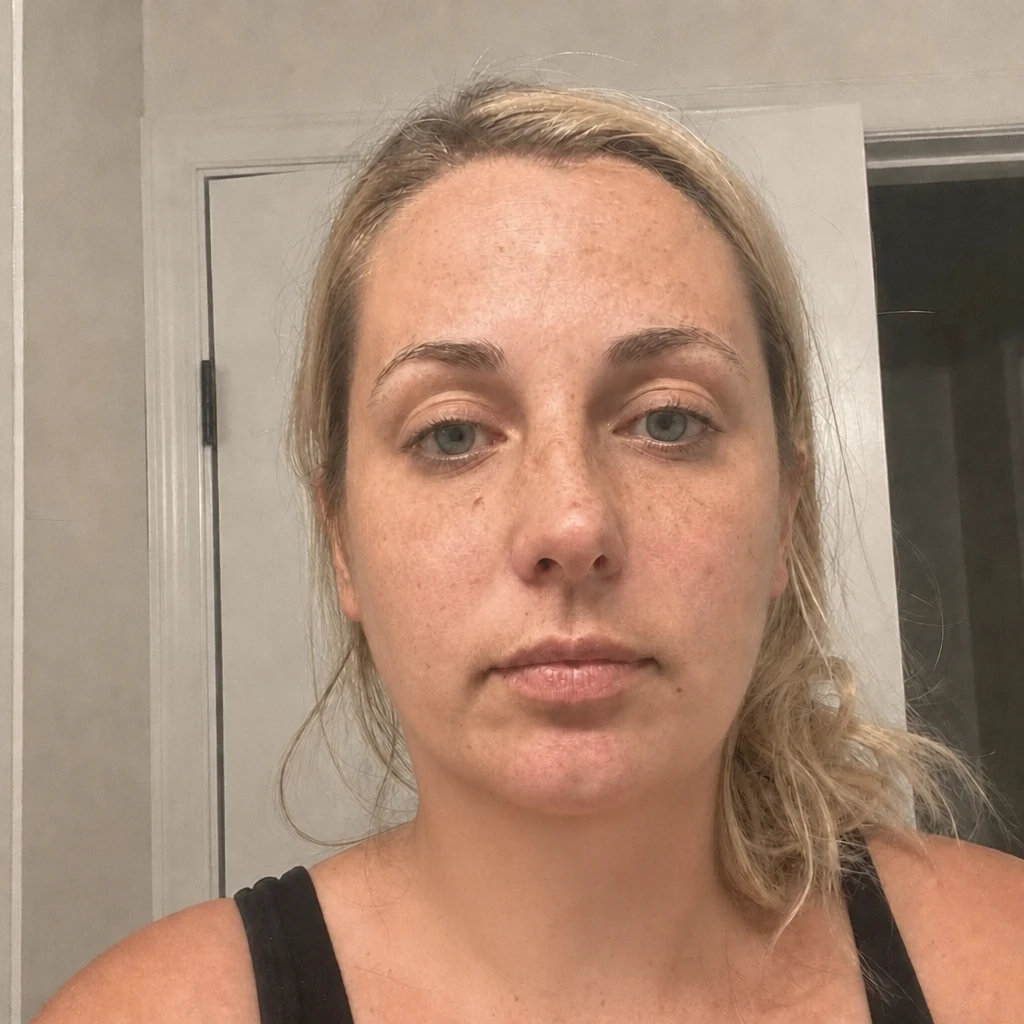


How the jawline filler simulation works
Your photo is analysed for the landmarks that matter to this procedure, and the render changes definition along your jaw while leaving the rest of your face alone. That constraint is the hard part — a generic image model will happily redraw your whole face and hand you a stranger who looks better.
The render sharpens the jaw in the frame. It cannot account for what sits over the jaw — submental fat and skin laxity limit how much definition filler can produce, and a photograph does not distinguish them from bone.
It is an illustration of a plausible direction, not a prediction of your result and not a medical opinion. What it is genuinely good for is finding out whether you want the change at all — plenty of people render one, find the difference smaller than they imagined, and stop there.
Measure your face before a jawline filler simulation
The free analysis tools measure symmetry, facial proportion and face shape, and tell you which measurements sit outside the reference range. Choosing a procedure from that is a much better starting point than choosing one from a photo you saved.



Jawline Filler simulator — frequently asked questions
Does jawline filler really work?
It works well for what it does — adding definition and structure to a jaw where the bone is modest and the tissue over it is thin. It does not remove fat or tighten skin, which is where most disappointing results come from.
Does jawline filler make your face wider?
Filler at the jaw angle adds width at the back of the lower face, which is often the intent for a squarer look. Placed mainly along the border and chin, it defines the line with less added width.
Is jawline filler painful?
Most people describe pressure and some soreness rather than sharp pain. Many fillers contain a local anesthetic, and tenderness when chewing for a few days afterwards is commonly reported.
Jawline filler or masseter botox?
They pull in opposite directions. Filler adds width and definition to the jaw; masseter botox relaxes the chewing muscle and narrows a wide, bulky lower face. Which applies depends on whether the jaw reads soft or bulky.
What is the riskiest place for fillers?
The nose and the area between the brows are most often cited as the highest-risk areas for vascular complications. The jawline is not risk-free: the facial artery crosses the jaw border, which is why depth and technique matter there.
Is the jawline filler simulator free?
The face analysis is free and needs no account. A rendered simulation costs credits because it runs on a GPU — $4.99 buys five and does not require a subscription.
How accurate is an AI jawline filler simulation?
It is an illustration of a plausible outcome, not a prediction of your result. Real outcomes depend on your anatomy, the injector and how you respond. Treat it as a conversation starter for a consultation, not a promise.
Do you keep my photo?
The free measurements never leave your browser. A simulation does send the photo to a rendering service, which is why it asks for explicit consent first, and you can delete the result from your dashboard at any time.
Can I show this to an injector?
Yes, and that is the most useful thing to do with it. Bringing a picture of the direction you want is far more precise than describing it in words.
Other jaw & chin simulations




This page is not medical advice and we are not clinicians. A simulation cannot tell you whether a procedure is appropriate for you, what it costs, or what the risks are. Those questions belong with a qualified injector.