Hairstyles for an oblong face: what shortens a long face, for women and men
·12 min read
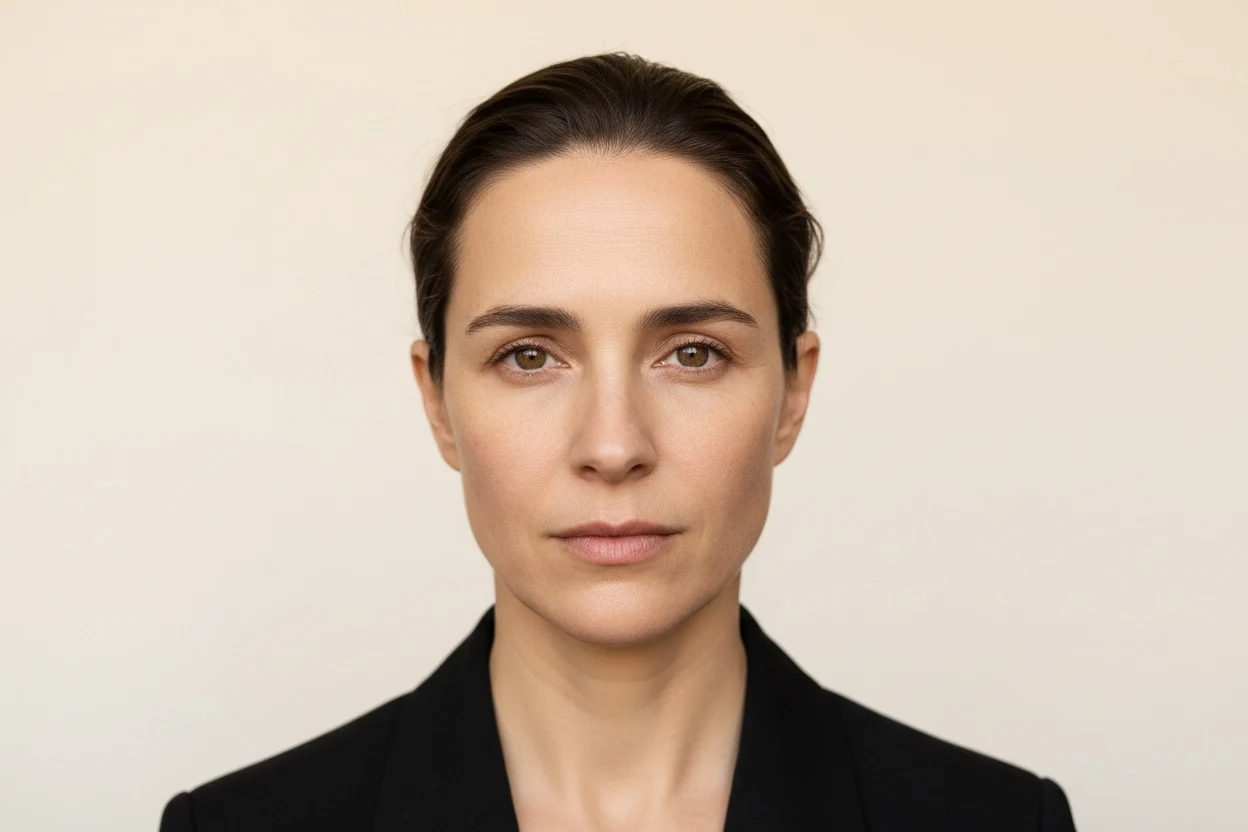
An oblong face is noticeably longer than it is wide, with the forehead, cheekbones and jaw at similar widths. Every good haircut for it does one or both of two things: hide some length and add some width. This guide explains why, how much a fringe actually changes, how oblong your face is, and then goes cut by cut for women and men — with the fade heights, textures and styles to avoid, and exactly what to ask for.
Face shape is decided by comparing your forehead, cheekbone and jaw widths with face length. One photo, in your browser, no upload.
Check if your face is oblongWhat makes a face oblong, and how oblong yours is
Two conditions make a face oblong: length clearly greater than width, and widths that stay similar from forehead to jaw. The second part matters. A face that is long but tapers to a narrow chin is closer to oval; a long face with a strong, angular jaw is sometimes called rectangular. The oblong face shape page has a mirror test with a tape measure.
Mildly vs strongly oblong
Oblong is a matter of degree, and the degree changes how much correcting a haircut needs to do. Measured with a tape from the hairline to the bottom of the chin, and across the cheekbones, the ratios below are a rough styling guide — not a clinical scale:
| Length ÷ cheekbone width (tape, from the hairline) | Reads as | How much correction | First change to try |
|---|---|---|---|
| About 1.4 to 1.5 | Long-ish, close to oval | Light | Waves or layers at cheek level |
| About 1.5 to 1.6 | Clearly oblong | Moderate | Curtain bangs or a side-swept fringe |
| Above about 1.6 | Strongly oblong | Strong | A full fringe plus side volume; no crown height |
Oblong, rectangle or long face?
"Long face" and "oblong" are used for the same thing. "Rectangle" usually means an oblong face with a squarer, more angular jaw. The haircut principle is the same for all three — width and less visible length — but a rectangular face also benefits from softness at the jaw: waves or layers that fall around the jaw line rather than a blunt edge exactly at it.
Why your hairline changes the verdict
Traditional face measurements run from the hairline, so a high forehead or a receding hairline makes the same face measure longer. That also explains why a fringe works so well on this shape: it moves the visible top of the face down. If your length is mostly forehead, a fringe is almost all you need. If it is mostly lower face, width at the jaw and a chin-length line matter more. Facial thirds measures which third of your face carries the length — though its upper third is the least reliable, for the same hairline reason.
The one rule for oblong face hairstyles: add width, hide length
How much a fringe actually shortens the face
Take an example face 21 cm from hairline to chin and 13 cm across the cheekbones: a ratio of 1.62, strongly oblong on the rough guide above. A fringe that covers the top 4 cm of forehead leaves 17 cm of visible face, a ratio of 1.31 — the same face now reads close to oval. Your numbers will differ, and nobody measures faces with a fringe down, but the arithmetic shows why stylists reach for a fringe first: it changes the one dimension that is in surplus, directly.
Where width should go
Width helps an oblong face most at the cheekbones and around the jaw — the middle and lower face. Volume at ear level and below balances length; volume on top of the head adds to it. That is why waves that start around the cheekbones, layers that begin at cheek level and a bob that bends in at the jaw all work, while height at the crown works against you however good the cut is.
Hairstyles for an oblong face: women
Fringes and bangs
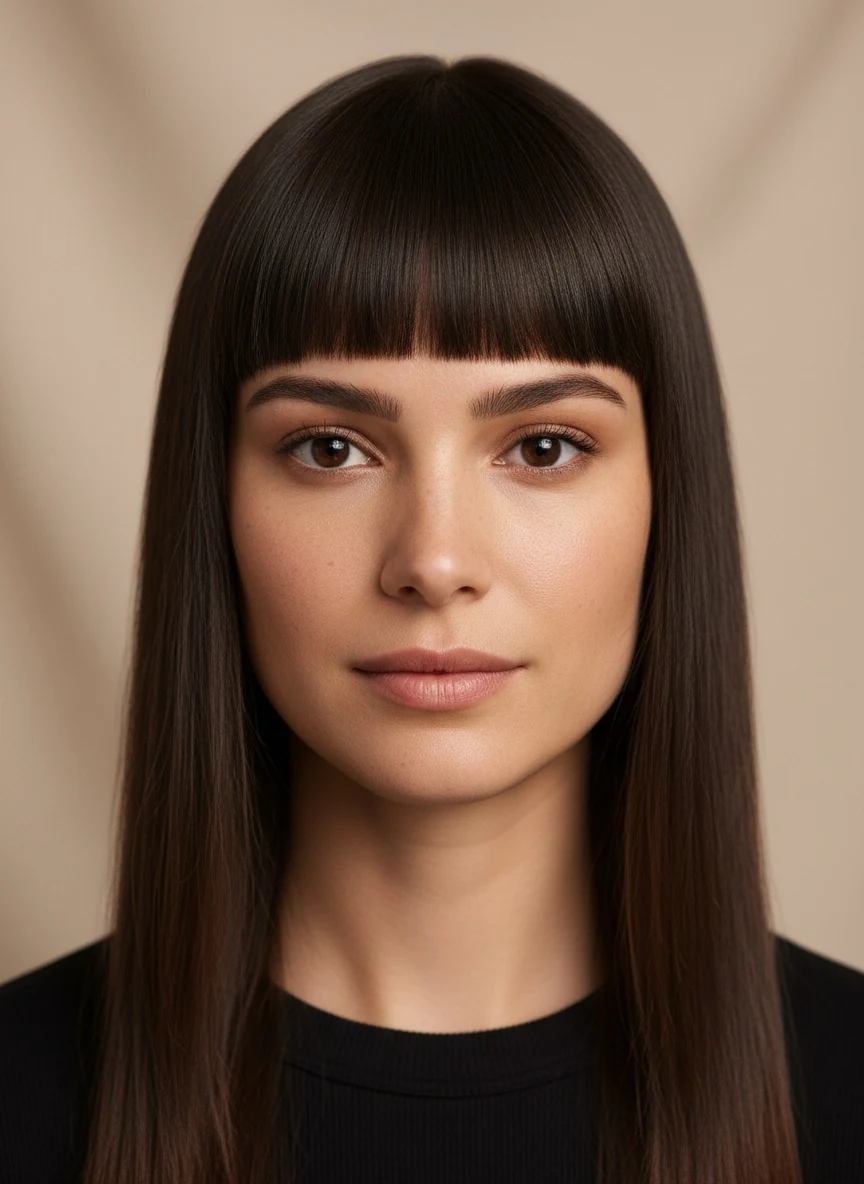
- Blunt fringe at brow level. The strongest option: a heavy, straight fringe hides the most forehead. Ask for it to sit just at or above the brows. Best on straight or smoothly blow-dried hair; high maintenance, with a trim every few weeks.
- Curtain bangs. Parted in the centre and sweeping to each side, they cover the upper forehead and, crucially, add width at the sides. The best all-round choice for a moderately oblong face.
- Side-swept fringe. A longer fringe swept to one side covers a diagonal slice of forehead and draws the eye across the face. The softest option, and the easiest to grow out.
- Wispy fringe. A light, piecey fringe covers some forehead without the commitment of a blunt one. Works well on fine hair, which a heavy fringe can overwhelm.
Short hairstyles for an oblong face
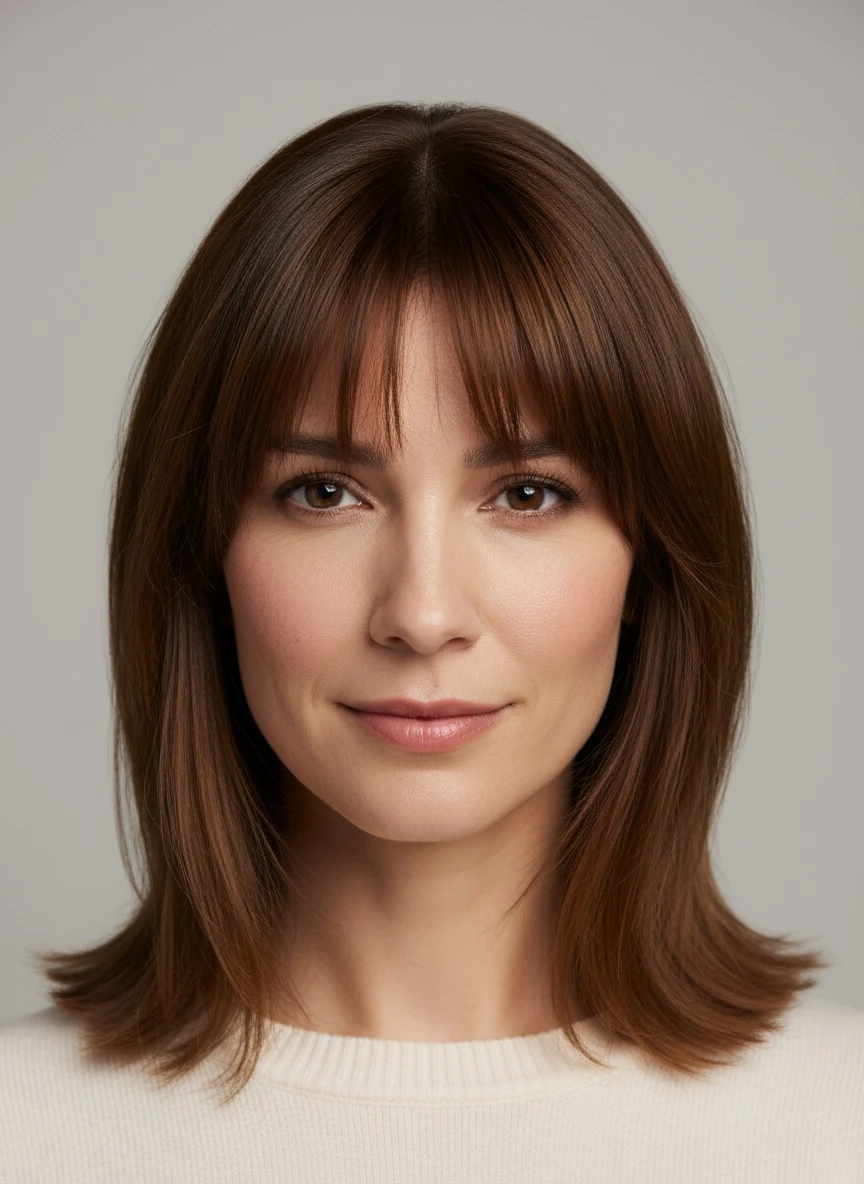
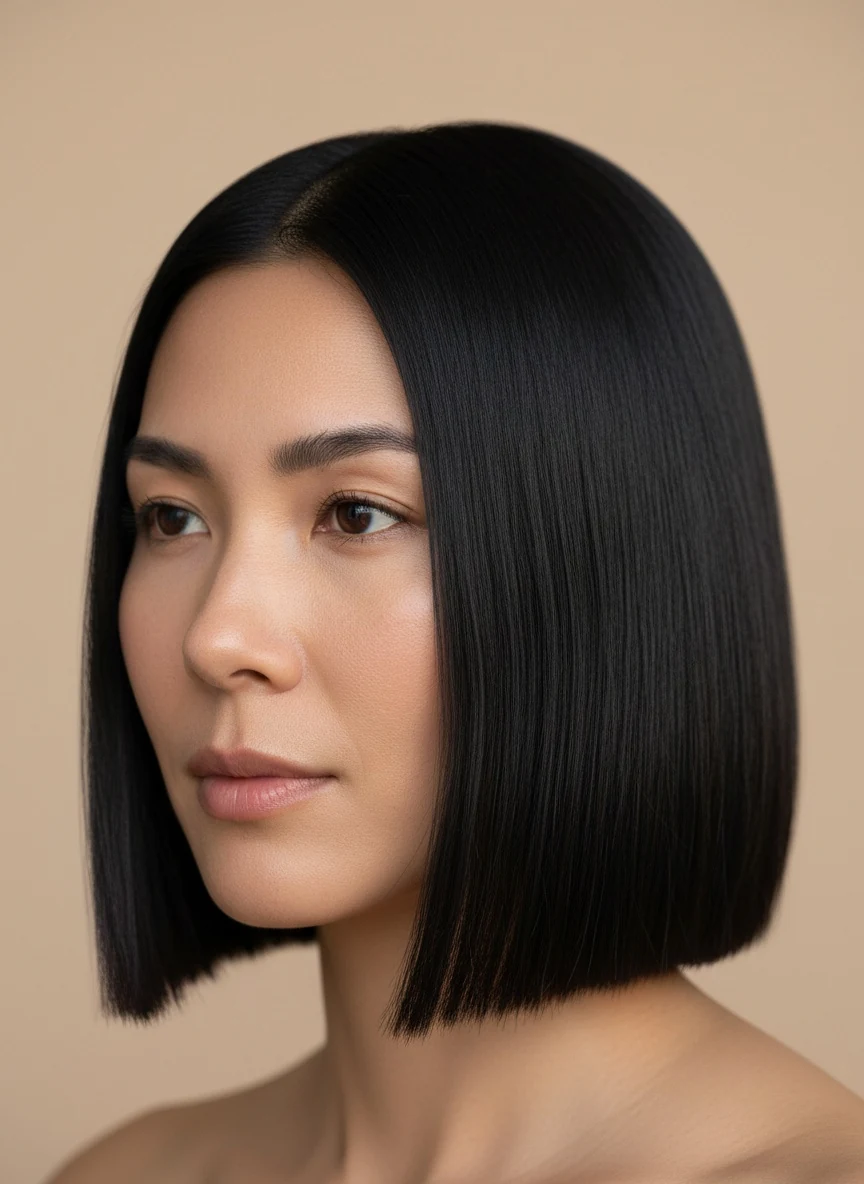
Short cuts work on oblong faces as long as they keep width at the sides and something over the forehead. A chin-length bob that bends inward at the jaw draws a horizontal line across the lower face and adds fullness exactly where it helps. A textured crop or pixie worn forward with a fringe and some hair left over the ears also works. What does not: a short cut with height on top and tight sides, which reads as more length.
Medium-length hairstyles
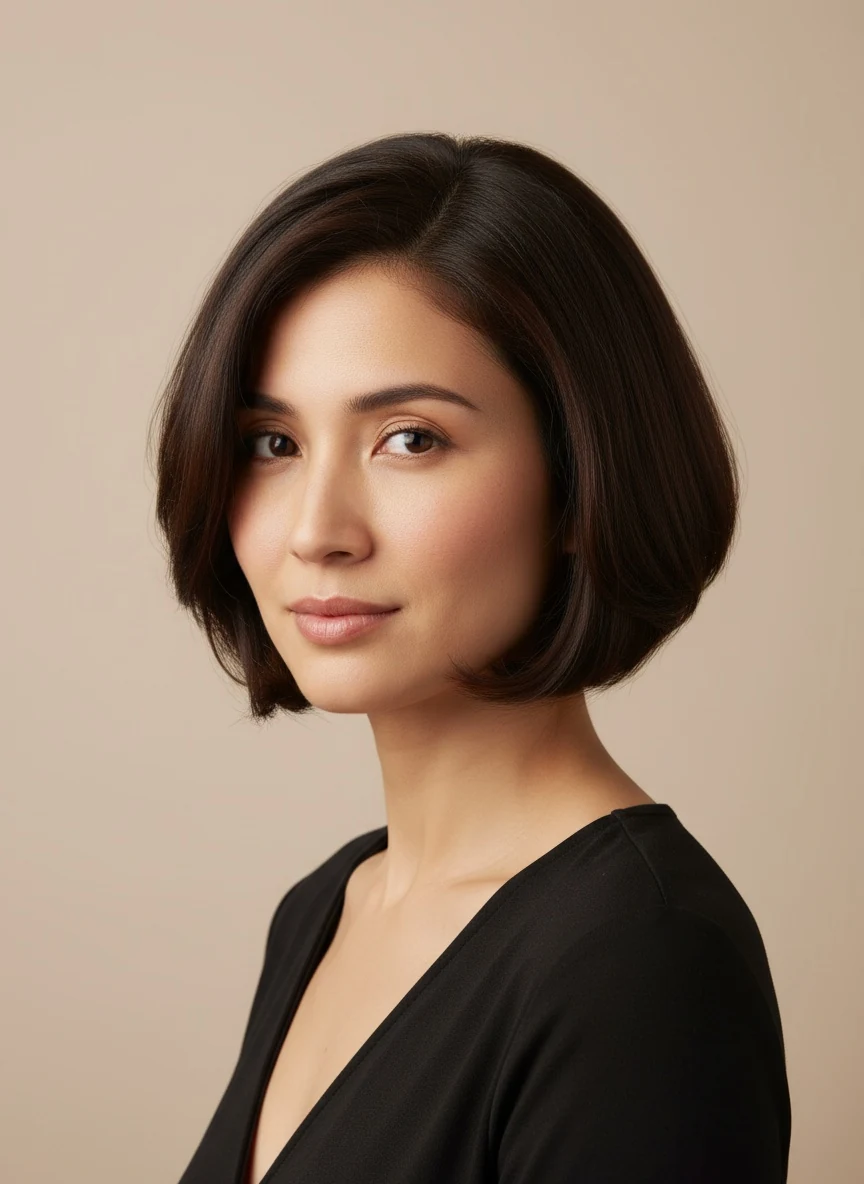
Medium length is the easiest territory for an oblong face. A blunt lob at the collarbone gives a strong horizontal line at the bottom; a shoulder-length cut with waves that start at cheek level adds the width this shape lacks; and layers that begin at the cheekbone build volume across the middle of the face rather than letting weight hang at the ends. Pair any of them with curtain bangs or a side-swept fringe for a stronger effect.
Can an oblong face wear long hair?
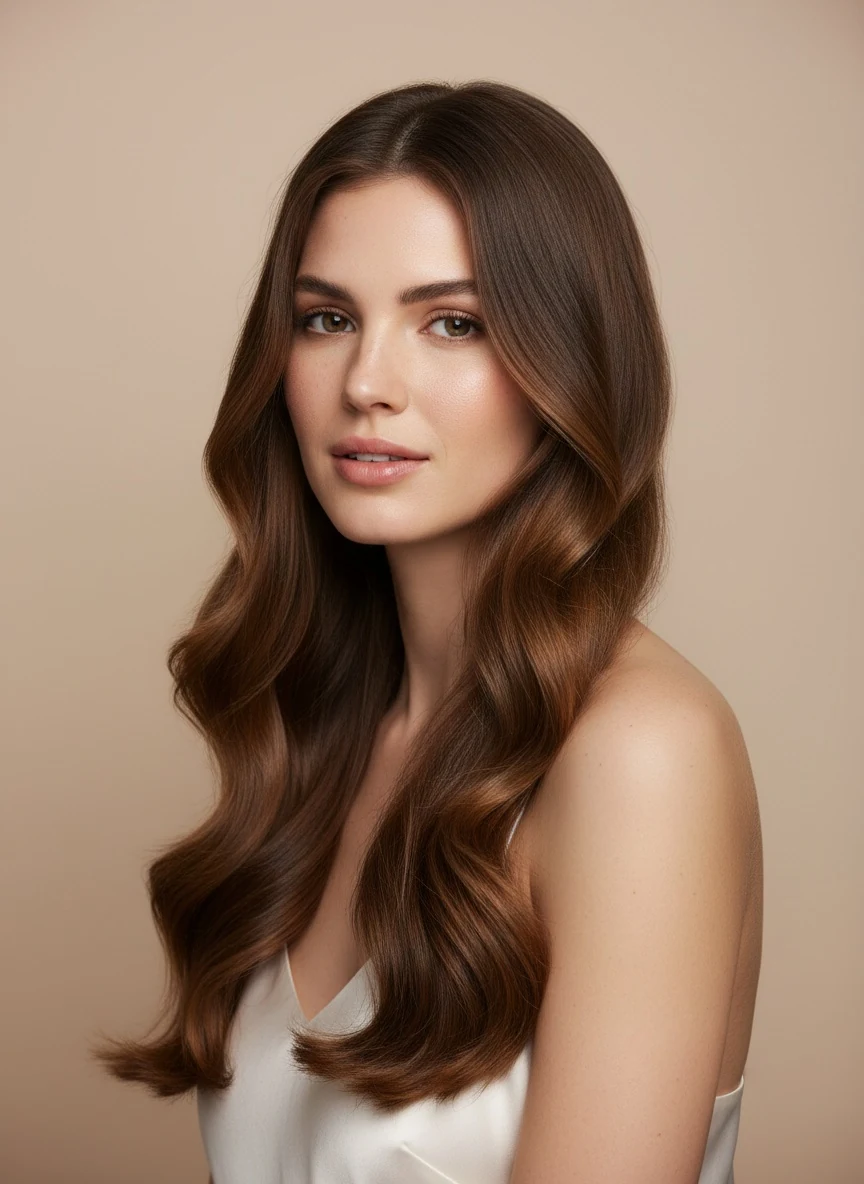
Yes, with conditions. Long hair on an oblong face needs a fringe or curtain bangs to break the vertical, and waves, curls or layers that put width at cheek level. Long, straight, one-length hair with a centre part is the combination to avoid: two unbroken vertical lines down a face defined by being long. Soft waves falling from the cheekbones down turn the same length into an asset.
Hairstyles for an oblong face: men
Fade height on a long face
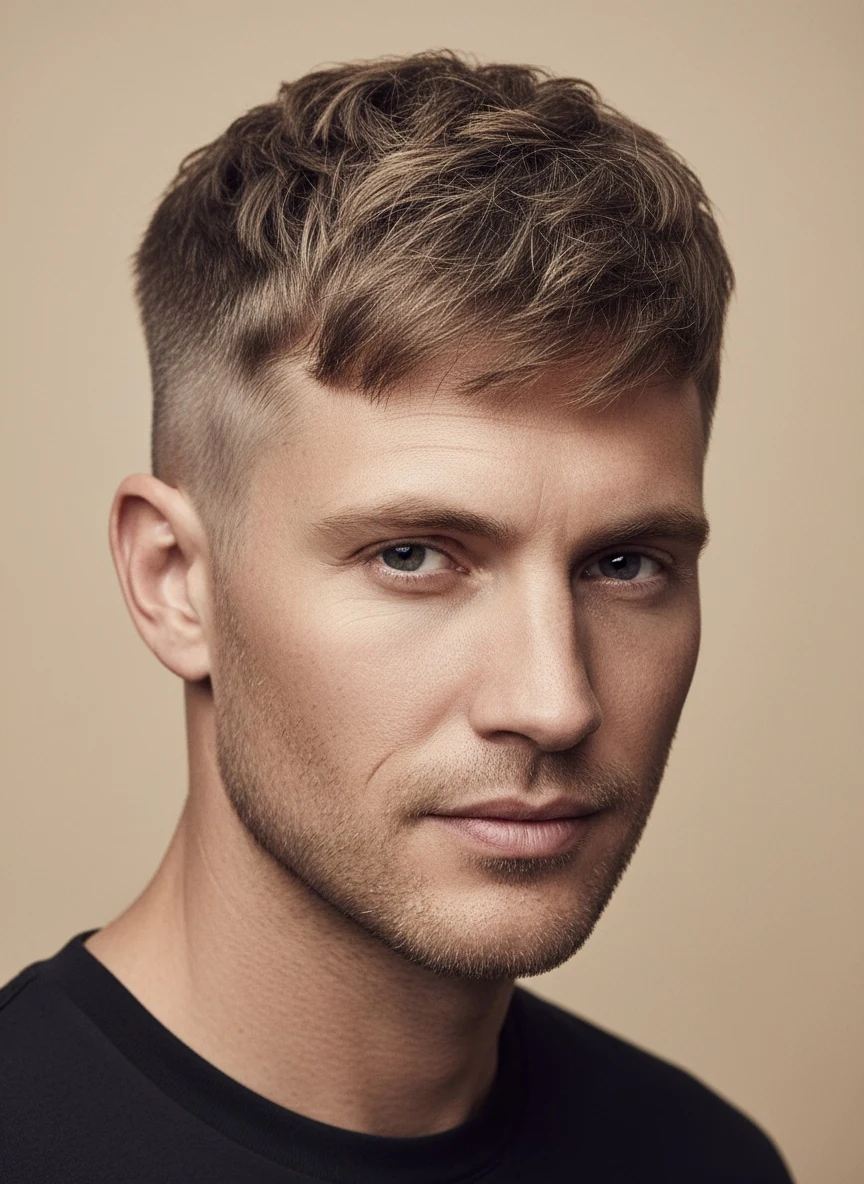
Fade height matters more on an oblong face than on any other shape. A high or skin fade takes the hair at the sides of the head down to the skin, which removes width from a face already short of it and makes the length stand out. A low fade or a taper keeps visible hair above the ears and so keeps some side width, while still looking clean. If you like a fade, ask for it low and blended, and keep the sides a little fuller than you normally would.
Short cuts for an oblong face
- Textured crop worn forward. A short, textured top pushed forward into a fringe hides forehead and keeps height low. With a low taper, it is the most reliable short cut for this shape.
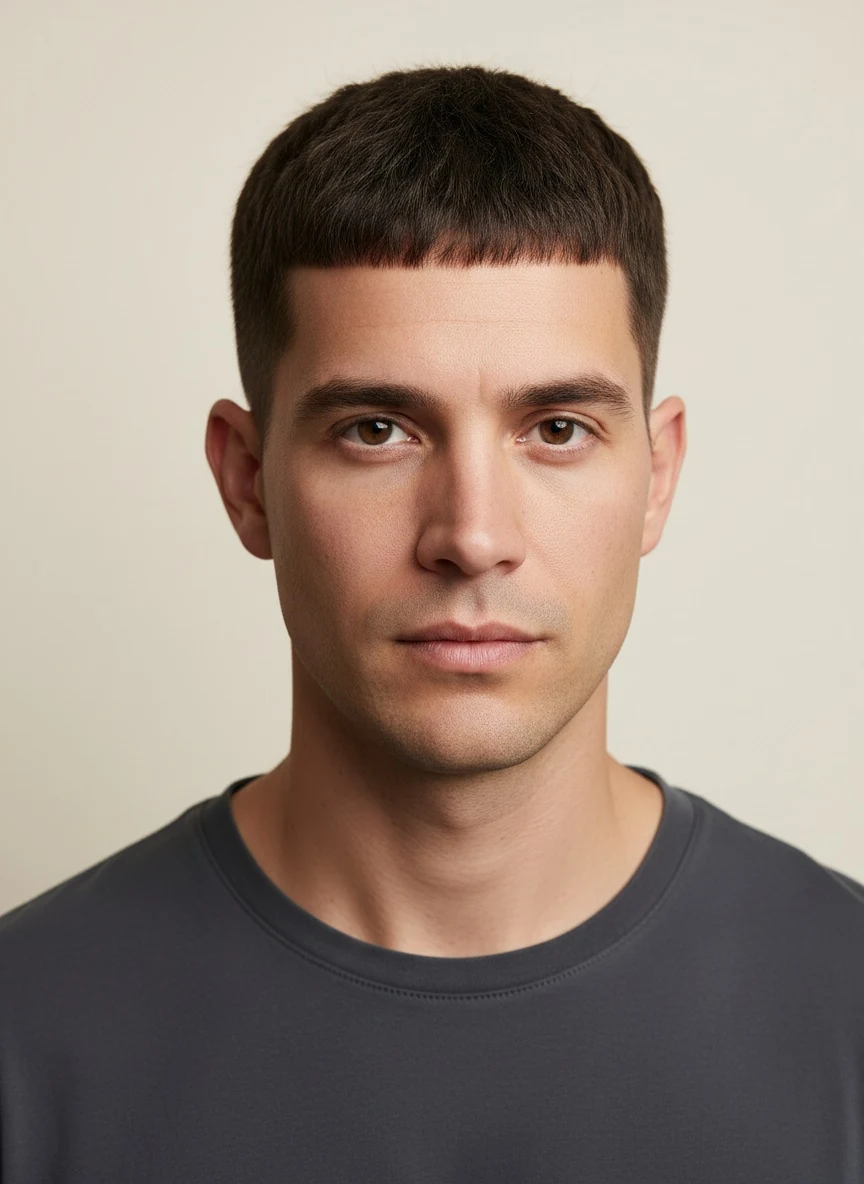
- Caesar cut. A short, even length with a straight fringe across the forehead — the classic way to shorten a long face.
- Crew cut with fuller sides. Keep the top short and flat and the sides longer than a standard crew cut. Avoid the version with extra length on top.
- Side part with low volume. A neat side part adds a diagonal across the forehead; keep the top flat rather than lifted.
Medium-length cuts
Medium length suits an oblong face well because it supplies width. Curtains — a centre-parted fringe falling to each side — cover the forehead and fill out the temples. A textured, tousled cut with fuller sides adds width without height. Longer hair pushed forward and to the side does the same. The one rule is not to let volume build on top.
Cuts that stretch an oblong face
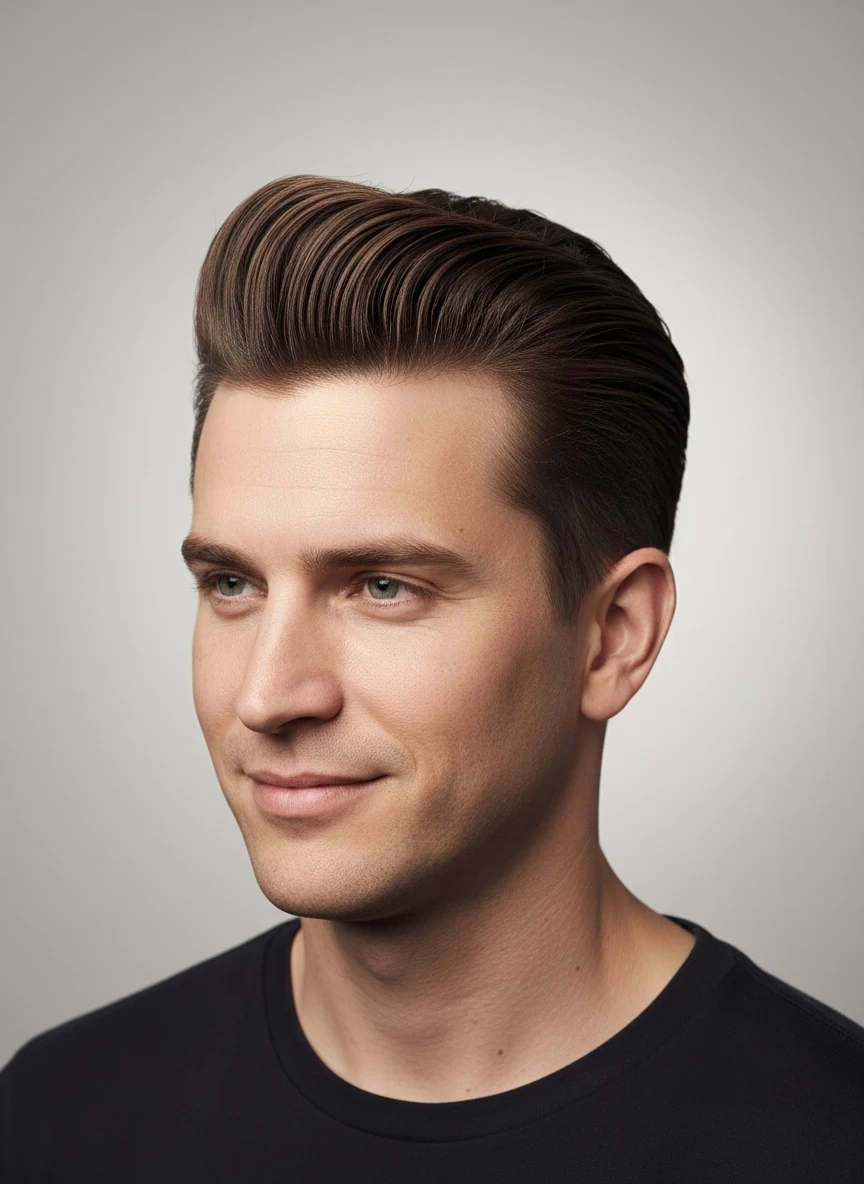
The pompadour, high quiff, faux hawk, slick-back and man bun all make the same mistake on a long face: they add height, expose the whole forehead, or both. The top knot of a man bun is height by definition. None of them is a bad haircut in general; on this face shape, each one adds to the measurement that is already the largest.
Beard direction for an oblong face
Facial hair follows the same logic in reverse. Fuller at the cheeks, shorter at the chin adds width to the lower face; a long, pointed beard extends it further. A well-kept short boxed beard or heavy stubble with fullness along the sides of the jaw is the usual recommendation. Keep the chin trimmed shorter than the sides.
Oblong face hairstyles by hair type
| Hair type | Women | Men | Avoid |
|---|---|---|---|
| Straight | Blunt fringe, blunt lob or bob with a horizontal end | Caesar or textured crop worn forward | Long one-length hair with a centre part |
| Wavy | Shoulder-length waves starting at cheek level, curtain bangs | Medium tousled cut with fuller sides | Flattening the wave out |
| Curly | Rounded curly shape with volume at the sides | Curls kept fuller at the sides, shorter on top | Tight sides with curls piled on top |
| Coily | Rounded shape with width at the sides; a tapered cut that keeps side fullness | Even length all over or a low taper | Height-focused shapes |
| Fine | Shorter, blunt cuts and a wispy fringe | Short textured crop with texture product | Long, flat, one-length hair |
| Thick | Layers at cheek level, curtain bangs | Medium length with sides left full | Bulk piling up at the crown |
Curly and wavy hair are the easiest textures for this face shape, because they grow outward and outward is exactly the direction the proportions need. Straight and fine hair take more help from the cut: a blunt line, a fringe and less length than feels intuitive.
Hairstyles to avoid with an oblong face
| Style | What it does to an oblong face | Try instead |
|---|---|---|
| Long, straight, one-length hair with a centre part | Two unbroken vertical lines and the full forehead on show | Add curtain bangs and waves from the cheekbones |
| Volume or height at the crown | Adds to the face's longest measurement | Keep the top flat; put volume at the sides |
| Pompadour, high quiff, faux hawk | Height above the forehead | Textured crop worn forward |
| Slicked-back hair | Exposes the whole forehead | Side part or fringe |
| High skin fade | Removes width at the sides | Low fade or taper |
| Long, pointed beard | Extends the chin | Fuller at the cheeks, shorter at the chin |
How to ask your stylist or barber
I have a long face and I want to shorten it visually. I'd like curtain bangs that sit around the top of my brows and fall to the sides, and a cut between the chin and collarbone with layers starting at my cheekbones for width. Please keep volume off the top of my head.— For a stylist — adjust the length and fringe to taste
My face is on the long side, so I want to keep width at the sides. Can I have a textured crop worn forward with a short fringe, a low taper rather than a high fade, and the top kept flat — no height.— For a barber — name the clipper grade you like for the taper
Bring a photo of the cut on someone whose face is also long, not just a cut you like. The same haircut on a round face is doing a different job.
Oblong face haircuts: effort and upkeep
| Cut | Trims | Daily styling | Heat tools |
|---|---|---|---|
| Blunt fringe | Fringe every few weeks | A few minutes to smooth | Often a blow-dryer |
| Curtain bangs | Every 6–8 weeks | Quick blow-dry or none | Optional |
| Chin-length bob with a bend | Every 6–8 weeks | A few minutes | Often a round brush or straightener |
| Collarbone lob or waves | Every 8–12 weeks | Low to moderate | Waves may need a curling tool |
| Textured crop with low taper | Every 3–4 weeks | A minute with product | None |
| Caesar cut | Every 3–4 weeks | Almost none | None |
Width and a fringe are the whole brief for an oblong face, and every cut above is a different way to deliver them. Nothing here is backed by a trial — haircut advice is styling practice, not measured science — but the principle is simple geometry: cover some length, add some width, and leave the top of the head alone.
Measures your upper, middle and lower thirds from one photo. A long forehead and a long lower face call for slightly different cuts.
See where your face carries its lengthFrequently asked questions
What is the most flattering hair length for a long face?
Somewhere between the chin and the collarbone works for most oblong faces, because it puts the ends of the hair — and the fullness — near the lower half of the face, where width helps. Very long, straight hair adds unbroken vertical lines, and very short hair with tight sides removes width. Long hair can still work with a fringe and waves or layers that start at the cheekbone.
Can an oblong face have bangs?
Yes — a fringe is the single most effective change for an oblong face. It covers forehead, which removes visible face length directly. A blunt fringe at brow level removes the most, curtain bangs remove a little less while adding width at the sides, and a side-swept or wispy fringe is the softest option.
Is an oblong face good for long hair?
It can be, with two conditions: something that breaks the vertical line, and width at cheek level. That means a fringe or curtain bangs, and waves, curls or layers that start around the cheekbones rather than all the volume sitting at the ends. Long, straight, one-length hair with a centre part is the version that exaggerates length.
What hairstyles should oblong faces avoid?
Anything that adds height or removes width: volume at the crown, pompadours and high quiffs, slicked-back styles that expose the whole forehead, very tight or high fades, and long, straight, one-length hair with a centre part. Each either adds to the face's length or takes away the width that balances it.
Is oblong an attractive face shape?
There is no measured ranking of face shapes by attractiveness. Research on facial attractiveness points to things like averageness, symmetry and skin rather than outline categories, and face shape labels themselves describe ratios along a continuum. Oblong is one common way faces are proportioned, and styling simply works with it.
Is oblong a rare face shape?
No — it is one of the common shapes. Its frequency depends on how length is measured, though: charts that measure from the hairline call more faces oblong than a photo tool that measures from the top of the forehead, and a receding or high hairline can move a face into the oblong range on a tape measure.
Does a high fade suit an oblong face?
Usually not. A high or skin fade removes the hair at the sides of the head, which takes width away from a face that is short of it and leaves the length more visible. A low fade or taper keeps some side fullness, which is why barbers tend to recommend it for long faces.
Can a receding hairline make my face oblong?
On a tape measure, yes. Face length is traditionally measured from the hairline to the chin, so a hairline that moves back makes the same face measure longer. A fringe or a haircut worn forward is the styling response. Photo-based tools that measure from the top of the forehead rather than the hairline are affected less, but not in a way that tells you anything about hair loss.
References
- Farkas, L. G. (1994). Anthropometry of the Head and Face (2nd ed.). Raven Press.
- Langlois, J. H., & Roggman, L. A. (1990). Attractive faces are only average. Psychological Science, 1(2), 115–121. doi:10.1111/j.1467-9280.1990.tb00079.x.
Tools mentioned in this article
Measurements on this site are for information only. Nothing here is medical advice, and no result is a diagnosis. Talk to a qualified clinician before making any decision about a procedure.