Beard styles for every face shape: where the volume goes, and why
·13 min read
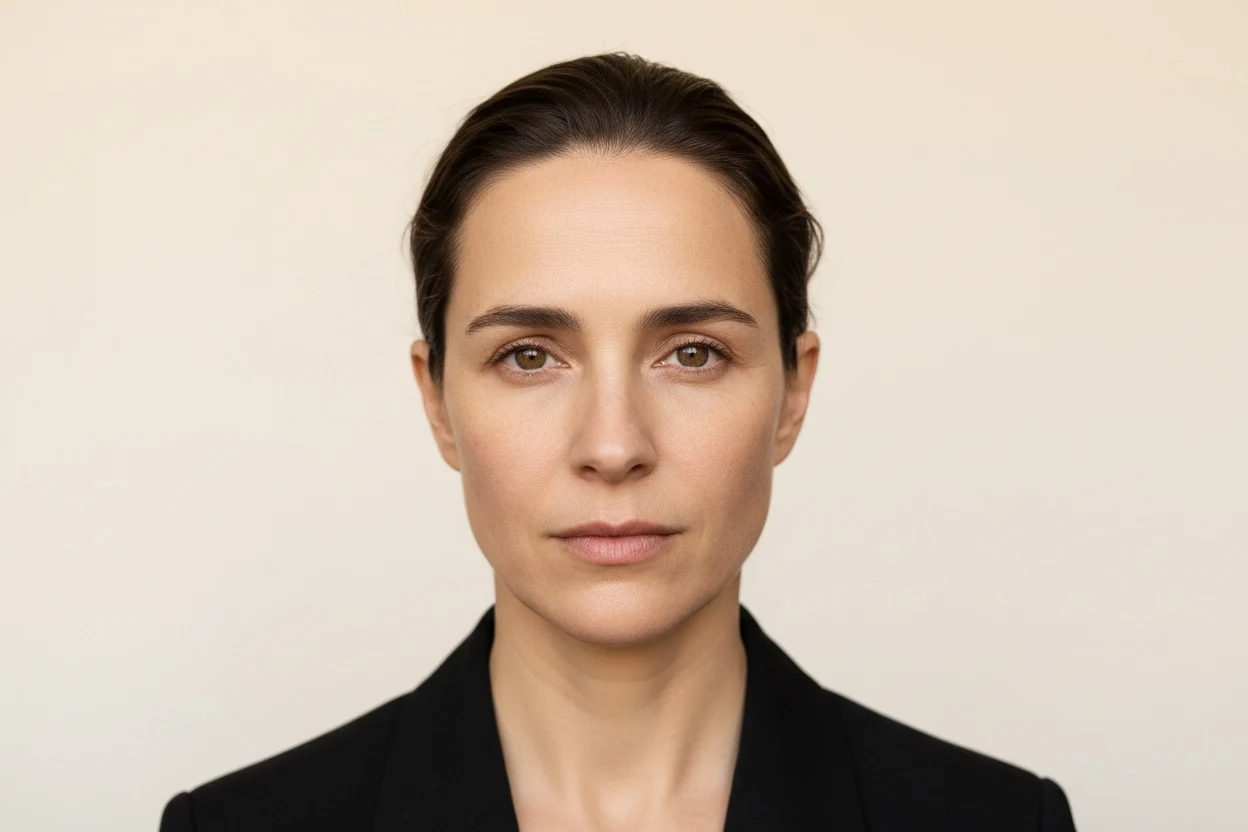
A beard is the only part of a face you can add to or remove in an afternoon, and it does one of two things wherever it grows: it adds length at the chin or width at the sides. Choosing a beard style for your face shape is just deciding which of those your face can use. This guide shows where the volume goes for all seven face shapes, defines the styles by name, and covers what the research on beards actually found.
Compares forehead, cheekbone and jaw widths with face length from one straight-on photo. Best measured clean-shaven or with a short beard. In your browser, no upload.
Find your face shape firstHow a beard changes the shape of your face
A beard redraws the lower third of the face. Length below the chin makes the face read longer; fullness on the cheeks and along the jaw makes it read wider; a sharp boxed edge makes the jaw corner read more angular, and a rounded edge softens it. Two lines decide most of the result: the cheek line and the neckline.
Cheek line and neckline: the two lines that decide it
- Cheek line. The upper edge of the beard on the cheek. Kept natural or slightly low, it leaves the cheekbones visible; shaved high, it narrows the midface and adds width lower down. A very high cheek line can make a beard look like a mask.
- Neckline. Where the beard stops under the jaw. A clean neckline about a finger or two above the Adam's apple defines the jaw from below. Trimmed too high — on the jaw itself — it makes the chin look smaller; left untrimmed, the beard merges into the neck and the jaw line disappears.
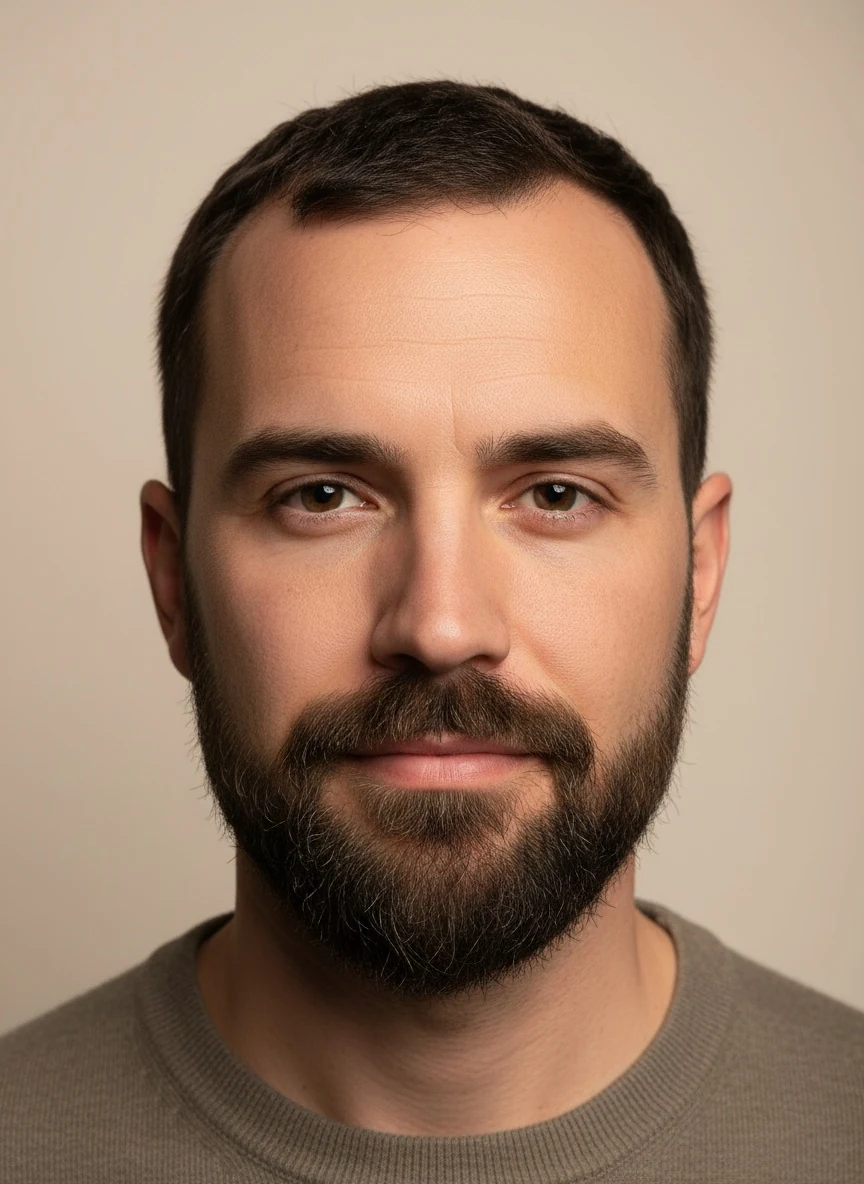
Find your face shape before choosing a beard style
Face shape is decided by four measurements: forehead width, cheekbone width, jaw width and face length. With a soft tape and a mirror you can take all four; the face shape pages explain how. The one catch for men with facial hair is that a full beard changes the outline you are measuring.
Does a beard change what a face shape detector reads?
It can. Photo-based tools, including the face shape detector on this site, place landmarks on the visible outline of the face, and at the jaw that outline is the edge of the beard, not the bone. A full beard can widen the measured jaw and push a borderline face toward square; a long chin beard can lengthen the measured face. We have not published a controlled test of how much, and an AI-edited photo would not be a fair one, because editing a beard in tends to change the rest of the face too. The practical advice is simple: measure your face shape clean-shaven or with a short trim, then choose the beard.
Beard styles for a round face
A round face is close to as wide as it is long, with soft angles at the jaw. The aim is to add length and keep width off: grow the chin, keep the sides short, and give the jaw a defined edge. This is the most searched beard question for any face shape, and the principle is the clearest.
Best beards for a round face
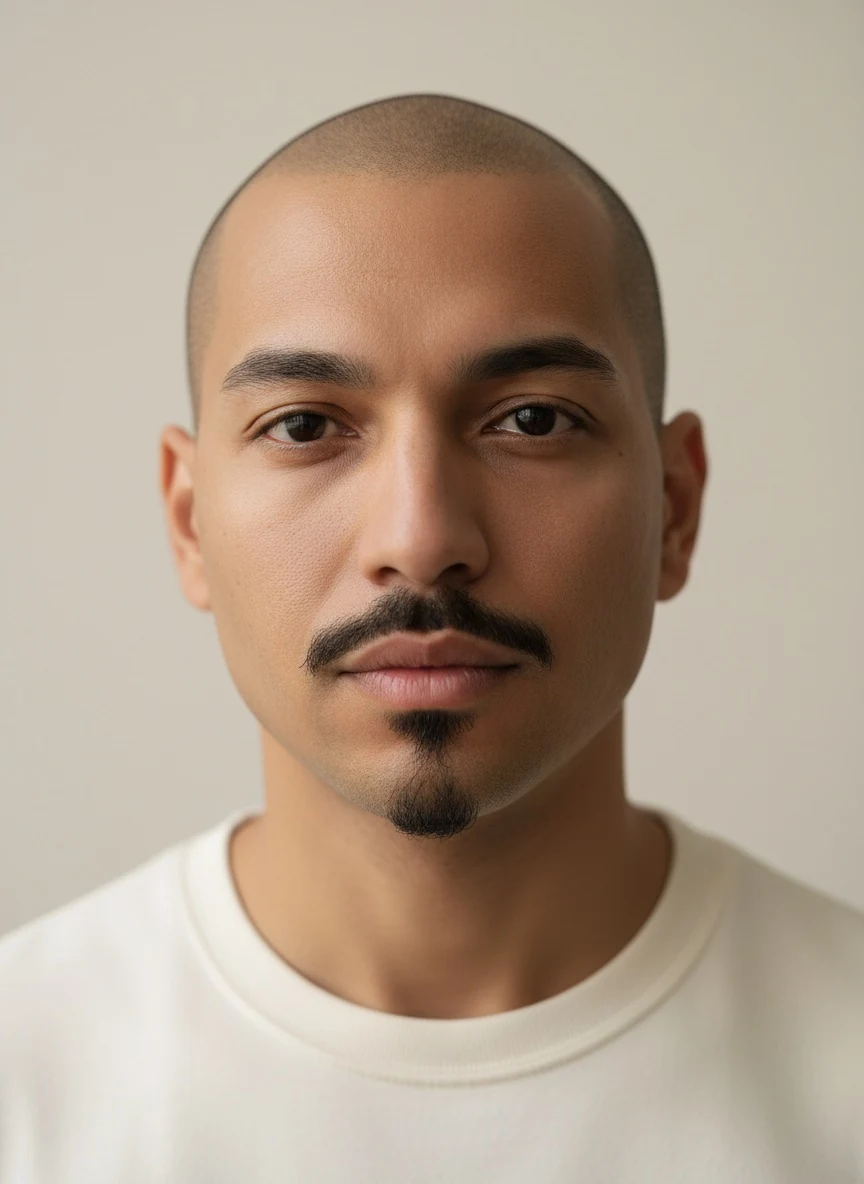
- Goatee. Hair on the chin joined to a moustache around the mouth, cheeks shaved. Adds length exactly at the centre of the lower face.
- Extended goatee. A goatee that runs a little way along the jaw, still with shaved cheeks. More coverage, same vertical line.
- Van Dyke. A pointed chin beard with a separate moustache. The point draws the eye down.
- Anchor. A pointed chin beard that runs along the jawline like an anchor shape, with a separate moustache.
- Short boxed beard, longer at the chin. A full short beard with the sides trimmed close and a little extra length left at the chin — the easiest option if you want full coverage.
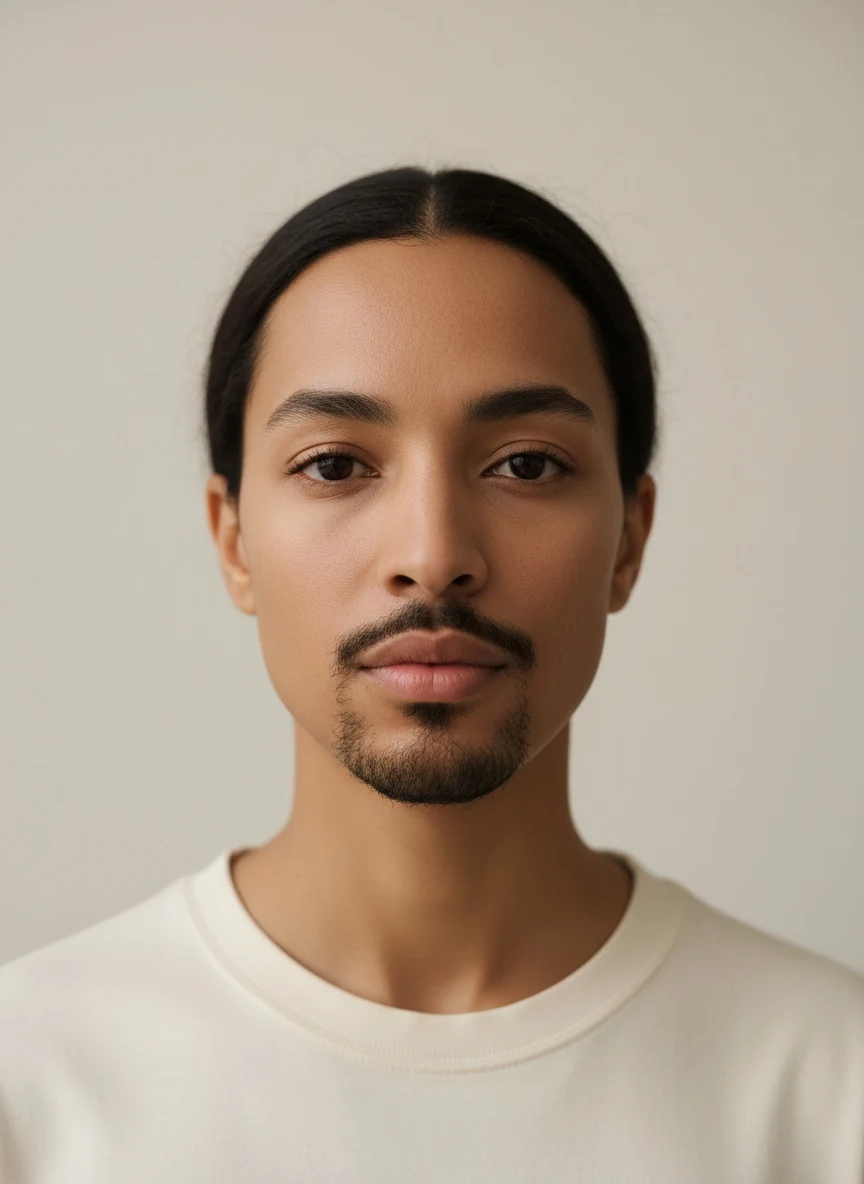
Do beards make a round face look slimmer?
They change the outline the eye reads, not the face underneath. Length at the chin raises the length-to-width ratio people perceive, and a crisp neckline separates the jaw from the neck, which is often what makes a face look fuller than it is. What a beard cannot do is change where fat sits; a full beard grown out on the cheeks adds visible width and does the opposite of what you want.
Beards that make a round face rounder
| Style | What it does to a round face | Try instead |
|---|---|---|
| Full rounded beard | Adds width at the cheeks and a curved outline | Short boxed beard with a longer chin |
| Mutton chops | Adds width exactly at the widest part | Goatee or Van Dyke |
| Chin strap alone | Traces the round outline | Extended goatee |
| No neckline | Merges jaw and neck | A clean neckline above the Adam's apple |
Minimal options: stubble and a short goatee
If you prefer something minimal, a short goatee or stubble with a defined neckline both work. Stubble adds little length, so the neckline does the work: a clean edge under the jaw gives a round face the definition a longer beard would.
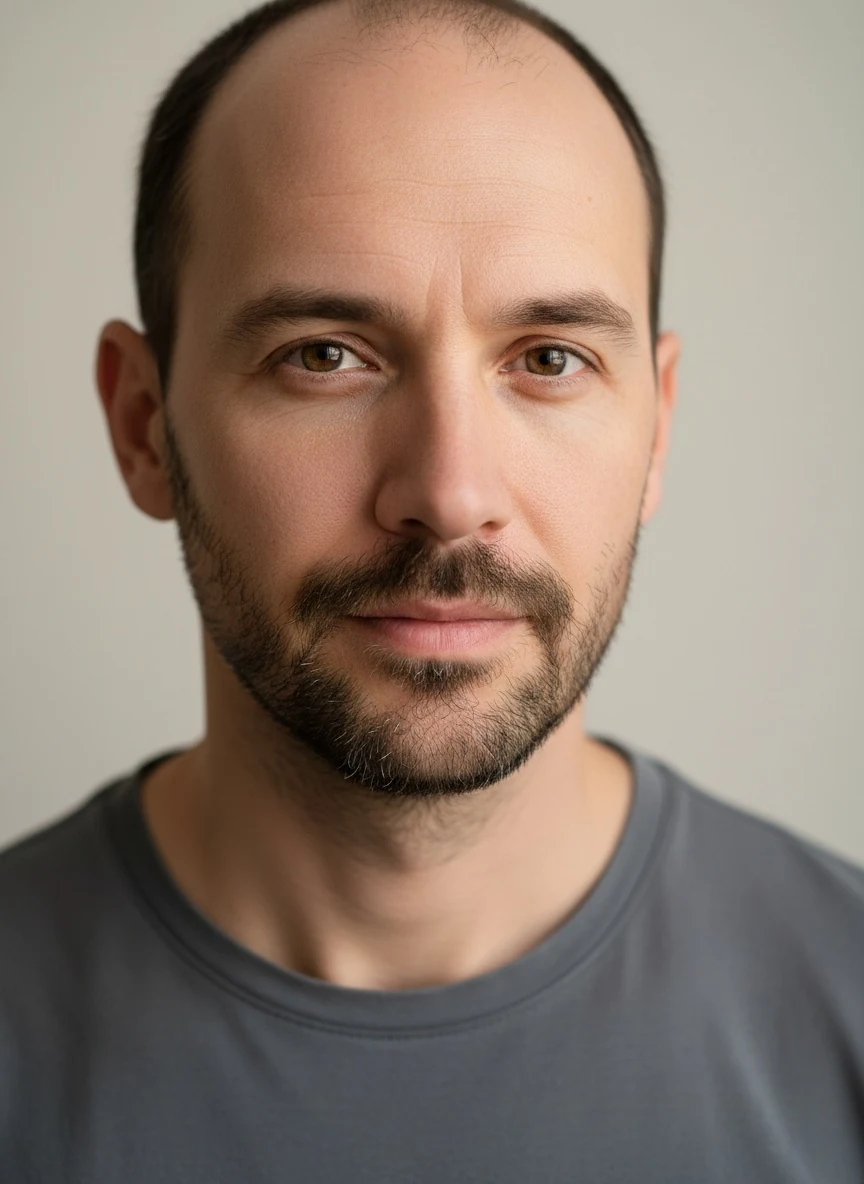
Beard styles for a square face
A square face has similar widths at forehead, cheekbones and jaw and a strong, angular jaw corner. A beard can either soften that angle or follow it, and both are legitimate choices. A beard with a rounded bottom edge and sides kept shorter than the chin softens the corner. A sharply lined short boxed beard follows the angle and makes it more emphatic, which suits a square face if that is the look you want. Avoid growing the sides wide, which adds to a jaw that is already broad.
Beard styles for an oval face
An oval face carries most beard shapes, so the only real constraint is length. Short and medium beards, boxed or natural, work without changing the balance. A long beard adds visible length and pushes an oval face toward oblong. Keep the cheek line natural rather than shaved high, which narrows the midface. If you want one rule: short to medium, evenly trimmed.
Beard styles for an oblong face
An oblong face is noticeably longer than it is wide, so beard direction matters more than on any other shape. The aim is the opposite of a round face: width at the sides, no extra length at the chin. Let the cheeks and the sides of the jaw grow fuller and keep the chin trimmed short and flat. Mutton chops and wide sideburns add the width the shape lacks. Avoid long goatees, Van Dykes and pointed beards, all of which extend the face. Hairstyle works the same way — the oblong face shape page covers both.
Beard styles for a heart-shaped face
A heart-shaped face is widest at the forehead and narrows to a smaller chin, so a beard adds mass exactly where the face is narrowest. That makes it one of the shapes that benefits most from facial hair. A short full beard or a beard kept fuller along the jaw and cheeks squares off the taper. Avoid a narrow goatee on its own, which sharpens the point the shape already has.
Beard styles for a diamond face
A diamond face is widest at the cheekbones with a narrower forehead and jaw. A beard is the fastest way to add width at the jaw, one of the two narrow points. Keep it fuller at the sides of the jaw and short at the chin, with a natural or slightly low cheek line so no volume is added at the cheekbones. A short boxed beard squares off a pointed chin. Avoid long goatees, which extend the taper.
Beard styles for a triangle face
A triangle face has a jaw wider than the forehead, so facial hair adds bulk where the face already has the most. This is the one shape where less usually reads better: short stubble and a clean, closely trimmed jaw line. Full beards and wide cheek lines extend the widest measurement. If you want more than stubble, keep it tight along the jaw and add volume with the haircut on top instead.
Beard styles by face shape: the chart
| Face shape | Aim | Styles to try | Avoid | Cheek line | Neckline |
|---|---|---|---|---|---|
| Round | Add length, keep width off | Goatee, Van Dyke, anchor, short boxed with a longer chin | Full rounded beard, mutton chops | Natural, kept close | Clean and defined |
| Square | Soften or follow the angle | Rounded short beard; sharp boxed beard for emphasis | Wide sides | Natural | Clean |
| Oval | Keep the balance | Short to medium, boxed or natural | Very long beards | Natural | Clean |
| Oblong | Add width, no length | Full sides with a short chin, mutton chops | Long goatee, pointed beards | Natural or slightly low | Clean, not too high |
| Heart | Add mass at the jaw | Short full beard, fuller along the jaw | Narrow goatee alone | Natural | Clean |
| Diamond | Width at the jaw | Fuller at the jaw sides, short boxed beard | Long goatee | Natural or slightly low | Clean |
| Triangle | Add nothing at the jaw | Short stubble, closely trimmed jaw | Full beards, wide cheek lines | Low and close | Clean |
Twelve beard styles, defined
| Style | What it is | Adds | Suits | Density needed |
|---|---|---|---|---|
| Stubble | A few days to a week or two of even growth | Definition, little volume | Every shape; best for triangle | Low |
| Short boxed | Short, even beard with clean cheek and neck lines | Structure | Oval, square, heart, diamond | Medium |
| Full beard | Beard grown out across cheeks, jaw and chin | Width and length | Heart; oval if kept medium | High |
| Goatee | Chin hair joined to a moustache, cheeks shaved | Length at the centre | Round | Low |
| Extended goatee | Goatee running partly along the jaw | Length, some jaw coverage | Round | Low to medium |
| Van Dyke | Pointed chin beard with a separate moustache | Length | Round | Low |
| Anchor | Pointed chin beard along the jawline, separate moustache | Length and a defined jaw | Round, square | Low to medium |
| Balbo | Chin and lower-jaw beard with a separate moustache, no sideburns | Jaw definition | Round, diamond | Medium |
| Chin curtain | Beard along the jawline and chin, no moustache | Frames the jaw | Oval, diamond | Medium |
| Mutton chops | Wide sideburns down the cheeks, chin shaved | Width at the sides | Oblong | Medium |
| Garibaldi | Wide, full, rounded beard, usually long | Width and length | Heart, oblong if kept wide | High |
| Ducktail | Full beard shaped to a point at the chin | Length | Round, square | High |
Growth, density and patchy beards
How long to grow before choosing a style
Give it several weeks of untouched growth before you decide. Short hairs make gaps look bigger than they are, and many beards that look patchy at a week fill in as the hairs lengthen and lie over each other. Keep only the neckline tidy while it grows, then shape the style once you can see where your beard grows densest.
Beard styles for a patchy beard
Most patchiness is on the cheeks, while the chin and the area around the mouth grow more densely. That is convenient for round faces, because the styles that suit them — goatee, Van Dyke, anchor — are concentrated exactly there. For other shapes, short even stubble hides uneven density better than a longer beard, and a shorter cheek line removes the patchiest area.
Matching your beard to your haircut and face shape
| Face shape | Haircut direction | Beard direction | Combination that backfires |
|---|---|---|---|
| Round | Height on top, shorter sides | Length at the chin, short sides | Wide, full hair plus a full rounded beard |
| Oblong | Fringe forward, fuller sides, flat top | Full sides, short chin | A quiff plus a long pointed beard — two vertical additions |
| Square | Some softness or texture on top | Rounded or boxed | Very sharp undercut plus sharp boxed beard, if you want softer |
| Heart | Less volume at the forehead | Fuller along the jaw | Big volume on top with a narrow goatee |
| Diamond | Width at the forehead | Width at the jaw | Tight sides plus a long goatee |
| Triangle | Volume on top and at the temples | Close stubble | Flat, short top plus a full beard |
The haircut and beard should push in the same direction. On a round face, height on top and length at the chin double the lengthening effect. On an oblong face the same pairing doubles the problem: a quiff and a pointed beard both add length. The oblong and round face shape pages go through haircuts for each.
What research says about beards
No study has tested which beard suits which face shape — that advice is styling practice. But beards themselves have been studied, and the findings are worth knowing before you grow one.
Beards and perceived age
Yes, consistently. Dixson and Vasey showed photos of the same men bearded and clean-shaven to women and men from two very different cultures, Europeans in New Zealand and Polynesians in Samoa. Both groups judged the bearded faces older and of higher social status, and bearded men making an aggressive expression were rated more aggressive. If you look younger than you would like, that is a point in a beard's favour; if not, stubble or a short beard keeps the effect small.
Are beards attractive?
It depends on the study and the question asked. In the same 2012 study, women in both cultures did not rate the bearded faces as more attractive than the clean-shaven ones. A much larger 2016 study by Dixson and colleagues had 8,520 women rate faces with four levels of facial hair — clean-shaven, light stubble, heavy stubble and full beard — and found facial hair raised ratings for a long-term relationship but not a short-term one, and that stubble and beards softened the extremes of very masculine or very feminine faces. Preference also depends on what is common: in Janif and colleagues' experiment, beards and heavy stubble were rated more attractive when they were rare among the faces shown, and clean-shaven faces more attractive when they were rare.
The honest summary: a beard reliably makes a face look older and more mature, its effect on attractiveness is modest and context-dependent, and standing out from what most men around you are doing seems to help. Choose the beard for your face shape and for yourself, not for a verdict.
Jaw width against cheekbone width from one front photo — useful for deciding whether your beard should add width at the jaw or keep it off. Measure clean-shaven or with a short beard.
Measure your jaw against your cheekbonesFrequently asked questions
What beard style suits my face shape?
Grow the beard where your face is narrow and keep it short where your face is wide. Round faces suit length at the chin with short sides; oblong faces the opposite, full sides and a short chin; heart and diamond faces fullness along the jaw; square faces a rounded shape or a sharp boxed one depending on the look you want; oval faces most shapes at short to medium length; triangle faces a close stubble.
How do I check which beard style suits my face?
Find your face shape first, from a straight-on photo or with a tape measure: compare forehead, cheekbone and jaw widths and face length. Then look at where your face is widest and where it is narrowest, and choose a beard that adds volume at the narrow point. If you already have a full beard, measure clean-shaven or with a short trim, because a full beard changes the outline a photo tool reads at the jaw.
Do beards look good on round faces?
Yes, when the shape adds length rather than width. A goatee, a Van Dyke or a short boxed beard with the chin left longer all draw the lower face downward. A full, rounded beard or mutton chops add width at the cheeks and make a round face look rounder.
What beard styles look best on a chubby face?
The same ones that suit a round face: keep the cheeks trimmed close and let the chin grow a little longer, with a defined neckline under the jaw. A beard does not change where fat sits, but it can redraw the outline the eye reads, and a clean neckline stops a beard merging into the neck.
Do beards make you look older or younger?
Older, in the research. In a study with raters from New Zealand and Samoa, the same men were judged older and of higher social status with beards than clean-shaven. That can suit a very young-looking face; on a face that already looks its age, a shorter, well-groomed beard or stubble keeps the effect smaller.
Are beards out of style?
Style follows frequency more than the calendar. In an experiment, people rated full beards and heavy stubble more attractive when beards were rare among the faces they saw, and less attractive when beards were common; clean-shaven faces showed the reverse. So a beard tends to stand out more when fewer people around you wear one.
What is the best beard for a patchy beard?
One that works with where your hair grows most densely. Most patchiness is on the cheeks, so styles concentrated on the chin and around the mouth — a goatee, a Van Dyke — or a short, even stubble usually look fuller than a full beard. Letting it grow for several weeks before deciding helps, because gaps often fill in as hairs lengthen.
Does a beard change your face shape?
Not your bone structure, but it changes the outline people see and the outline a photo tool measures. Face landmark models follow the visible lower edge of the face, so a full beard can widen the measured jaw and shift a borderline result toward square. For a clean face shape reading, measure clean-shaven or with a short trim.
References
- Dixson, B. J., & Vasey, P. L. (2012). Beards augment perceptions of men's age, social status, and aggressiveness, but not attractiveness. Behavioral Ecology, 23(3), 481–490. doi:10.1093/beheco/arr214.
- Janif, Z. J., Brooks, R. C., & Dixson, B. J. (2014). Negative frequency-dependent preferences and variation in male facial hair. Biology Letters, 10(4), 20130958. PMID 24740903.
- Dixson, B. J., Sulikowski, D., Gouda-Vossos, A., Rantala, M. J., & Brooks, R. C. (2016). The masculinity paradox: facial masculinity and beardedness interact to determine women's ratings of men's facial attractiveness. Journal of Evolutionary Biology, 29(11), 2311–2320. PMID 27488414.
- Farkas, L. G. (1994). Anthropometry of the Head and Face (2nd ed.). Raven Press.
Tools mentioned in this article
Measurements on this site are for information only. Nothing here is medical advice, and no result is a diagnosis. Talk to a qualified clinician before making any decision about a procedure.