Round Face Shape
A round face is close to as wide as it is long, with a soft jawline and full cheeks. This test calls a face round when its length is at most 1.16× the cheekbone width and the jaw is at least 0.79× as wide.
- ≤ 1.16×
- length ÷ cheekbones
- ≥ 0.79×
- jaw ÷ cheekbones
- 7
- face shapes
- Free
- photo not uploaded
Drop a photo into the panel and it will say whether your four measurements read as round.
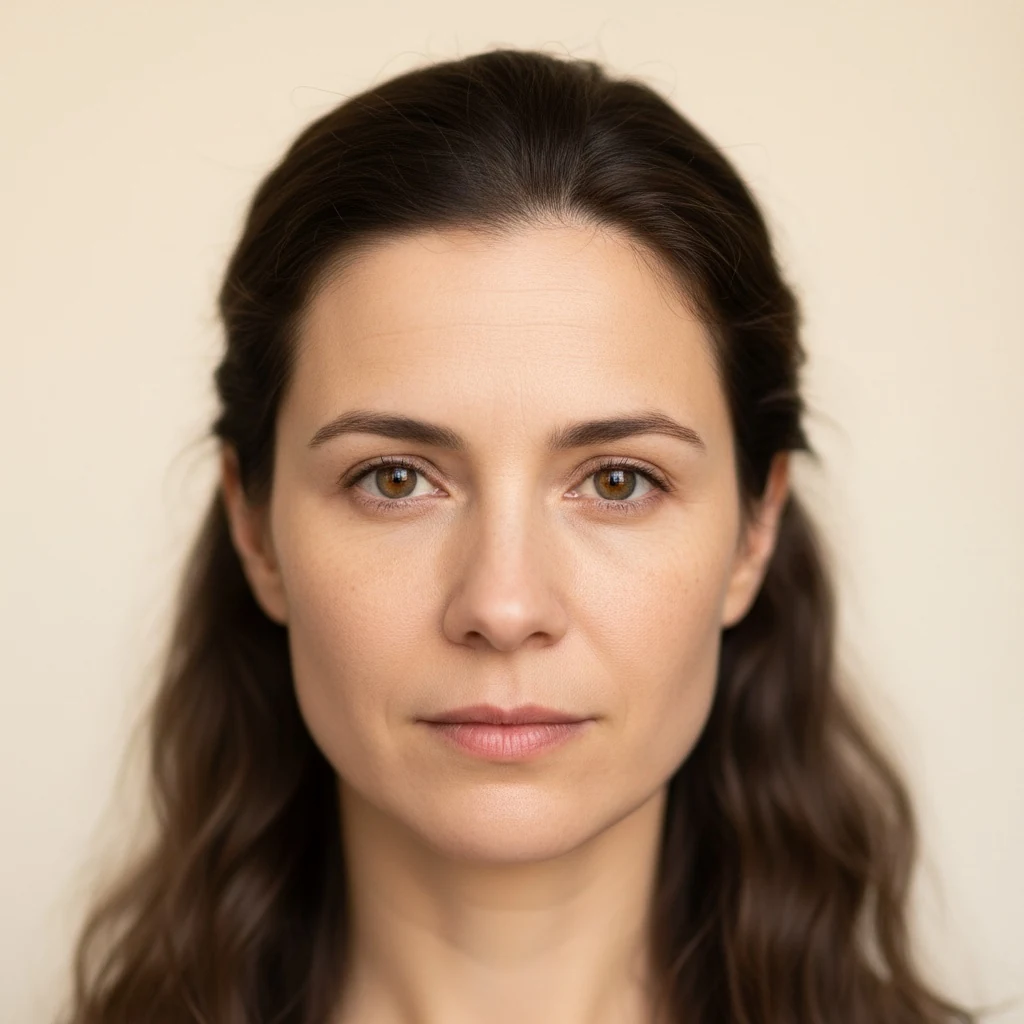 Example
Choose your own photo
Discover your face shape and proportions.
Choose your own photoClick to choose a photo, or drop one here
Front-facing · Even lightingStraight-on, even lighting, at arm's length gives the most comparable reading.
Runs in your browser. Your photo is not uploaded.
How a round face is measured
Face length is no more than 1.16 times cheekbone width and the jaw carries at least 79.1 per cent of that width — a short face with little taper toward the chin. Charts that quote 1.5 or 1.6 measure length from the hairline, which a photo landmark cannot see; this test measures from the top of the forehead, so its numbers run lower and its cut points are calibrated to its own measurements.
- Face width and length close to equal
- Cheeks are the fullest part of the face
- Jawline soft, with no sharp corner
- Chin rounded rather than pointed
A round face is close to as wide as it is long, and the outline is decided by soft tissue as much as by bone — which is why it is the one shape that genuinely changes with weight, and the only one where a result can move across years. The jaw curves instead of turning a corner, and that curve is what separates it from square.
Also called: Circle face, Full face.
How to tell if you have a round face
Round is decided by one ratio and confirmed by the jaw, so take the ratio first.
- Tie your hair back and stand square to the mirror.
- Measure from your hairline to the base of your chin — that is face length.
- Measure across your cheekbones at the widest point — that is face width.
- Divide length by width. Under about 1.2 puts you in round or square territory.
- Now look at the corner below your ear. If the jaw curves into the neck with no angle, it is round; if it turns a visible corner, it is square.
A tape measure held against your own face is accurate to maybe half a centimetre, which is enough for the clear cases and not enough for the borderline ones. The tool above takes the same three widths from 478 landmarks instead.
Round vs Square face shape
The proportions are nearly identical — both are close to as wide as they are long. What differs is the jaw. In a mirror the difference is the jaw corner — a visible angle below the ear on a square face, a curve on a round one — and a front-facing photo reads that corner poorly. So this test separates them by length instead: a wide-jawed face no more than 1.16 times as long as its cheekbone width is called round, and a longer one with three close widths is called square.
The square face shape in full →Round vs Oval face shape
Both have a soft, cornerless jaw. The whole difference is length and jaw width together: this test calls a face round at no more than 1.16 times as long as its cheekbone width with a jaw at 79.1 per cent of that width or more, and oval when it is longer or tapers more. Textbook charts give 1.2 and 1.5, measured from the hairline. Close to the cut point no measurement gives a stable answer, because the categories overlap there.
The oval face shape in full →Hairstyles for a round face
A round face measures close to as long as it is wide, and the cheeks are where it is widest. So the useful questions for any cut are two: does it make the outline taller, and does it keep hair away from cheek level? Cuts that answer yes to both are the safest bets.
Haircuts for a round face — women
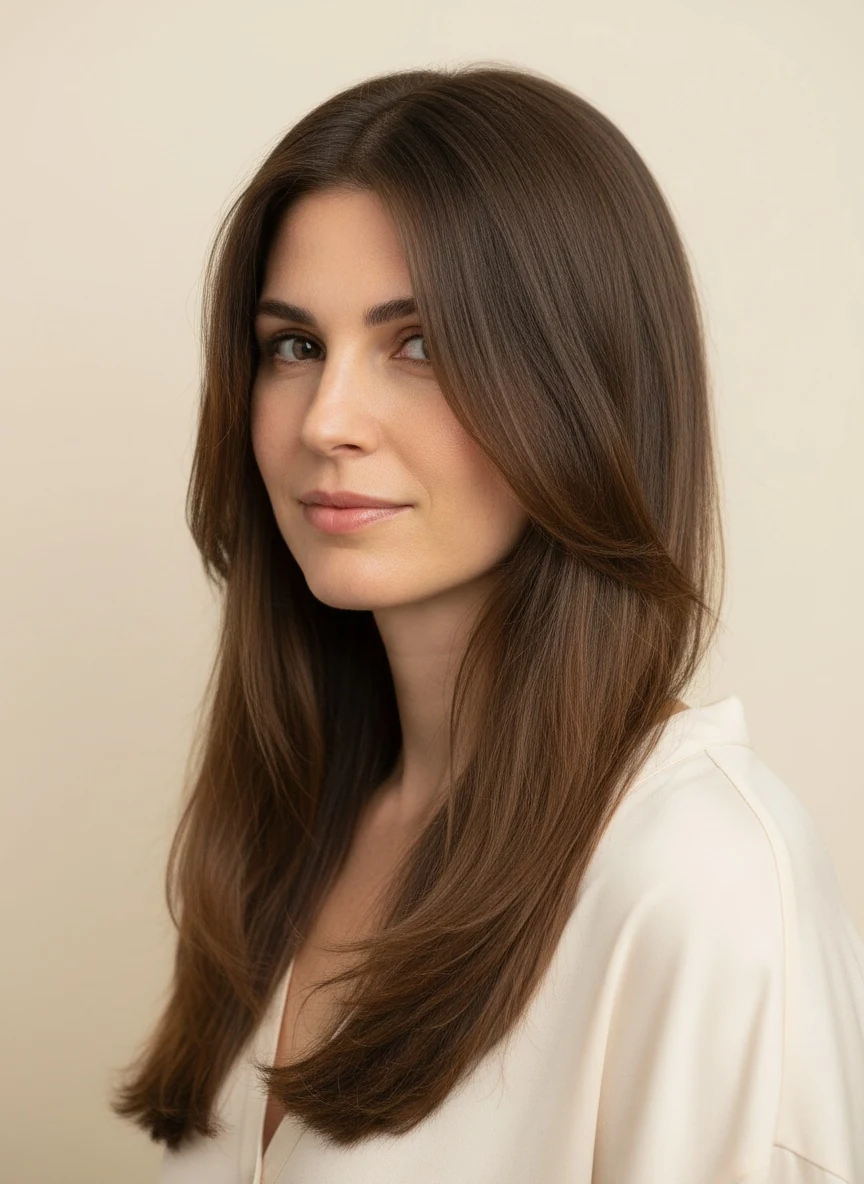
Long layers past the collarbone
Length below the jaw stretches the outline downward. The layers should begin under the cheekbone, so their movement sits below the widest point instead of on it.
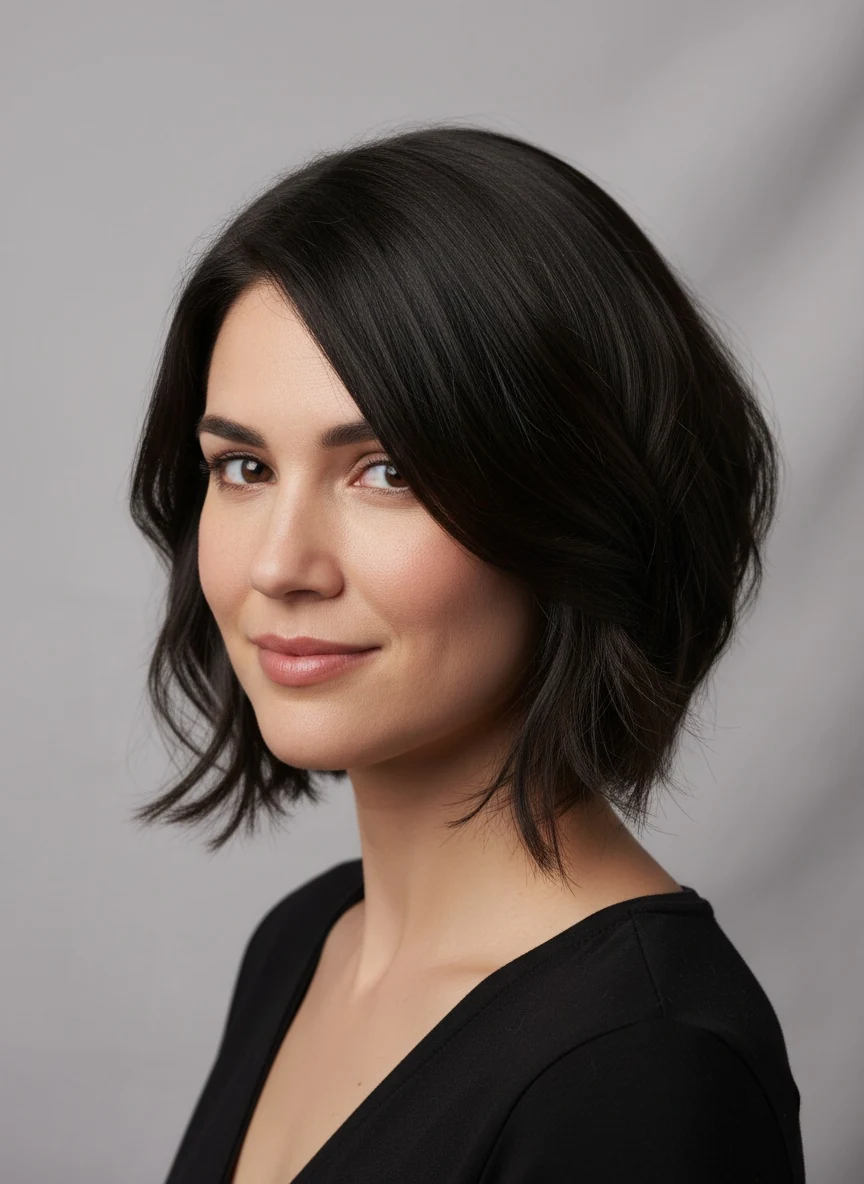
Asymmetric lob
One side longer than the other turns the bottom edge of a short cut into a slope. A slope reads as length; a level edge at chin height reads as width.
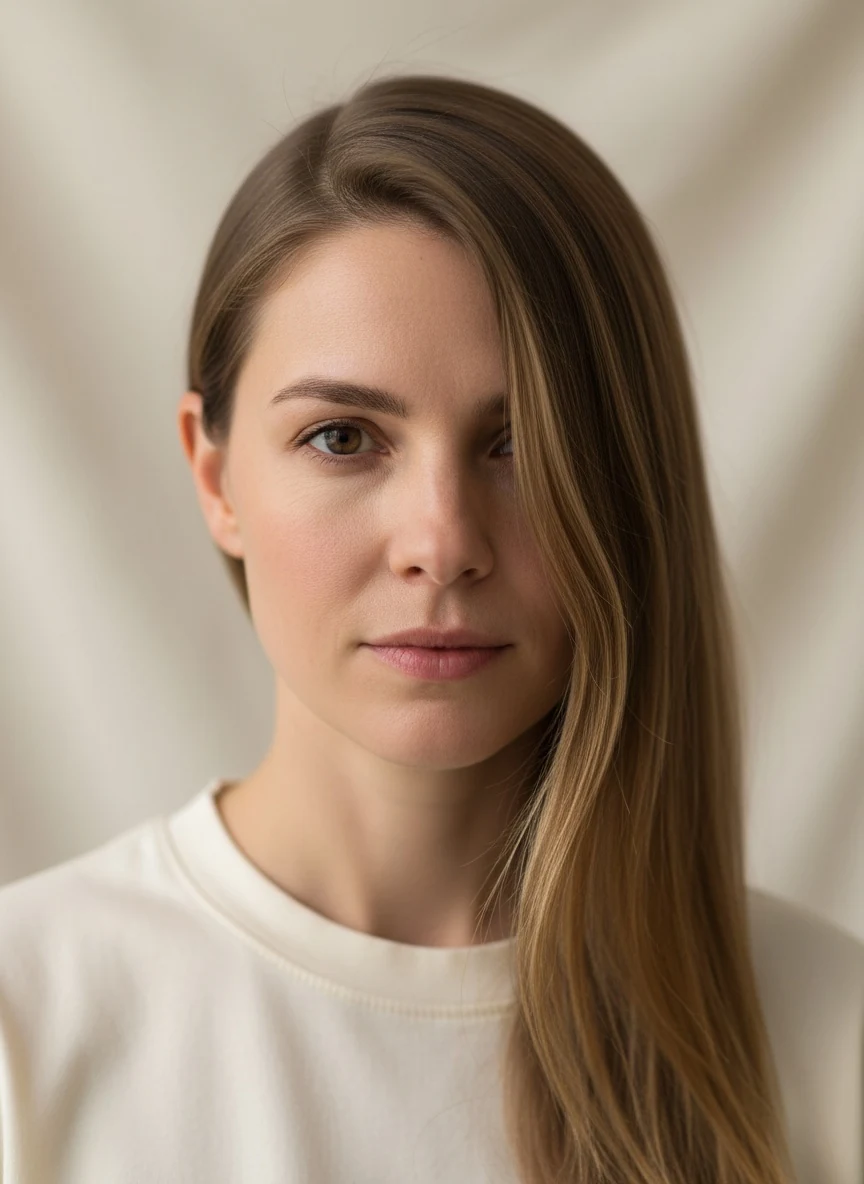
Long side-swept fringe
A fringe cut long and brushed to one side covers part of the forehead on a diagonal, which leaves more visible height than a straight fringe and breaks the symmetry of the face.
Textured shag with lift at the crown
Short layers concentrated on top give height, and a shag's thinned ends keep the sides from building into a rounded mass at ear level.
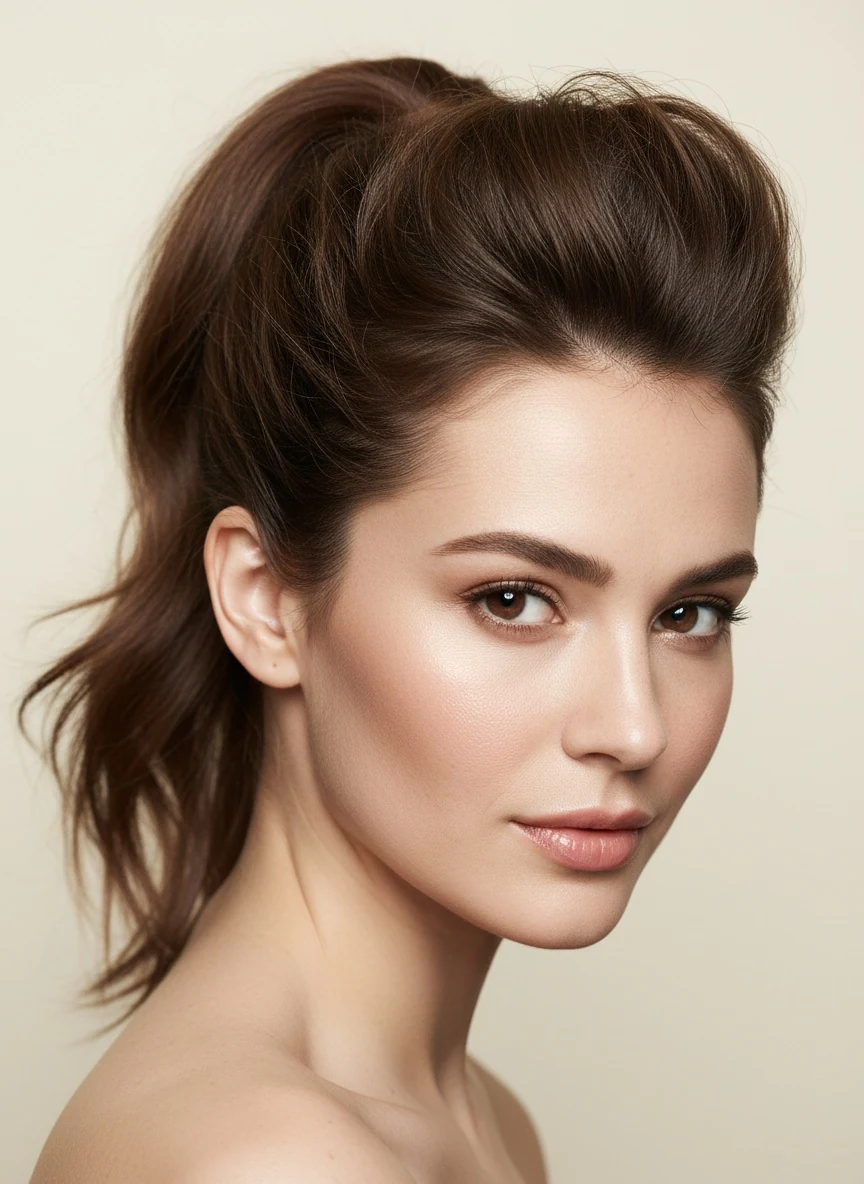
High ponytail with height at the roots
Pulling everything up shows the full length of the face and moves the hair's volume above it. It only works if the top has lift; hair pulled flat to the scalp shows the round outline instead.
Haircuts for a round face — men
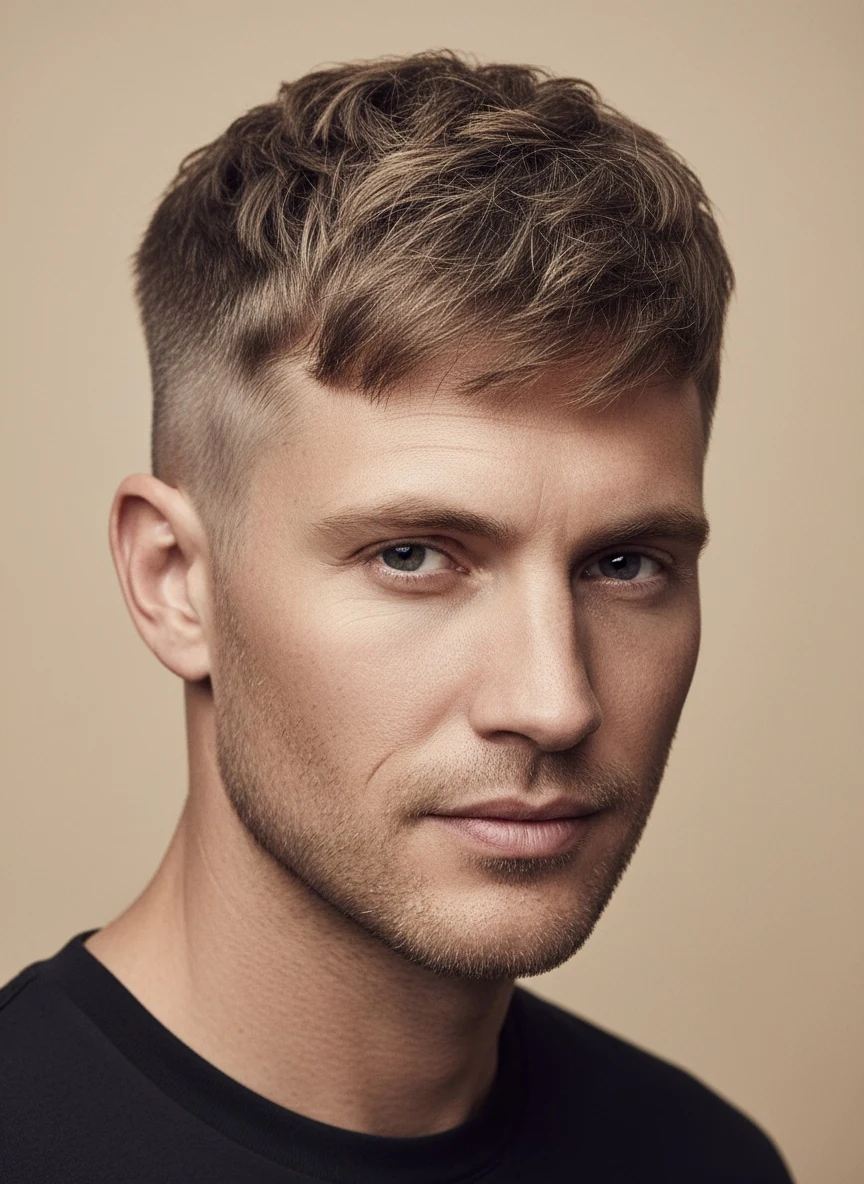
Textured crop with a high fade
Clipping the sides high narrows the head at temple and cheek level, and a choppy top gives the crown lift. Push the front up rather than wearing it as a straight fringe.
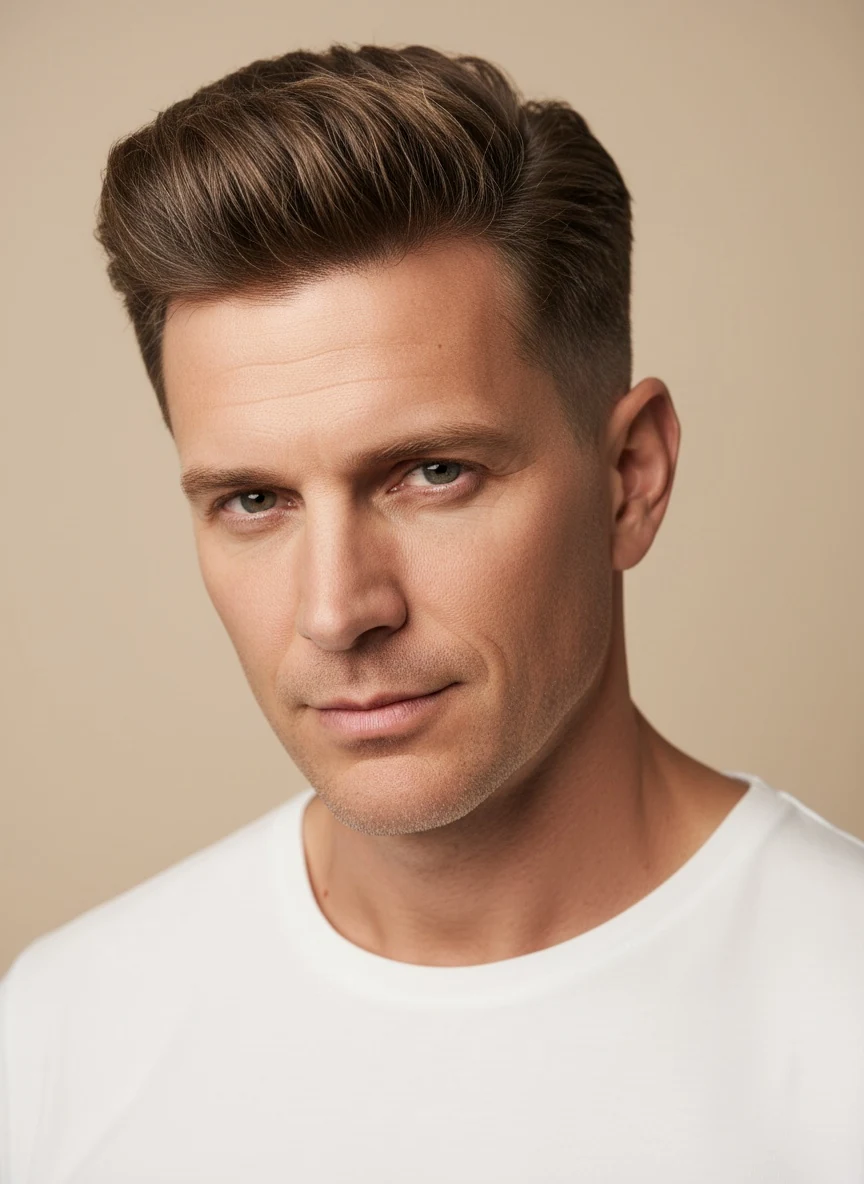
Textured quiff
The front brushed up and back adds height where the outline needs it most, with less styling than a smooth pompadour.
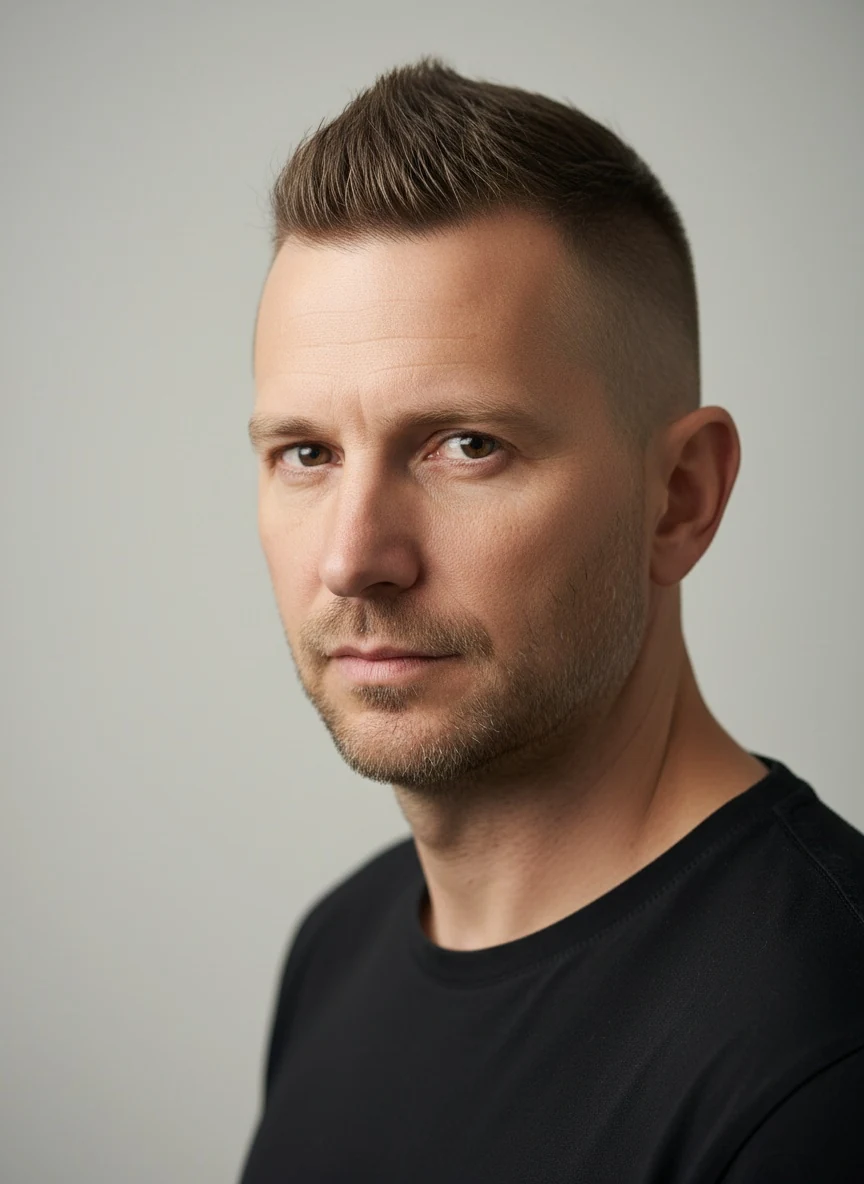
Faux hawk
Volume gathered in a strip down the middle of the head adds height and narrows the silhouette in one move.
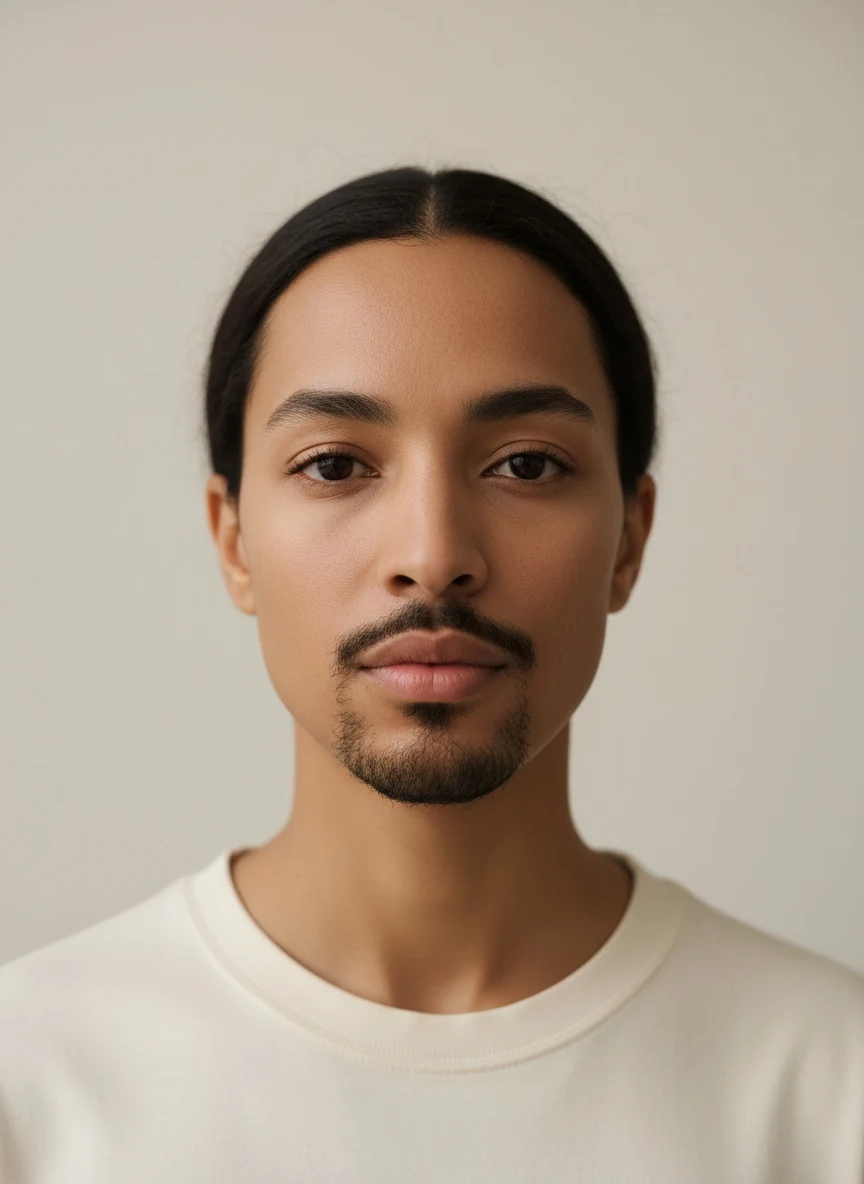
Goatee or a beard short at the cheeks
Hair at the chin with little or none on the cheeks lengthens the lower face. A full beard grown out on the cheeks adds width at the widest point.
By hair type
- Straight
- Straight hair collapses toward the scalp, so the height a round face needs has to come from a blow-dry, root product or a cut with lift built in. An off-centre part costs nothing and helps more than most cuts.
- Wavy
- Waves already break up vertical lengths, which suits this shape. Encourage the bend to run downward; a wave that flips out beside the ears adds width exactly where it is not wanted.
- Curly
- Curls spread sideways as they grow. Keep more length on top than at the sides, or enough overall length that the weight pulls the curls down past the cheeks.
- Fine
- Fine hair flattens quickly, and a flat outline looks wider. A shorter cut with texture on top usually beats long, thin lengths; start any face-framing pieces at chin level or lower.
- Thick
- Thick hair holds height easily but bulks out around the ears. Ask for weight removed from the sides and mid-lengths while the top is left full.
Round face hairstyles to avoid
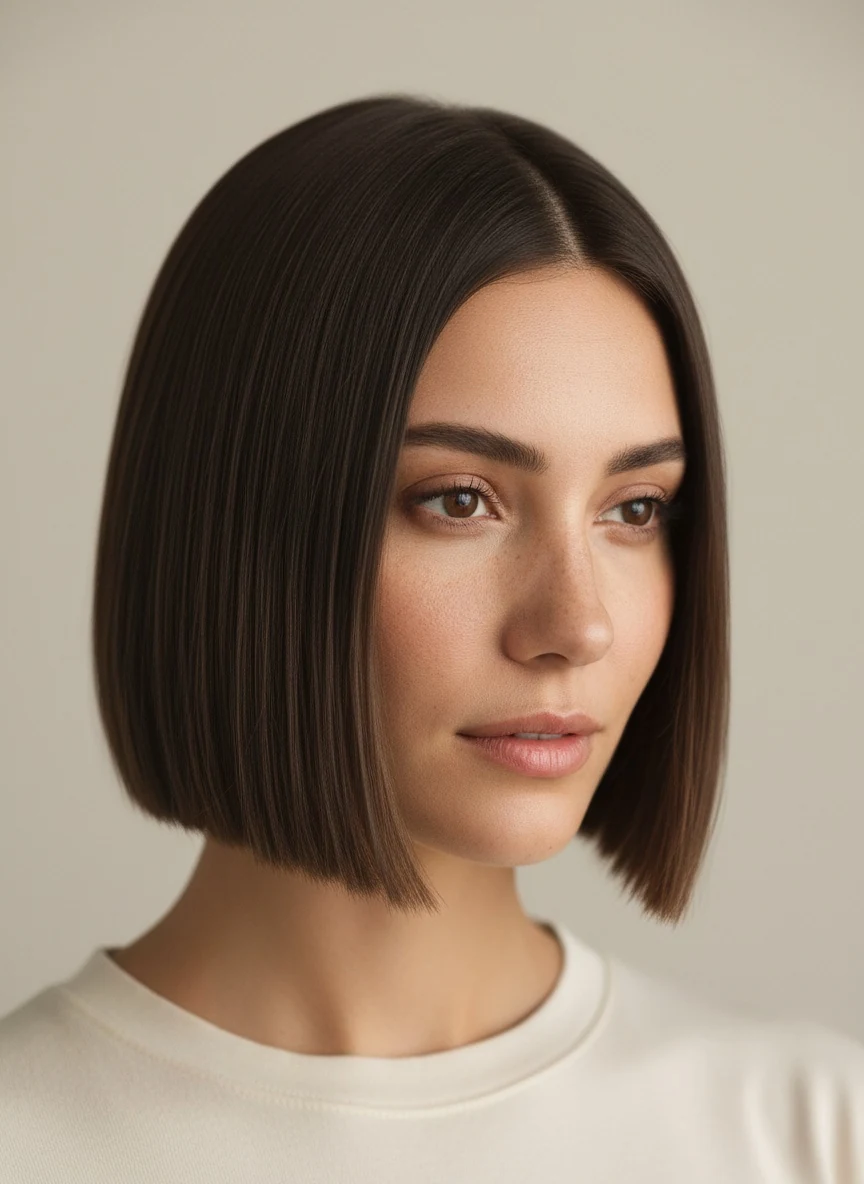
A one-length bob that stops at the chin
Its level edge lands close to the widest part of the face and draws a horizontal line there.
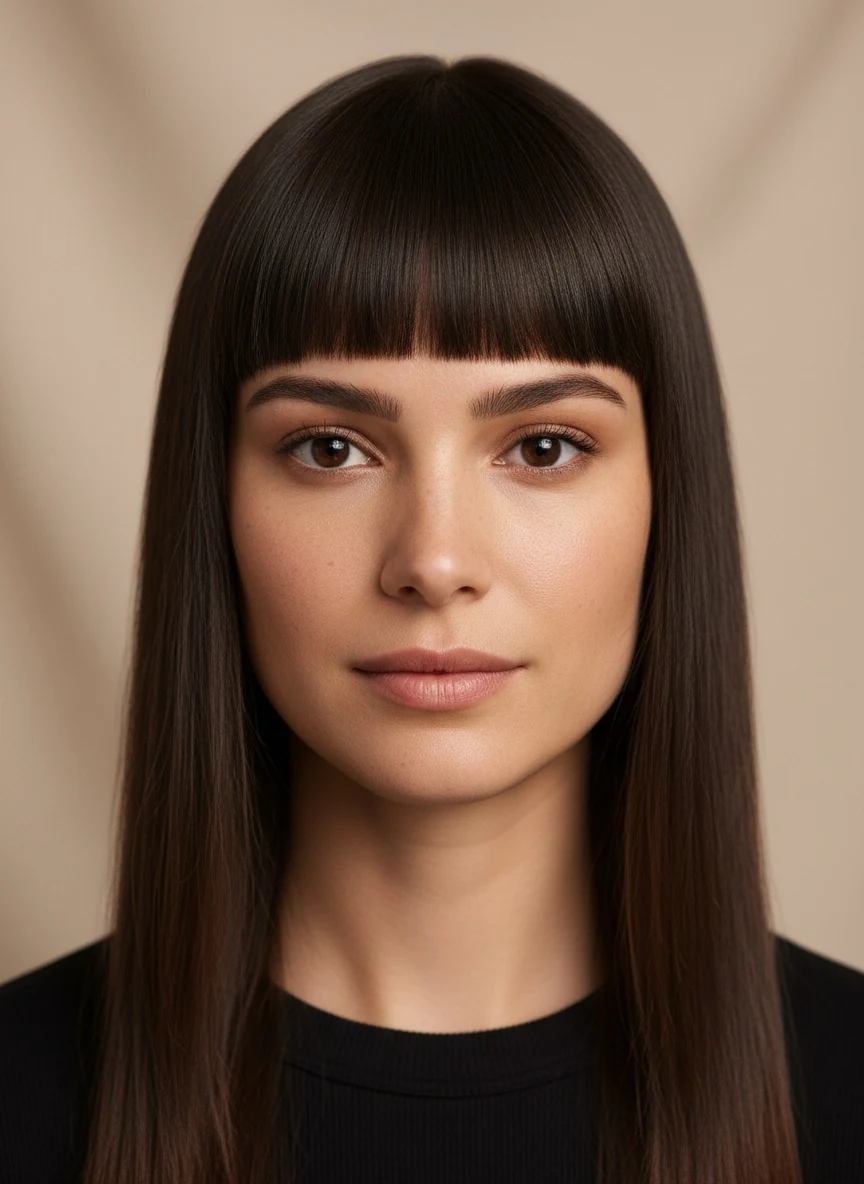
A heavy straight-across fringe
It hides the forehead and so shortens the visible face, and a round face has no length to spare.
Volume at ear level
Round blow-outs, short curls at the sides or grown-out sides on a man's cut all add width beside the cheeks.
Flat hair with a centre part
No height on top and a symmetrical frame around the cheeks give the outline nothing to break it up.
Beard styles for a round face
This is the highest-demand beard question of the seven shapes by a wide margin, and the principle is simple: length at the chin, short at the sides.
- Keep the sides trimmed close so nothing is added to the widest part of the face
- Let the chin grow longer — a short goatee or an extended goatee lengthens the outline
- A defined, slightly angular jaw line rather than a curved one
- Avoid full round beards and mutton chops, which widen exactly where the face is already wide
Makeup for a round face shape
Every recommendation here works in the same direction: create vertical, reduce horizontal.
- Contour along the sides of the face, from temple to jaw, in a straight line rather than a curve
- Highlight down the centre — forehead, nose bridge, chin — to draw the eye vertically
- Blush angled up toward the temple instead of round on the apple
- An arched brow rather than a flat one, which adds height to the upper third
Glasses for a round face
A round face has near-equal width and length with no hard corner anywhere. Angular frames supply the structure the bone does not, which is why almost every recommendation here has a straight line in it.
Rectangular
Works
Browline
Also works
Small round
Fights the shape
Frame styles that suit a round face
Each style below opens to name real frames that match it, with the measurement that matters. Price band: $ under $100, $$ $100–250, $$$ above $250. Links go to Amazon search results rather than a single product, so they keep working when a colour or size sells out.
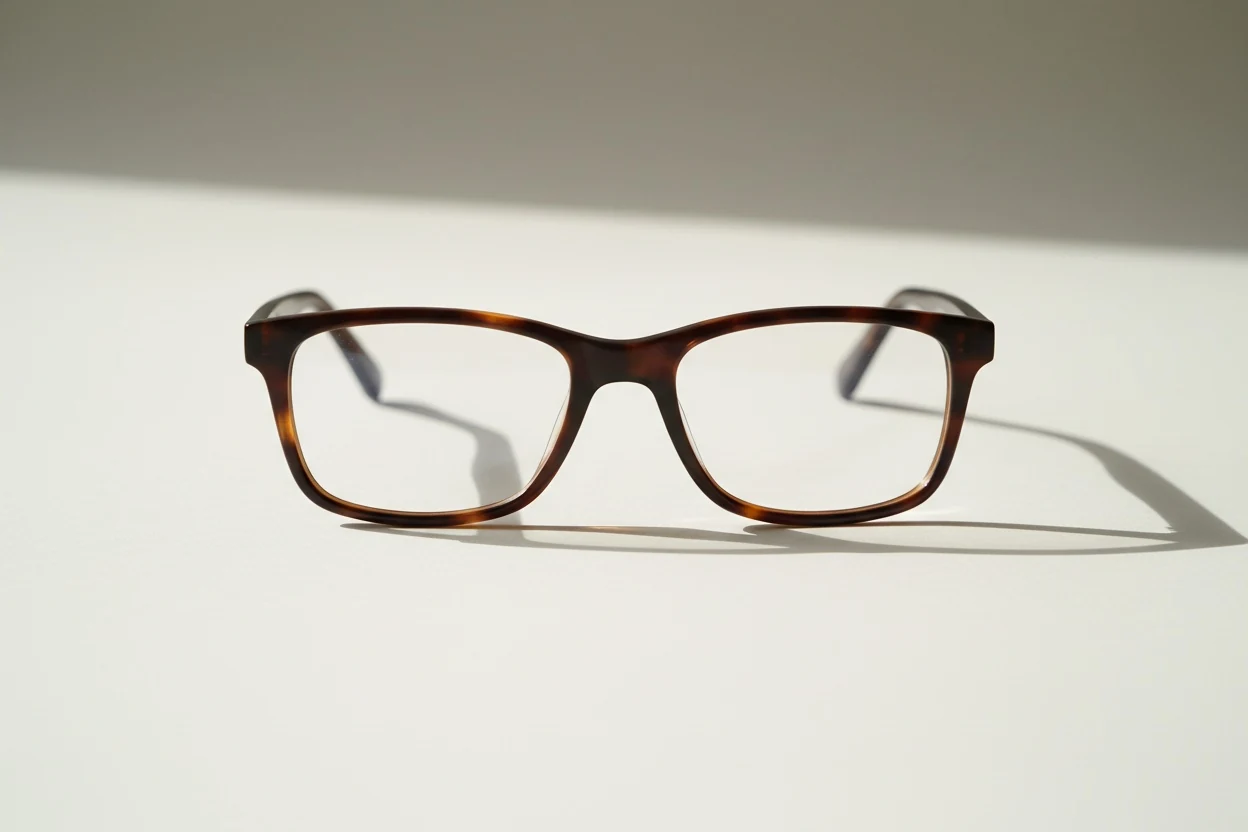
Rectangular glasses
The most reliable everyday shape: a straight top line and defined corners cut against every curve in the face. Choose lenses noticeably wider than they are deep, so the frame does not repeat the face's near-equal proportions.
RB5228 Square Optics · Chamberlain · Wilkie
Eyeglasses · 53-17 · $$
Acetate, full rim, square with the corners slightly softened. The lowest-risk version of an angular frame — you get the straight top line without the formality of a hard rectangle.
Eyeglasses · 50-18-140 · $$
A bold square with a strong bridge. One of the few models sold in a wide fit, so a broad face does not run out of frame.
Eyeglasses · $$
Rectangular lenses under a sloped browline. It runs two mechanisms at once, which makes it the second option when a face wants both corners and weight up top.
Square
The same idea as rectangular with more presence. Proportion is the thing to check: a true square lens is as deep as it is wide, and on this face a little extra width is what keeps it working.
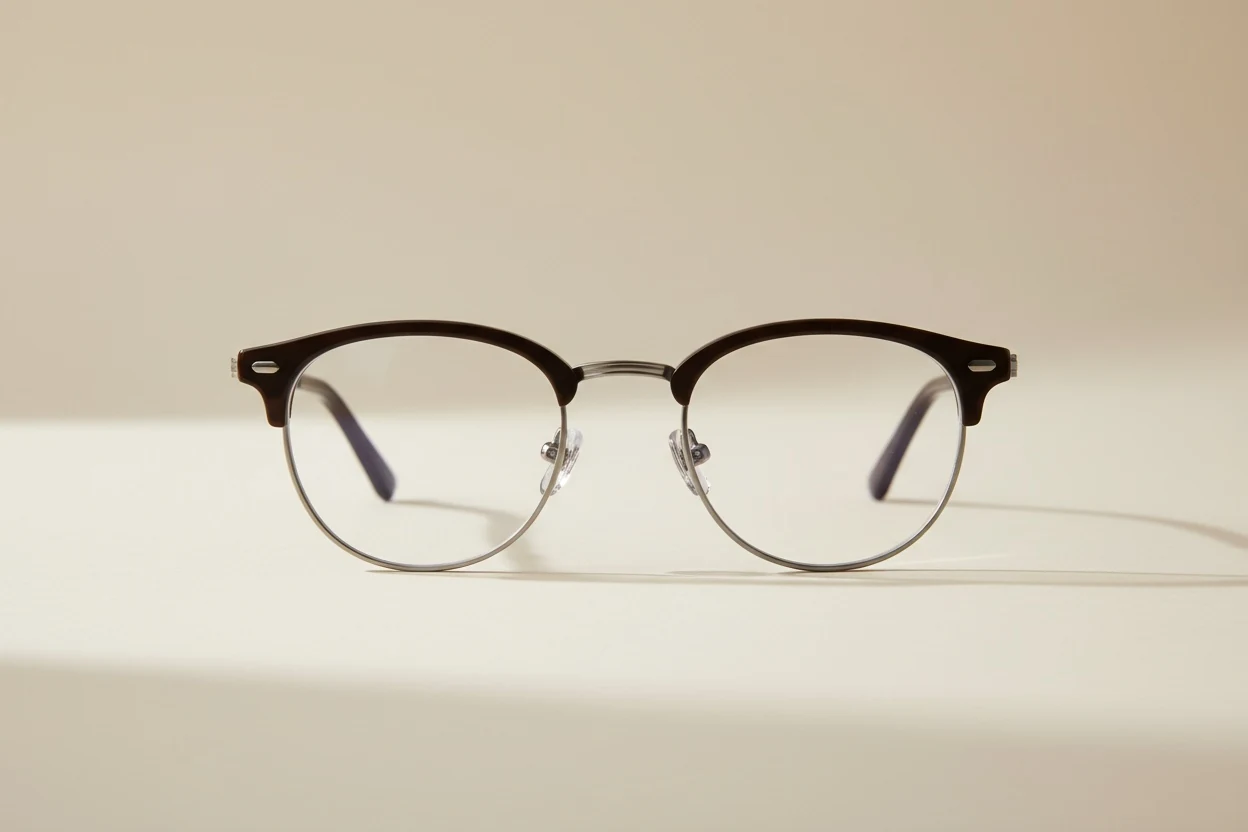
Browline
The heavy top bar concentrates weight at the brow and lifts the read of the face upward.
Clubmaster RB3016 · Clubmaster RX5154
Sunglasses · 51-21 · $$
The definition of the category: heavy acetate above, thin metal below. The purest form of moving weight to the brow.
Eyeglasses · $$
The prescription version of the RB3016. Same geometry, as everyday glasses.
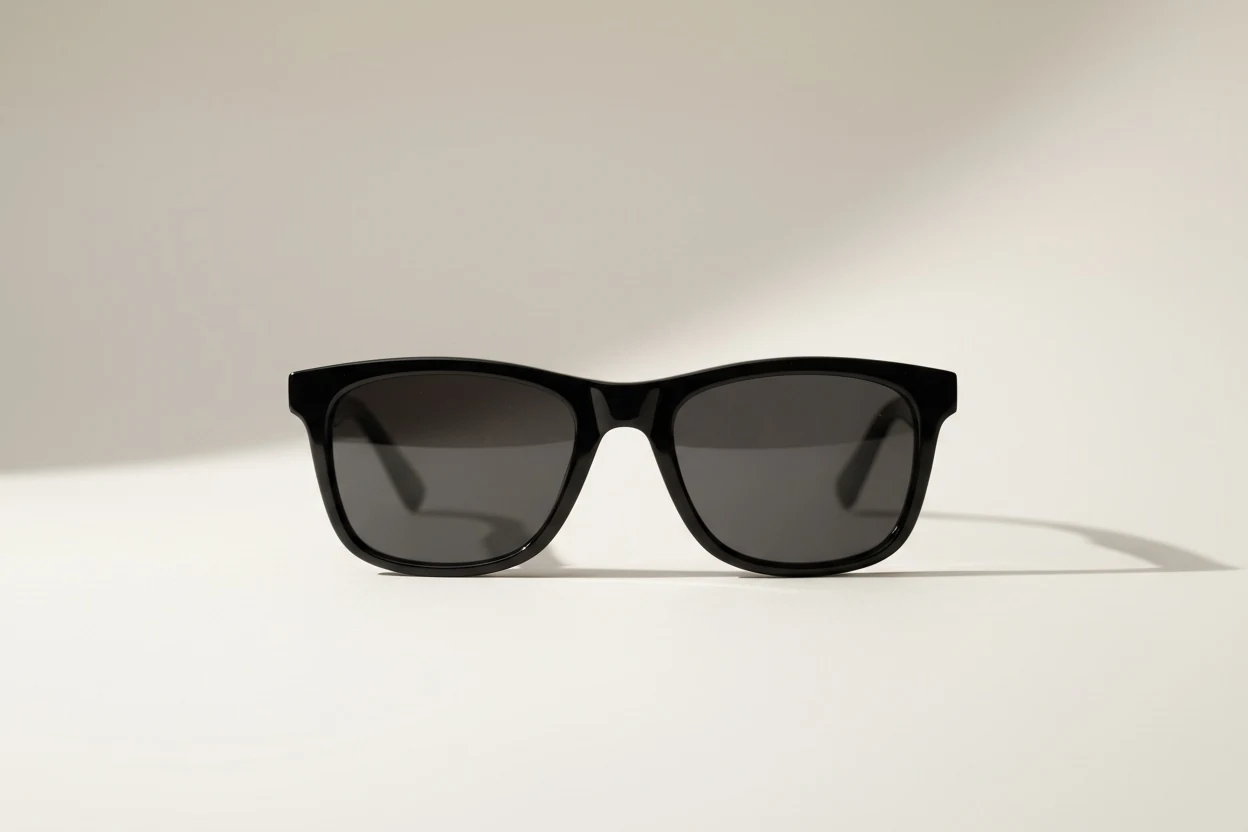
Wayfarer
Angular enough to add structure without the formality of a hard rectangle, which is why it survives on most faces.
Original Wayfarer RB2140 · New Wayfarer RB2132
Ray-Ban Original Wayfarer RB2140
Eyeglasses & sunglasses · 50 / 54 · $$
It sits with a forward (pantoscopic) tilt and has a deeper lens than the New Wayfarer. This is the one to pick on a long face: it covers more vertical ground.
Eyeglasses & sunglasses · 52 / 55 / 58 · $$
No tilt, sits flat against the face, shallower lens. The model for people on whom the original looks oversized — and the three sizes live here.
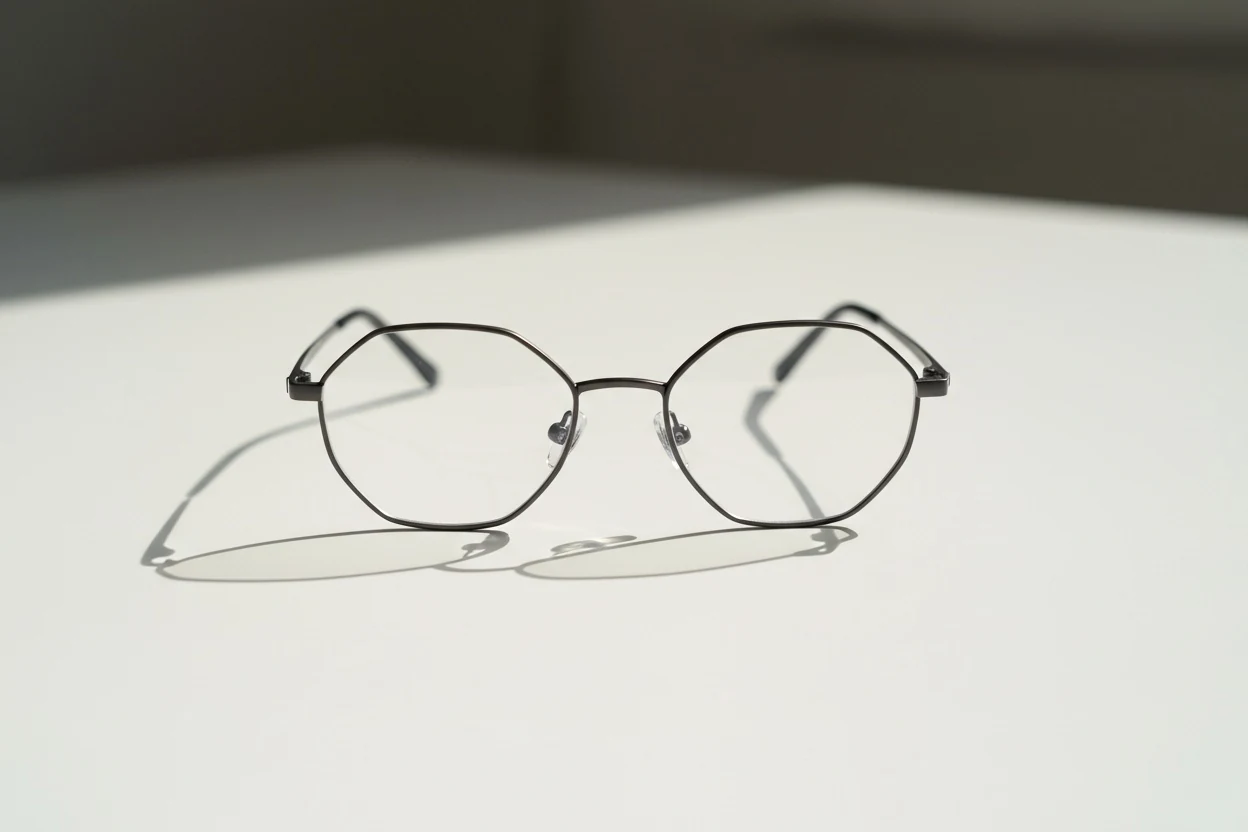
Geometric
Hexagons and angled shapes maximise the contrast between frame and face — the most deliberate version of the same idea.
Hexagonal RB3548N
Sunglasses · $$
A hexagon in thin metal. The angular version of round: it does the same job as a circle while leaving a corner on every side.
Women's frames for a round face
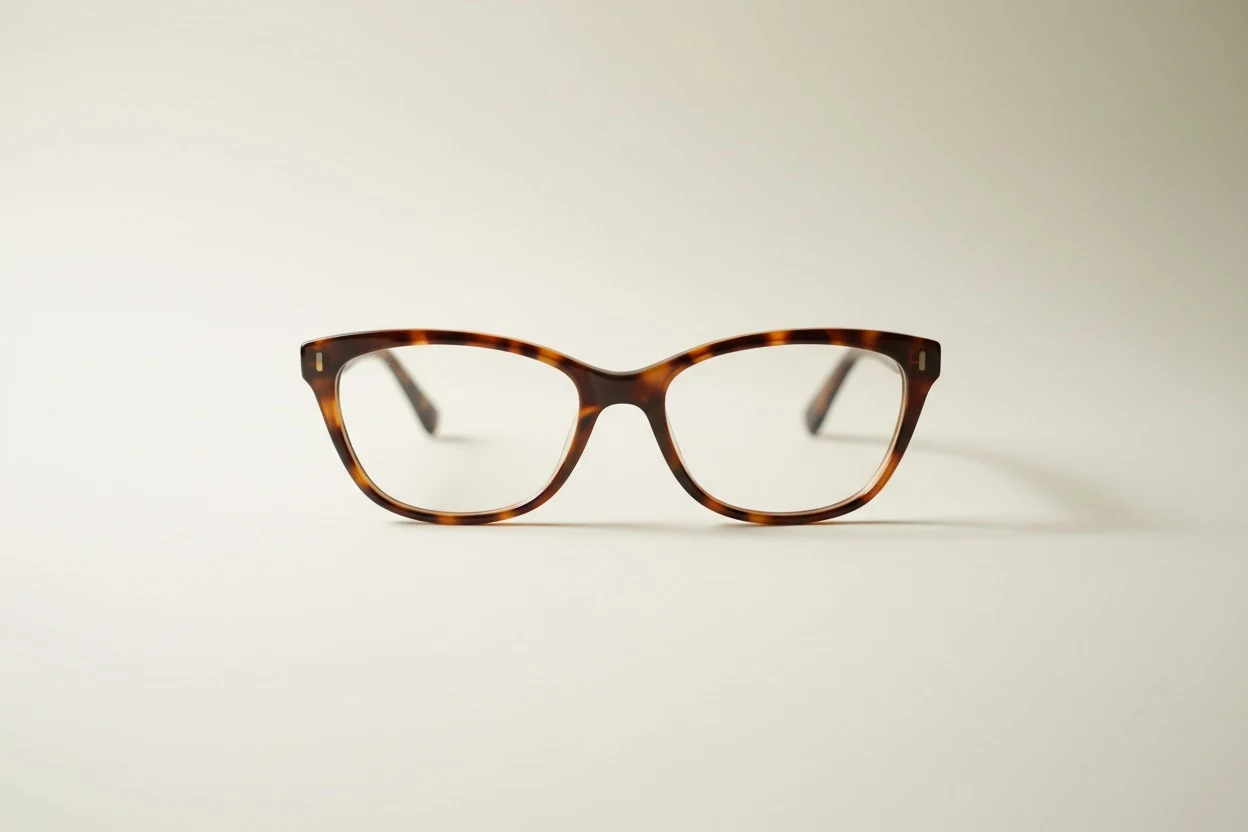
Squared cat-eye
A cat-eye whose top line runs straight before the outer corner lifts. The straight line adds structure to a curved outline and the lift draws the eye up and out, away from the fullest part of the cheek.
Nina RB4314N · Esme · Louise
Sunglasses · 54 · $$
The measured version of a cat-eye: the outer corner lifts, but not far enough to read as costume in daily wear.
Eyeglasses · 55-16-145 · $$
A squared cat-eye. It combines the lifted outer corner with a straight top line, so it works where a face wants width and structure at once.
Eyeglasses · 52-15-140 / 55-16-140 · $$
The classic soft cat-eye, in two sizes. If your cheekbones are prominent, the smaller size keeps the frame from landing on the bone.
Thin metal geometric frames
Hexagons and octagons in fine metal add corners without adding weight, which keeps the frame from sitting on a soft face like a block.
A coloured or contrasting top rim
A darker or brighter upper rim puts a horizontal line high on the face, where it reads as structure rather than width.
Men's frames for a round face
Browline
The heavy upper bar concentrates weight at the brow and leaves the lower half of the lens light, so the frame does not add bulk at cheek level. The Clubmaster models under the browline style above are the reference.
Wide-fit rectangular acetate
A broad face runs out of frame on a standard fit, and a frame that ends inside the widest point makes the face look wider. Some rectangular models, such as the Warby Parker Chamberlain listed above, are sold in a wide fit.
Angular frames with a beard shaped the same way
A beard kept short at the cheeks and a little longer at the chin draws a vertical line in the lower face, and an angular frame draws structure in the upper face. Both point the same direction; see the beard section on this page.
What size frames fit a round face
The most common frame mistake on a round face is size rather than style: a frame narrower than the face leaves the cheeks extending past it, which makes them read wider. Aim for a total frame width close to the width across your cheekbones, and lenses that are wider than they are deep. The three numbers printed inside a temple arm, such as 52-18-140, are the lens width, the bridge width and the arm length in millimetres. Lens height is usually not printed; product pages list it separately. Frames are fitted around your pupils, so your pupillary distance is worth knowing before you order online.
| Check | What to look for | Why it matters on a round face |
|---|---|---|
| Total width | About as wide as your cheekbones | A narrower frame makes the face beside it look wider |
| Lens shape | Wider than it is deep | A tall lens repeats the face's near-equal proportions |
| Top line | Straight or gently angled | A straight line is the structure the outline lacks |
| Bridge | Sits at or slightly above the eyes | A low-sitting frame shortens the visible nose and face |
| Colour weight | Heavier at the top than the bottom | Weight high on the face reads as lift, not bulk |
Round and square faces have almost the same proportions and opposite frame advice: angles for round, curves for square. If you are unsure which you are, the comparison sections above show the jaw difference, and the tool at the top of the page measures it.
Sunglasses for a round face
Square and classic wayfarer shapes are the safest, for the same reason as the eyeglasses. Go slightly oversized with a defined edge rather than small and round.
Wayfarer
Angular enough to add a corner on each side, wide enough to reach the cheekbones, and familiar enough to wear anywhere.
Squared oversized sunglasses
Size works on a round face when it comes with corners: a large frame with a straight top line covers the widest zone and draws a structure across it.
Hexagonal metal
The angular cousin of a round lens. It keeps the lightness of a thin metal frame while leaving a corner on every side.
Frames to avoid
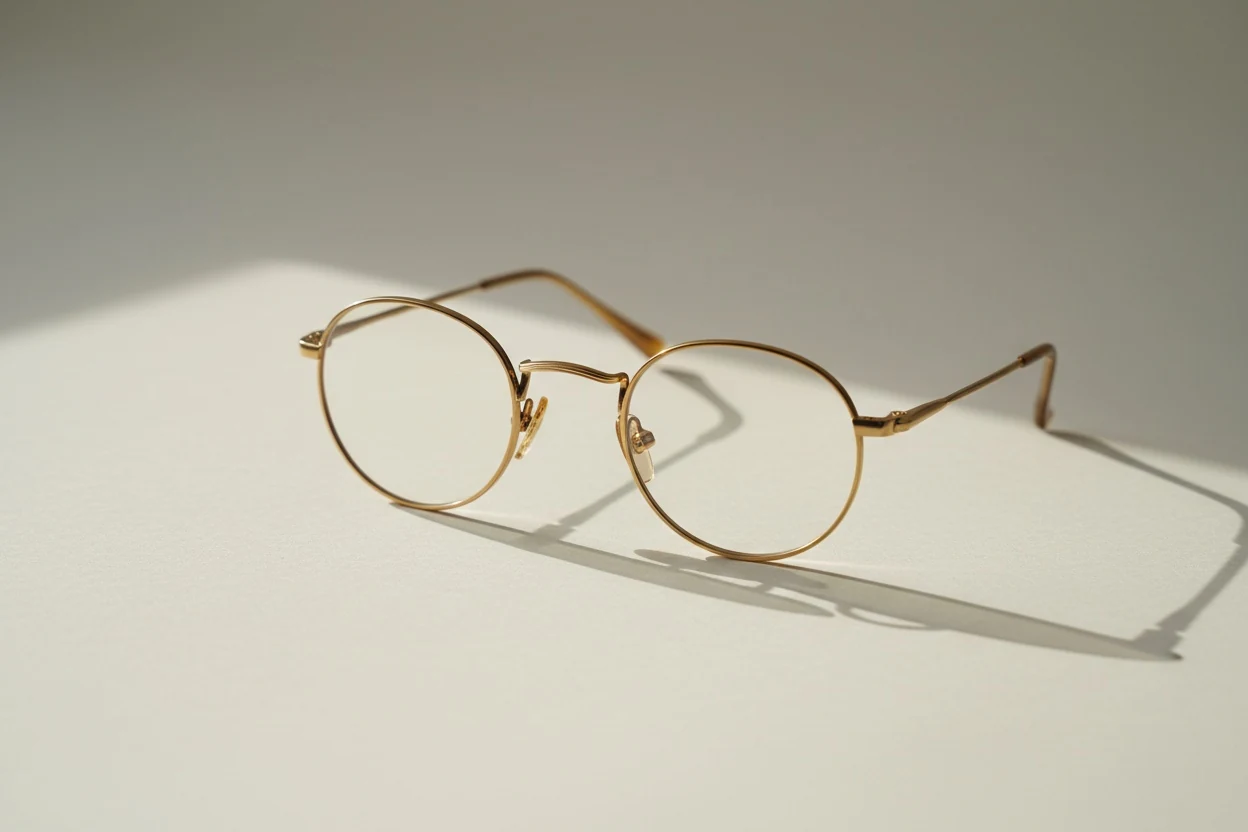
Small round frames
They repeat the face's own line and sit inside its widest part, which emphasises width twice over.
Frames narrower than the face
Anything that ends before the widest point makes the face read wider by contrast.
Not sure this is your shape? Glasses for face shape measures it from a photo and lists the frames that suit the result.
The round face shape on men
On men the question behind a round result is almost always about the jaw, and the answer is usually facial hair rather than anything structural. A beard is the single largest change available to the outline of a round male face, and it works by adding length at the chin, not width at the sides.
Round face shape celebrities
Round is the shape most often used as an insult in celebrity commentary, which is a reason to be more careful with the label rather than less. This site does not publish a list of who has one. The measurement is a length-to-width ratio, it takes a straight-on photo, and no press image is taken with that in mind.
Procedures that change a round face
If the softness at the lower face is what you want to change, these simulations touch the same area.
 Before
 After — simulatedBuccal Fat Removal
 Before — generated
 After — simulatedMasseter Botox
 Before
 After — simulatedJawline Filler
- Buccal Fat Removal →Changes cheek fullness below the cheekbone.
- Masseter Botox →Changes the width of your lower face at the masseter.
- Jawline Filler →Changes definition along your jaw.
- Chin Filler →Changes chin projection, without surgery.
A simulation is a visualisation, not a surgical plan, and nothing on this page is medical advice.
Round face shape — frequently asked questions
Do round faces look younger?
Facial fullness is associated with youth and tends to reduce with age, which is where that observation comes from. It is a correlation with fat distribution, not a property of the shape itself.
Is a round face the same as a chubby face?
No, though the two get used interchangeably. Round is a ratio — on this test, face length no more than 1.16 times cheekbone width measured from the top of the forehead, with a wide jaw — and plenty of very lean faces meet it because their bone structure is short and wide. Weight moves the reading, but it is not what the label means.
How do I make a round face look slimmer?
Every reliable trick works vertically: length at the chin rather than width at the sides, contour in a straight line from temple to jaw, hair with height rather than volume at the cheek. None of it changes the measurement, only the read.
Does a round face change with weight?
More than any other shape. The outline is set by soft tissue as much as by bone, so a round result can move toward oval across a large weight change — and it is the only one of the seven where that is common.
What glasses make a round face look longer?
Angular frames with a defined top line — rectangles, browlines, anything with corners — because they introduce the straight lines the outline does not have. Small round frames sit inside the widest part of the face and repeat its curve, which is the opposite of what you want.
Are rectangular glasses good for a round face?
Yes, they are the most reliable choice. A straight top line and defined corners add structure to a curved outline, and lenses wider than they are deep avoid repeating the face's near-equal proportions. Choose a total width close to the width across your cheekbones.
Can a round face wear round glasses?
Small round frames are the ones to avoid, because they sit inside the widest part of the face and repeat its outline. A larger round frame with a flatter top line, or a keyhole bridge that adds a straight element, can work, because the frame no longer ends inside the face's widest point.
Which frames suit a chubby round face?
The same frames that suit a round face: angular shapes with a defined top line, wide enough to reach the cheekbones. Round is a proportion rather than a weight, and a frame cannot make a face slimmer, but a structured frame of the right width makes the face read longer rather than wider.
The other face shapes
- Diamond face shape →
- Oval face shape →
- Heart face shape →
- Square face shape →
- Oblong face shape →
- Triangle face shape →