Square Face Shape
A square face has a jaw nearly as wide as the cheekbones and a defined angle where the jaw turns. This test calls a face square when the jaw is at least 0.80× the cheekbone width and the forehead is no wider than 1.16× the jaw.
- ≥ 0.80×
- jaw ÷ cheekbones
- ≤ 1.16×
- forehead ÷ jaw
- 7
- face shapes
- Free
- photo not uploaded
Drop a photo into the panel and it will say whether your four measurements read as square.
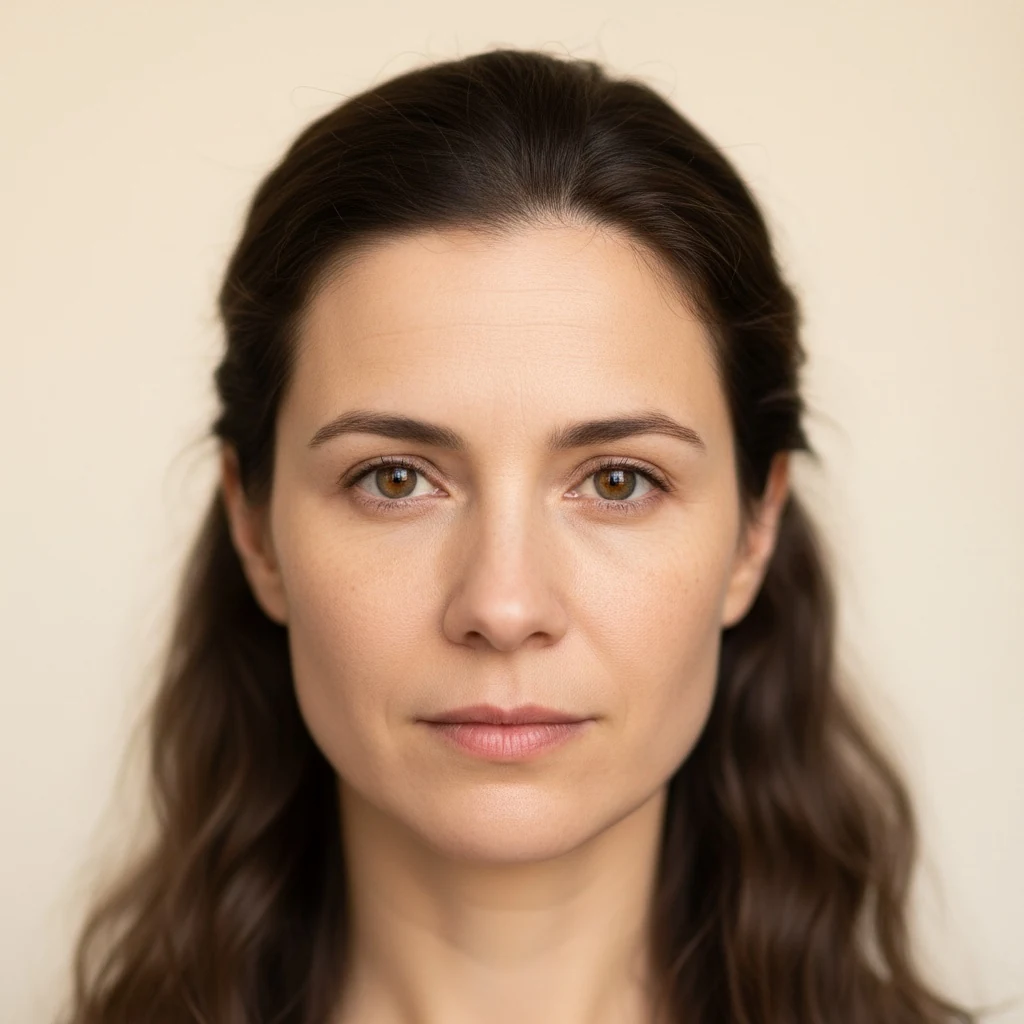 Example
Choose your own photo
Discover your face shape and proportions.
Choose your own photoClick to choose a photo, or drop one here
Front-facing · Even lightingStraight-on, even lighting, at arm's length gives the most comparable reading.
Runs in your browser. Your photo is not uploaded.
How a square face is measured
The three widths sit close together: the jaw measures at least 79.6 per cent of cheekbone width and the forehead is no more than 15.8 per cent wider than the jaw, on a face too long to read round. A jaw that wide against the cheekbones is what reads as a strong, straight-sided lower face.
- Jaw almost as wide as the cheekbones
- Defined angle at the jaw corner
- Forehead width close to jaw width
- Face length close to face width
A square face has forehead, cheekbones and jaw within a narrow band of each other and a jaw that turns a visible angle below the ear. That angle — the gonial angle — is the whole definition, and it is also the reason a square result rarely changes: it is bone, not soft tissue.
Also called: Rectangular face (when longer), Angular face.
How to tell if you have a square face
The jaw does the work here, so measure it properly rather than judging it by eye.
- Face the mirror straight on with your hair back.
- Measure across your cheekbones and then across your jaw, ear to ear below the lobes.
- If the jaw is within about five per cent of the cheekbone figure, the width condition is met.
- Measure face length and divide by cheekbone width — under about 1.2 confirms square rather than rectangular.
- Finally, run a finger from below your ear down along the bone. A square jaw turns a corner you can feel; a round one does not.
A tape measure held against your own face is accurate to maybe half a centimetre, which is enough for the clear cases and not enough for the borderline ones. The tool above takes the same three widths from 478 landmarks instead.
Square vs Round face shape
Identical proportions, different jaw. In a mirror, a jaw that corners visibly is square and one that curves is round. A front-facing photo cannot see the corner well, so this test uses length: a wide-jawed face no more than 1.16 times as long as its cheekbone width reads round, and a longer one with a jaw at 79.6 per cent of cheekbone width or more reads square.
The round face shape in full →Square vs Oblong face shape
Both have three similar widths. Length decides: this test calls a face oblong at 1.23 times cheekbone width or longer, measured from the top of the forehead, and square below that when the three widths stay close. Charts that quote 1.6 and 1.2 measure from the hairline. The same jaw on a longer face gets called oblong or rectangular.
The oblong face shape in full →Hairstyles for a square face
A defined jaw is a feature many people spend money trying to acquire, so this section is written as options rather than corrections. If you want to soften the angles, curves do it; if you want to keep them, the styles that expose the jaw do that instead.
Haircuts for a square face — women
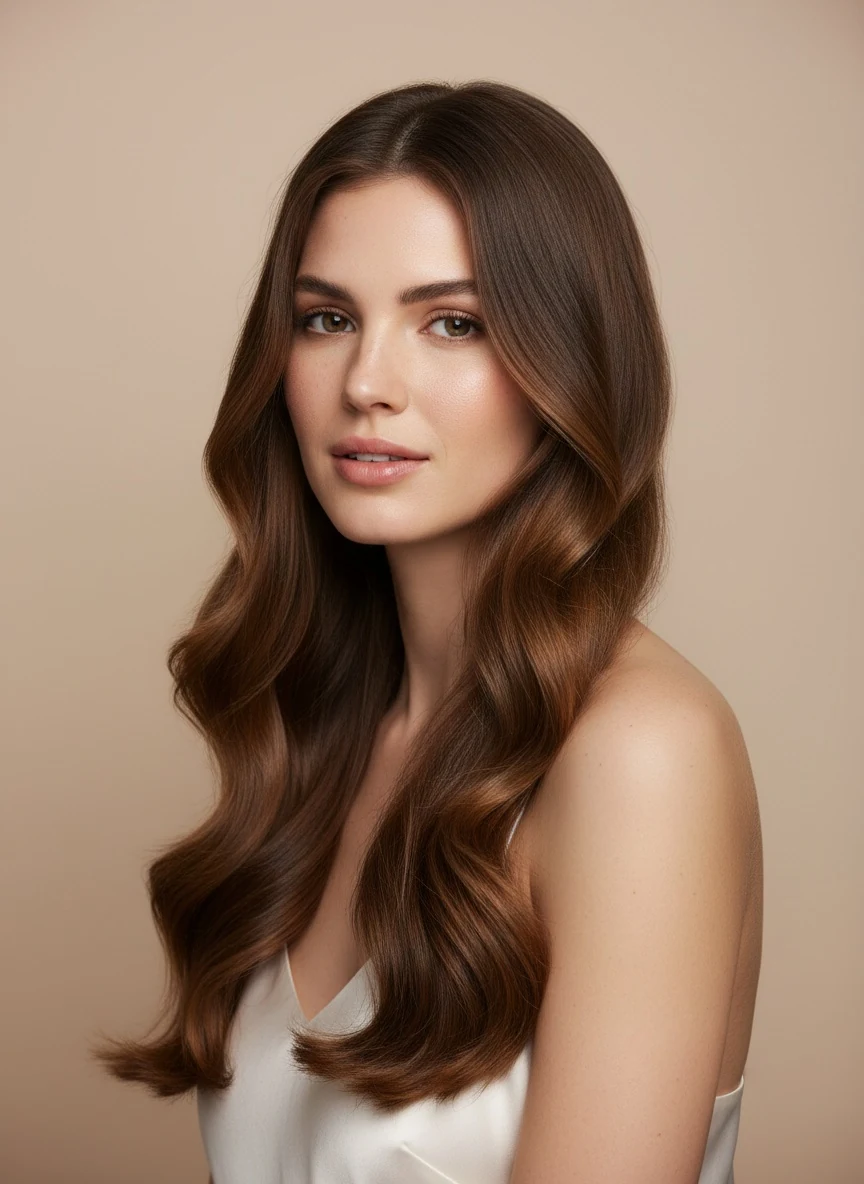
Long soft waves starting below the jaw
Curved lines against straight ones. Starting the wave below the jaw means the softening lands where the corner is, not above it.
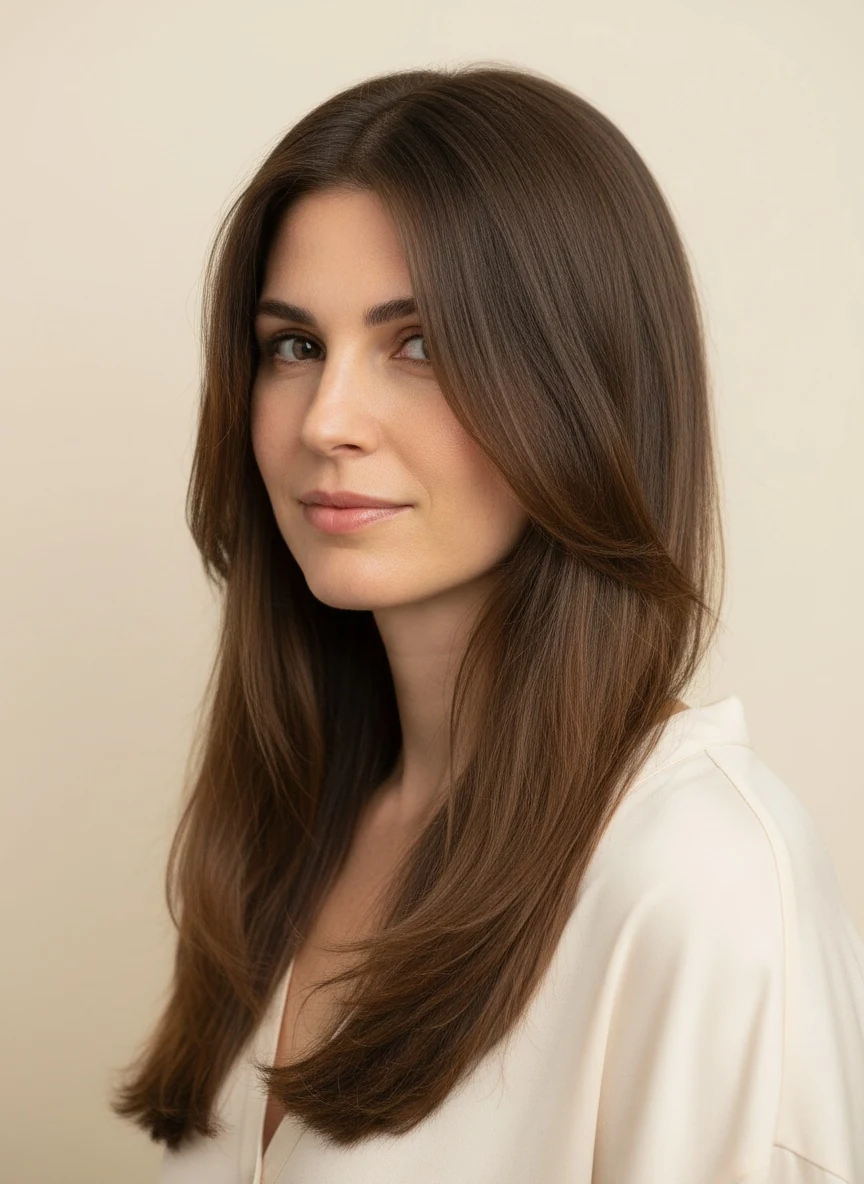
Long layers with movement at the ends
Weight removed at the jaw keeps the corner from being framed by a solid block of hair.
Middle-parted long hair
The opposite intent: it runs two straight lines down beside a straight jaw, which reinforces the structure rather than hiding it. Choose this if the jaw is the point.
Textured lob that ends below the jaw
Ending past the jaw rather than at it keeps the cut from drawing a second horizontal at the widest angle.
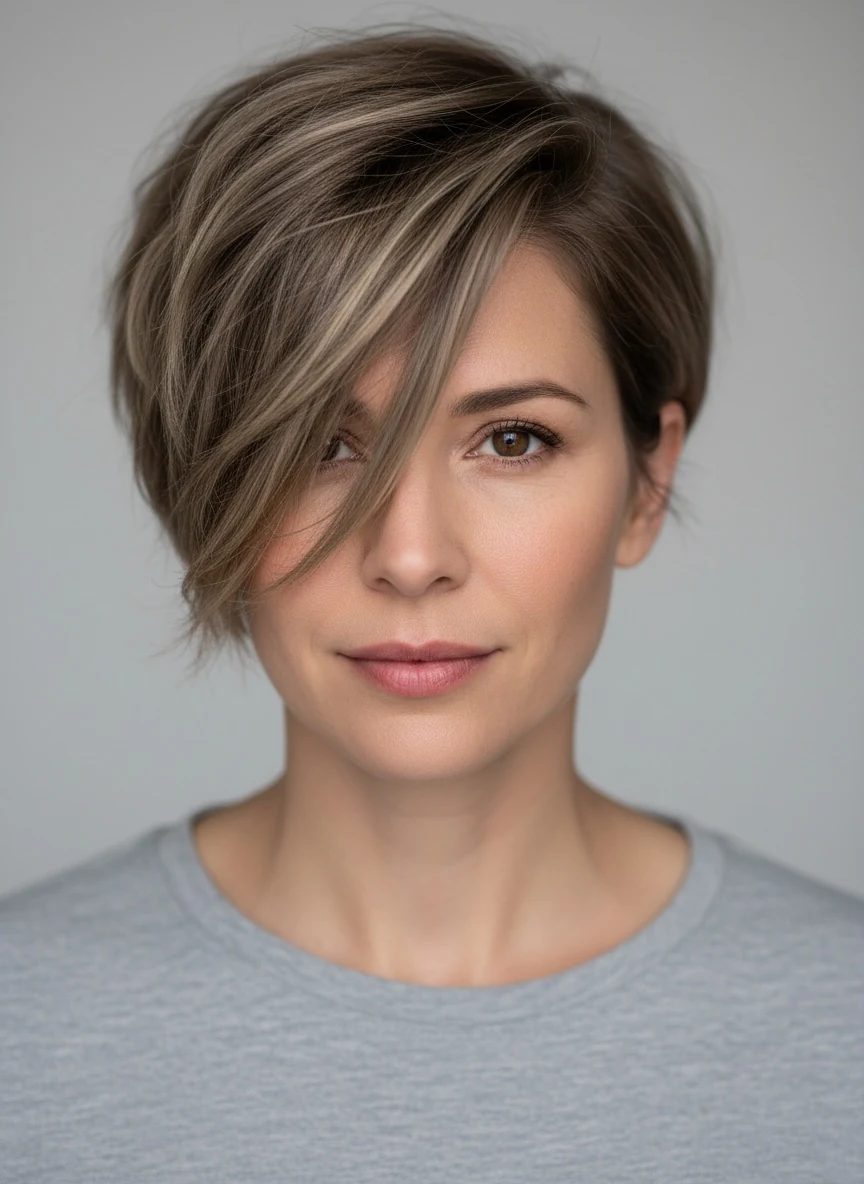
Textured bixie with side-swept length
A short cut that softens a square face through asymmetry rather than volume: the longer side-swept pieces cross the forehead on a diagonal, and the soft, uneven ends avoid a blunt line at the jaw.
Haircuts for a square face — men
Medium-length crop with texture on top
Softens the outline without hiding the jaw, which for most men is the reason the shape was searched in the first place.
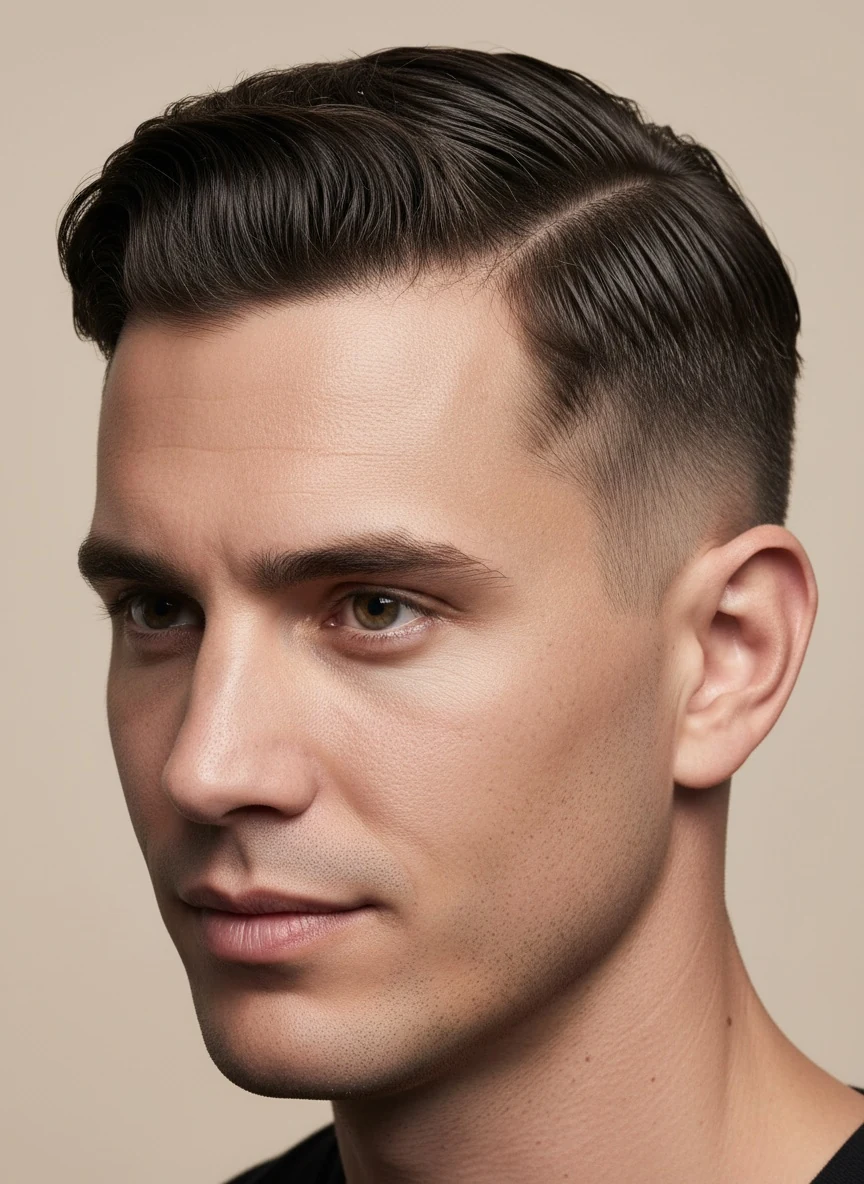
Side part with volume
The diagonal parting breaks the squareness at the top while the jaw stays visible.
Short back and sides with length on top
Height adds a little length to a face that is short relative to its width, and it leaves the jaw completely uncovered.
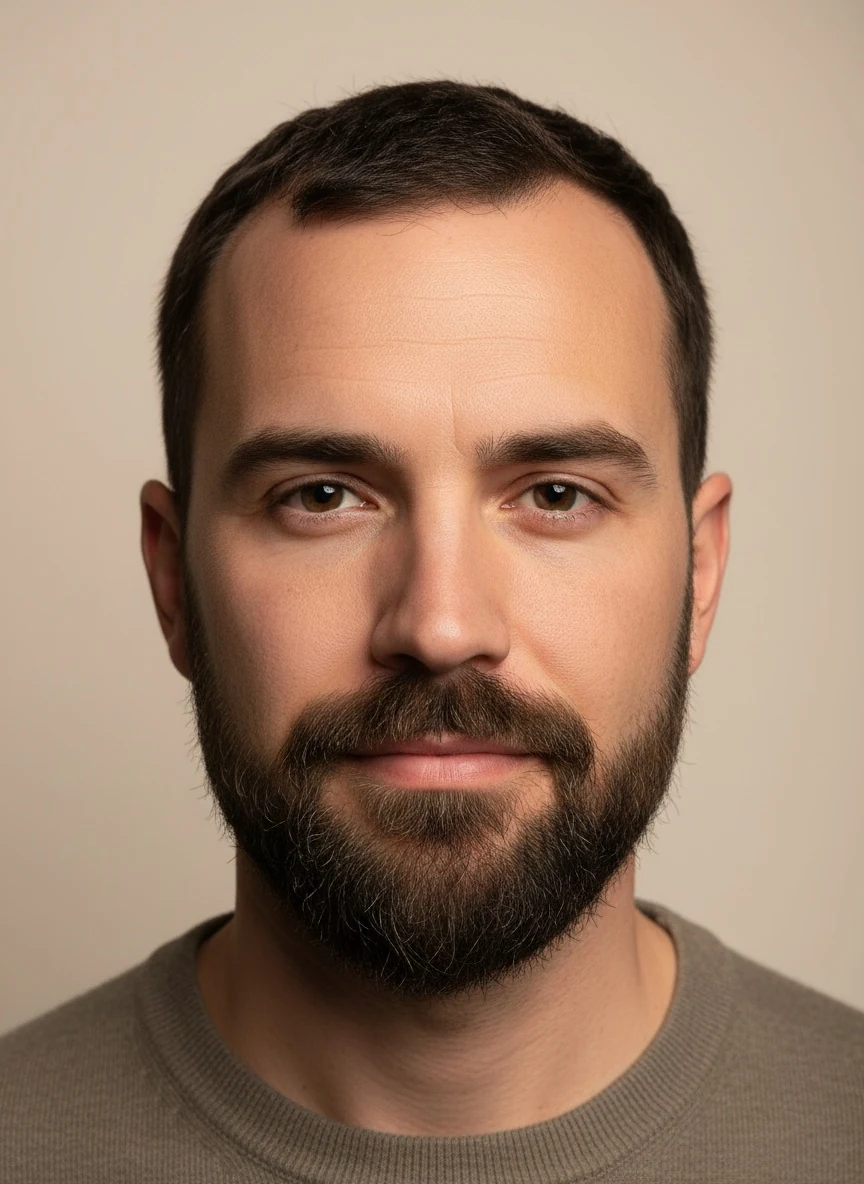
Short, sharply lined beard
This shape is the one that carries a hard beard line best, because the bone underneath already supplies the angle the line follows.
Low fade with a textured, slightly messy top
A high fade strips the sides and makes the head and jaw corners look sharper. A low fade keeps some fullness at the sides, and a loose top adds curves. A buzz cut does the opposite and shows the jaw at its most defined — the right choice if that is the aim.
Short, medium or long hair for a square face
- Short
Women: Short cuts work when they do not end at the jaw corner: a bixie or pixie with side-swept length, or a cut that ends clearly above or below the jaw.
Men: Crops and short back and sides suit a square face. A low fade softens the corners; a high fade and a buzz cut emphasise them.
- Medium
Women: A lob or shoulder-length cut should pass the jaw by a few centimetres, so the ends fall below the corner instead of framing it.
Men: Medium-length textured hair and side parts with some movement add curves while leaving the jaw visible.
- Long
Women: Long layers or waves that start below the jaw soften the lower face. This is also the most effective way to make a square face read narrower at the jaw.
Men: Chin-length or longer hair softens the outline; keep it layered so it does not form a block at jaw level.
Bangs for a square face
Wispy or textured fringe
Separated pieces break the straight line of the forehead without drawing a new one.
Side-swept fringe
A diagonal across the forehead interrupts the parallel lines of forehead and jaw that define the shape.
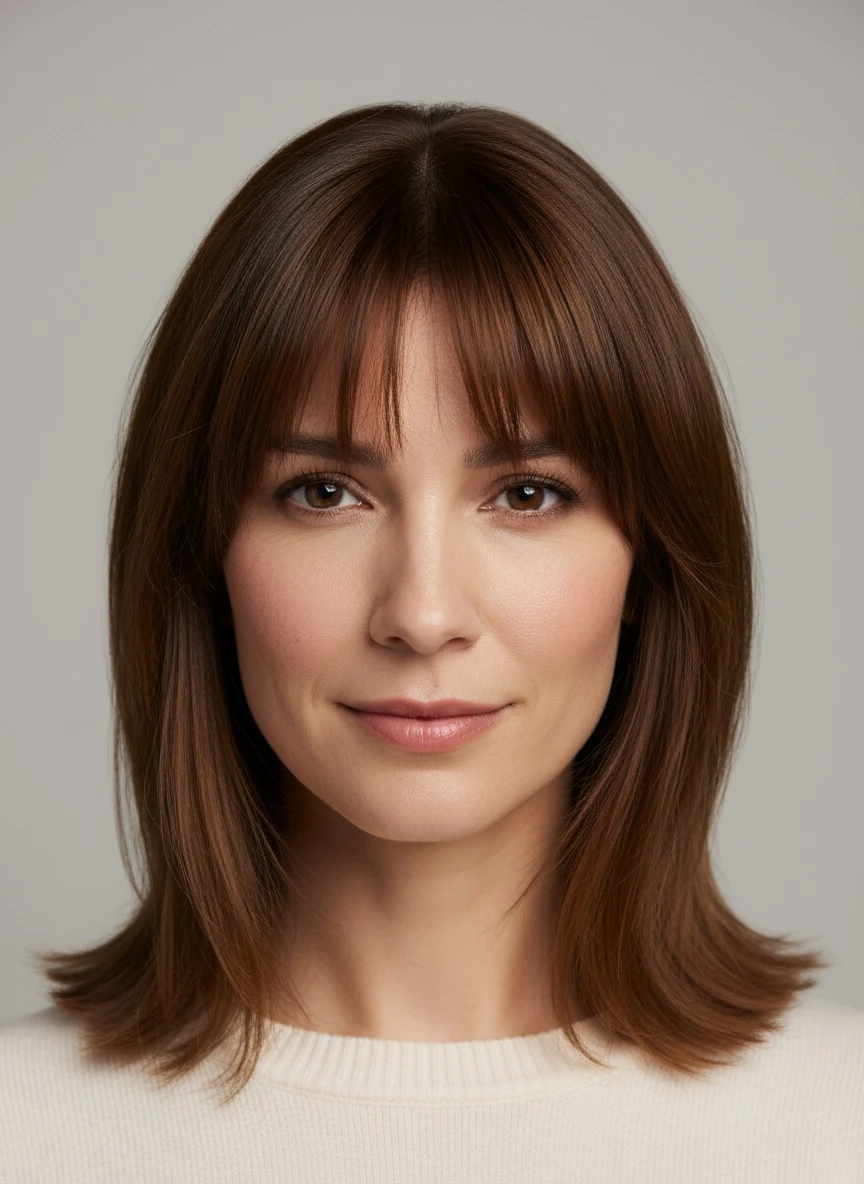
Curtain bangs
The two framing sections curve toward the cheekbones and away from the jaw corners, adding a soft line in the upper face.
Blunt straight fringe — use with care
It adds a second hard horizontal to a face already built on straight lines, so it tends to make a square face look more angular.
By hair type
- Straight
- Straight hair repeats the straight lines of the face, so any softening has to come from the cut — layers, a side part, or length that passes the jaw rather than stopping at it.
- Wavy
- The easiest texture for softening this shape, because the curve is already there. Let the wave fall around the jaw rather than above it.
- Curly
- Curl and a square jaw balance each other well: the roundness of the curl against the angle of the bone. Keep the volume from sitting exactly at jaw level, where it doubles the width.
- Fine
- Fine hair lies close to the head and shows the outline underneath, so if softening is the goal, layers and waves matter more here than for any other texture.
- Thick
- Thick hair can bulk out at the jaw and make a wide lower face wider. Internal layers keep the weight off the corner.
Square face hairstyles to avoid
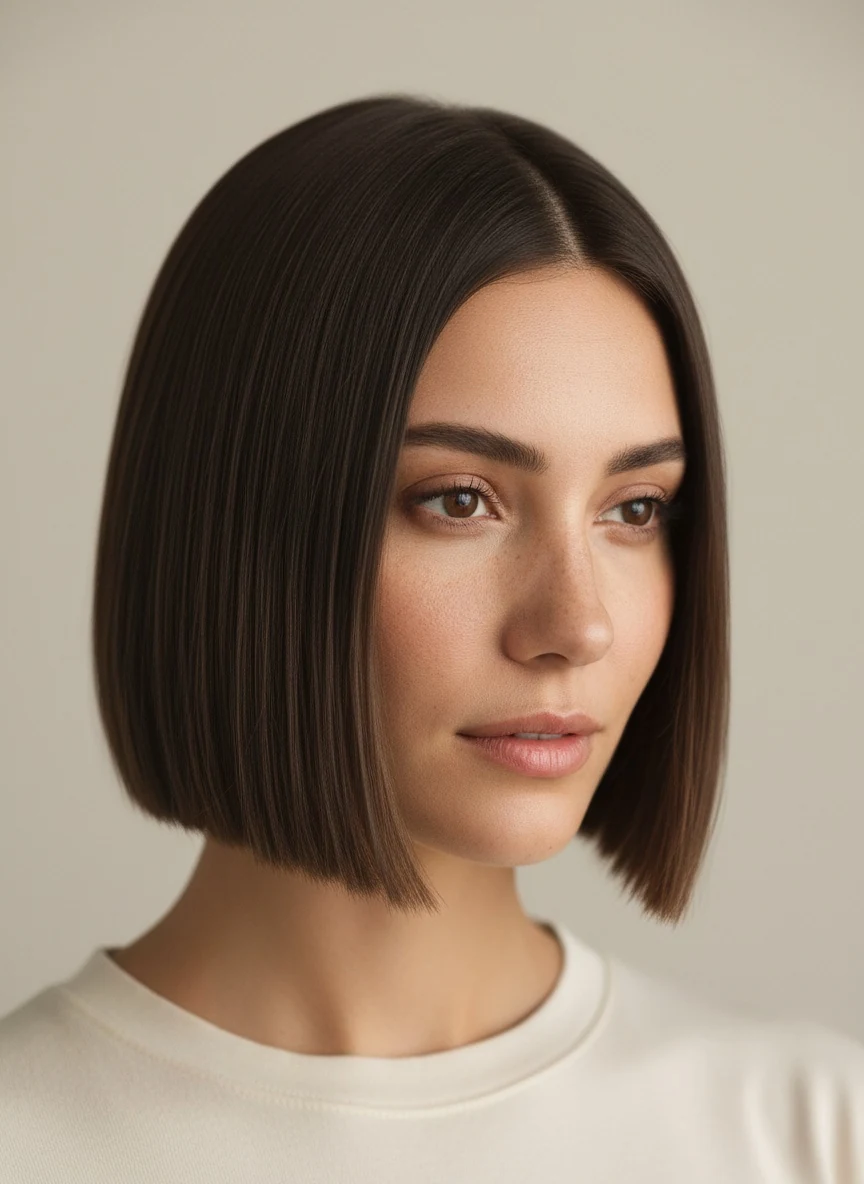
A blunt bob ending exactly at the jaw
It draws a horizontal line along the widest, most angular part of the face and repeats the corner.
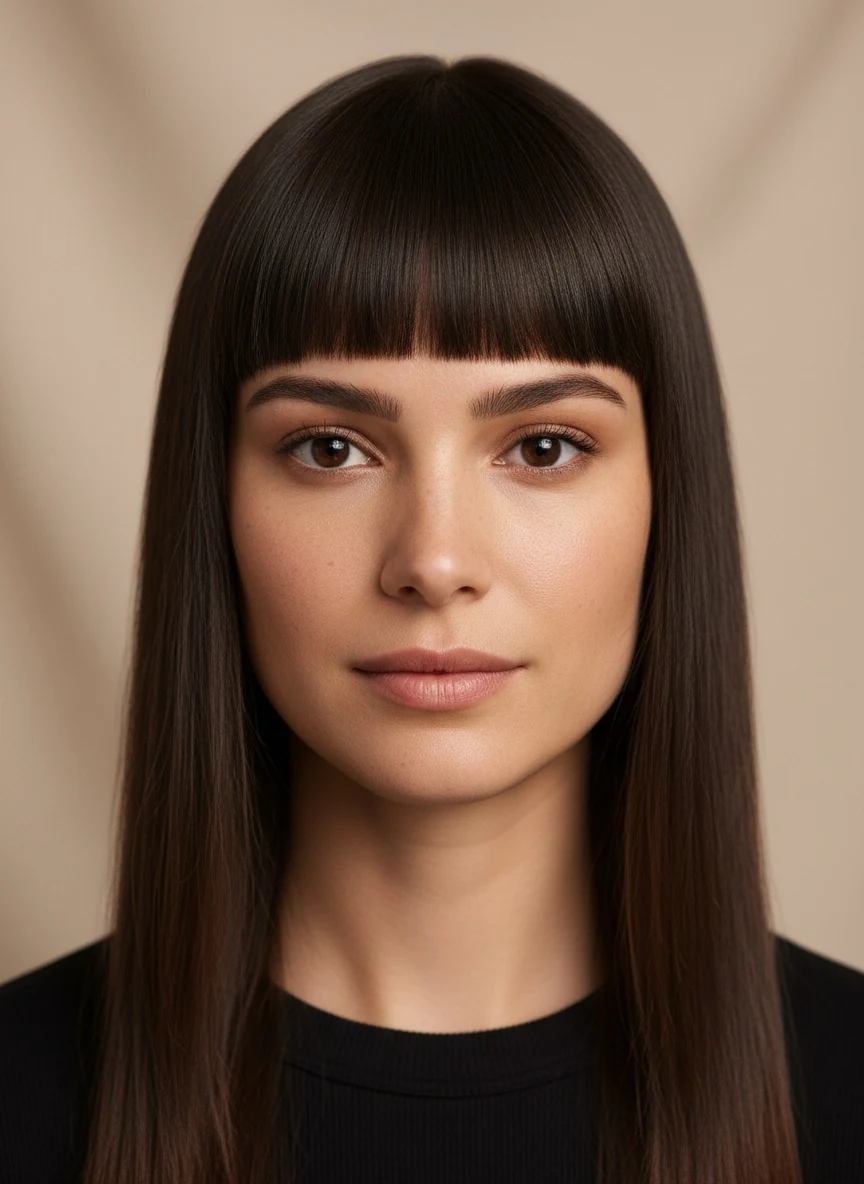
A blunt straight-across fringe
It adds a second hard horizontal to a face already defined by straight lines running parallel.
Slicked-back hair with no movement
It exposes the full outline with nothing to break it, which is the maximum-angle version of the shape.
Volume concentrated at ear level
Width added beside the jaw makes the lower face read wider than it measures.
Haircuts men with a square face should skip
A flat top or boxed crop
A square cut on top of a square jaw draws a second box around the face.
A high skin fade with a flat top
Bare sides and a flat top frame the head as a rectangle and sharpen the jaw corners further.
A heavy straight fringe cut square
A blunt horizontal across the forehead repeats the horizontal of the jaw.
Beard styles for a square face
A beard on a square face either exaggerates the angle or softens it, and the shape of the cheek line decides which.
- A rounded beard line softens the jaw corner
- Keep the sides shorter than the chin to avoid widening the jaw further
- A boxed beard follows the existing angle and makes the shape more emphatic — useful if that is the intent
Makeup for a square face shape
The aim is to soften the four corners without flattening the definition that comes with them.
- Contour at the corners of the jaw and at the outer forehead, curving the outline inward
- Blush rounded on the apple of the cheek rather than angled
- Highlight down the centre of the face to pull attention away from the sides
- Rounded rather than straight brows, which repeats a curve against the angles
Glasses for a square face
The jaw supplies more angle than most faces have, so frames that add more of it compete rather than complement. Curves are the counterweight.
Round
Works
Oval
Also works
Sharp rectangle
Fights the shape
Frame styles that suit a square face
Each style below opens to name real frames that match it, with the measurement that matters. Price band: $ under $100, $$ $100–250, $$$ above $250. Links go to Amazon search results rather than a single product, so they keep working when a colour or size sells out.
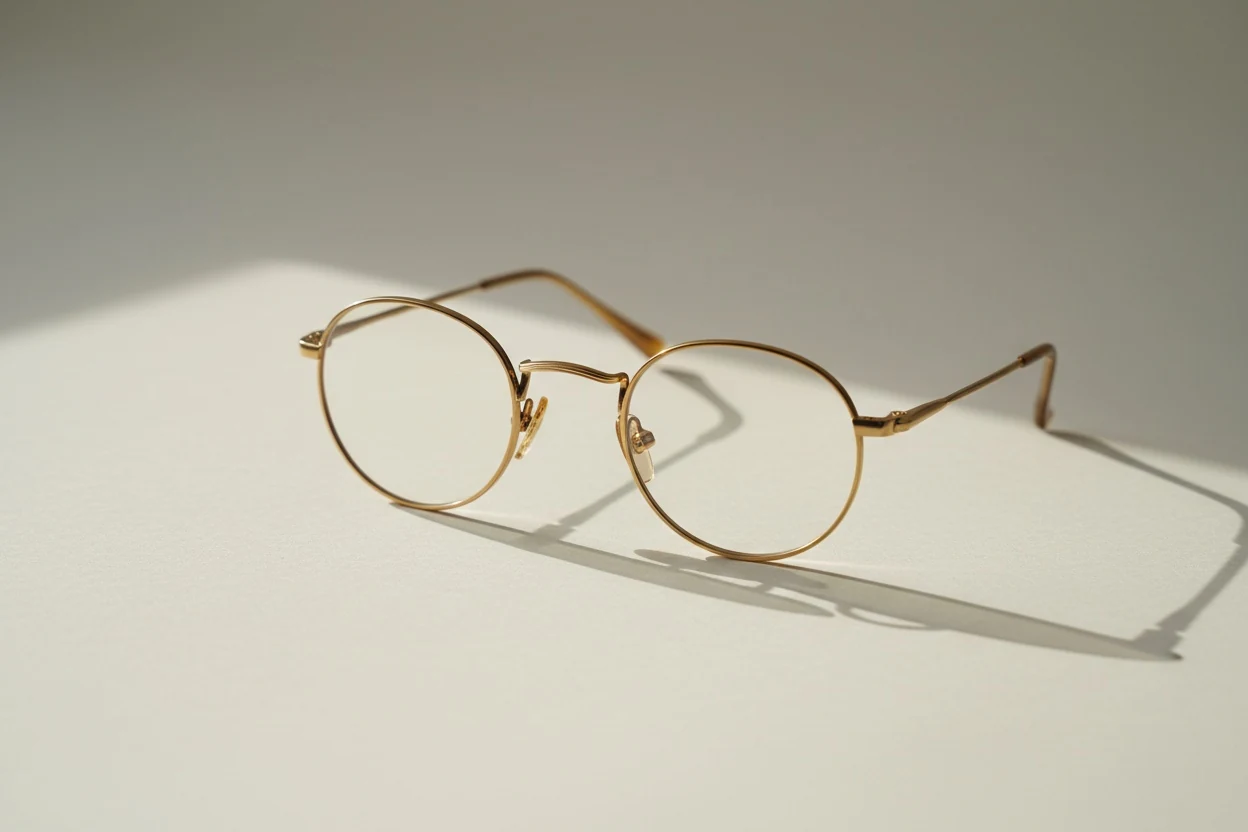
Round glasses
The most direct contrast available: a circle against a face built from straight lines. On a smaller face, start with a narrower round; the thickest acetate rounds can overpower it.
Round Metal RB3447 · Gregory Peck OV5186 · LEMTOSH · Percey
Eyeglasses & sunglasses · $$
The reference model for a true circle. Because the rim is thin metal the round reads as a line drawn on the face rather than a block sitting on it.
Oliver Peoples Gregory Peck OV5186
Eyeglasses & sunglasses · 47-23-150 · $$$
Acetate round with a keyhole bridge. Same circle as the metal version, considerably more weight — the mechanism is identical, the volume is not.
Eyeglasses & sunglasses · $$$
The thickest end of the round family: diamond rivets, keyhole bridge. The strongest available contrast against an angular face, but on a small face the frame starts running the face.
Eyeglasses · $$
A narrow round with a keyhole bridge. Smaller lenses than the three above, which makes it the right starting point on a small face.
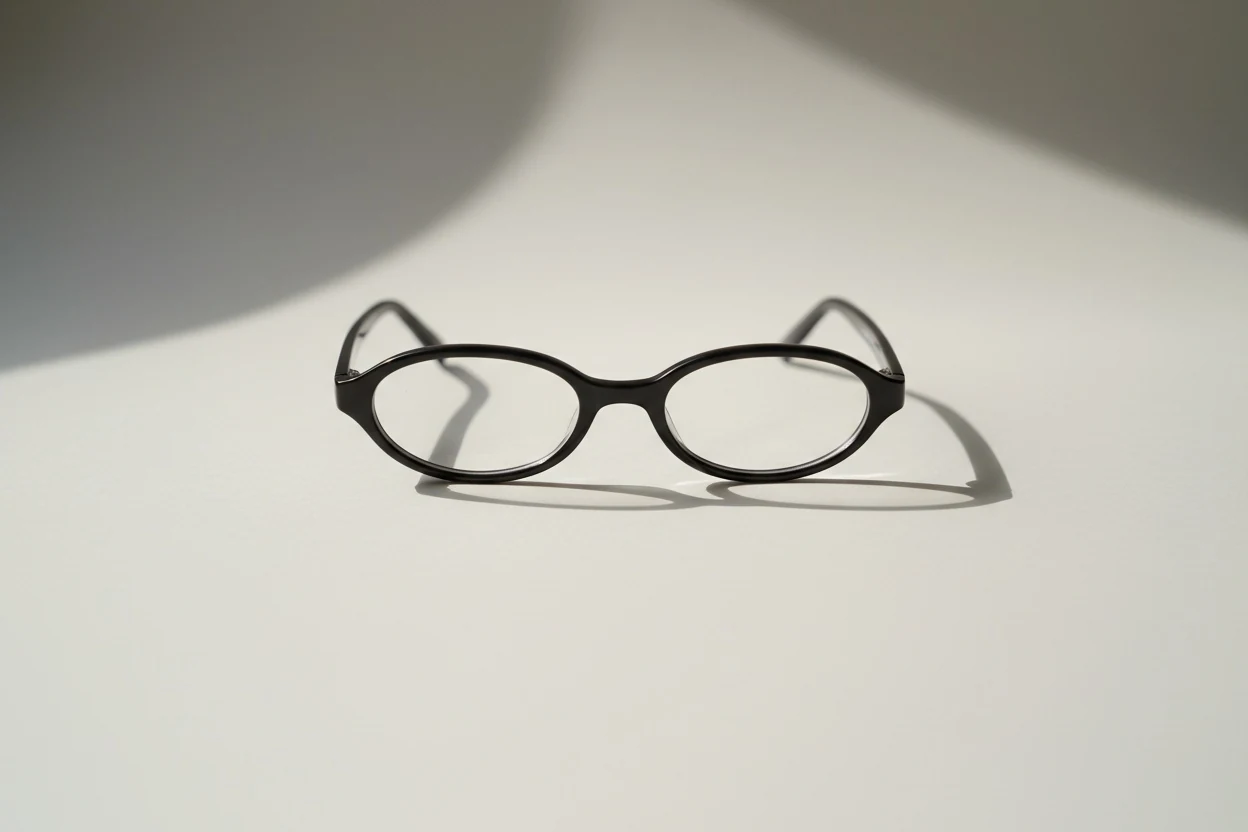
Oval
A softer version of the same idea, and easier to wear day to day than a full round frame.
Oval Metal RB3547 · Percey
Sunglasses · 51-21 / 54-21 · $$
Genuinely oval — longer horizontally, unlike most frames marketed as round. It comes in a narrow fit, so it sits on small and narrow faces.
Eyeglasses · $$
A narrow round with a keyhole bridge. Smaller lenses than the three above, which makes it the right starting point on a small face.
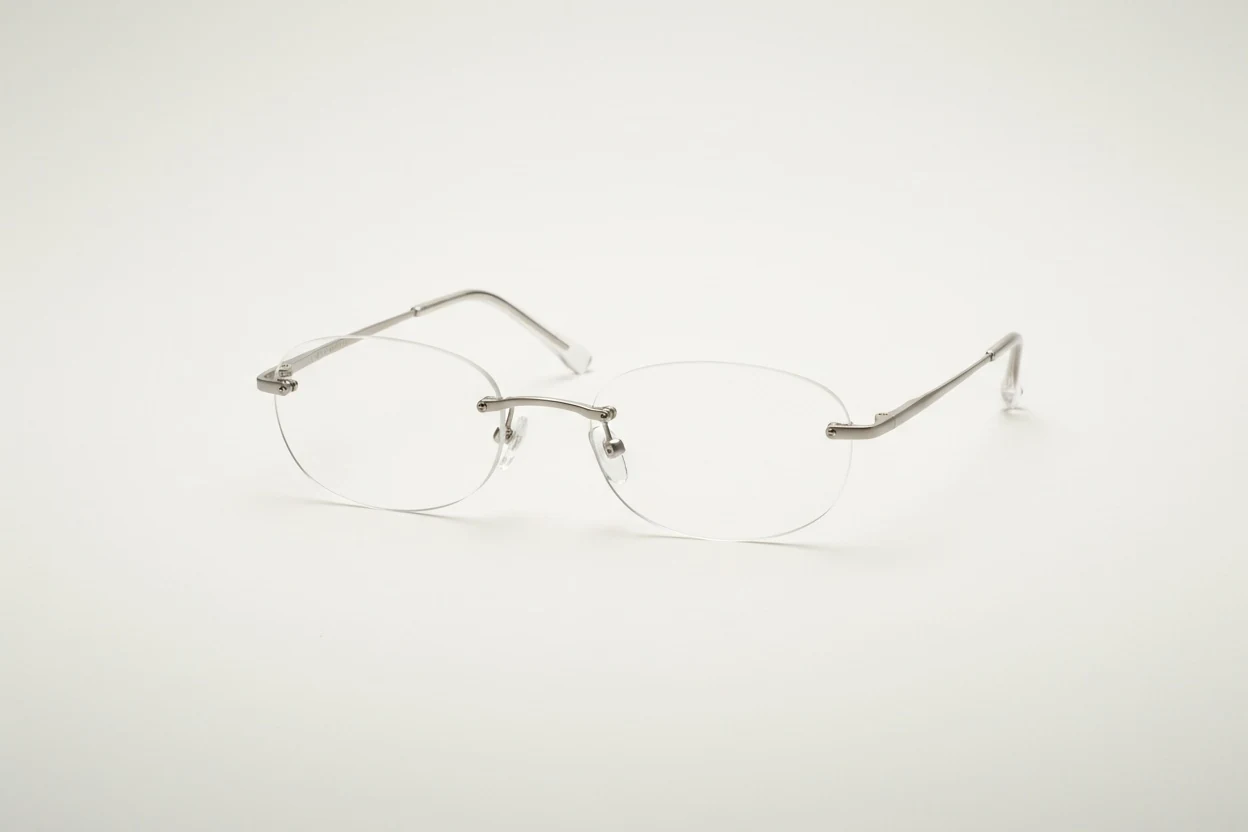
Rimless
Removes the frame line entirely, so nothing competes with the jaw. The most conservative option here.
Titan Minimal Art (5599 chassis) · air titanium rim
Silhouette Titan Minimal Art (5599 chassis)
Eyeglasses · $$$
1.8 grams, no screws and no hinges. If the point of recommending rimless is to add no line to the face, this is the limiting case.
Eyeglasses · $$$
A titanium wire frame with a spiral hinge and no screws. Unlike fully rimless there is a hair-thin line around the lens, which protects the lens better than nothing at all.
Thin metal frames
The lighter the frame line, the less it echoes the strong lines of the face.
Curved lower edge
Even on an otherwise angular frame, a rounded bottom edge is enough to break the repetition.
Women's frames for a square face
Oval metal frames
A thin horizontal oval is the softest line a frame can add, and it sits lightly against a strong jaw. The models are listed under the oval style above.
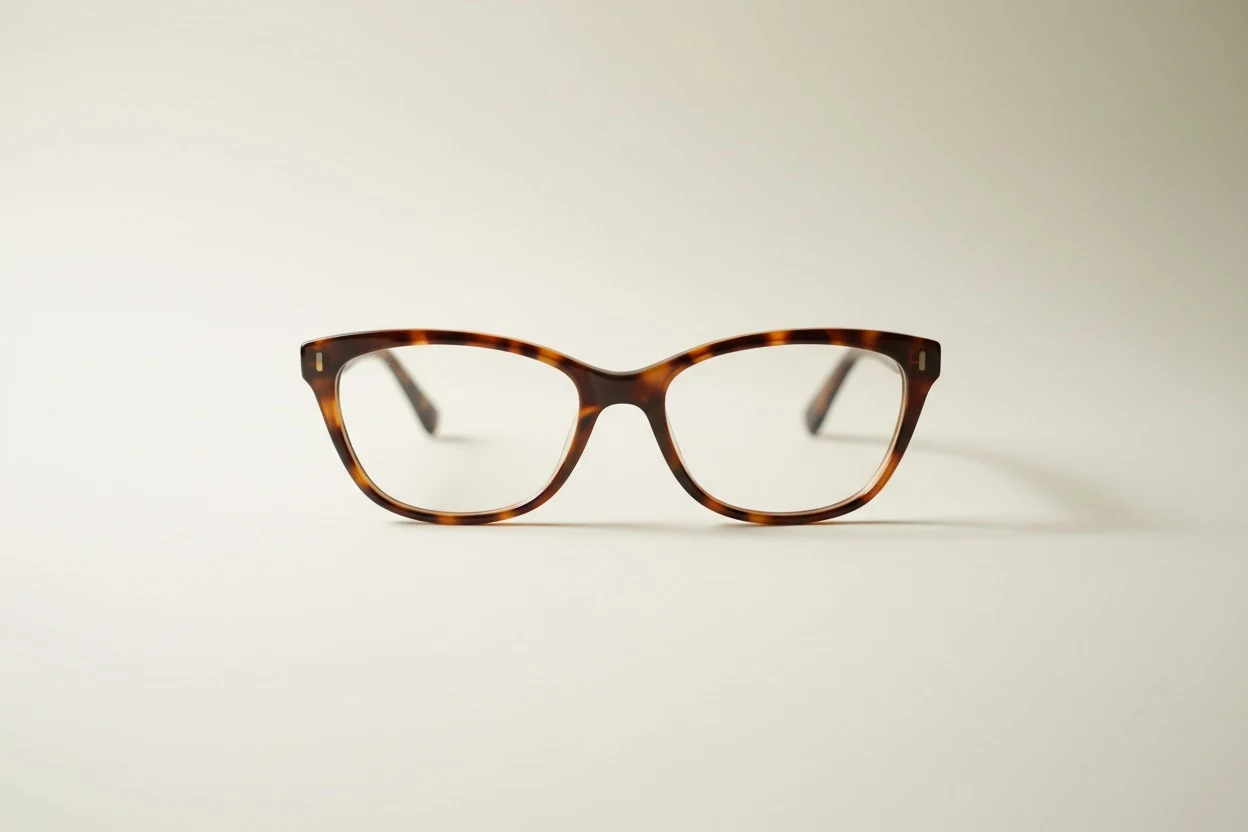
Soft cat-eye
A cat-eye with a rounded lower rim lifts the eye outward while its curves offset the corners of the jaw.
Nina RB4314N · Esme · Louise
Sunglasses · 54 · $$
The measured version of a cat-eye: the outer corner lifts, but not far enough to read as costume in daily wear.
Eyeglasses · 55-16-145 · $$
A squared cat-eye. It combines the lifted outer corner with a straight top line, so it works where a face wants width and structure at once.
Eyeglasses · 52-15-140 / 55-16-140 · $$
The classic soft cat-eye, in two sizes. If your cheekbones are prominent, the smaller size keeps the frame from landing on the bone.
Rimless frames
No outline at all means nothing competes with the jaw — the quietest option if you want the face, not the frame, to be seen.
Men's frames for a square face
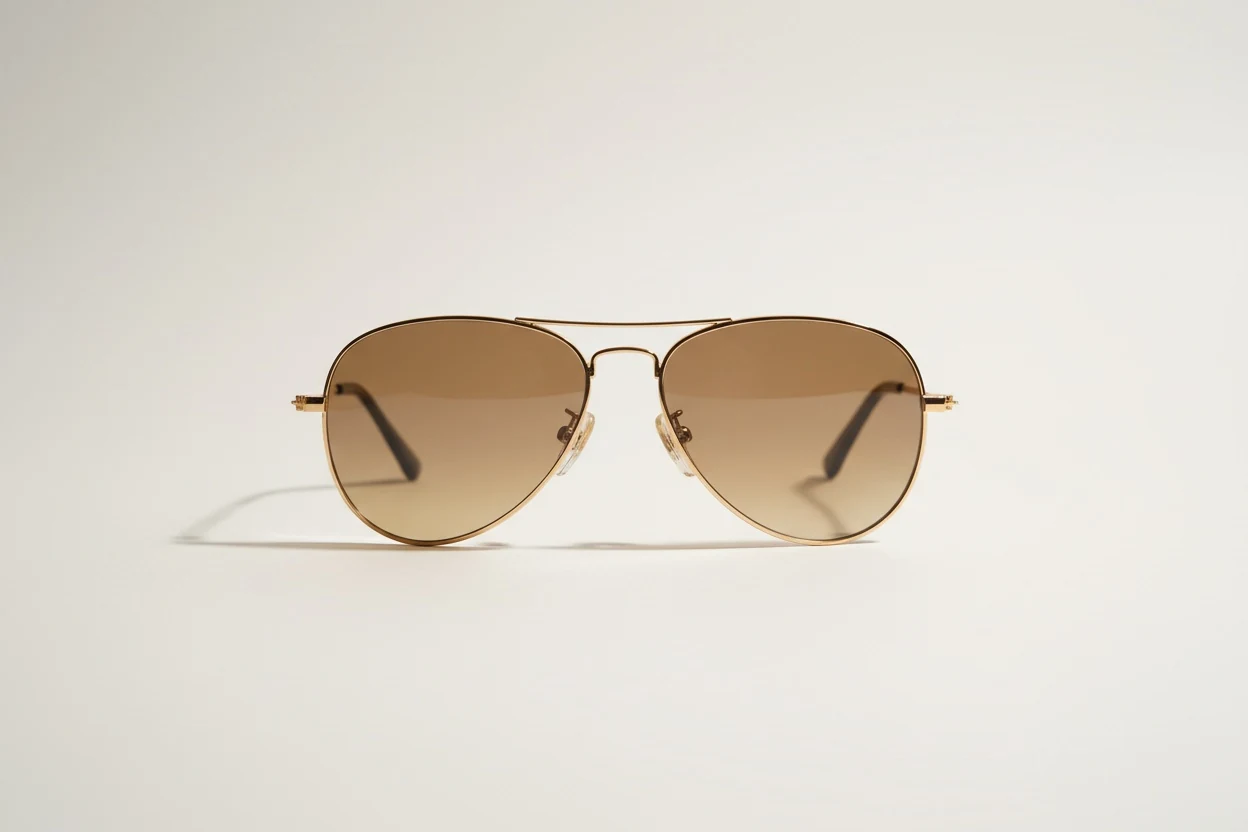
Aviator
The teardrop narrows from the cheekbones toward the jaw, which pulls against a wide lower face instead of adding to it.
Aviator Classic RB3025 · Aviator · 649 / 714
Ray-Ban Aviator Classic RB3025
Sunglasses · $$
The same pattern since 1937. The teardrop narrows from cheekbone toward jaw — that geometry is the entire reason aviators get recommended.
Sunglasses · $$$
Built to military spec MIL-S-25948, with bayonet temples that run straight over the ear instead of hooking behind it. That, not the lens, is what you notice under a headset or after eight hours.
Sunglasses · $$$
A modified aviator: the same wide lens without the teardrop. The 714 is the identical shape that folds — that is the only difference.
Round acetate frames
The strongest contrast with an angular face. On a smaller face, choose a narrower round; the thickest rounds start to dominate.
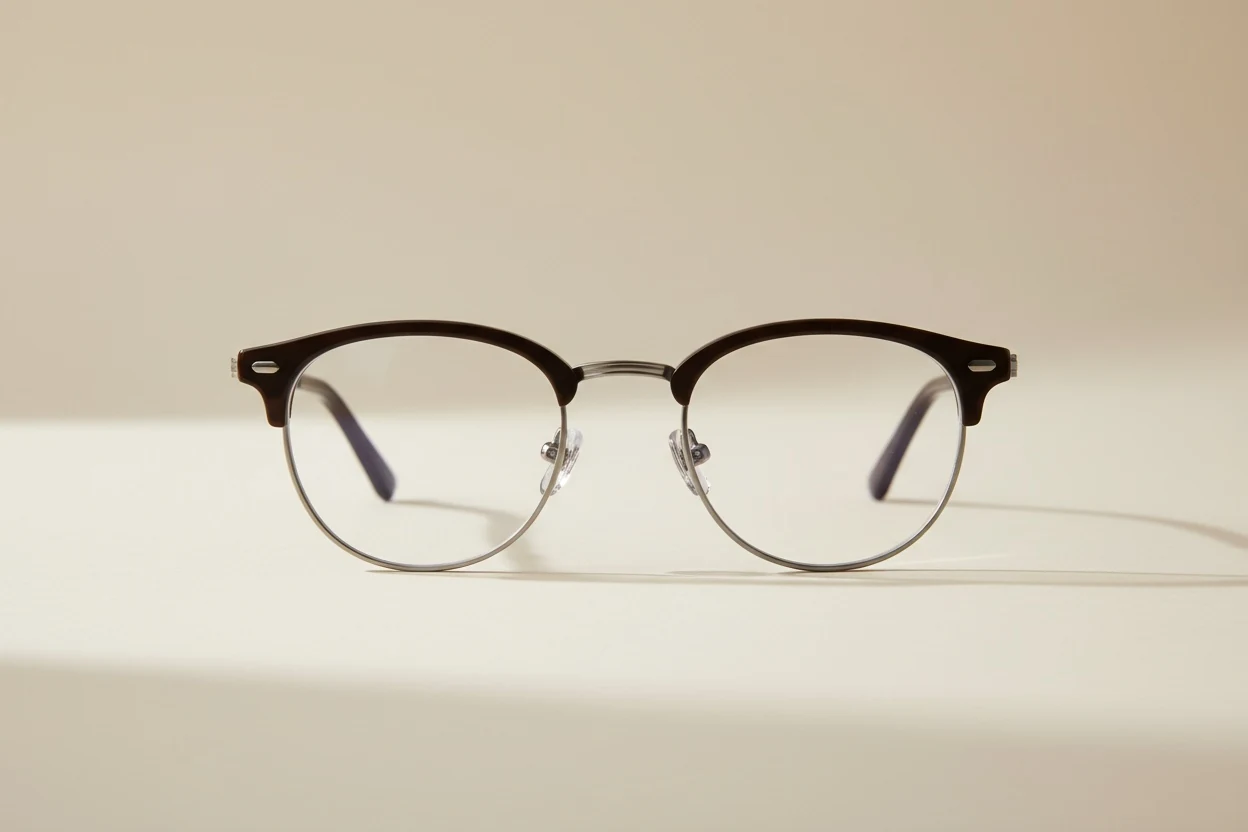
Browline
A browline works on a square face because its weight sits at the brow, away from the jaw, and the thin lower rim adds no corner at the bottom. Pair it with a rounded beard line to soften, or a boxed beard if the angle is the point.
Clubmaster RB3016 · Clubmaster RX5154
Sunglasses · 51-21 · $$
The definition of the category: heavy acetate above, thin metal below. The purest form of moving weight to the brow.
Eyeglasses · $$
The prescription version of the RB3016. Same geometry, as everyday glasses.
Should a square face avoid square glasses?
Not entirely. The combination that causes trouble is a sharp corner plus heavy acetate: the frame's outline then repeats the angle of the jaw and adds weight to it. A thin metal square with softened corners, or a rectangular frame with a curved lower edge, keeps some structure without echoing the jaw. The test is simple: does the frame's lower corner look like a smaller copy of your jaw corner?
| Square face | Round face | |
|---|---|---|
| What separates them | Angular jaw corner, similar widths | Soft, curved jaw |
| Frame line that helps | Curves: round, oval, rimless | Angles: rectangular, browline, geometric |
| Frame line that hurts | Sharp, heavy rectangles | Small round frames |
| Sunglasses | Aviator, round, oval | Wayfarer, squared oversized |
| Beard with the frame | Rounded beard with curved frames to soften | Chin-length beard with angular frames to lengthen |
What size frames fit a square face
A frame that ends inside the width of the jaw makes the lower face look wider by comparison, so line the total width up with the widest part of the face. Oversized frames can work on a square face when they are wide and curved; oversized and angular is the version to skip. The three numbers printed inside a temple arm, such as 52-18-140, are the lens width, the bridge width and the arm length in millimetres. Lens height is usually not printed; product pages list it separately. Frames are fitted around your pupils, so your pupillary distance is worth knowing before you order online.
Sunglasses for a square face
Round and oval sunglasses do the softening job best. Classic aviators also work, because the taper toward the bottom pulls against a wide jaw.
Aviator sunglasses
The taper toward the bottom works against a broad jaw.
Round sunglasses
A circle against straight lines, the clearest softening a frame can do.
Oval sunglasses
A gentler version of round that is easier to wear every day.
Frames to avoid
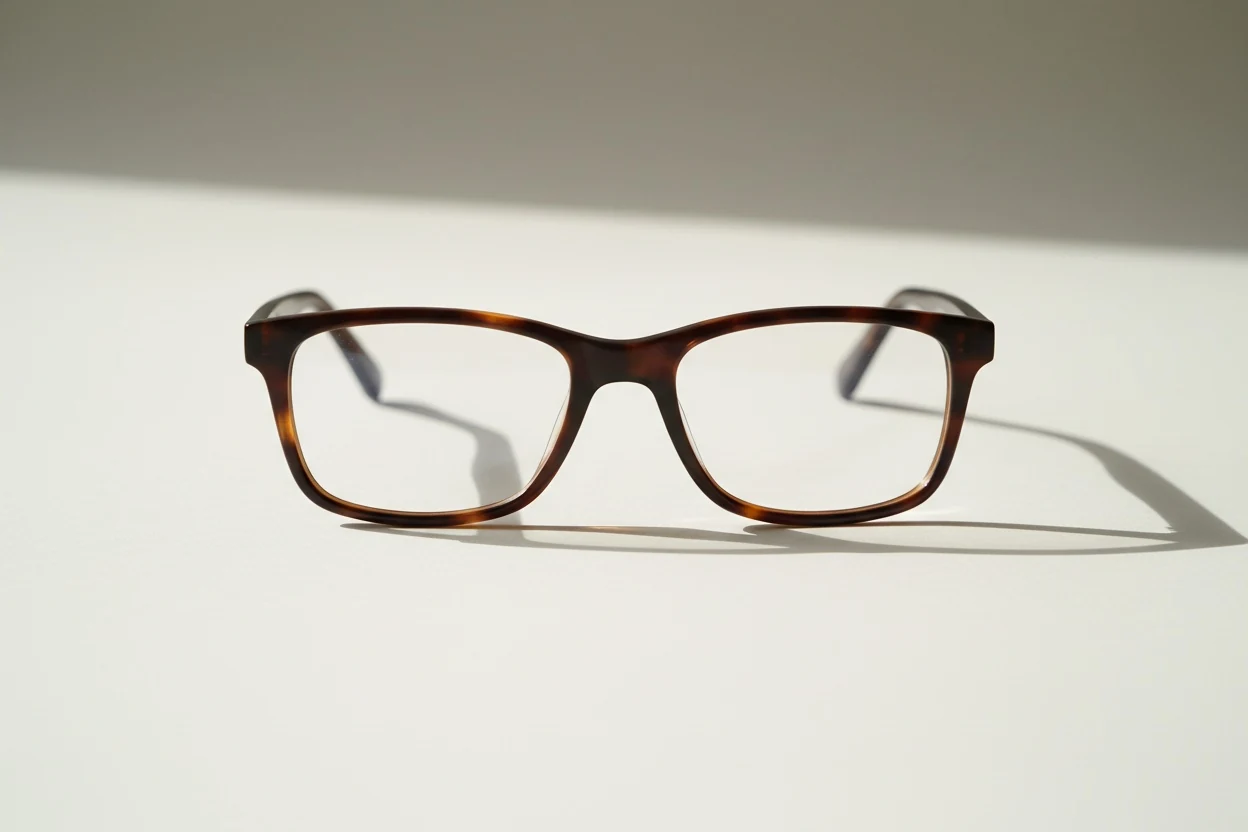
Sharp rectangular frames
They repeat the angles of the jaw and forehead, which makes the face read more angular rather than balanced.
Heavy square frames
Weight plus angle in the same place as the face's own strongest feature is the one combination that reliably overpowers.
Not sure this is your shape? Glasses for face shape measures it from a photo and lists the frames that suit the result.
The square face shape on men
The square jaw is the most requested male face shape in cosmetic consultation and the one most often produced artificially in photographs through lighting and angle. If your measurement comes back square, the number is doing something a photograph cannot: a low camera and a hard side light will manufacture the same look on almost any face.
Square face shape celebrities
Square attracts celebrity lists built almost entirely from lighting. A hard key light from the side sharpens a gonial angle that a flat frontal light would not show at all. That is why this site measures your own straight-on photo rather than publishing names.
Procedures that change a square face
Where a square result is unwanted, the target is usually the masseter or the jaw angle itself.




- Masseter Botox →Changes the width of your lower face at the masseter.
- Jaw Reduction →Changes the width of your jaw angle.
A simulation is a visualisation, not a surgical plan, and nothing on this page is medical advice.
Square face shape — frequently asked questions
Is a square face shape attractive?
A defined jaw is one of the most frequently requested outcomes in cosmetic consultation, which is worth knowing if you arrived here hoping to soften it. No published work ranks jaw shapes; the preference is real, but it is a preference.
Why do face shape tools rarely say square?
Many implementations check the round condition before the square one, and because the round threshold is looser, square never gets reached. Ours checks the narrower condition first.
What hairstyle suits a square face shape?
Anything that introduces a curve against the angles: soft layers, side parts, waves around the jaw. Blunt fringes and hard straight lines repeat the shape rather than balancing it.
Can a square face become less square?
The angle is bone and the muscle over it is not. Masseter reduction changes the width of the lower face without touching the bone, which is why it is the most common request from a square measurement.
Why does my jaw look square in some photos and not others?
Light and camera height, mostly. A hard side light throws a shadow that traces the jaw corner and makes it read as sharp; flat frontal light erases the same corner. A low camera lengthens and widens the lower face as well. The measurement is stable — the photographs are not.
Do round glasses suit a square face?
Yes, they are one of the best choices. A circle is the most direct contrast with a face built from straight lines. On a smaller face, a narrower or thinner round works better than a heavy acetate one.
Are oversized glasses good for a square face?
Wide, curved oversized frames can suit a square face, especially as sunglasses. Oversized angular frames are the ones to skip, because they repeat the jaw's corners at a larger scale.
Why do some tools call my face round when frames for square suit me better?
Round and square have almost the same proportions, and many detectors, this one included, check the round condition first. A face with a strong jaw corner can therefore be labelled round. The frame advice is opposite for the two shapes, so if your jaw turns a visible corner in the mirror, follow the square advice.
Do square faces look better with short or long hair?
Both can work. Short cuts should end clearly above or below the jaw corner rather than at it; medium cuts should pass the jaw by a few centimetres; long hair softens most when the layers start below the jaw.
What is the best haircut for a square face as you get older?
Softer lines that end below the jaw. With age the midface loses volume and the lower face descends, so a blunt line at jaw level looks heavier than it did. Layers or waves that start below the jaw and a side-swept fringe keep the outline soft.
The other face shapes
- Diamond face shape →
- Oval face shape →
- Round face shape →
- Heart face shape →
- Oblong face shape →
- Triangle face shape →