Diamond Face Shape
A diamond face is widest at the cheekbones and tapers in both directions: a narrow forehead above, a narrow chin below. This test calls a face diamond when the temples are at most 0.93× and the jaw at most 0.80× the cheekbone width.
- ≤ 0.93×
- temples ÷ cheekbones
- ≤ 0.80×
- jaw ÷ cheekbones
- 7
- face shapes
- Free
- photo not uploaded
Drop a photo into the panel and it will say whether your four measurements read as diamond.
 Example
Choose your own photo
Discover your face shape and proportions.
Choose your own photoClick to choose a photo, or drop one here
Front-facing · Even lightingStraight-on, even lighting, at arm's length gives the most comparable reading.
Runs in your browser. Your photo is not uploaded.
How a diamond face is measured
Both ends of the face are narrower than the middle: the temples measure no more than 93.4 per cent of cheekbone width and the jaw no more than 79.6 per cent. The widest point sits at the cheekbones with nothing above or below coming close to it. The test checks this only after ruling out oblong, triangle, round, square and heart, so a face that meets one of those first gets that label instead.
- Cheekbones are the widest point of the face
- Forehead is narrower than the cheekbones
- Jaw narrows to a defined, often pointed chin
- Face length is usually greater than face width
The name comes from the outline you get by joining the four widest points: narrow at the top, wide across the middle, narrow again at the chin. It is the rarest of the seven because it needs cheekbones measurably wider than both the forehead and the jaw, and most faces are widest at one end or the other rather than in the middle.
Also called: Rhombus face, Kite face.
How to tell if you have a diamond face
A diamond shape is decided by three widths, and you can take all three with a soft tape measure in front of a mirror.
- Pull your hair back completely and face the mirror square on, at eye level.
- Measure across your forehead at its widest point, roughly halfway between your brows and your hairline.
- Measure across your cheekbones, from the outer corner of one eye straight across to the other.
- Measure your jaw from the point below one ear to the point below the other, following the bone.
- If the cheekbone figure beats both the forehead and the jaw by more than about a centimetre, the shape is diamond. If the forehead wins instead, it is heart.
A tape measure held against your own face is accurate to maybe half a centimetre, which is enough for the clear cases and not enough for the borderline ones. The tool above takes the same three widths from 478 landmarks instead.
Diamond vs Heart face shape
Both taper to a narrow chin, so they look alike in a photograph. The separating measurement is at the top: a heart face is widest at the forehead, a diamond is widest at the cheekbones. Measure forehead width against cheekbone width and the answer is immediate — if the forehead wins, it is heart.
The heart face shape in full →Diamond vs Oval face shape
An oval face also narrows toward the chin, but its widths step down gently and its forehead is not noticeably narrower than its cheekbones. The test calls a face diamond only when both ends fall away: temples at no more than 93.4 per cent of cheekbone width and a jaw at no more than 79.6 per cent. Borderline cases usually get called oval, which is part of why oval is assigned so often.
The oval face shape in full →Hairstyles for a diamond face
A diamond face is widest at the cheekbones, with both the forehead and the jaw narrower. The goal is nearly always the same: add apparent width at the top and the bottom, take it away from the middle. If your diamond result is borderline — forehead only a little narrower than your cheekbones — oval advice works too, and the list of cuts to avoid below still applies.
Haircuts for a diamond face — women
Chin-length cut with volume at the jaw
Weight at the narrow lower third brings the jaw closer to the cheekbone measurement, which is the widest of the three.
Layers that start below the cheekbone
Layers that begin at the cheek pile volume onto the widest point. Starting them lower moves that volume to where it helps.
A soft bob ending just past the jaw
Ending below the jaw rather than at the cheek keeps the widest line of the haircut away from the widest line of the face.
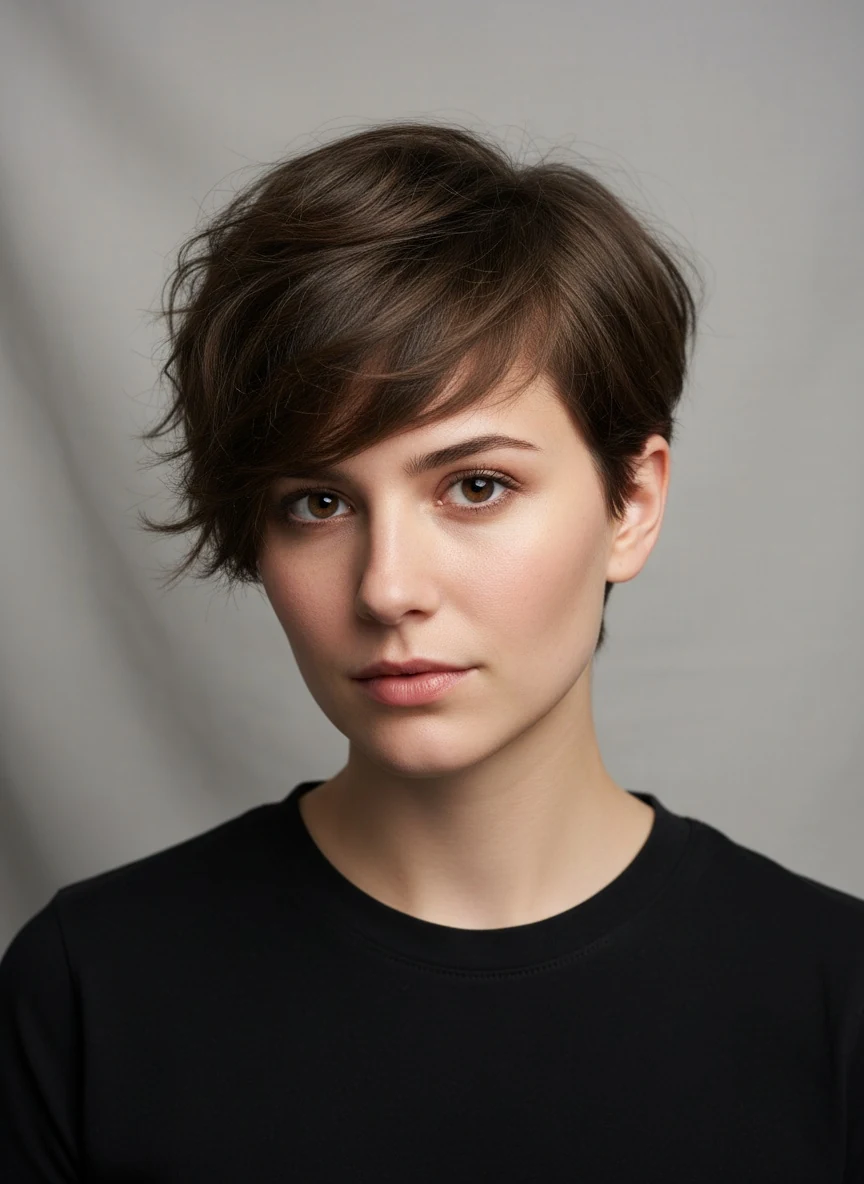
Textured pixie with volume at the temples
Fullness at the temples widens a narrow forehead, a flat crown avoids adding length, and pieces left in front of the ears keep the jaw from looking bare.
Haircuts for a diamond face — men
Medium length with fullness at the temples
Width at the temples narrows the gap between forehead and cheekbone, which is the larger of the two imbalances.
Textured fringe
It broadens the top of the face directly, and a diamond face is the shape most often short of forehead width.
Longer hair over the ears
Length past the ear adds width at the jaw rather than at the cheek, which is the correct direction.
Beard with volume at the jaw
The cheapest way to add lower-face width. Keep it short at the cheeks, since fullness there widens the point already widest.
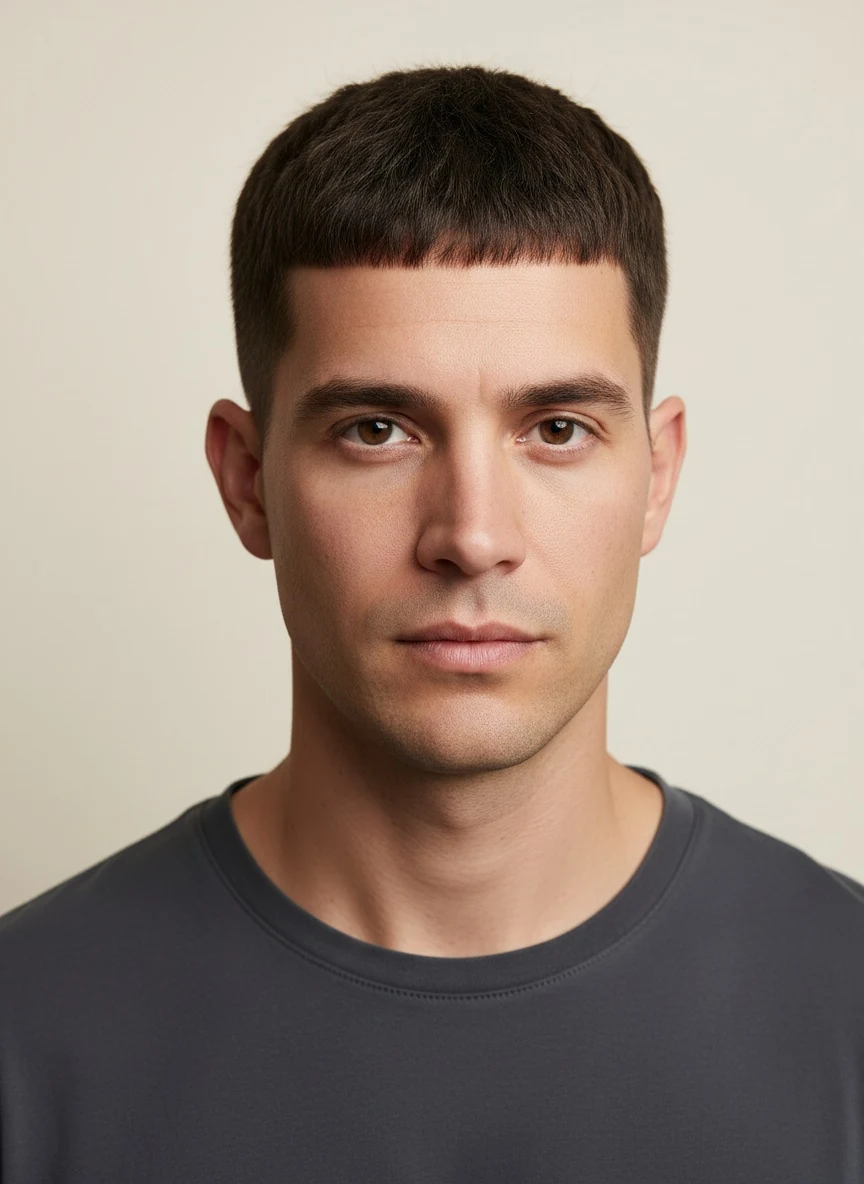
Textured crop with a forward fringe
Hair worn forward adds width across a narrow forehead and puts no volume at the cheekbones.
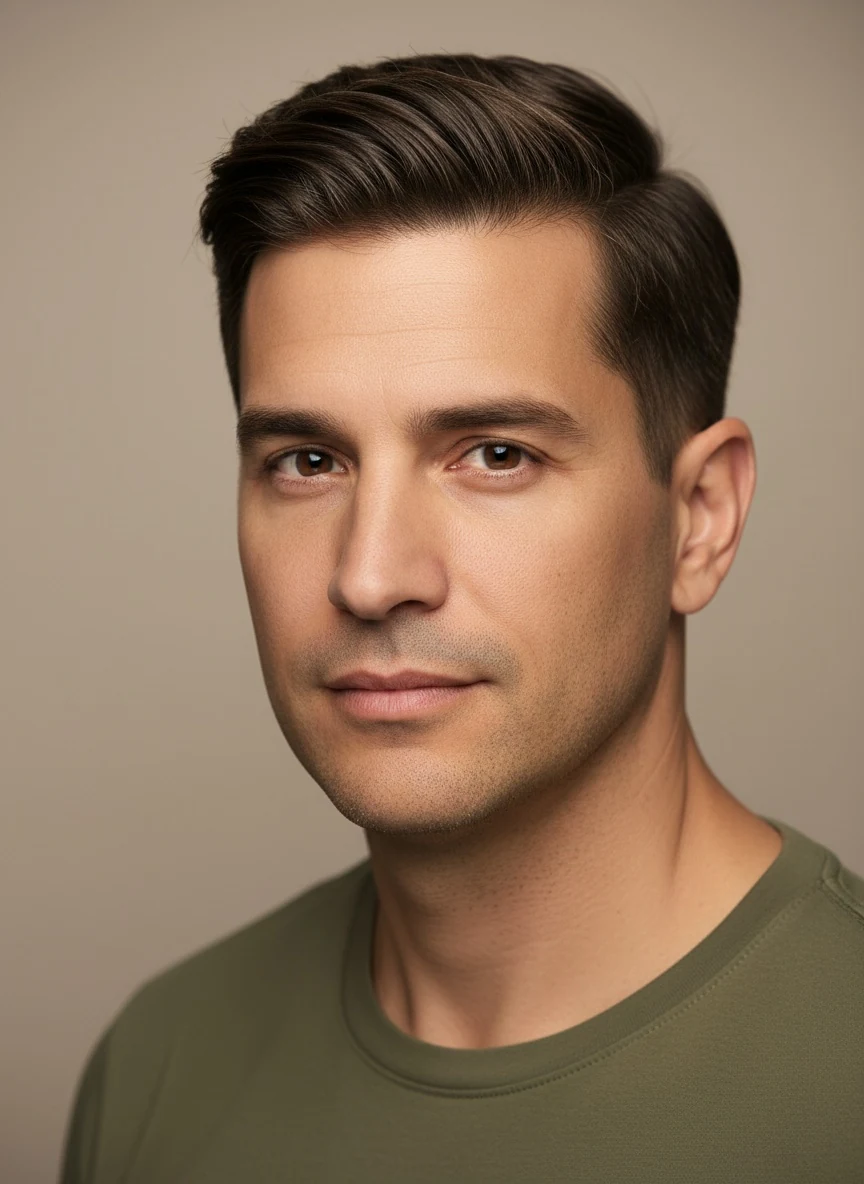
Side-swept quiff, moderate height
A diagonal sweep widens the forehead; keeping the height moderate stops it lengthening a face that is usually longer than it is wide.
Mid-length textured crop with a low taper
A low taper keeps fullness at the temples. A high fade removes it and leaves the cheekbones as the only wide point.
Short, medium or long hair for a diamond face
- Short
Women: Short cuts work when they keep volume at the temples and some length in front of the ears; a crop cut close at the sides exposes the narrow forehead and jaw together.
Men: Crops worn forward with a low taper suit; high fades and very short sides do not.
- Medium
Women: Chin to collarbone is the safest band, because it puts weight at the jaw — the narrow lower point.
Men: Medium length with fullness at the temples and over the ears adds width at both narrow points.
- Long
Women: Long hair works with layers that start below the cheekbone, so the fullness lands at the jaw rather than the widest point.
Men: Longer hair should fall over the ears toward the jaw; avoid volume that sits at cheekbone level.
Bangs for a diamond face
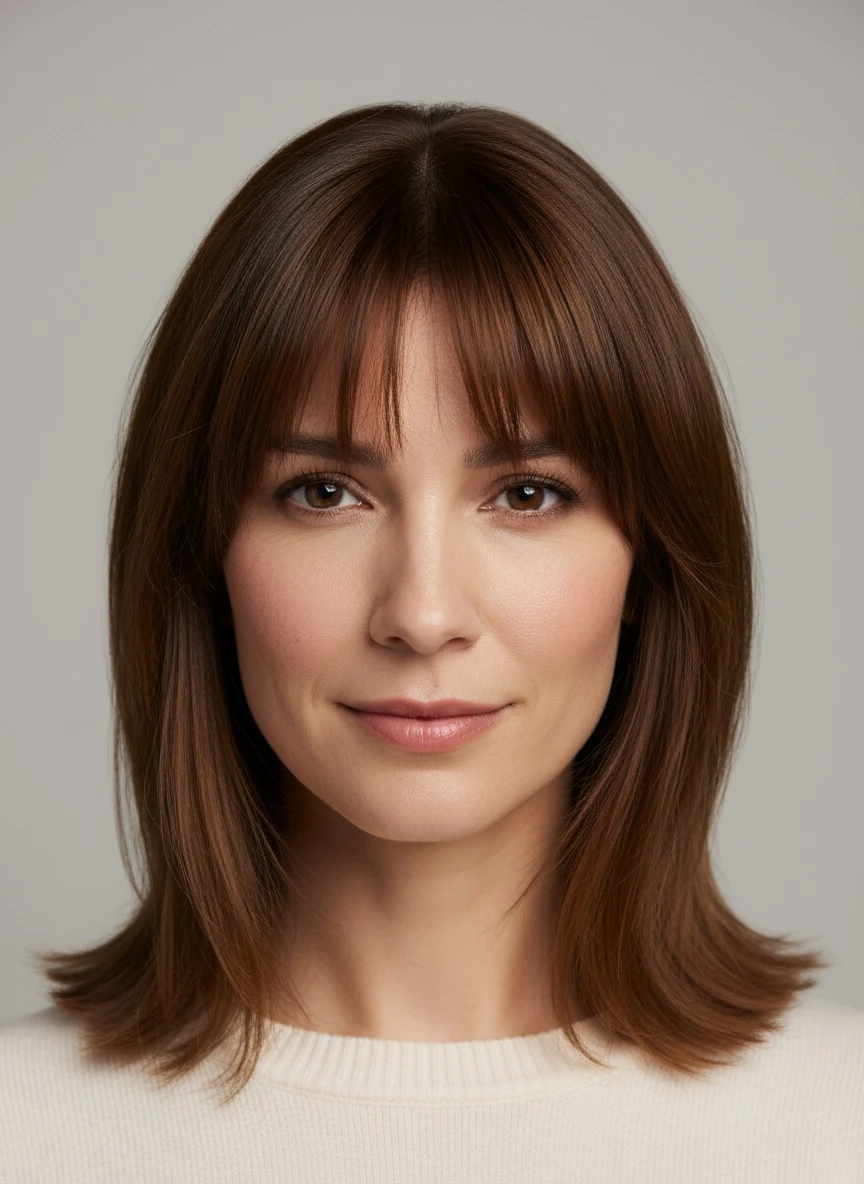
Curtain bangs
The framing pieces widen the forehead, and the gap down the centre keeps them from adding weight at the cheekbones.
Side-swept fringe
It adds visible width across the forehead on a diagonal, the one change that works directly on the narrow top third.
Textured forward fringe (men)
A short, piecey fringe worn forward broadens the top of the face without height.
Heavy blunt fringe — use with care
Covering all of a narrow forehead can leave the cheekbones as the only wide line on the face.
Is your diamond result reliable? Diamond is a narrow condition: both the forehead, measured at the temples, and the jaw have to be clearly narrower than the cheekbones. A slight head turn or hair over the temples can move a face in or out of it, so if your result is close, take the mirror test in the section on telling if you have a diamond face, and measure again with your hair pulled back.
By hair type
- Straight
- Straight hair hugs the head and follows the cheekbone outward, which is the outline you would rather hide. A fringe and jaw-length weight are the two useful moves.
- Wavy
- Good, provided the wave sits low. A wave that begins at the temple lands its volume on the cheekbone.
- Curly
- Curl adds width everywhere, which helps at the forehead and jaw and hurts at the cheek. Length is the control: enough of it and the volume settles below the widest point.
- Fine
- Fine hair adds no width anywhere, so the shape shows through. A blunt line at the jaw and a fringe do more than any layering could.
- Thick
- Thick hair supplies the width both narrow zones need, but it needs thinning at the cheeks or it doubles the widest measurement.
Diamond-shaped face hairstyles to avoid
Slicked-back hair
It exposes the narrow forehead and the wide cheekbones at the same time, which is the most exaggerated version of the shape.
Volume at cheekbone level
It adds width to the one measurement that is already the largest of the three.
A severe centre part
It narrows the apparent forehead further and draws a line straight down to the point of the chin.
Very short cuts with no length past the ear
They leave the jaw with nothing to fill it out against a much wider cheekbone. A pixie that keeps volume at the temples and some length in front of the ears is the exception.
Haircuts men with a diamond face should skip
A high skin fade
It clears the temples and leaves the cheekbones as the only wide point on the head.
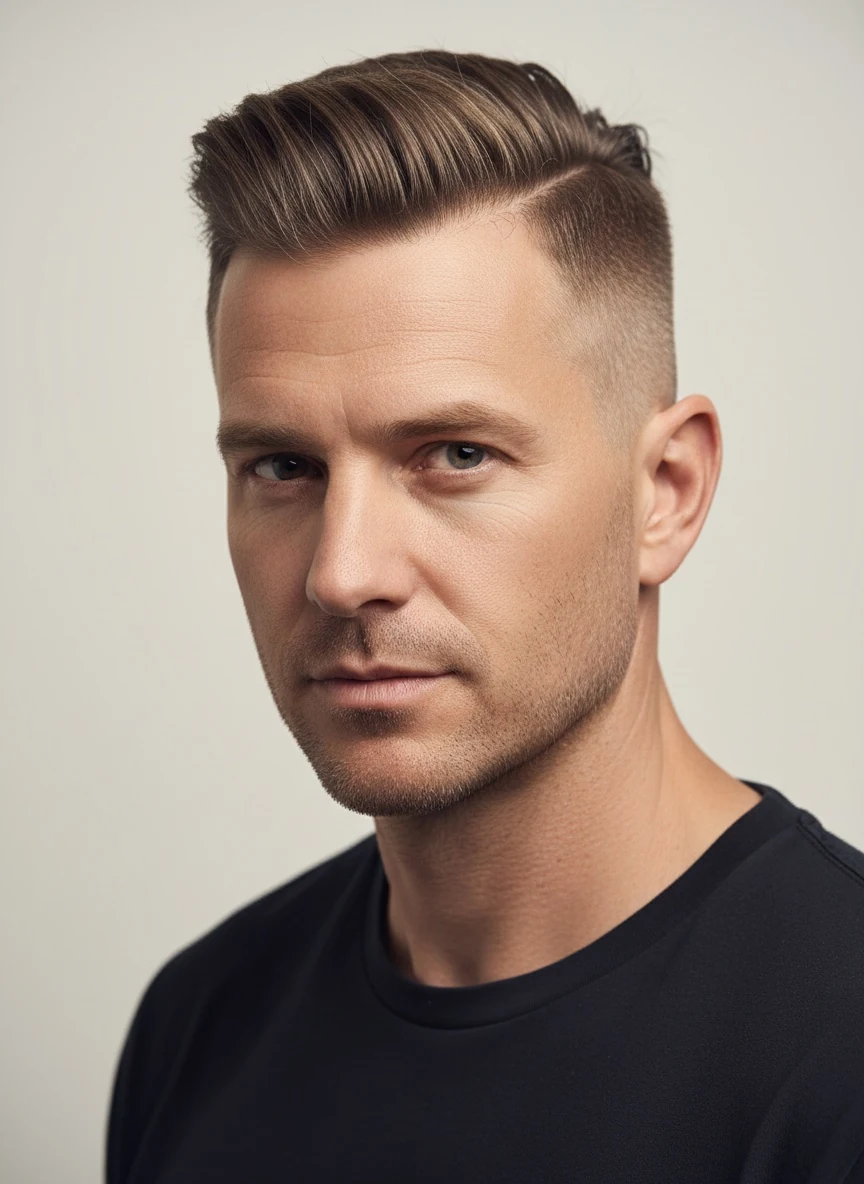
A slick back
It exposes the narrow forehead and the wide cheekbones at the same time.
A tall pompadour
Height adds length to a face that is usually already longer than it is wide.
A buzz cut without a beard
With no hair at the temples or the jaw, the outline is left to the cheekbones alone.
Beard styles for a diamond face
Search volume for a diamond-face beard is small, but the principle is worth stating: a beard is the fastest way to add width at the jaw, which is one of the two narrow points of a diamond face.
- Fuller at the sides of the jaw, trimmed short at the chin
- A short boxed beard, which squares off a pointed chin
- Avoid a long goatee, which extends the taper the shape already has
Makeup for a diamond face shape
The aim is to soften the middle and add apparent width at the two narrow ends — the reverse of the advice given for a round face.
- Bronzer or shadow just under the cheekbone, blended back toward the ear rather than forward
- Highlight on the centre of the forehead and on the chin, where the face is narrow
- Blush placed slightly higher and rounder than the cheekbone edge, to break the hard line
- Brows extended a fraction wider than usual, which widens the top of the face
Glasses for a diamond-shaped face
The cheekbone is doing the most work in this outline, so the useful frames are the ones that put visual weight somewhere else — usually at the brow.
Cat-eye
Works
Browline
Also works
Narrow
Fights the shape
Frame styles that suit a diamond-shaped face
Each style below opens to name real frames that match it, with the measurement that matters. Price band: $ under $100, $$ $100–250, $$$ above $250. Links go to Amazon search results rather than a single product, so they keep working when a colour or size sells out.
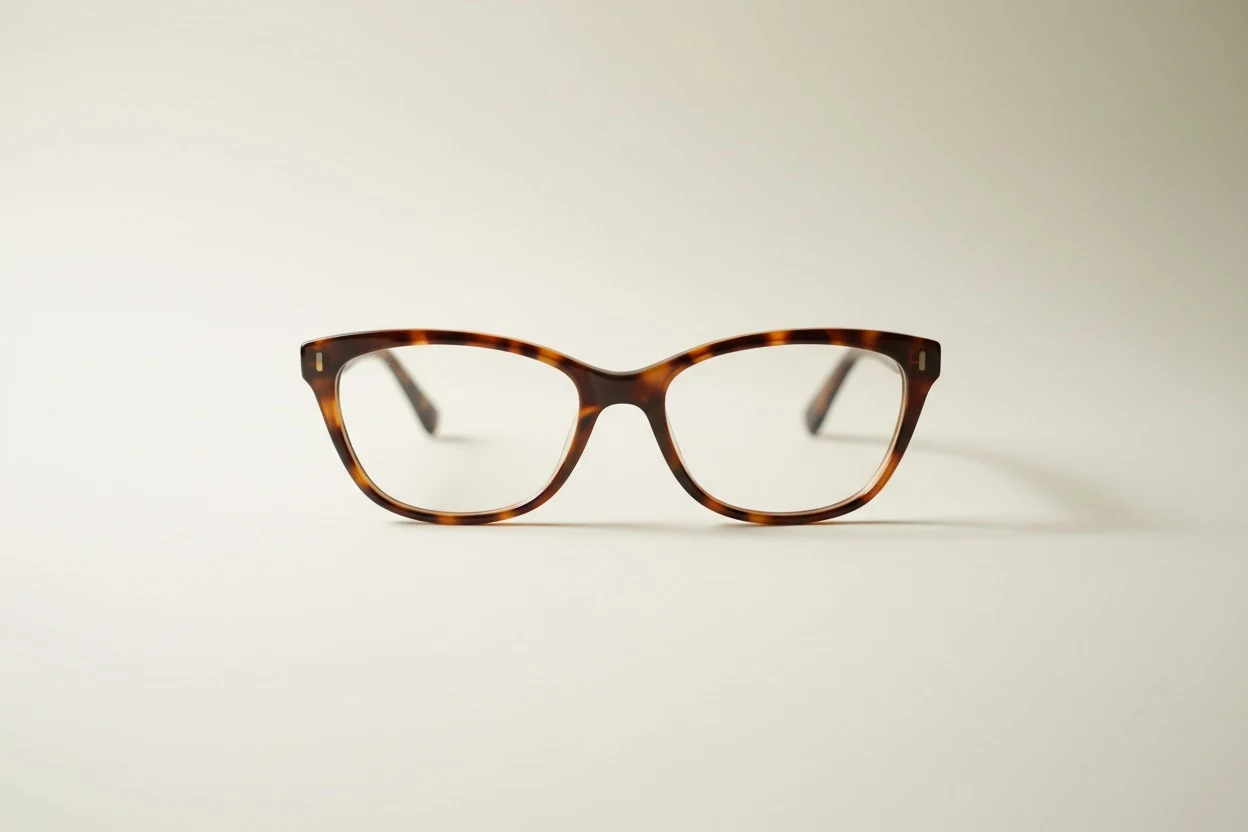
Cat-eye
The upward outer flick draws width across the forehead, which is the narrower of the two undersized measurements.
Nina RB4314N · Esme · Louise
Sunglasses · 54 · $$
The measured version of a cat-eye: the outer corner lifts, but not far enough to read as costume in daily wear.
Eyeglasses · 55-16-145 · $$
A squared cat-eye. It combines the lifted outer corner with a straight top line, so it works where a face wants width and structure at once.
Eyeglasses · 52-15-140 / 55-16-140 · $$
The classic soft cat-eye, in two sizes. If your cheekbones are prominent, the smaller size keeps the frame from landing on the bone.
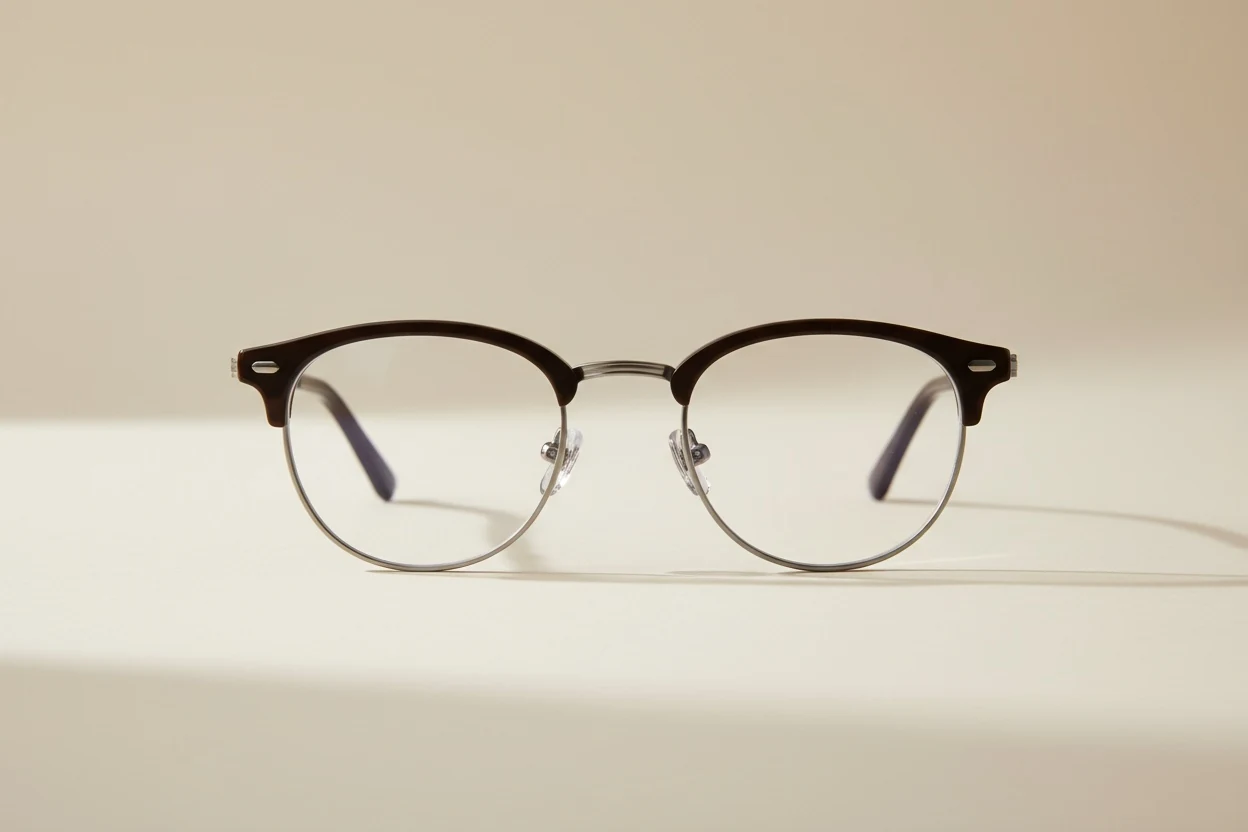
Browline
A heavy top bar adds structure at the brow and pulls the eye off the cheekbone.
Clubmaster RB3016 · Clubmaster RX5154
Sunglasses · 51-21 · $$
The definition of the category: heavy acetate above, thin metal below. The purest form of moving weight to the brow.
Eyeglasses · $$
The prescription version of the RB3016. Same geometry, as everyday glasses.
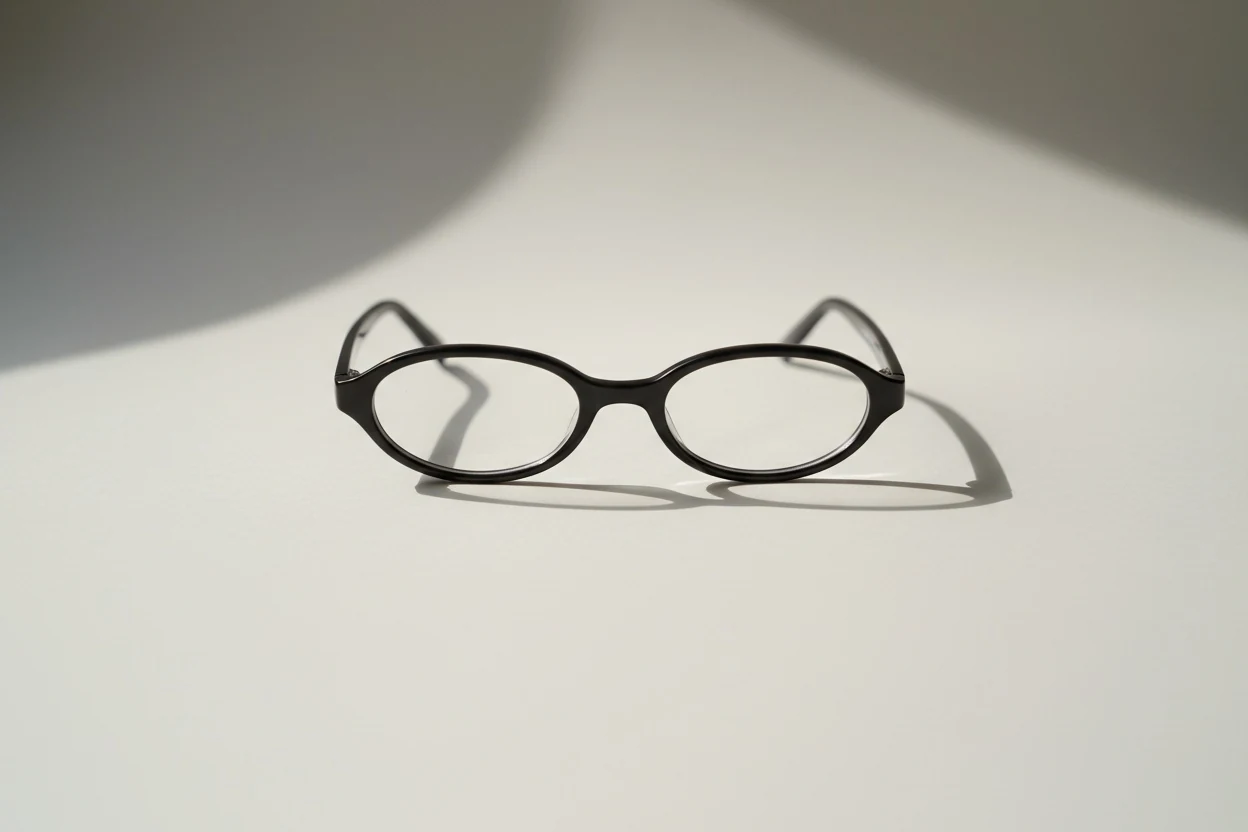
Oval
Soft curves offset angular cheekbones without adding any width at the point that is already widest.
Oval Metal RB3547 · Percey
Sunglasses · 51-21 / 54-21 · $$
Genuinely oval — longer horizontally, unlike most frames marketed as round. It comes in a narrow fit, so it sits on small and narrow faces.
Eyeglasses · $$
A narrow round with a keyhole bridge. Smaller lenses than the three above, which makes it the right starting point on a small face.
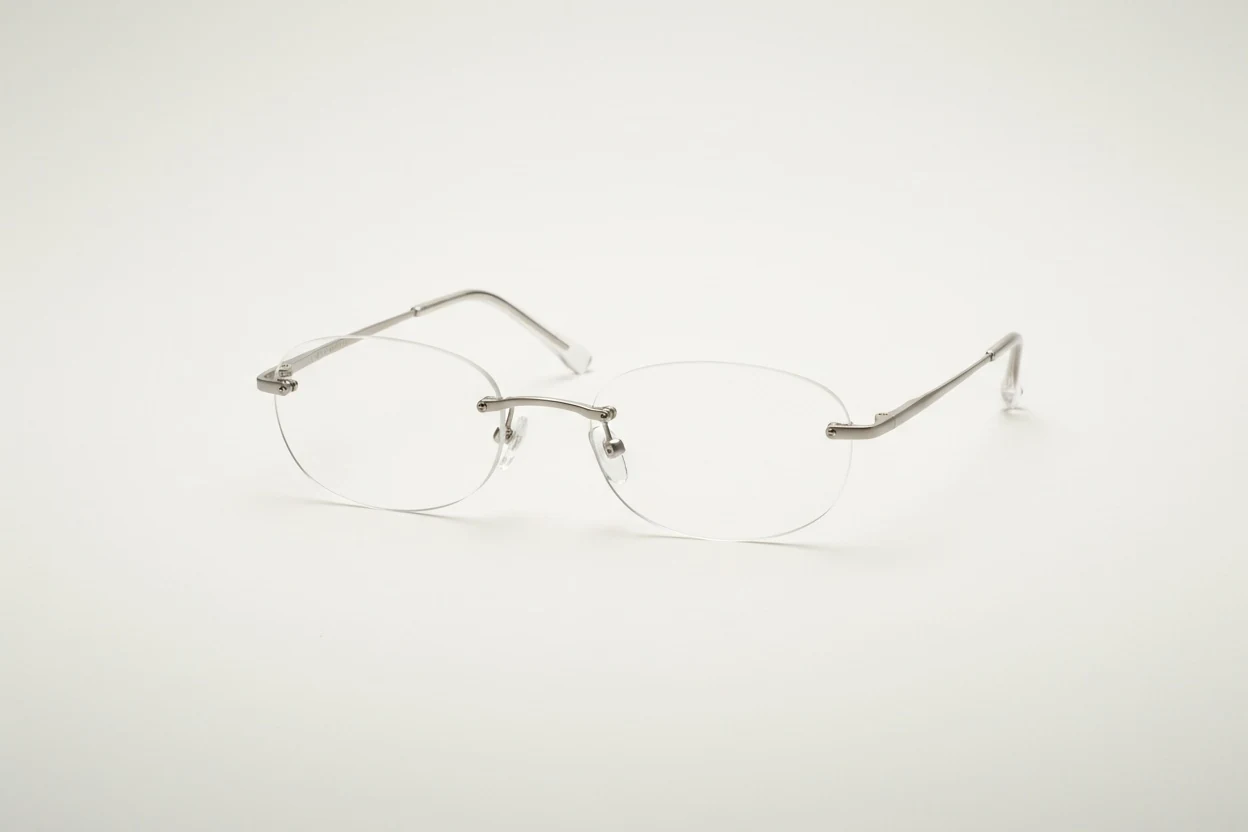
Rimless
Adds nothing at the cheekbone, which for this shape is often the entire requirement.
Titan Minimal Art (5599 chassis) · air titanium rim
Silhouette Titan Minimal Art (5599 chassis)
Eyeglasses · $$$
1.8 grams, no screws and no hinges. If the point of recommending rimless is to add no line to the face, this is the limiting case.
Eyeglasses · $$$
A titanium wire frame with a spiral hinge and no screws. Unlike fully rimless there is a hair-thin line around the lens, which protects the lens better than nothing at all.
Frames wider at the top
The general rule the four above are specific cases of: weight high, nothing at the middle.
Women's frames for a diamond-shaped face
Cat-eye in the smaller size
The lifted outer corner widens the narrow forehead. If your cheekbones are prominent, a smaller size keeps the lower rim off the bone. The models are under the cat-eye style above.
Oval metal frames
Soft curves offset angular cheekbones without adding width at the widest point. The models are under the oval style above.
Rimless frames
Adds nothing at the cheekbone, which on this shape is often the whole requirement.
Men's frames for a diamond-shaped face
Browline
A heavy top bar adds width across the brow, where a diamond face is narrow, and the thin lower rim stays clear of the cheekbone. The Clubmaster models are under the browline style above.
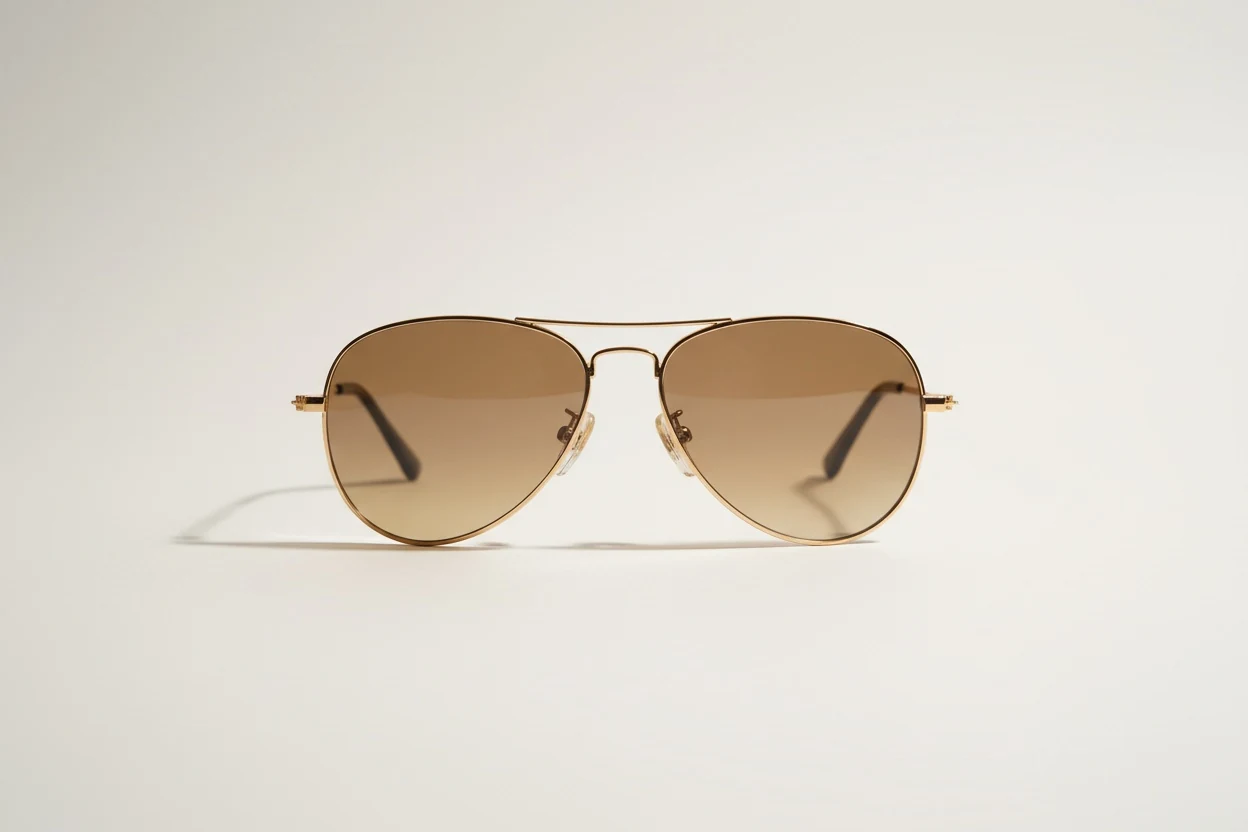
Aviator — with care
An aviator's wide lower lens can mark the cheekbones if it is as wide as they are. A narrower aviator, or a modified shape such as the Persol 649, works better.
Aviator Classic RB3025 · Aviator · 649 / 714
Ray-Ban Aviator Classic RB3025
Sunglasses · $$
The same pattern since 1937. The teardrop narrows from cheekbone toward jaw — that geometry is the entire reason aviators get recommended.
Sunglasses · $$$
Built to military spec MIL-S-25948, with bayonet temples that run straight over the ear instead of hooking behind it. That, not the lens, is what you notice under a headset or after eight hours.
Sunglasses · $$$
A modified aviator: the same wide lens without the teardrop. The 714 is the identical shape that folds — that is the only difference.
Rimless titanium, with a beard fuller at the jaw
No frame line at the cheekbone, and a beard kept fuller at the sides of the jaw adds width low down. Frame at the top and beard at the bottom balance the middle.
Is it diamond, heart or oval? Check before you buy frames
Diamond is the shape most often confused with heart and oval, and the frame advice differs: cat-eye and browline frames suit a diamond face but are usually avoided on a heart-shaped one. The deciding measurement is how the forehead compares with the cheekbones.
| Shape | Widest point | Measurement that confirms it | Frames that suit | Frames that backfire |
|---|---|---|---|---|
| Diamond | Cheekbones | Forehead and jaw both clearly narrower than the cheekbones | Cat-eye, browline, oval, rimless | Narrow frames ending at the cheekbone |
| Heart | Forehead | Forehead wider than the jaw by a large margin | Aviator, rimless, oval, round | Pronounced cat-eye, browline |
| Oval | Cheekbones, gently | None of the other conditions clearly met | Most frames | Frames wider or deeper than the face |
What size frames fit a diamond-shaped face
The critical point on a diamond face is the cheekbone. A lens whose lower rim rests on a prominent cheekbone is uncomfortable and marks the widest point; a frame whose total width ends exactly at the cheekbone draws a line there. Choose a frame slightly narrower than the cheekbones that does not stop right on that line, with a moderate lens height. The Warby Parker Louise, listed under the cat-eye style above, comes in two sizes, and the smaller one keeps the lower rim off a prominent cheekbone. The three numbers printed inside a temple arm, such as 52-18-140, are the lens width, the bridge width and the arm length in millimetres. Lens height is usually not printed; product pages list it separately. Frames are fitted around your pupils, so your pupillary distance is worth knowing before you order online.
Sunglasses for a diamond-shaped face
Cat-eye and browline shapes for the same reason as the eyeglasses. Avoid anything narrow that stops at the cheekbone and marks its width.
Cat-eye sunglasses
The Ray-Ban Nina is a measured cat-eye: the corner lifts without reading as costume, adding width at the top of the face.
Browline sunglasses
The Clubmaster puts weight at the brow and keeps the lower rim light.
Oval sunglasses
A horizontal oval softens the cheekbones and suits a narrow chin.
Frames to avoid
Narrow frames that end at the cheekbone
They draw a line at the widest point of the face, which marks the very measurement you would want to soften.
Frames heavier at the bottom
They add weight below the cheekbone in the wrong place, at the cheek rather than at the jaw.
Not sure this is your shape? Glasses for face shape measures it from a photo and lists the frames that suit the result.
The diamond face shape on men
On men the diamond outline reads as high, prominent cheekbones with a narrow temple area, and it is the shape most often mistaken for oval in male faces because a short haircut removes the visual cue at the forehead. The styling problem is the same in both cases: the narrow forehead is what needs width, not the cheekbones.
Diamond face shape celebrities
Celebrity diamond-face lists are everywhere and this site does not publish one. A face shape is decided by three widths measured on a straight-on photograph, and press photos are shot at every angle and lens length there is — assigning a shape from one of them is a guess dressed as a fact. Measure your own instead; the tool above needs one photo and no account.
Procedures that change a diamond face
If the narrow forehead or the pointed chin is what you want to change, these are the simulations that touch the same geometry.
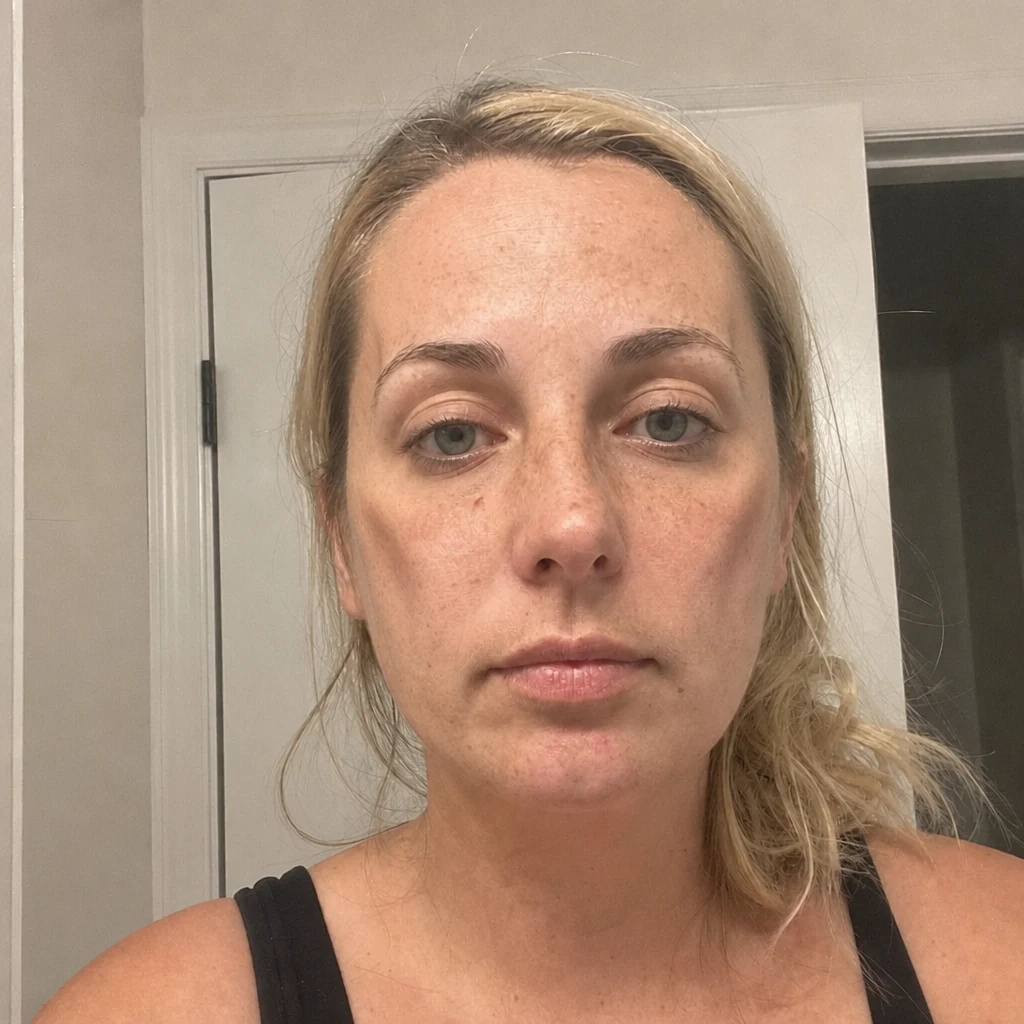 Before — generated
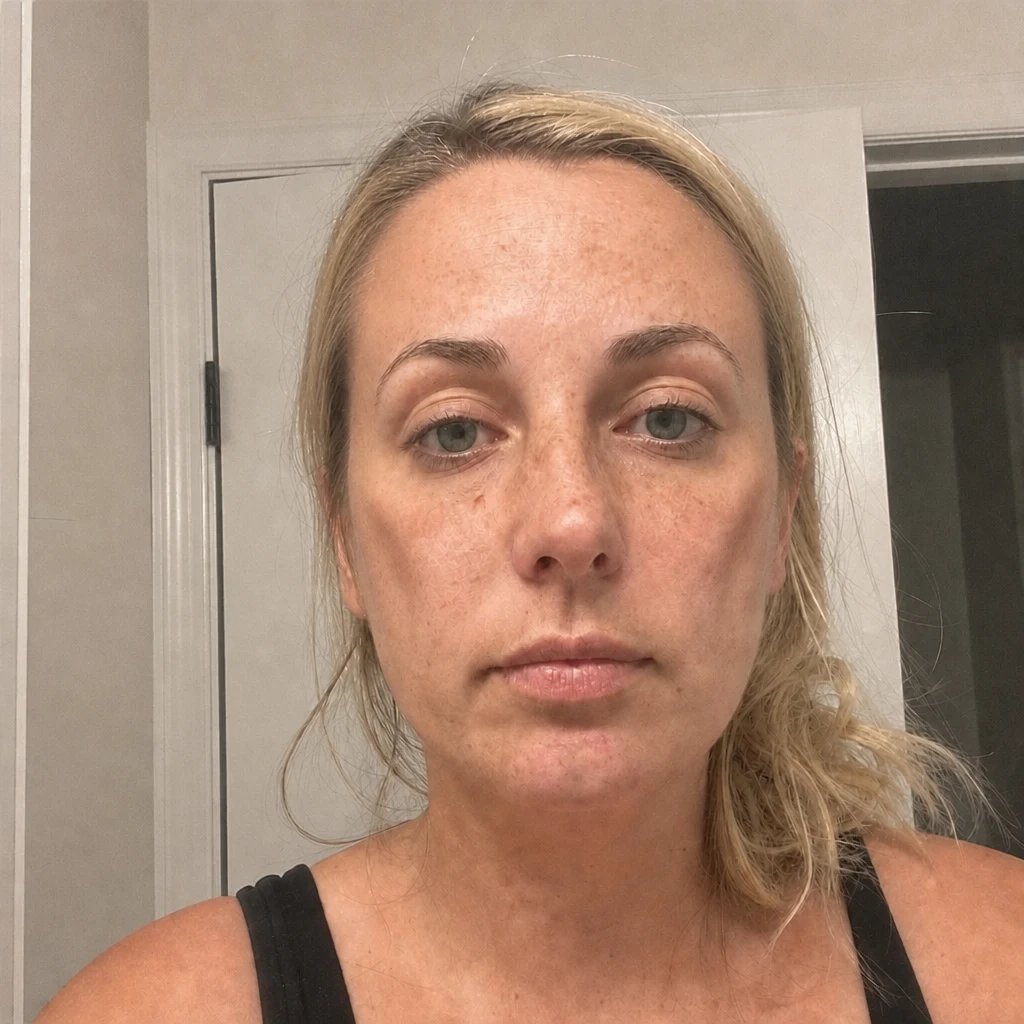 After — simulatedTemple Filler
 Before — generated
 After — simulatedChin Filler
 Before
 After — simulatedBuccal Fat Removal
- Temple Filler →Changes hollowing at the temples.
- Chin Filler →Changes chin projection, without surgery.
- Buccal Fat Removal →Changes cheek fullness below the cheekbone.
A simulation is a visualisation, not a surgical plan, and nothing on this page is medical advice.
Diamond face shape — frequently asked questions
Is a diamond face shape rare?
It is one of the less common results. It requires cheekbones measurably wider than both the forehead and the jaw, a narrower condition than most other shapes, and a slight head turn or hair over the temples can move a borderline face out of it.
What hairstyle suits a diamond face shape?
Anything that adds width at the forehead and the jaw while keeping volume away from the cheekbones. Side-swept fringes and chin-length cuts do both at once; slicked-back styles and cheekbone-level layers do the opposite.
Are high cheekbones the same as a diamond face shape?
No. High cheekbones describe where the bone sits vertically; a diamond face is about how wide it is relative to the forehead and jaw. You can have prominent cheekbones on any of the seven outlines, and plenty of diamond results have cheekbones that are wide rather than high.
Is a diamond face shape attractive?
There is no measured ranking of face shapes by attractiveness, and any article that gives you one is quoting a preference as a finding. What the research supports is averageness and symmetry, neither of which favours a particular outline.
Can I change a diamond face shape?
The outline is bone, so hair, framing and facial hair are what actually move it day to day. Fillers at the temple or chin change the same three widths the measurement uses, which is why they appear in the simulations above.
Which frame shapes work best on a diamond-shaped face?
Frames that add width at the top and nothing at the cheekbones: cat-eye and browline frames, soft ovals and rimless frames. Choose a frame slightly narrower than the cheekbones that does not end right on that line.
What should a diamond face avoid in glasses?
Narrow frames whose width stops exactly at the cheekbones, which draws a line at the widest point, and frames heavier at the bottom, which add weight at the cheek rather than the jaw. A lower rim that rests on a prominent cheekbone is also worth avoiding.
Should I choose cat-eye or round glasses for a diamond face?
It depends on your forehead. A cat-eye widens a narrow forehead, so it is the better choice when the forehead is much narrower than the cheekbones. A round frame does not mark the cheekbones, so it suits a face where the cheekbones are the main feature. Both avoid the frames that backfire on this shape.
What hair length is best for a diamond face?
Chin to collarbone is the safest length, because it puts weight at the narrow jaw. Short cuts work if they keep volume at the temples; long hair works with layers that start below the cheekbone.
What haircut suits a man with a diamond face?
Cuts that add width at the forehead and keep some fullness at the temples: a textured crop worn forward, a side-swept quiff of moderate height, or a mid-length crop with a low taper. High skin fades and slick backs leave the cheekbones as the only wide point.
The other face shapes
- Oval face shape →
- Round face shape →
- Heart face shape →
- Square face shape →
- Oblong face shape →
- Triangle face shape →