Pretty Scale Test
The Face Analysis pretty scale test reads 478 points on one photo and combines symmetry (40%) with three facial proportions (20% each). Your score out of 10 is where that result ranks among 102 research faces from the Face Research Lab London Set, so 5.5 is the middle face. Free, no sign-up, and your photo never leaves your browser.
- 102
- research faces
- 478
- landmarks
- 5.5
- middle of the scale
- Free
- no sign-up
Updated
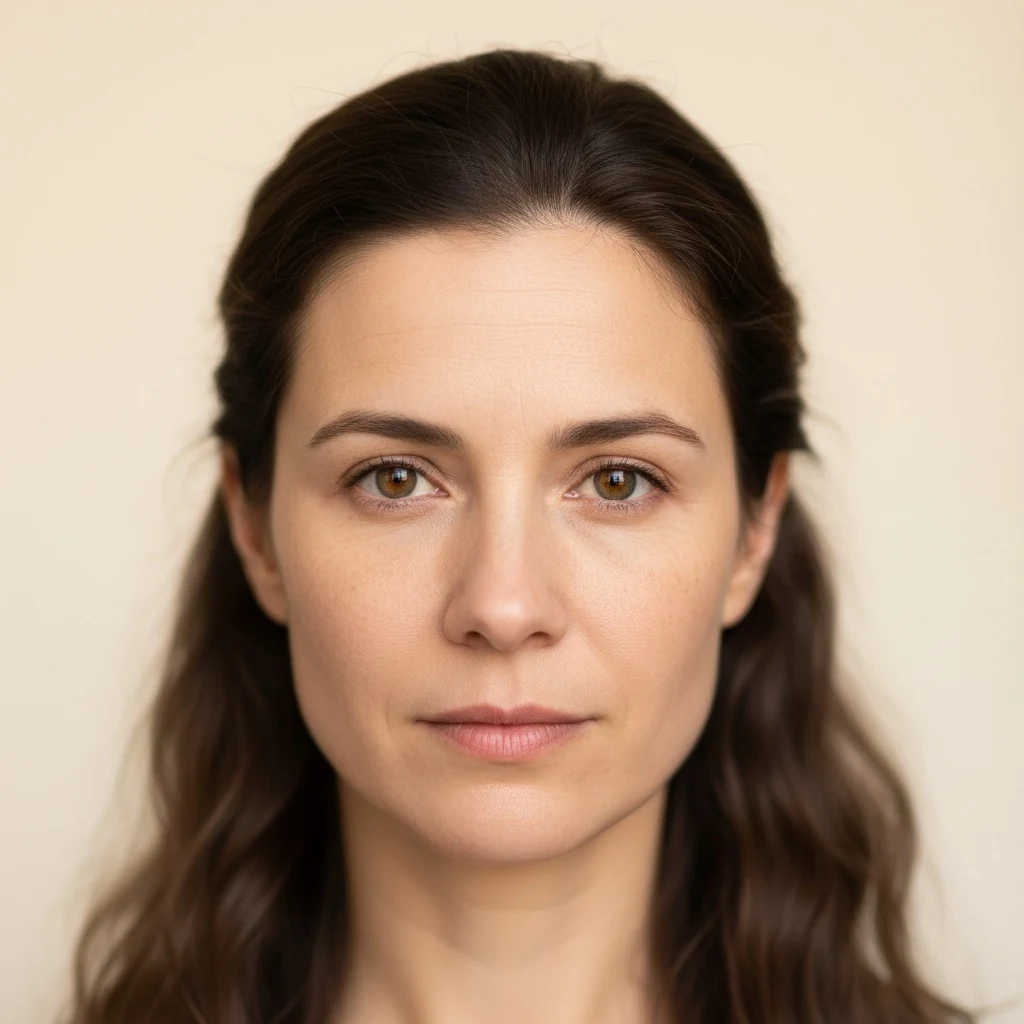
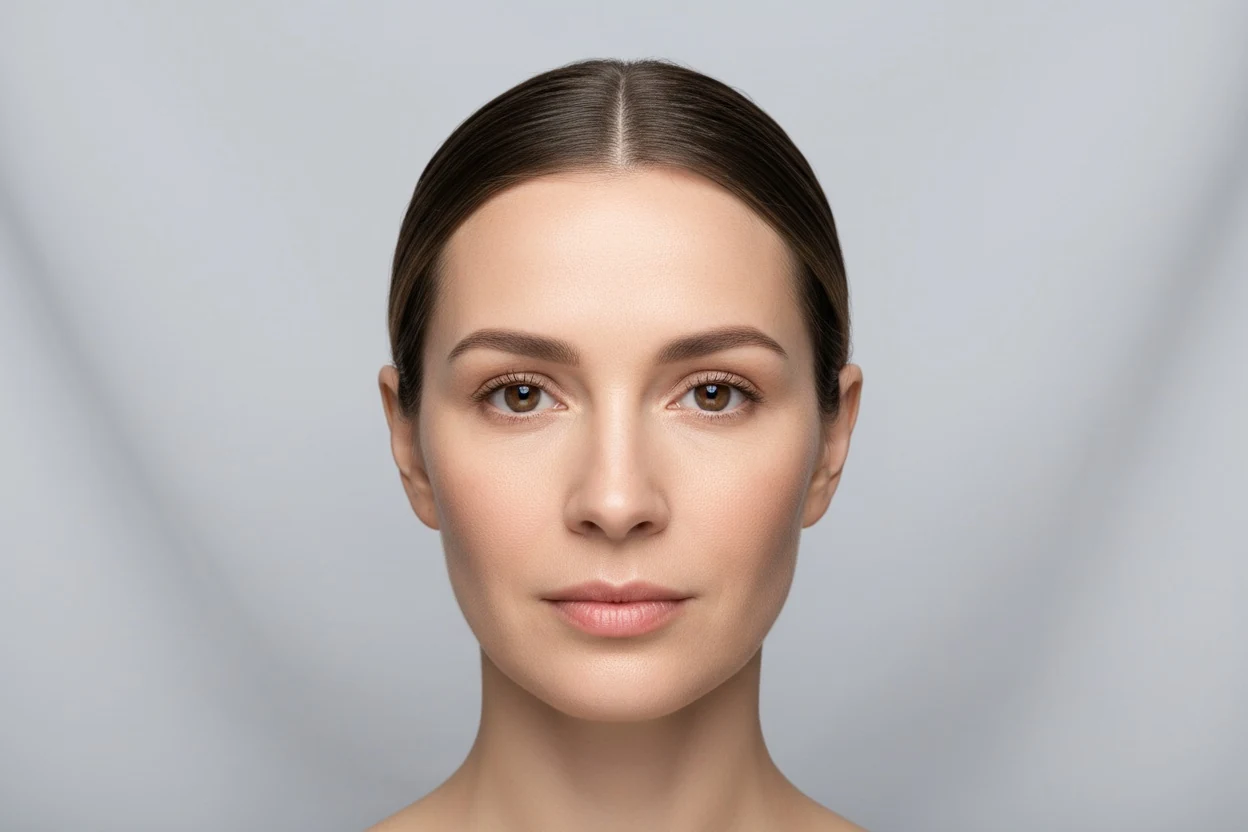
 Example
Choose your own photo
See your score, symmetry and proportions.
Choose your own photoClick to choose a photo, or drop one here
Front-facing · Even lightingStraight-on, even lighting, at arm's length gives the most comparable reading.
Runs in your browser. Your photo is not uploaded.
How does the pretty scale test score a face out of 10?
- Score = 1 + 9 × percentile ÷ 100 against 102 research faces; 5.5 is the middle.
- The formula and weights are published, and the same photo always returns the same score.
- Smiling raised the median score from 5.5 to 7.4 on the same 102 people.
- The analysis runs in the browser; the photo is not uploaded.
See what a change would actually look like
These are the renders that act on what this page measures. Each one below was generated by the same model that runs on your own photo — labelled examples on another face, so you can see what the procedure changes before you spend anything.
Glow Up Pack
Glow Up Pack · AI example
Glow Up Pack. A different possibility.
Tap the photo to enlarge. AI visualisation, not a prediction. Both images are AI generated.
What Changed & Why · Annotated AI example
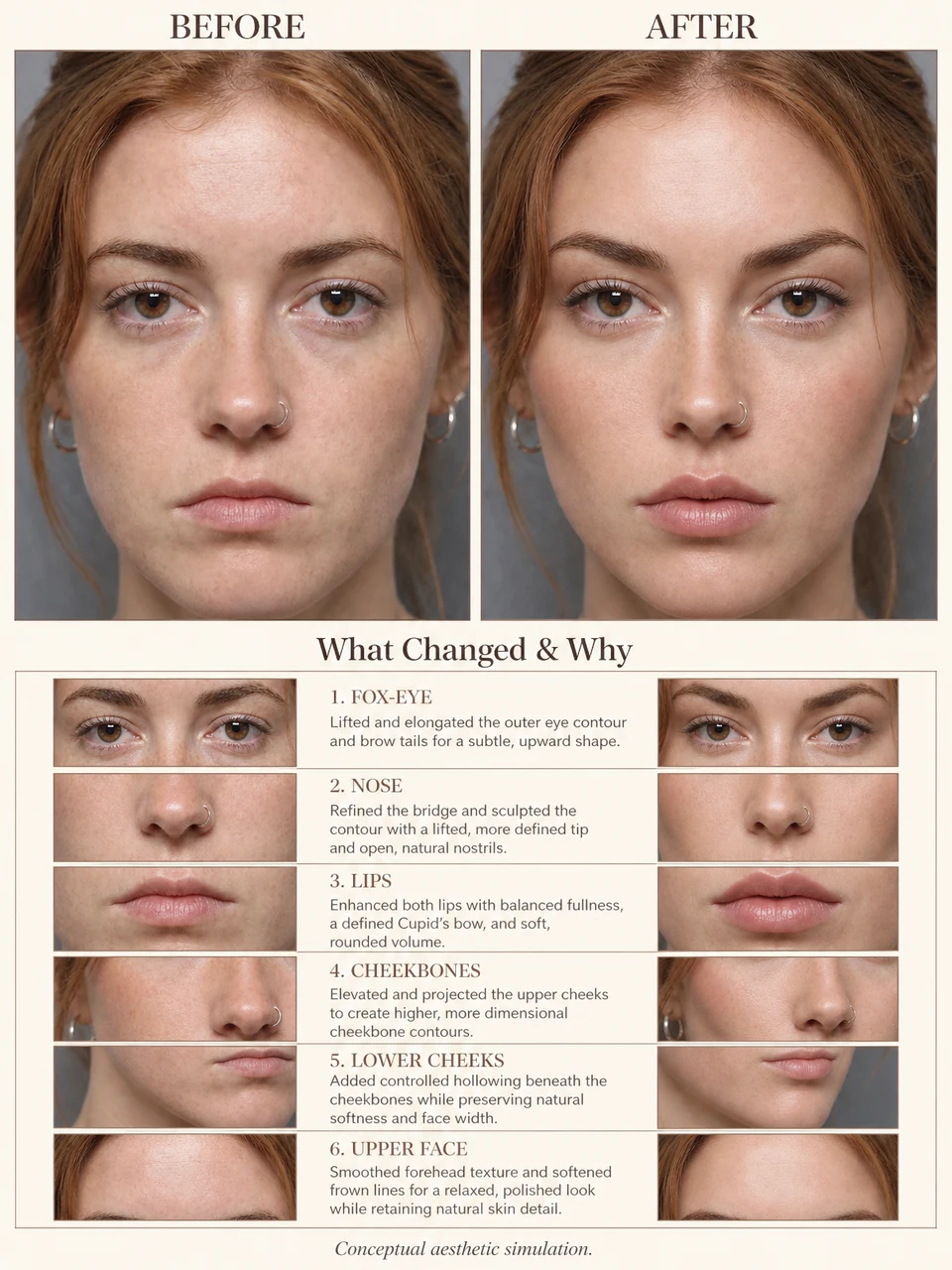
Conceptual aesthetic simulation. Another face, not your result.
Changes several changes at once, as one render.
What it does →Lip Filler
Lip Filler · AI example
Lip Filler. A different possibility.
Tap the photo to enlarge. AI visualisation, not a prediction. Both images are AI generated.
Changes the volume and shape of your lips.
What it does →Rhinoplasty
Rhinoplasty · AI example
Rhinoplasty. A different possibility.
Tap the photo to enlarge. AI visualisation, not a prediction. Both images are AI generated.
Changes the bridge, tip and nostril width of your nose.
What it does →
Every “after” above is an AI simulation on a sample face, not a photograph of a surgical result — it shows the direction a procedure moves a face, not an outcome anyone achieved and not a prediction of yours. Where a frame reads “Before · AI example”, the before image is generated too: the same portrait with the condition that procedure treats added, because none of the source photographs had it. Run one on your own photo.
What is the pretty scale?
"Pretty scale" began as the name of one online face-rating site and became the everyday name for any test that puts a face on a number line, usually 1 to 10. Search for it today and you find apps, quizzes and AI tools, each with its own formula and each giving a different number for the same photo.
This pretty scale test is built the way a measurement should be: from published face research, with the formula written out and the reference data named. It reads the geometry of your face (symmetry and three classic proportions), then places the result on a 1-10 scale built from real, rated research faces. The same photo always gives the same score.
How the pretty scale test works
A face-landmark model places 478 points on your photo, in your browser. From those points the test computes four measurements that face research has studied for decades. Each is shown on your result card with its own bar, so you can see what moved your score.
The four measurements are combined into one composite. That composite is then ranked against 102 adults from the Face Research Lab London Set (49 women, 53 men), measured with exactly the same code. Your pretty scale score is that rank, written on a 1-10 scale. It is the same number the [AI attractiveness test](/attractiveness-test) gives; this page explains the scale, that one explains the science of attractiveness in depth.
| Measurement | What it compares | Weight |
|---|---|---|
| Facial symmetry | Six matched left–right landmark pairs, each against the facial midline | 40% |
| Face length to width | Hairline-to-chin height against cheekbone width, compared with 1.618 | 20% |
| Eye spacing to nose width | Distance between the outer eye corners against nostril width | 20% |
| Nose length to mouth width | Bridge-to-tip length against mouth width | 20% |
The pretty scale out of 10, score by score
Every score on this scale has an exact meaning: the share of the 102 research faces your composite is higher than. The conversion is one line of arithmetic, score = 1 + 9 × percentile ÷ 100, so 5.5 is always the middle face of the set, and each full point is about eleven percentage points.
That makes the scale easy to read and hard to inflate. A 7 is not a compliment and a 4 is not an insult; they are positions. Half of all faces sit below 5.5 by construction, which is what a fair scale has to do.
| Pretty scale score | Where it places your proportions | Reading |
|---|---|---|
| 1.1 | Higher than about 1% of the 102 research faces | The lowest reading the scale gives |
| 2.0 | Higher than about 11% of the 102 research faces | Below the middle of the set |
| 3.0 | Higher than about 22% of the 102 research faces | Below the middle of the set |
| 4.0 | Higher than about 33% of the 102 research faces | Below the middle of the set |
| 5.0 | Higher than about 44% of the 102 research faces | Below the middle of the set |
| 5.5 | Higher than about 50% of the 102 research faces | The middle face of the research set |
| 6.0 | Higher than about 56% of the 102 research faces | Above the middle of the set |
| 7.0 | Higher than about 67% of the 102 research faces | Above the middle of the set |
| 8.0 | Higher than about 78% of the 102 research faces | Above the middle of the set |
| 9.0 | Higher than about 89% of the 102 research faces | Above the middle of the set |
| 9.9 | Higher than about 99% of the 102 research faces | The highest reading the scale gives |
The research behind the scale
The scale is calibrated on the Face Research Lab London Set, a public research dataset of 102 adults photographed under identical, standardised conditions. Every one of those faces was also rated for attractiveness by 2,513 people on a 1-7 scale. We ran all 102 faces through this site's own engine and analysed every measurement against those ratings. The full results, face by face and measurement by measurement, are on the [face measurement statistics](/face-measurement-statistics) page.
That analysis, and the wider literature, point the same way. People agree with each other about faces more than folk wisdom suggests: a meta-analysis of more than 900 studies found raters agree both within and across cultures. Faces close to the population average tend to be rated higher, a finding first shown in 1990 and replicated many times since. Symmetry plays a smaller part. The golden ratio, quoted everywhere, has the weakest support of all.
Research also shows the limit of any scale, and it is worth knowing. In a 2006 series of experiments, each person's private taste counted about as much as the taste people share. That is the part of "pretty" that belongs to the person looking, and no formula reads it from a photo. A pretty scale can measure the geometry precisely; who finds that face beautiful is up to people.
Large benchmark datasets such as SCUT-FBP5500 (5,500 rated faces) exist because researchers keep testing which facial features people respond to. This test reports the ones that can be measured from landmarks, each one separately, so you can see your own proportions rather than a single opaque grade. The methodology page documents every step.
Why your pretty scale score changes from photo to photo
The score reads one photo, and photos vary. Expression has the biggest effect: when the same 102 research participants were photographed smiling, their median score rose from 5.5 to 7.4. A smile lifts the cheeks and widens the mouth, and both feed the proportion measurements. Psychology research finds a similar effect in how people judge faces: a happy expression raises ratings.
Camera distance and angle come next. A phone held close enlarges whatever is nearest, usually the nose. A camera below eye level widens the jaw and shortens the midface, and a head turned a few degrees lowers symmetry on one side.
For a fair reading, compare like with like: neutral expression, straight on, arm's length, even light. Run two or three photos and treat the spread as your range. If you want to see your face the way other people see it, unflipped, the [online mirror](/online-mirror) shows the true view.
Pretty scale vs attractiveness test vs PSL scale
All three are names for the same question, and on this site they run on the same measurements. The difference is what each page explains around the number.
| Test | What it gives you | Best for |
|---|---|---|
| Pretty scale test (this page) | Your score out of 10 and what each point of the scale means | Reading the 1-10 scale itself |
| Attractiveness test | The same score, with the science of facial attractiveness in depth | Understanding what research says makes faces attractive |
| PSL scale test | Your measurements next to the forum PSL tiers | Translating PSL vocabulary into measurements |
| Golden ratio calculator | Three proportions against phi, 1.618 | One classic ratio, in detail |
| Face symmetry test | Left against right, pair by pair | The symmetry component on its own |
If the question behind your search is closer to "am I ugly", that one has its own page with a different answer: am I ugly?. And if you want to know what you find pretty in other people, find your type learns it from the faces you tap.
Is the pretty scale test private?
Yes. The face-landmark model downloads to your browser and runs on your device. Your photo is processed in local memory and is never sent to a server, so there is no upload to store, leak or reuse. You can confirm it in your browser's network tab: the model file comes down, and nothing containing your image goes up.
How to get a fair pretty scale reading
- Keep a neutral expression. Smiling raised the median score from 5.5 to 7.4 on the research faces.
- Face the camera straight on. A few degrees of turn lowers symmetry on one side.
- Hold the camera at arm's length and at eye level, not below the chin.
- Use even light from the front; side light casts edges the model can misread.
- Turn off beauty filters and pull hair away from the face.
- Run two or three photos and read the spread as your range.
Pretty Scale Test — frequently asked questions
Is this the prettyscale.com test?
No. This is The Face Analysis's own pretty scale test, and we are not affiliated with prettyscale.com. The method here is published in full: four measurements, fixed weights, and a scale built from research faces.
Is the pretty scale test free?
Yes. The score, the scale position and every measurement are free and need no account. Credits exist only for optional AI simulations, which render a specific change on your own photo.
Is 7 out of 10 a good pretty scale score?
A 7 means your composite is higher than about two thirds of the 102 research faces. It is above the middle of the scale. More useful than the total is the breakdown under it, which shows which measurement sits closest to and furthest from the reference.
What is the average score on the pretty scale?
5.5. The scale is a percentile, so 5.5 is the middle face of the research set by definition, and half of all faces score below it.
Does the pretty scale work for men?
Yes. The same measurements apply to any adult face, and the reference set includes 53 men and 49 women. Searching "how handsome am I" lands you on the same scale.
Why do two pretty scale sites give me different numbers?
Each site uses its own formula, and most do not publish it. Some also send the photo to an AI model whose answer changes between runs. This test publishes its weights and returns the same number for the same photo, so you can compare your own photos fairly.
Is the pretty scale accurate?
The measurements are precise and reproducible, and the scale is calibrated on a published research set. What no scale captures is personal taste: research finds private preference counts about as much as shared preference. Read the score as your proportions, measured, not as a final word on how pretty you are.
Can I raise my pretty scale score?
Most of the measurements follow bone structure and soft tissue, so they do not change quickly. What changes the reading most is the photo: a straight-on, eye-level shot at arm's length in even light. A smile raises it too, which is why fair comparisons use neutral photos.
Is there a pretty scale for the body?
Not here. This test reads facial landmarks only. Body proportions need a different model and a different reference set.
Is a pretty calculator or pretty meter the same thing?
Yes, they are other names for a pretty scale. On this site they all mean the same four measurements placed on the same 1-10 scale.
Can I use the pretty scale on someone else's photo?
Only with their knowledge. A face is personal data, and scoring someone without asking is not okay.
References
- 1.DeBruine, L., & Jones, B. (2021). Face Research Lab London Set [Data set]. figshare. doi:10.6084/m9.figshare.5047666.
- 2.Langlois, J. H., Kalakanis, L., Rubenstein, A. J., Larson, A., Hallam, M., & Smoot, M. (2000). Maxims or myths of beauty? A meta-analytic and theoretical review. Psychological Bulletin, 126(3), 390–423. PMID 10825783.
- 3.Langlois, J. H., & Roggman, L. A. (1990). Attractive faces are only average. Psychological Science, 1(2), 115–121. doi:10.1111/j.1467-9280.1990.tb00079.x.
- 4.Grammer, K., & Thornhill, R. (1994). Human (Homo sapiens) facial attractiveness and sexual selection: the role of symmetry and averageness. Journal of Comparative Psychology, 108(3), 233–242. PMID 7924253.
- 5.Hönekopp, J. (2006). Once more: is beauty in the eye of the beholder? Relative contributions of private and shared taste to judgments of facial attractiveness. Journal of Experimental Psychology: Human Perception and Performance, 32(2), 199–209. PMID 16634665.
- 6.Liang, L., Lin, L., Jin, L., Xie, D., & Li, M. (2018). SCUT-FBP5500: A diverse benchmark dataset for multi-paradigm facial beauty prediction. 24th International Conference on Pattern Recognition (ICPR), 1598–1603. doi:10.1109/ICPR.2018.8546038.
- 7.Golle, J., Mast, F. W., & Lobmaier, J. S. (2014). Something to smile about: the interrelationship between attractiveness and emotional expression. Cognition and Emotion, 28(2), 298–310. PMID 23875865.
Other free face analysis tools
Every tool below runs from the same photo. For all of them at once, start with the free AI face analysis.