Hairline Lowering Surgery: Forehead Reduction Before and After, on Your Face
Hairline lowering surgery — also called forehead reduction — removes a strip of forehead skin at the hairline and brings the scalp forward, shortening the forehead in one operation. Here is who it is usually considered for, how far a hairline can realistically move, what the scar and recovery involve, how it compares with a hair transplant, and a render of a lower hairline on your own photo.
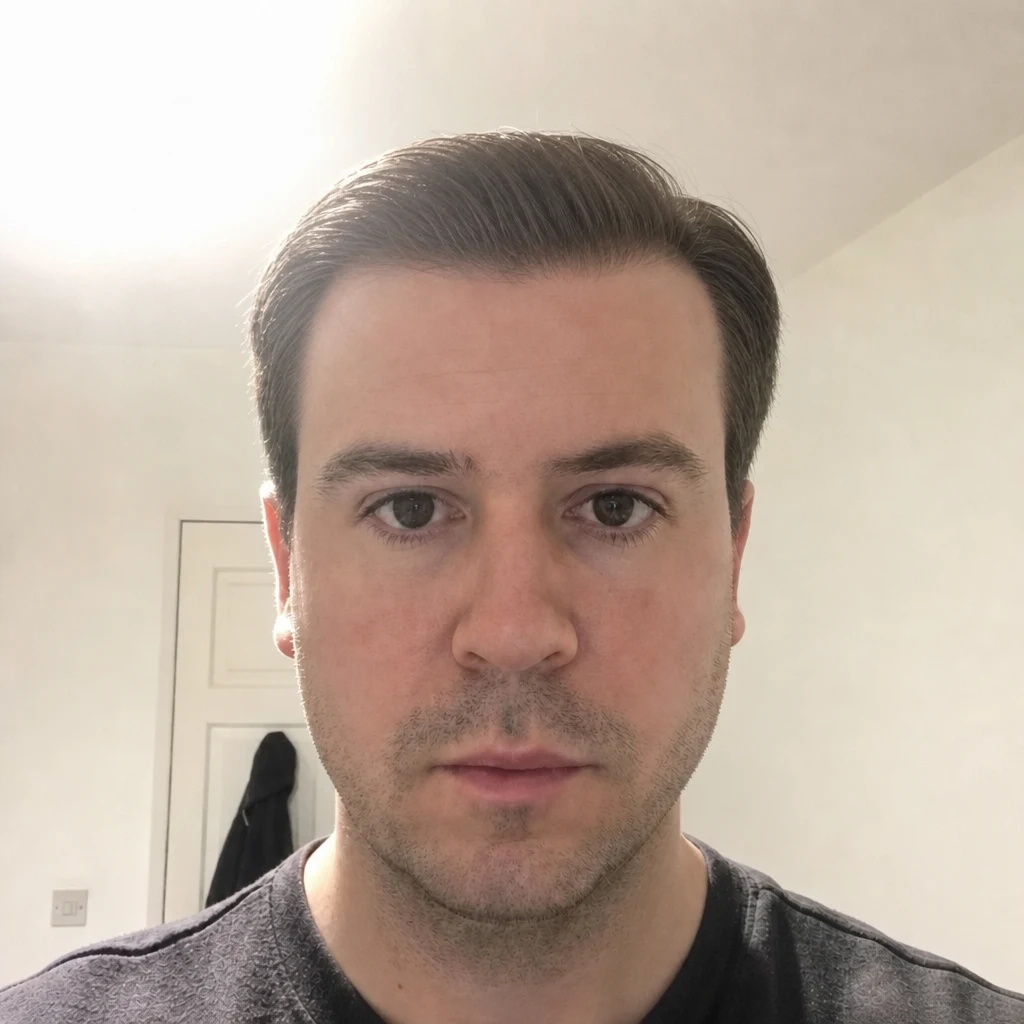
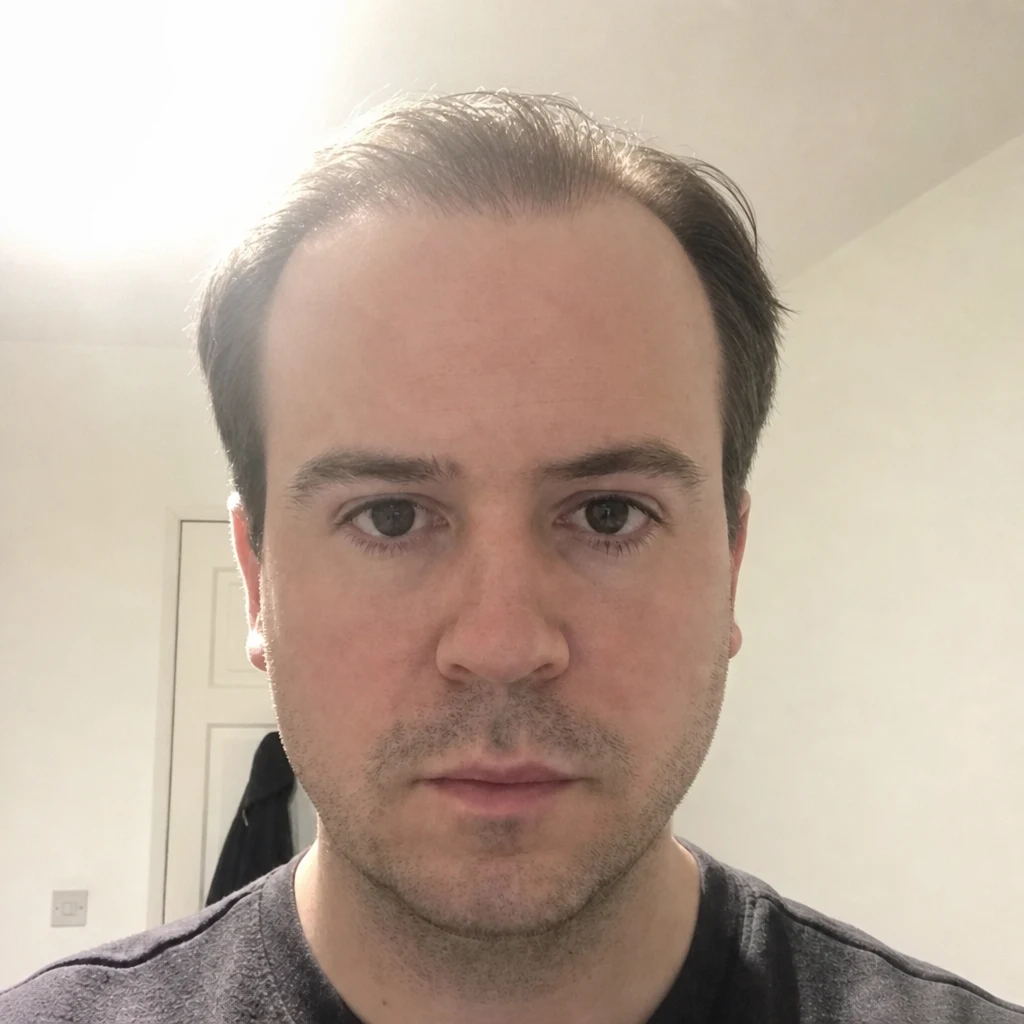
Hairline Lowering simulator — example render
- Also called
- Forehead reduction surgery
- Typical US cost
- Roughly $6,000–$12,000
- Typical lowering
- About 1–2.5 cm in one stage
- Recovery
- Stitches out at 7–10 days; scar matures over a year
- Upload one front-facing photo
- The render changes the height of your forehead — and leaves the rest of your face alone
- Compare your before and after side by side
1 render = 1 credit
5 credits $4.99, no subscription · or Starter $7.99/month for 10. The face analysis is free.
What is hairline lowering surgery?
In hairline lowering surgery, the surgeon makes an incision along the front edge of the hairline, frees the scalp so it can slide forward, removes the strip of forehead skin in front of the incision, and closes the scalp to the new, lower edge. Nothing is transplanted: the existing hairline itself moves down, all at once.
The incision is usually made in an irregular, zig-zag pattern and beveled so that hairs grow up through the scar — the "trichophytic" closure that makes the new edge look like a hairline rather than a line. Forehead reduction and hairline advancement are the same operation under other names. It is typically done under general anesthetic or sedation as an outpatient procedure.
Who forehead reduction surgery is usually considered for
Surgeons commonly describe the typical candidate as someone with a naturally high hairline, a scalp loose enough to move forward, good hair density at the front, and a hairline that is stable rather than receding. A congenitally tall forehead is the classic reason; a forehead that has become tall through hair loss is a different problem — the Norwood scale shows how to tell a maturing hairline from a receding one.
Hairline lowering for women
Hairline lowering is performed more often on women, largely because a naturally high hairline that is not receding — the situation the operation suits best — is more common in women. The procedure is also a common part of facial feminization surgery, sometimes combined with contouring of the brow bone.
Hairline lowering for men
Men are considered more cautiously, because a stable hairline is a core requirement and male pattern hair loss can keep receding behind a scar that was placed at the old edge. A man whose hairline has already receded, or who has a family history of hair loss, is usually steered toward a hair transplant and medical treatment instead. A man with a genuinely high but stable hairline may still be a candidate.
How much can a hairline be lowered?
Surgeons commonly quote about 1 to 2.5 centimeters in a single stage, and the limit is scalp laxity — how far the scalp will stretch forward without too much tension on the closure. A tight scalp may allow less.
When more distance is needed, some surgeons use two stages: a tissue expander is placed under the scalp and gradually inflated over several weeks to stretch it, then removed at a second operation that advances the hairline further. Grafts can also be added later to soften the edge or fill the temples.
Hairline lowering vs hair transplant
Both lower a hairline. They do it in completely different ways, and they suit different people.
| Hairline lowering surgery | Hair transplant | |
|---|---|---|
| How it works | Removes forehead skin and advances the scalp | Moves individual follicles from the back of the scalp to the front |
| Distance in one session | About 1–2.5 cm, all at once | Limited by graft numbers; larger changes often take more than one session |
| When you see the result | Immediately, once swelling settles | Transplanted hair grows over roughly a year |
| Scar | A line at the new hairline, designed for hair to grow through | Small donor-area scars at the back of the head |
| Hair loss | Needs a stable hairline | Works with ongoing loss when combined with medical treatment |
| Typical US cost | Roughly $6,000–$12,000 | Roughly $4,000–$15,000 by graft count |
In short, hairline lowering suits a high but stable hairline with a flexible scalp; a transplant suits a hairline that is receding, or a patient who wants a softer, irregular edge, and the hair transplant simulation shows that version.
Forehead reduction without surgery
Nothing non-surgical makes the forehead itself shorter, but several things change how tall it looks: a fringe or curtain bangs, a side part that breaks up the line, scalp micropigmentation or hair fibers to darken a sparse front edge, and brow position — a lower, straighter brow reads as a shorter forehead than a high arch. Minoxidil does not move a naturally high hairline forward.
Hairline lowering before and after: how to read the photos
Forehead reduction before and after photos are unusually easy to stage, because hair styling alone can change apparent forehead height by more than the operation does.
- Hair pulled back in both frames. A before with hair slicked back and an after with loose, forward hair is not a comparison.
- The scar, wet or up close. Ask for the hairline with hair wet or pulled back at one year. Styled, dry hair hides the edge completely.
- Measure, don't eyeball. Compare brow-to-hairline distance against a fixed feature like the eye width in each frame.
- Head tilt. Tilting the chin down foreshortens the forehead; both photos should be straight on.
- Timing. Early photos can show shedding along the incision that later regrows, or swelling that makes the result look different from the settled one.
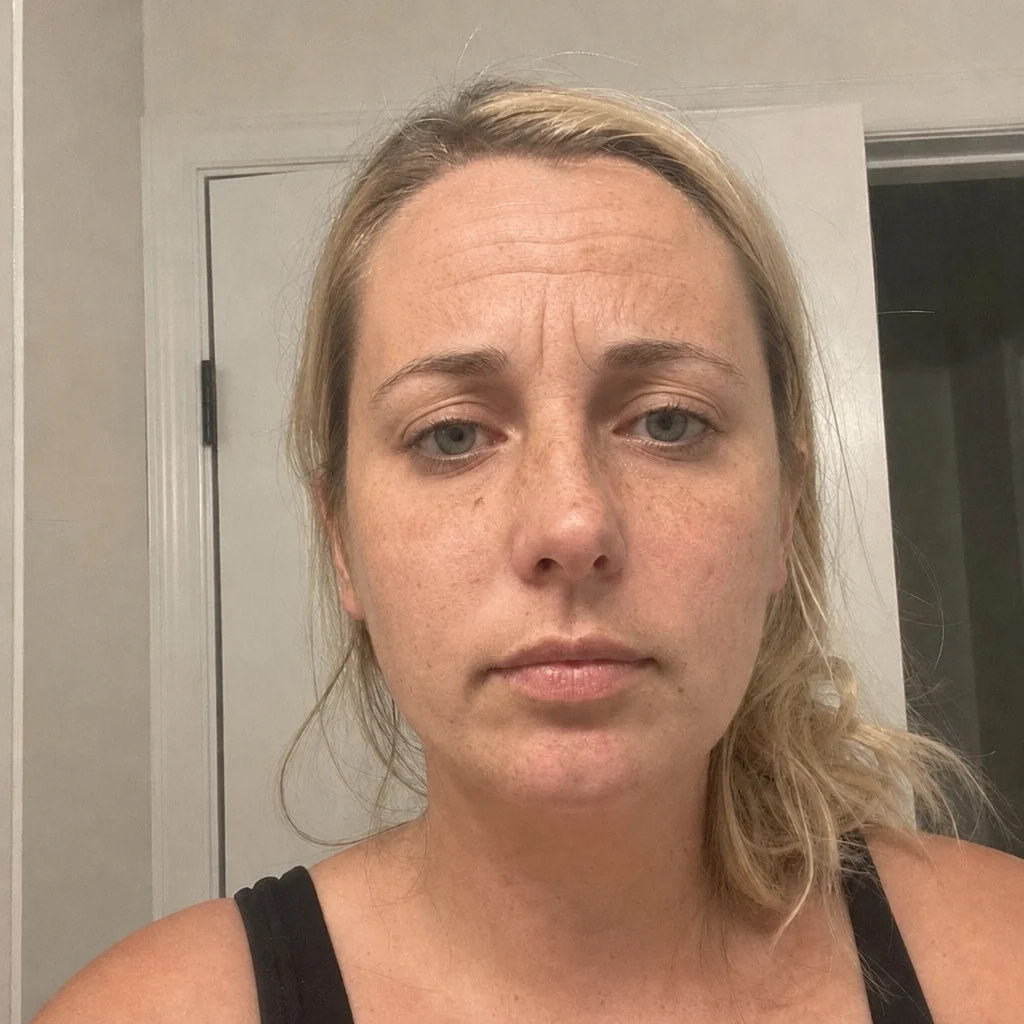
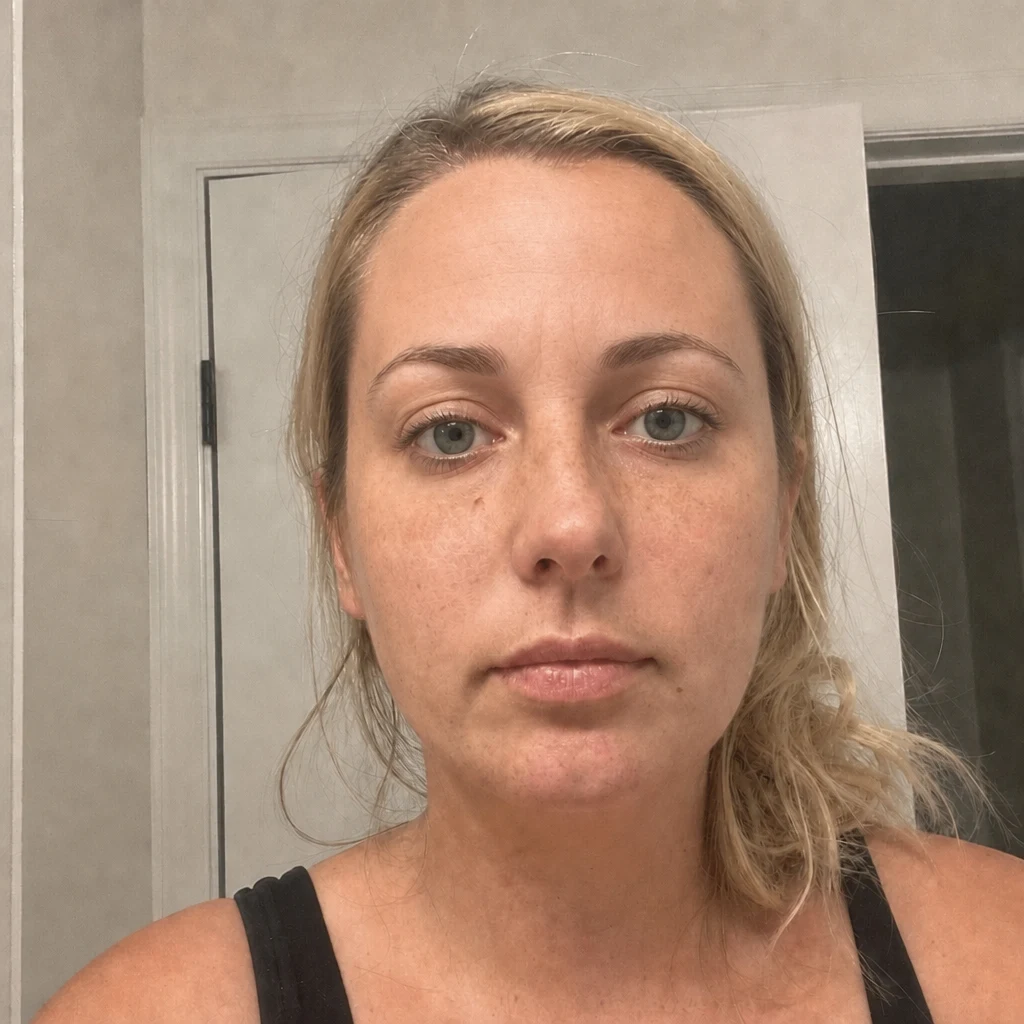
Before — generatedAfter — simulatedSee a hairline lowering on your own face
Run this simulationHairline lowering recovery and the forehead reduction scar
| Stage | What is commonly reported |
|---|---|
| First days | Swelling of the forehead that can drift down around the eyes, tightness, headache; a dressing and sometimes a drain |
| 7–10 days | Stitches or staples removed; many people return to work around this point |
| 2–6 weeks | Some hair near the incision may shed (shock loss), usually temporary |
| 3–6 months | Shed hair typically starts regrowing; numbness behind the hairline gradually improves |
| About a year | The scar matures and hair growing through it is at its best |
The forehead reduction scar is the trade-off at the center of this operation. It sits exactly where people look, it is designed to be hidden by hair growing through and in front of it, and it is usually hard to see once mature — but it is permanent, its visibility varies, and a scar that stays visible is one of the reasons grafts are placed into it later.
Forehead reduction risks and side effects
- A scar that stays visible, widens or is paler than the surrounding skin
- Temporary shedding along the incision; permanent hair loss there is less common
- Numbness of the scalp behind the incision, usually improving over months
- Tightness, headache and, rarely, poor healing where tension is highest
- A hairline shape that looks too straight or too low for the face
- Future pattern hair loss exposing the scar — the main reason surgeons screen for a stable hairline
- Bleeding, infection, and rarely injury to nerves in the forehead
Hairline lowering surgery cost
Hairline lowering surgery is commonly quoted at roughly $6,000–$12,000 in the United States. Forehead reduction cost rises with the distance needed and with anything added to the operation.
| Cost factor | Why it moves the price |
|---|---|
| One stage or two | A tissue expander means two operations and more follow-up |
| Grafting | Transplanting hair into the scar or temples is priced separately, often later |
| Anesthesia and facility | General anesthesia and an accredited operating room add to the surgeon's fee |
| Combined procedures | A brow lift or brow-bone contouring in the same session raises the total |
| Location | Lower prices abroad are part of why the cost term is searched; revision is rarely included |
Hairline lowering simulator: a shorter forehead on your photo
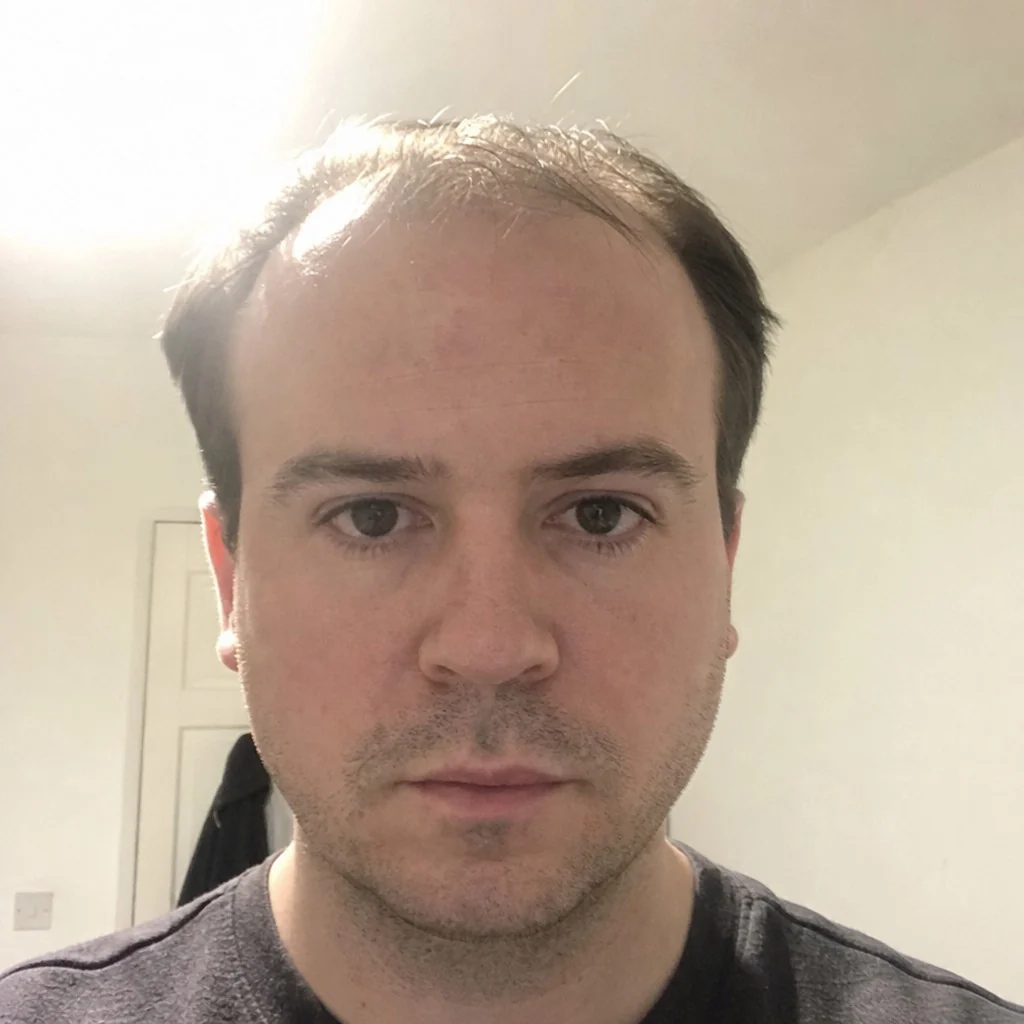
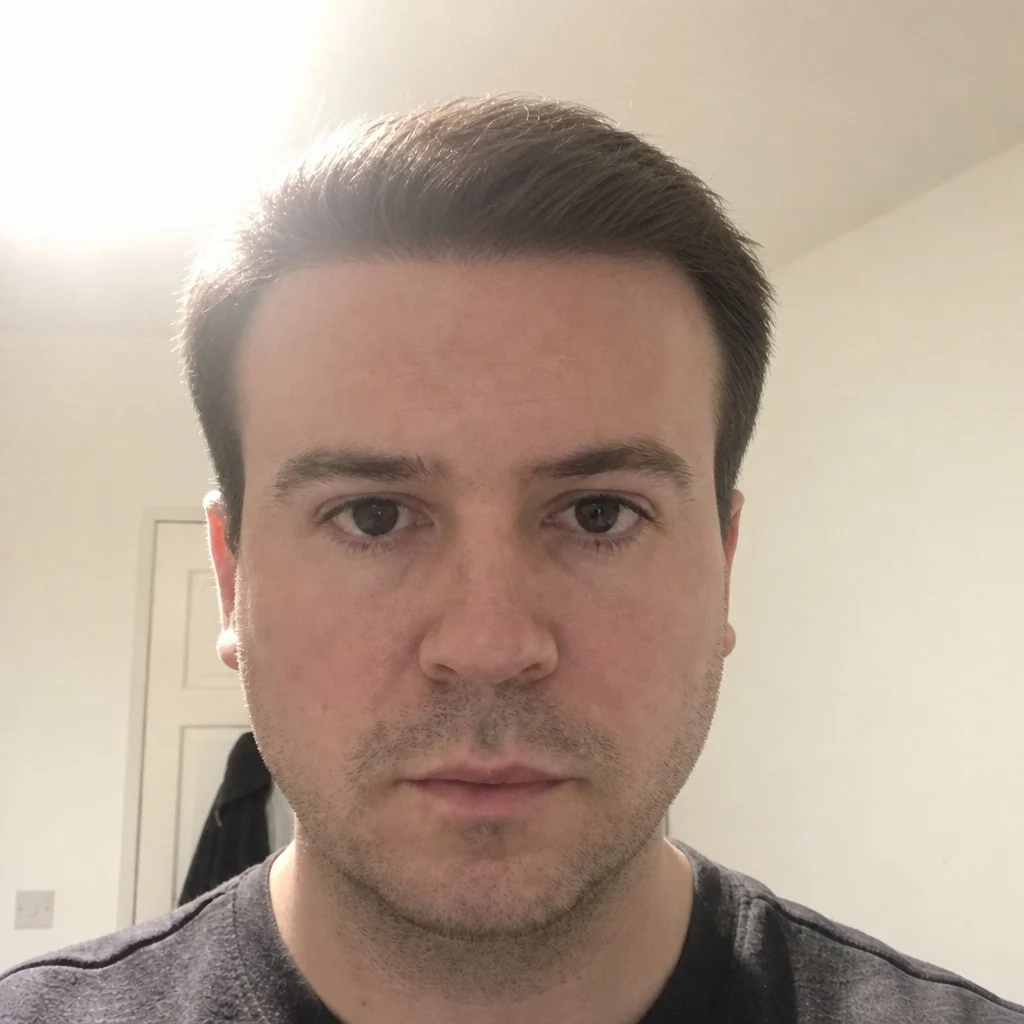
The hairline lowering simulation brings your hairline down and reduces forehead height, matching your existing hair color, density and direction, and leaves the rest of your face unchanged. It is a direct way to find out whether a centimeter or two of forehead changes your face as much as you expect — and whether you would still want it with a scar.
The render cannot show the scar or tell how far your scalp would actually move, which are the two things that decide the real result. The upper band of the facial thirds calculator measures forehead height against the rest of your face, and the oblong face shape page explains why face length is one of the few classifications this operation changes directly.
See how your forehead compares with the middle and lower thirds — with the caveat that the upper third is bounded by a hairline, not by bone.
Measure your facial thirdsQuestions to ask your surgeon before hairline lowering surgery
- How far does my scalp laxity actually allow the hairline to move in one stage, and would I need an expander for the distance I want?
- Is my hairline stable, and what would further recession do to the look of the scar in ten years?
- Do you plan grafts into or in front of the scar, and can I see scars from your patients at a year with the hair pulled back?
Alternatives to hairline lowering
How the hairline lowering simulation works
Your photo is analysed for the landmarks that matter to this procedure, and the render changes the height of your forehead while leaving the rest of your face alone. That constraint is the hard part — a generic image model will happily redraw your whole face and hand you a stranger who looks better.
The render shortens the forehead in the frame. It cannot show the trichophytic scar at the new hairline, which is the trade-off, and it cannot assess scalp laxity — the factor that decides how far the hairline can actually move.
It is an illustration of a plausible direction, not a prediction of your result and not a medical opinion. What it is genuinely good for is finding out whether you want the change at all — plenty of people render one, find the difference smaller than they imagined, and stop there.
Measure your face before a hairline lowering simulation
The free analysis tools measure symmetry, facial proportion and face shape, and tell you which measurements sit outside the reference range. Choosing a procedure from that is a much better starting point than choosing one from a photo you saved.



Hairline Lowering simulator — frequently asked questions
Is hairline lowering surgery worth it?
It depends on what you are trading. The change is immediate and permanent, which suits a naturally high, stable hairline; it suits a still-receding hairline poorly, and the scar is a permanent part of the deal. There is no reliable published satisfaction or regret rate to quote — the most useful evidence is a surgeon's own patients at a year, with hair pulled back.
Is hairline lowering permanent?
Yes. The forehead skin is removed and the hair-bearing scalp moved, so the new position does not relax back. What can change later is the hair itself, if pattern hair loss develops behind the new edge.
Does forehead reduction surgery hurt?
It is done under anesthesia. Afterwards, tightness across the scalp and headaches are the common complaints for the first days, usually managed with prescribed medication, followed by numbness that fades over months.
Does forehead reduction move your eyebrows?
It is designed not to — the skin is removed at the top of the forehead, not near the brows. Because the brows stay where they are while the hairline comes down, some people with low brows combine it with a brow lift.
Can hairline lowering change your face shape?
It can change how long the face reads. Face length is measured from the hairline, so a shorter forehead can move a face out of the oblong range — one of the few classifications a single operation changes directly.
Is the hairline lowering simulator free?
The face analysis is free and needs no account. A rendered simulation costs credits because it runs on a GPU — $4.99 buys five and does not require a subscription.
How accurate is an AI hairline lowering simulation?
It is an illustration of a plausible outcome, not a prediction of your result. Real outcomes depend on your anatomy, the facial plastic surgeon and how you respond. Treat it as a conversation starter for a consultation, not a promise.
Do you keep my photo?
The free measurements never leave your browser. A simulation does send the photo to a rendering service, which is why it asks for explicit consent first, and you can delete the result from your dashboard at any time.
Can I show this to a facial plastic surgeon?
Yes, and that is the most useful thing to do with it. Bringing a picture of the direction you want is far more precise than describing it in words.
Other forehead & hairline simulations
This page is not medical advice and we are not clinicians. A simulation cannot tell you whether a procedure is appropriate for you, what it costs, or what the risks are. Those questions belong with a qualified facial plastic surgeon.