Snub Nosealso called upturned or celestial
A snub nose is short with a tip that rotates upward, so the nostrils become more visible from the front than usual. Tip rotation is measured in profile, so a front photo cannot label a snub nose; this test reports the 3 front ratios instead.
- Profile
- only — not readable from the front
- 3
- front ratios measured
- Free
- photo not uploaded
A snub nose is defined in profile, so no front-facing tool can identify one — including this one. The profile test below is the honest method, and the panel measures the three proportions a photo can settle.
 Example
Choose your own photo
Discover your nose shape and proportions.
Choose your own photoClick to choose a photo, or drop one here
Front-facing · Even lightingStraight-on, even lighting, at arm's length gives the most comparable reading.
Runs in your browser. Your photo is not uploaded.
What defines a snub nose
Tip rotation above the neutral range, combined with short length. Rotation is measured in profile as the angle between the columella and the line of the upper lip.
- A tip that angles upward rather than straight out or down
- Nostrils more visible from a front view
- Short overall length
- Often a slight concavity along the bridge
How to tell if you have a snub nose
- Rotation is a profile angle. From the side, look at the angle between the base of your nose and your upper lip — a snub nose opens that angle wider than average.
- From the front, visible nostril show is a hint rather than a measurement, since it also changes with head tilt.
- The tool above measures length, which is the other half of the definition and the half a front photo can see.
Snub, upturned or celestial — why one nose has three names
This shape has swung between being a defect to correct and a feature to request within living memory, which is a reasonably strong argument for treating any nose trend with suspicion. The word snub itself carries a slight, which is why upturned and celestial exist as alternatives for the identical anatomy.
What changes a snub nose
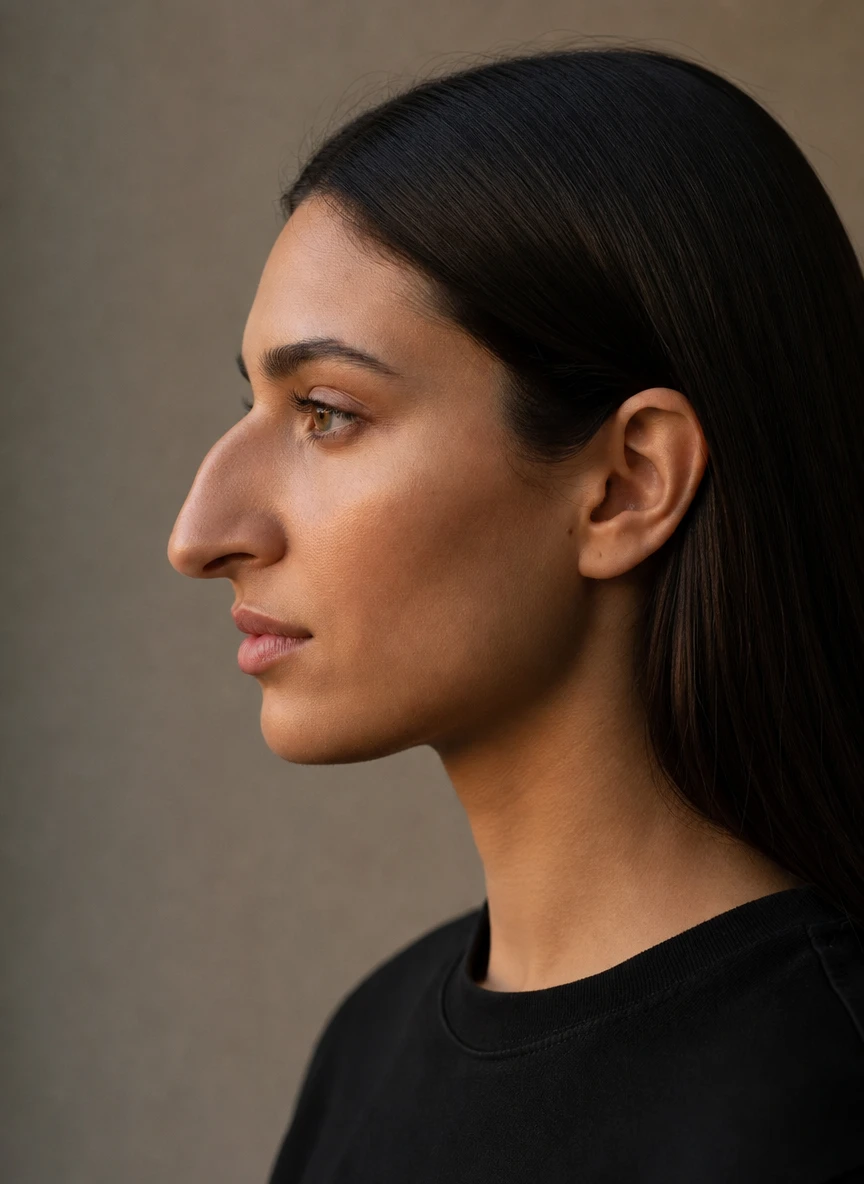 Before — generated
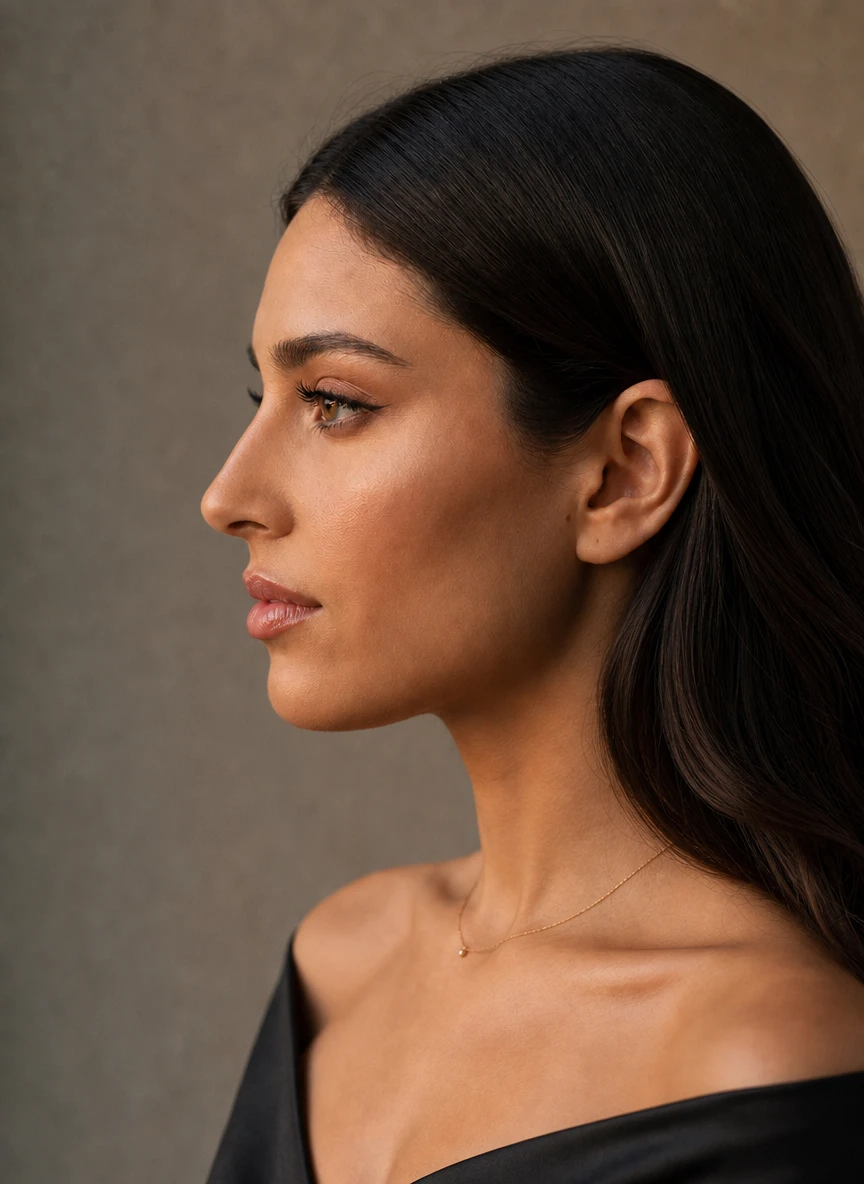 After · AI glow-upRhinoplasty
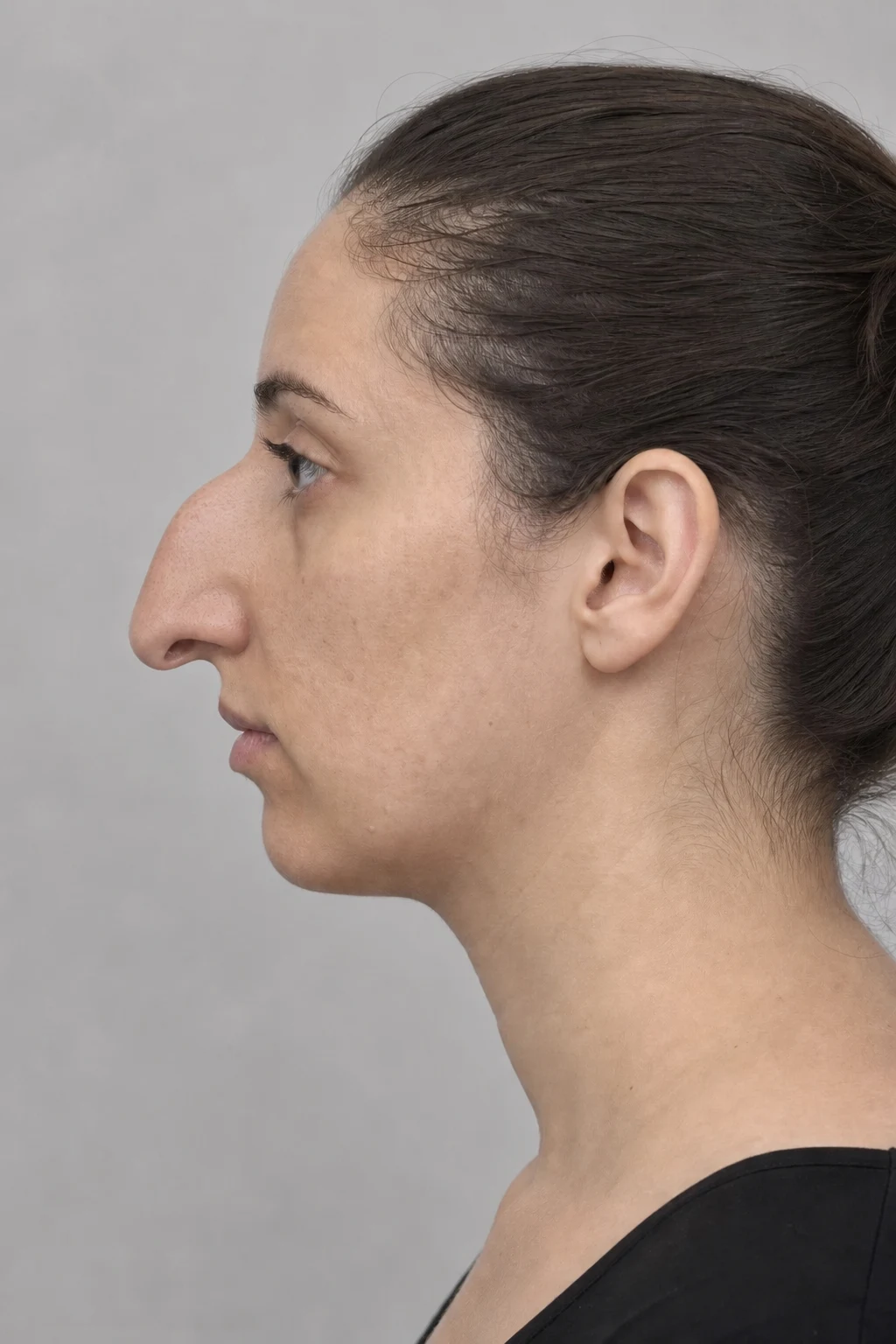 Before — generated
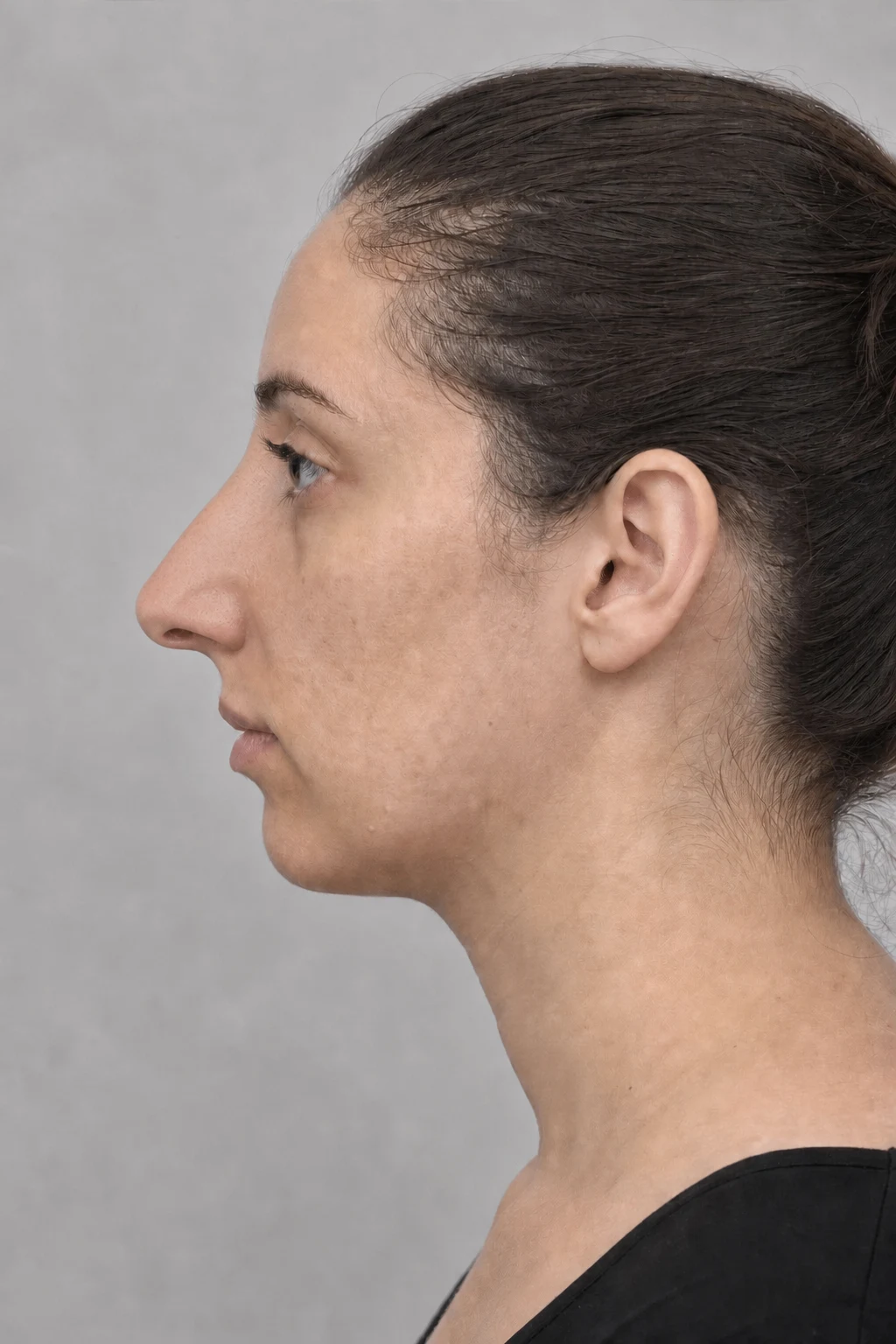 After — simulatedLiquid Rhinoplasty
Rhinoplasty
De-rotates the tip and can lengthen a short nose with grafts.
See it simulated on your own photo →Liquid rhinoplasty
Adds volume at the tip and bridge to reduce the apparent rotation.
See it simulated on your own photo →
Snub nose vs Button nose
The two names describe overlapping shapes and most charts merge them. Snub emphasises the tip rotating upward with nostrils visible from the front; button emphasises overall shortness and a rounded, small tip. Rotation is the more measurable of the two, and it is a profile trait — the front photo can suggest it from nostril visibility but cannot confirm it.
The button nose in full →How to contour a snub nose
Everything here works to lengthen a short nose and lower a rotated tip visually.
- Highlight carried the full length of the bridge and onto the tip
- A soft shadow under the tip, which visually rotates it downward
- Side shadows continued past the tip rather than stopping level with it
- Avoid highlighting the tip's underside, which lifts a tip that is already lifted
The snub nose on men
This shape is described far more often on female faces, and the vocabulary shows it — snub carries a slight, which is why upturned and celestial exist as alternatives. For men the search usually concerns lengthening or de-rotating the tip, which is a grafting procedure rather than a reduction, and a technically different operation from the more common hump reduction.
Snub nose celebrities
Snub and upturned nose lists are shaped almost entirely by camera height. A lens held below eye level exposes the nostrils and makes almost any nose read as upturned; a lens above does the opposite. Since tip rotation is the defining trait, and it is the trait most distorted by camera position, these lists are close to unreliable by construction.
Snub nose — frequently asked questions
Do snub noses run in families?
Nasal cartilage shape and tip support are heritable, so short upturned noses cluster in families like other skeletal and cartilaginous proportions.
Does an upturned nose drop with age?
Usually yes, slightly. Tip support weakens gradually through adulthood and the tip rotates downward, so a nose that read as clearly upturned at twenty often reads as less so decades later.
Where does the word snub come from?
From an old sense of snub meaning blunted or cut short, and it carries the slight with it — which is exactly why upturned and celestial exist as alternatives and why beauty writing now prefers them. The measurement they all describe is the same: a tip rotated upward.
Can an upturned nose be lengthened?
Surgically yes, with cartilage grafts that de-rotate and extend the tip. It is a different operation from the more common hump reduction — it adds structure rather than removing it, and it is technically harder.
Why do my nostrils show in some photos and not others?
Camera height, almost entirely. A lens below eye level looks up into the nostrils and makes any nose read as more upturned; a lens at or above eye level hides them. Tip rotation is the single trait most distorted by where the camera is held.
What is a snub nose?
A short nose with an upward-rotated tip, so the nostrils show more from the front. Upturned and celestial describe the same shape.
Is an upturned nose the same as a snub nose?
Yes — identical anatomy, different connotation. Snub carries a slight that upturned does not.
Can a tool detect an upturned nose from a photo?
Not reliably from the front. Tip rotation is a profile angle, and visible nostril show from the front changes with head tilt.