Wide Nosealso called narrow
Width is the one nose property a front-facing photo measures cleanly, and it is the axis every other named shape gets confused with. This test reads a nose as wide when its alar width is 0.28 of face width or more, and narrow at 0.22 or less.
- ≥ 0.28
- alar ÷ face width
- ≤ 0.22
- narrow
- Free
- photo not uploaded
The panel measures the three nose proportions a front-facing photo can settle.
 Example
Choose your own photo
Discover your nose shape and proportions.
Choose your own photoClick to choose a photo, or drop one here
Front-facing · Even lightingStraight-on, even lighting, at arm's length gives the most comparable reading.
Runs in your browser. Your photo is not uploaded.
What defines a wide nose
Alar width against face width. Above roughly 0.28 reads as wide, below roughly 0.22 as narrow, with the majority in between. A second classic reference compares alar width against the distance between the inner eye corners, where the traditional canon puts them at about equal.
- Alar base occupying more or less of the face's width than average
- Fully visible from the front — no profile needed
- Independent of bridge shape, tip rotation and projection
How to tell if you have a wide nose
- No profile needed. This is the measurement the tool above makes most directly.
- Measure straight on. Head rotation compresses one side of the nose and produces a false narrow reading.
- Compare against the inner-corner distance as well as against face width — the two references answer slightly different questions.
Where the nose width canon comes from
The canon that alar width should equal the intercanthal distance is repeated in aesthetics writing as though it were a finding. It is a drawing convention from Renaissance proportion studies, and measured populations vary around it considerably. It is a useful reference point and not a target.
What changes a wide nose
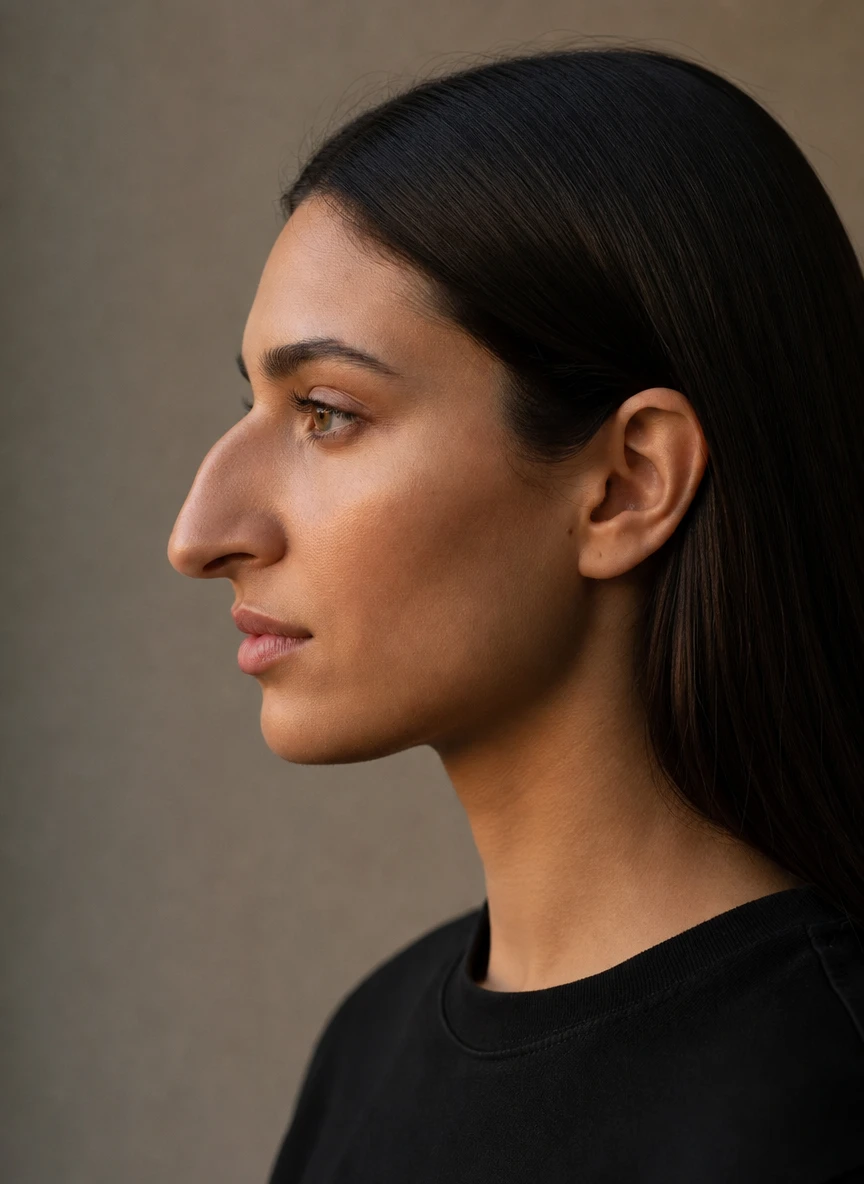 Before — generated
 After · AI glow-upRhinoplasty
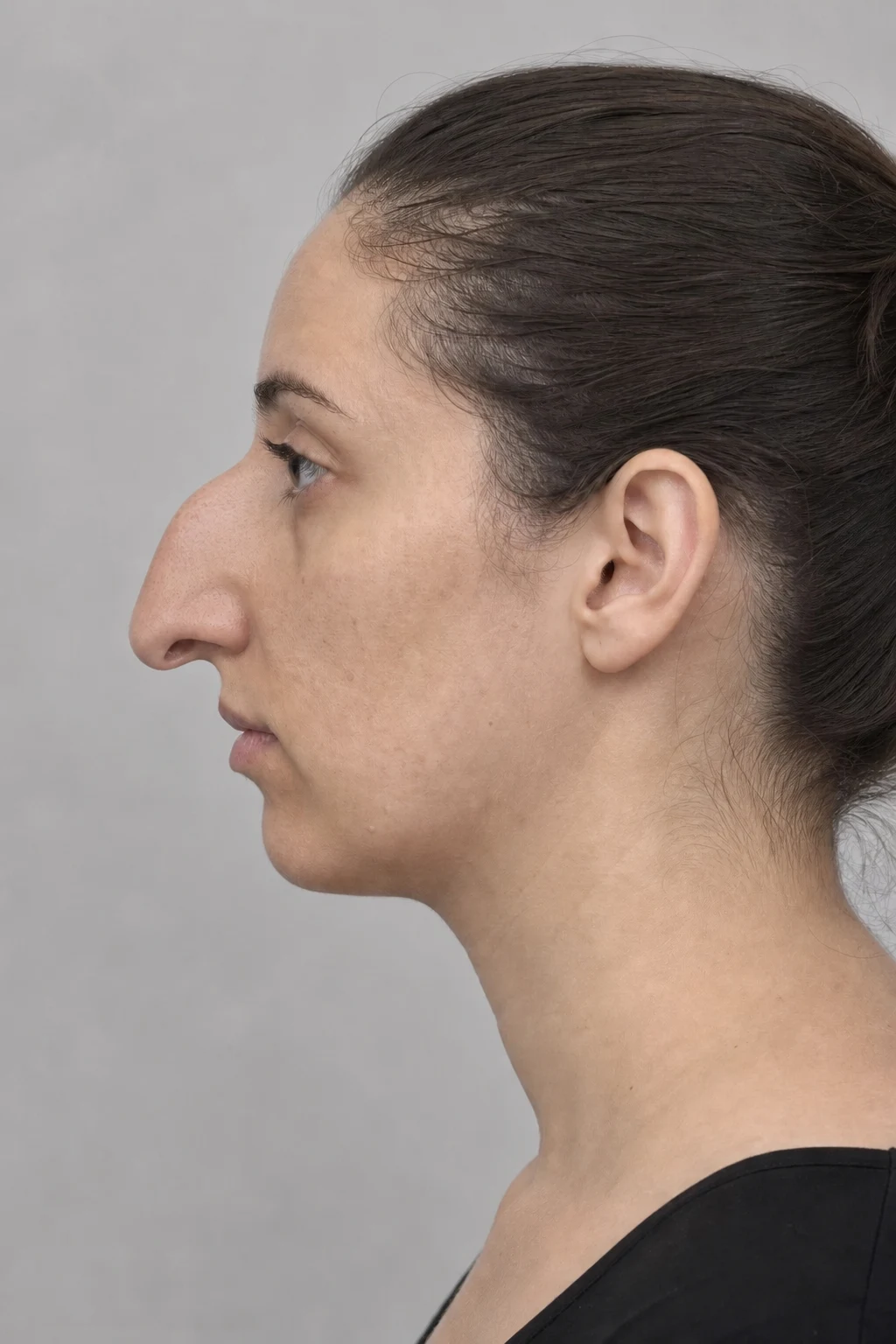 Before — generated
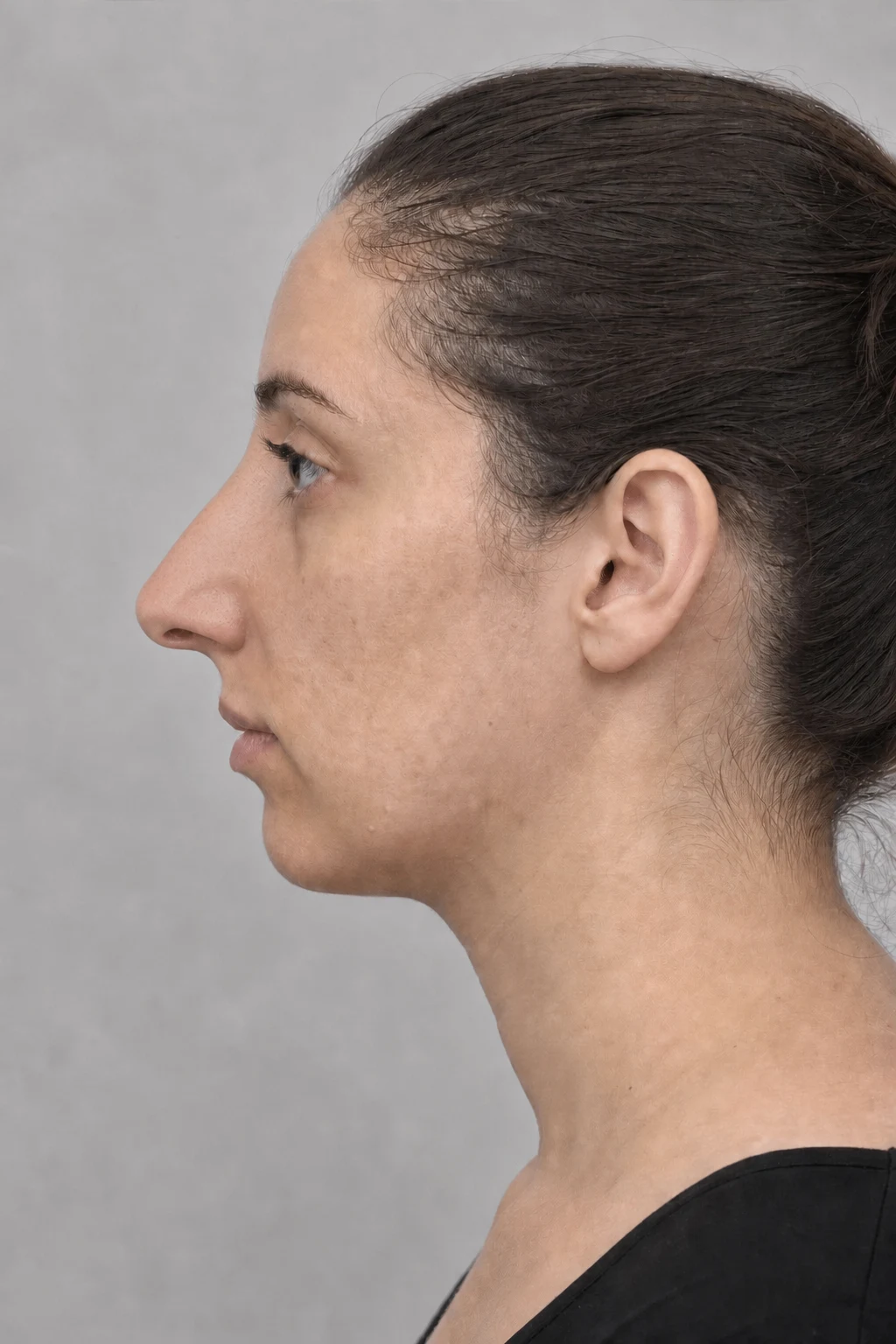 After — simulatedLiquid Rhinoplasty
Alarplasty
Narrows the alar base surgically.
See it simulated on your own photo →Liquid rhinoplasty
Raises the bridge so the base reads as proportionally narrower.
See it simulated on your own photo →
Wide nose vs Nubian nose
Both are defined by a wide alar base and they differ in length. A wide nose is a width measurement on its own; the Nubian label describes a long nose with that same wide base and a tip pointing downward. If your length-to-width ratio is ordinary and only the base is wide, wide is the accurate description of what was measured.
The nubian nose in full →How to contour a wide nose
Narrowing contour is the most-performed makeup manoeuvre on the face and also the most overdone one.
- Two parallel shadows down the sides, kept the same width from top to bottom
- A thin central highlight — a broad one cancels the shadows either side of it
- Blend until no edge is visible; a visible line reads as makeup rather than shape
- Match the intensity to the light you will be seen in, not to the mirror you applied it in
The wide nose on men
Male noses are wider on average in absolute terms, and every ratio on this page is relative rather than absolute, which is why the same measurement is applied to everyone here. Search interest concentrates on alar base reduction and on bridge augmentation, which changes how wide the base reads without touching the base at all.
Wide nose celebrities
Wide nose lists are the one place in this cluster where the front photo would actually be the right view, and they still fail — alar width means nothing without the face width it is measured against, and a photograph taken at an unknown distance and angle gives you neither reliably. The tool above compares the two on your own photo, which is the whole point.
Wide nose — frequently asked questions
Does a wide nose mean a wide nasal bridge?
Not necessarily, and this is the most useful distinction on the page. Alar base width and bridge width are separate measurements — a narrow bridge with a wide base is common, and it responds to different procedures than a uniformly wide nose.
Can breathing be affected by nose width?
External width and internal airflow are largely independent. Breathing complaints usually trace to the septum or the turbinates inside the nose, neither of which is visible from outside, which is why a functional assessment is separate from a cosmetic one.
What is the nose width canon?
The convention that alar width should equal the distance between the inner corners of the eyes. It comes from Renaissance proportion studies and is repeated in aesthetics writing as though it were a measured norm. Populations vary around it considerably, which makes it a starting point rather than a target.
Does nose width change with age?
Slightly. Cartilage keeps changing through adulthood and the tip tends to drop, which can widen the base a little as the nose lengthens. The bone at the top does not change after growth.
Does a wide nose look narrower with a higher bridge?
Usually yes, and it is why bridge augmentation is requested by people whose actual concern is base width. A higher dorsum changes the proportion the eye reads without touching the alar base at all — and it is reversible when done with filler.
What counts as a wide nose?
An alar width above roughly 0.28 of face width. The traditional reference compares it instead against the distance between the inner eye corners, which the canon puts at about equal.
Is the nose-width canon a real rule?
No. It is a Renaissance drawing convention that gets repeated as a measurement. Real populations vary around it substantially.
Can a wide nose be narrowed without surgery?
Not directly. Filler adds volume, so it can raise the bridge and change proportion, but it cannot reduce the width of the base.