Nubian Nosealso called wide-based
A Nubian nose is described as long with a wide base and a broad, often downward-projecting tip. The front-measurable half is a wide base (from 0.28 of face width) with above-average length (from 1.28× its width); tip projection needs a profile view.
- ≥ 0.28
- alar ÷ face width
- ≥ 1.28×
- length ÷ width
- Free
- photo not uploaded
The panel measures the three nose proportions a front-facing photo can settle.
 Example
Choose your own photo
Discover your nose shape and proportions.
Choose your own photoClick to choose a photo, or drop one here
Front-facing · Even lightingStraight-on, even lighting, at arm's length gives the most comparable reading.
Runs in your browser. Your photo is not uploaded.
What defines a nubian nose
A wide alar base combined with above-average length — both of which the front-facing tool can measure — and a tip with greater projection, which it cannot.
- A wide alar base relative to face width
- Above-average length
- A broad tip with more projection than average
- The first two traits are front-measurable; the third is not
How to tell if you have a nubian nose
- The tool above measures alar width against face width and length against width — the two front-visible traits.
- Tip projection needs a side view: look at how far the tip stands off the plane of the face.
Where the nubian nose gets its name
Nose classification by ancestry has a specific and documented history in nineteenth and twentieth century racial pseudoscience, where nasal measurements were used to construct hierarchies. That history is the reason this page describes measurements rather than populations. A wide alar base is a common and ordinary variation and appears across every human population; the label attached to it is a naming convention, not a finding.
What changes a nubian nose
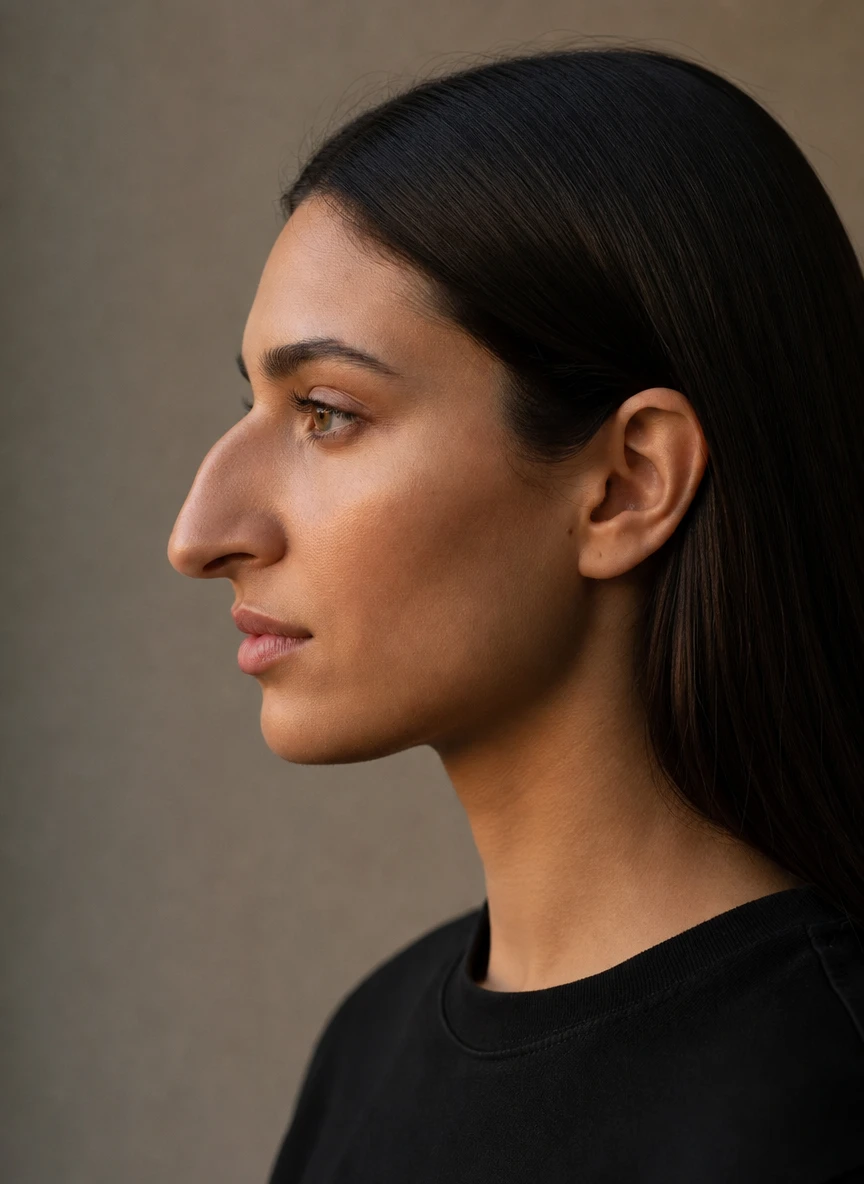 Before — generated
 After · AI glow-upRhinoplasty
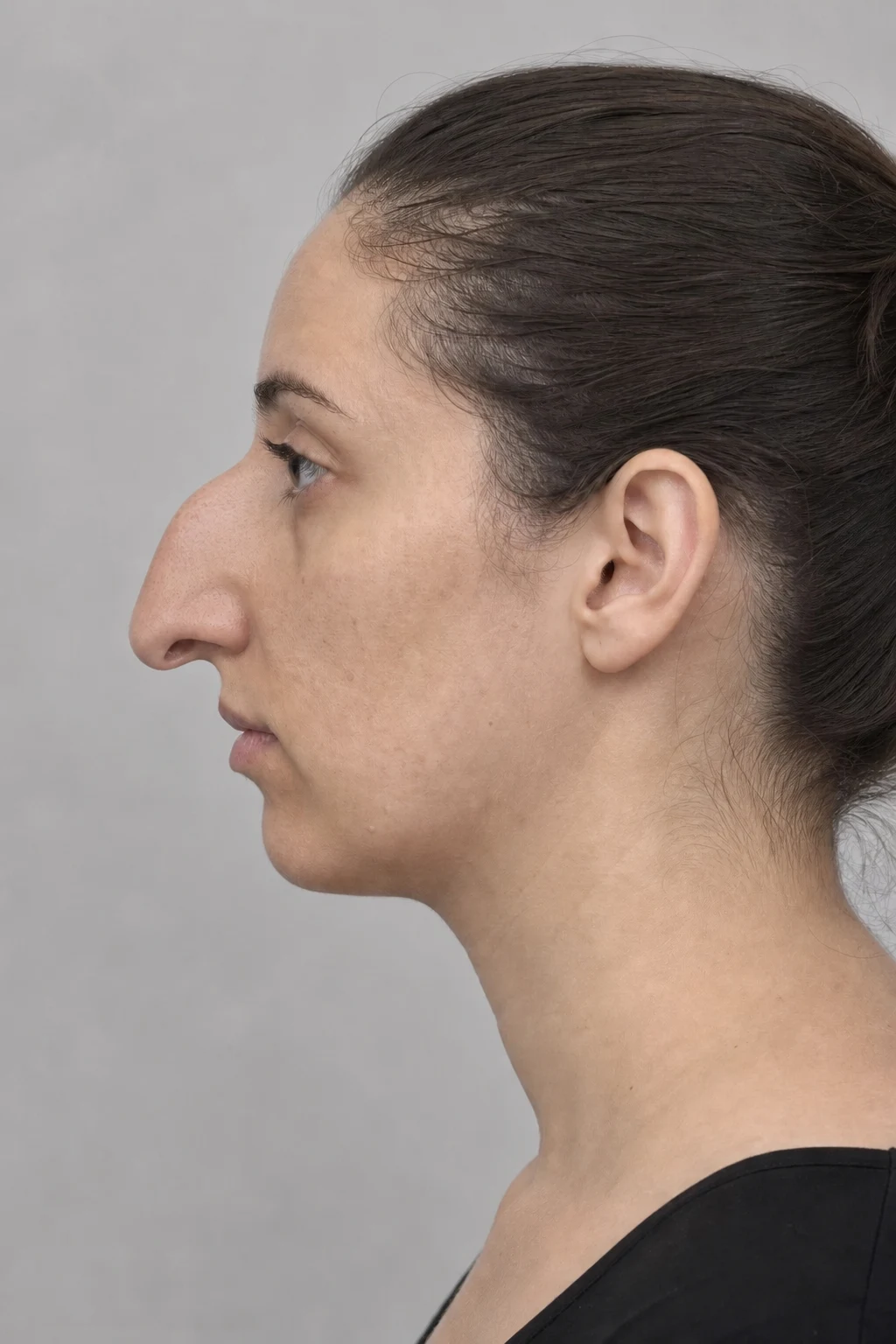 Before — generated
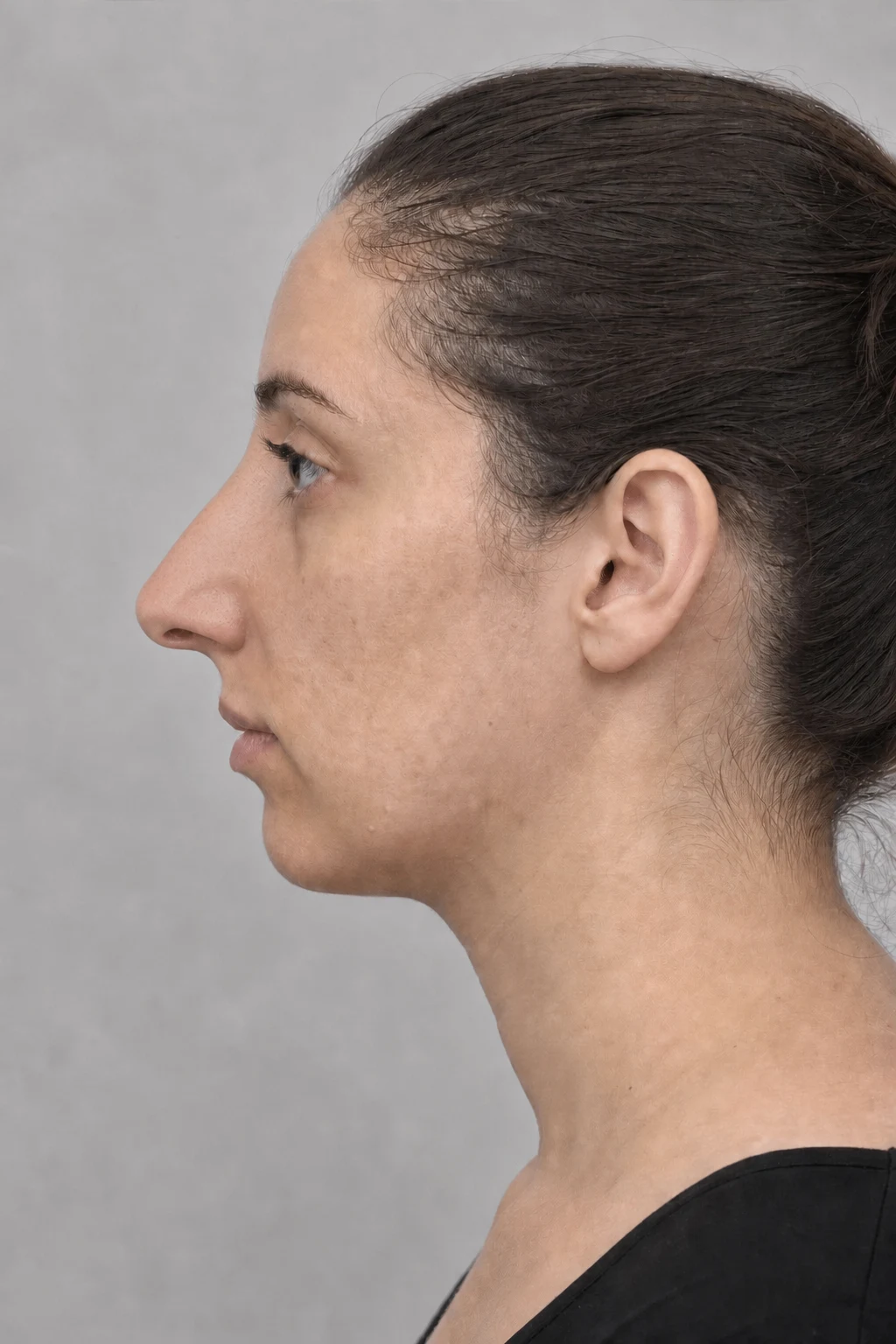 After — simulatedLiquid Rhinoplasty
Alarplasty
Narrows the alar base directly; a distinct procedure from a full rhinoplasty.
See it simulated on your own photo →Liquid rhinoplasty
Raises the bridge so the base reads as proportionally narrower.
See it simulated on your own photo →
Nubian nose vs Wide nose
These are close relatives and are often the same measurement described differently. Wide refers to alar base width against face width and nothing else. The Nubian label adds length — a longer nose with a wide base and a downward-facing tip. Both are among the few traits in this cluster a front photo can actually measure, which is why this page reports a number rather than a profile guess.
The wide nose in full →How to contour a nubian nose
Contouring a wider base is about the sides, and the strongest version of this advice is that it is optional.
- Shadow along the outer edges of the nostrils, blended upward toward the bridge
- A narrow highlight down the centre, kept thin — a wide highlight widens
- Blend downward at the base rather than stopping in a hard line
- Nothing here changes a measurement; it changes a photograph
The nubian nose on men
Search interest here is dominated by alar base reduction, which narrows the nostrils directly and is a distinct procedure from a full rhinoplasty. It is worth saying plainly that this is a cosmetic choice made against a beauty convention with a documented history, not a correction of a defect, and surgeons writing responsibly about it say the same.
Nubian nose celebrities
This site does not publish celebrity lists for any nose type, and this is the type where the reason is most acute. Naming a nose after an ancestry and then listing people under it is the exact structure nineteenth-century nasal classification used, and no amount of modern framing changes what the list is doing. The measurement — alar width against face width, and length against width — is reported for your own photo instead.
Nubian nose — frequently asked questions
Is a wide alar base related to breathing?
Not directly. External nostril width and internal airflow are separate — the septum and turbinates inside the nose govern breathing and are invisible from outside. Alar base reduction is a cosmetic procedure, not a functional one.
What does the length measurement add?
It is what separates this label from a simply wide nose. The condition combines a wide base with a length-to-width ratio above the average, and a downward-facing tip. Both figures are reported by the tool above, so you can see which of the two is actually driving the result.
Where does the name come from?
From nineteenth and twentieth century anthropometry, which classified noses by ancestry and used those measurements to construct hierarchies. The term survives in beauty writing detached from that history. This page keeps the measurement — alar width against face width, length against width — and does not assign the label to any group.
Is a wide nasal base more common in some populations?
Nasal dimensions do vary across populations, and that is unremarkable — so does every other measurement on the body. What does not follow is a ranking, and the historical use of exactly this measurement to build one is the reason this site reports numbers rather than categories.
What is alar base reduction?
A procedure that narrows the outside edges of the nostrils directly, by removing a small wedge of tissue at the base. It is distinct from a full rhinoplasty, which reshapes the bridge and tip, and it is often requested alongside bridge augmentation because a higher bridge makes the base read narrower on its own.
What is a Nubian nose?
A conventional name for a nose with a wide base, above-average length and a broad tip. The measurements are real; the name is a classification convention with a difficult history.
Can this tool measure it?
It measures alar width against face width and length against width. Tip projection needs a profile view.
What procedure narrows a wide nasal base?
An alarplasty narrows the base specifically. Filler cannot narrow a base — it can only raise the bridge so the base reads as proportionally smaller.