Bulbous Nosealso called fleshy
A bulbous nose has a tip that is round and wide relative to the bridge above it. This test measures alar width (wide from 0.28 of face width) and length, but no landmark ratio isolates tip roundness, so it does not label a nose bulbous.
- No
- bulbous label from landmarks
- 3
- front ratios measured
- Free
- photo not uploaded
The panel measures the three nose proportions a front-facing photo can settle.
 Example
Choose your own photo
Discover your nose shape and proportions.
Choose your own photoClick to choose a photo, or drop one here
Front-facing · Even lightingStraight-on, even lighting, at arm's length gives the most comparable reading.
Runs in your browser. Your photo is not uploaded.
What defines a bulbous nose
Tip width disproportionate to bridge width. The underlying cause is usually the shape and springiness of the lower lateral cartilages together with skin thickness, rather than size alone.
- A rounded tip that reads as wider than the bridge
- Little definition between the tip and the nostrils
- Often thicker skin over the tip, which softens any underlying structure
- Visible from the front, unlike most named nose traits
How to tell if you have a bulbous nose
- This one is visible from the front. Compare the width of the tip against the width of the bridge just above it.
- In profile, note whether the tip is round or comes to a point — thick skin can make a well-defined cartilage framework read as bulbous.
- Photograph in even light. Side lighting exaggerates tip roundness considerably.
Why a bulbous nose is the most common rhinoplasty request
This is the shape most likely to bring someone to a rhinoplasty consultation, and also the one where surgeons most often manage expectations: the result depends on skin thickness, because thick skin drapes over whatever refinement is done underneath. That is a physical constraint rather than a matter of surgical skill.
When a bulbous nose is a question for a doctor
What changes a bulbous nose
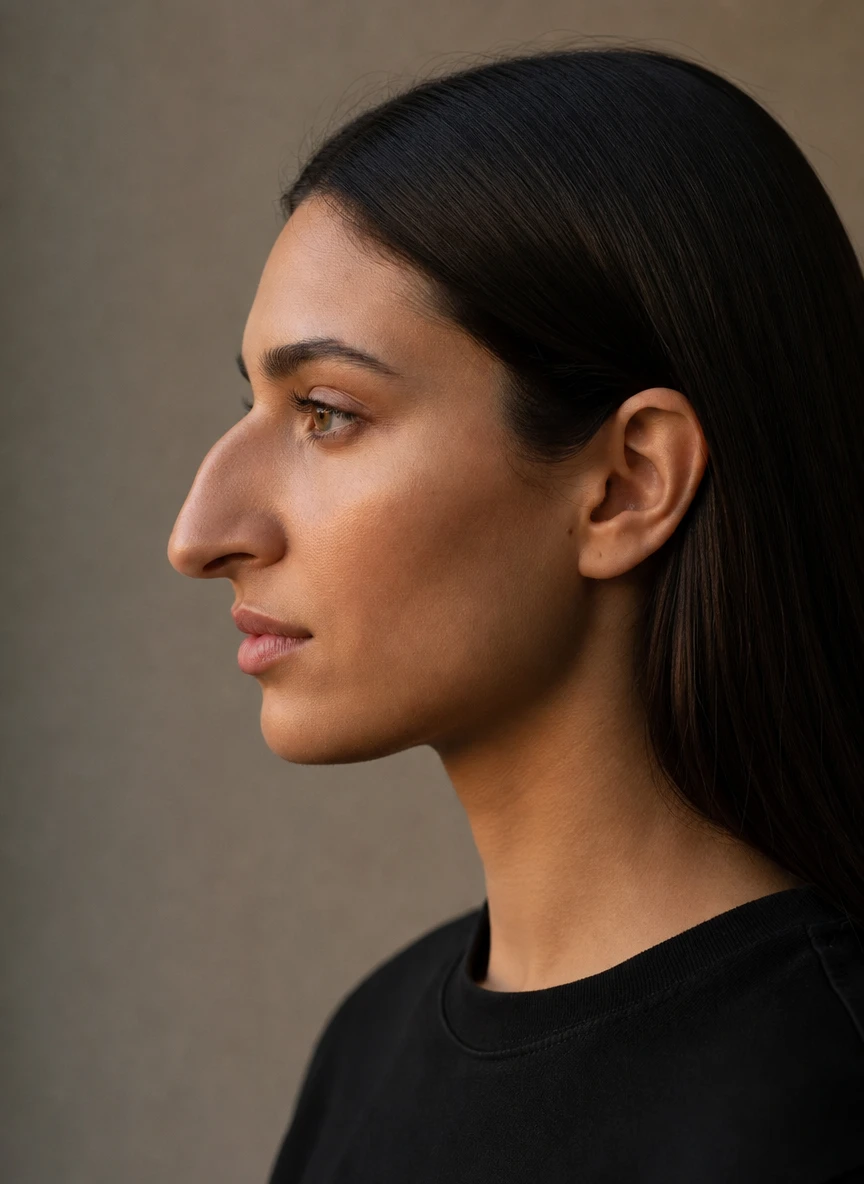 Before — generated
 After · AI glow-upRhinoplasty
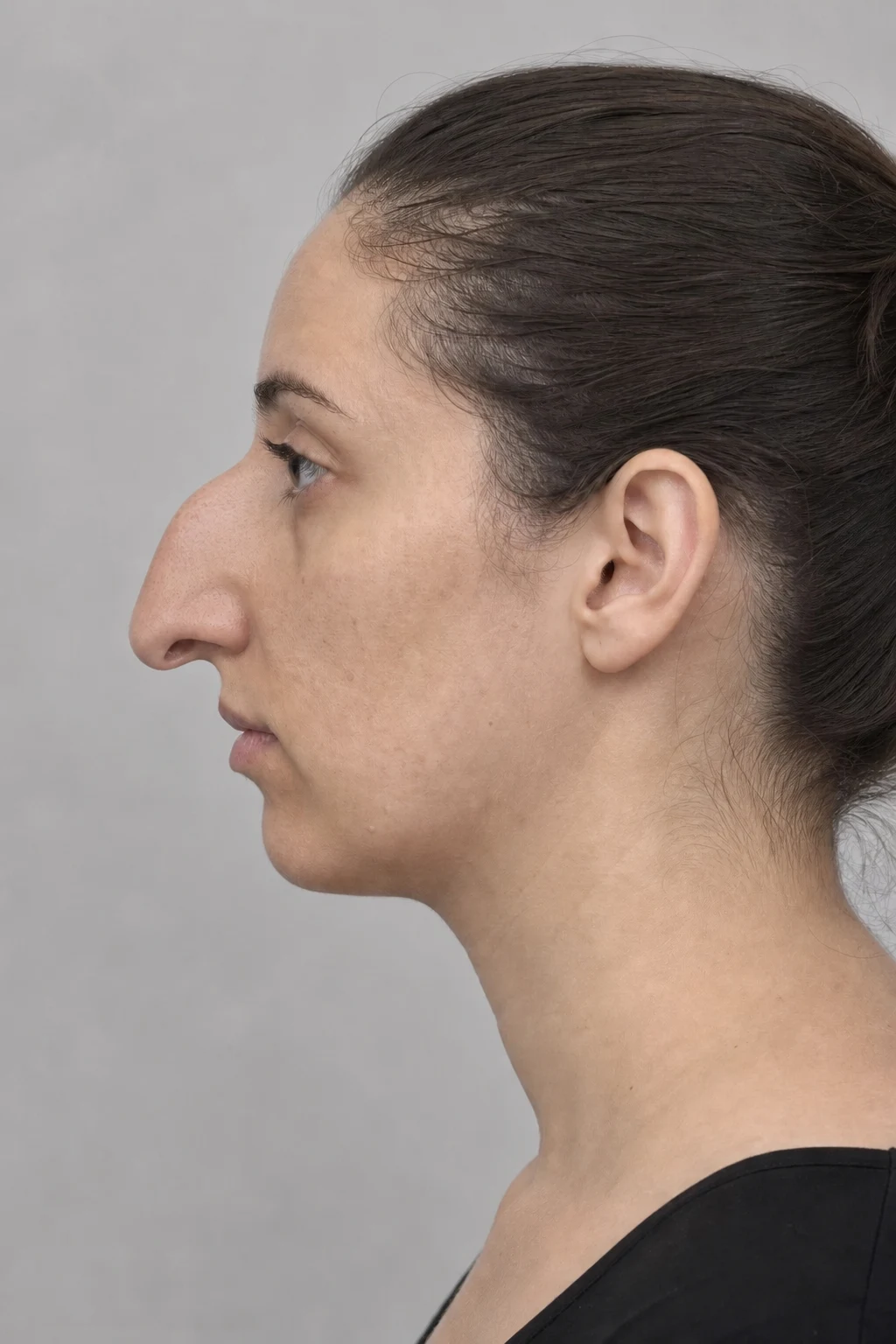 Before — generated
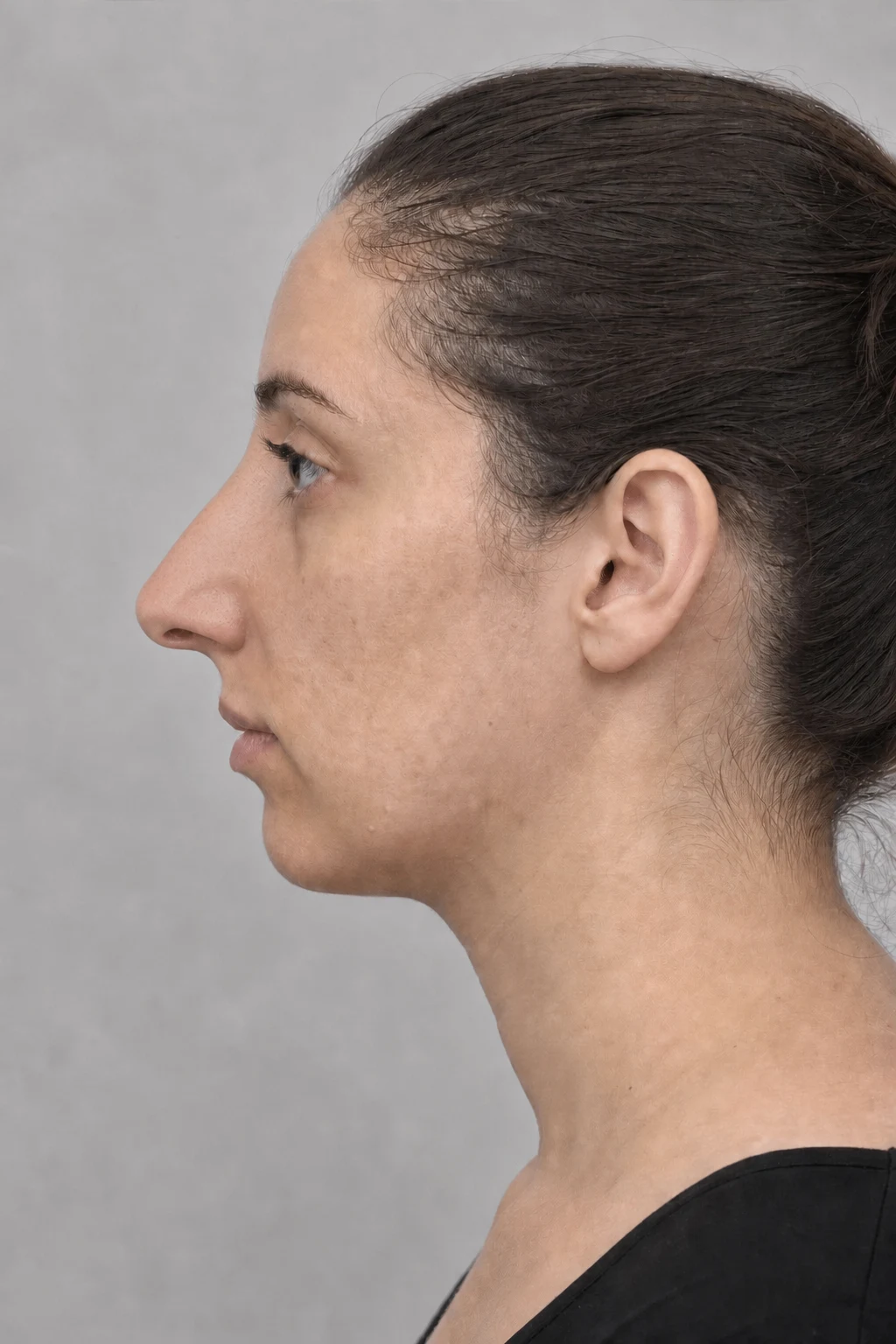 After — simulatedLiquid Rhinoplasty
Rhinoplasty
Refines the tip cartilage; the achievable change is limited by skin thickness.
See it simulated on your own photo →Liquid rhinoplasty
Adds bridge height so the tip reads as proportionally narrower, without touching the tip.
See it simulated on your own photo →
Bulbous nose vs Wide nose
A wide nose is measured across the alar base — the outside edges of the nostrils — against the width of the face. A bulbous nose is about the tip itself being round and undefined, which is a separate trait. A nose can be wide with a well-defined tip, or narrow at the base with a rounded one. The front photo can measure the first and cannot decide the second.
The wide nose in full →How to contour a bulbous nose
Contouring a rounded tip is about breaking up a single highlight, not about darkening the whole tip.
- Two small shadows at the outer edges of the tip rather than one broad one
- A narrow highlight down the bridge stopping just before the tip
- Matte products throughout — a rounded tip catches light and shimmer doubles it
- Avoid shading directly under the tip, which reads as a shadow rather than a shape
The bulbous nose on men
Rhinophyma — the thickened, enlarged tip associated with advanced rosacea — occurs far more often in men, which is one reason this shape carries a heavier medical footnote than the others. A tip that has been round your whole life is a shape. A tip that has thickened and reddened over years is something to have looked at.
Bulbous nose celebrities
This is the most searched celebrity nose query in the cluster by a wide margin, and it is almost always searched unkindly. That is reason enough not to publish a list. It is also the type where the medical boundary matters: an enlarged, thickened nasal tip can be rhinophyma, a condition rather than a shape, and filing public figures under a look blurs a line that is worth keeping clear.
Bulbous nose — frequently asked questions
Are bulbous noses hereditary?
Tip cartilage shape and skin thickness are both heritable, and together they decide how round a tip reads. That is different from rhinophyma, which is a condition associated with advanced rosacea rather than an inherited shape.
Does losing weight change a bulbous nose?
No. The tip is cartilage and skin, not fat, so it does not respond to weight change the way cheeks or the jaw do. This is one of the clearest cases where a face shape changes with weight and a nose shape does not.
Can makeup make a bulbous tip look smaller?
It can reduce the contrast that makes the tip visible, which is not the same thing. A rounded tip catches light as one broad highlight; breaking that highlight into a narrower one with soft shadow at the outer edges changes the read in photographs and in ordinary light.
What is a bulbous nose?
One where the tip is round and wide relative to the bridge. It is caused mainly by the shape of the lower lateral cartilages and the thickness of the overlying skin.
When is a bulbous nose tip a medical concern?
When it is a change rather than a lifelong feature — progressive enlargement, thickening, redness or a lumpy surface can indicate rhinophyma, which is treatable and belongs with a dermatologist.
Can a bulbous nose be fixed without surgery?
Filler cannot make a tip smaller. It can raise the bridge so the tip reads as proportionally narrower, which is a different effect achieved a different way.
Why does skin thickness matter so much?
Because the skin drapes over the cartilage. Refining the framework underneath thick skin produces less visible change than the same work under thin skin, regardless of technique.