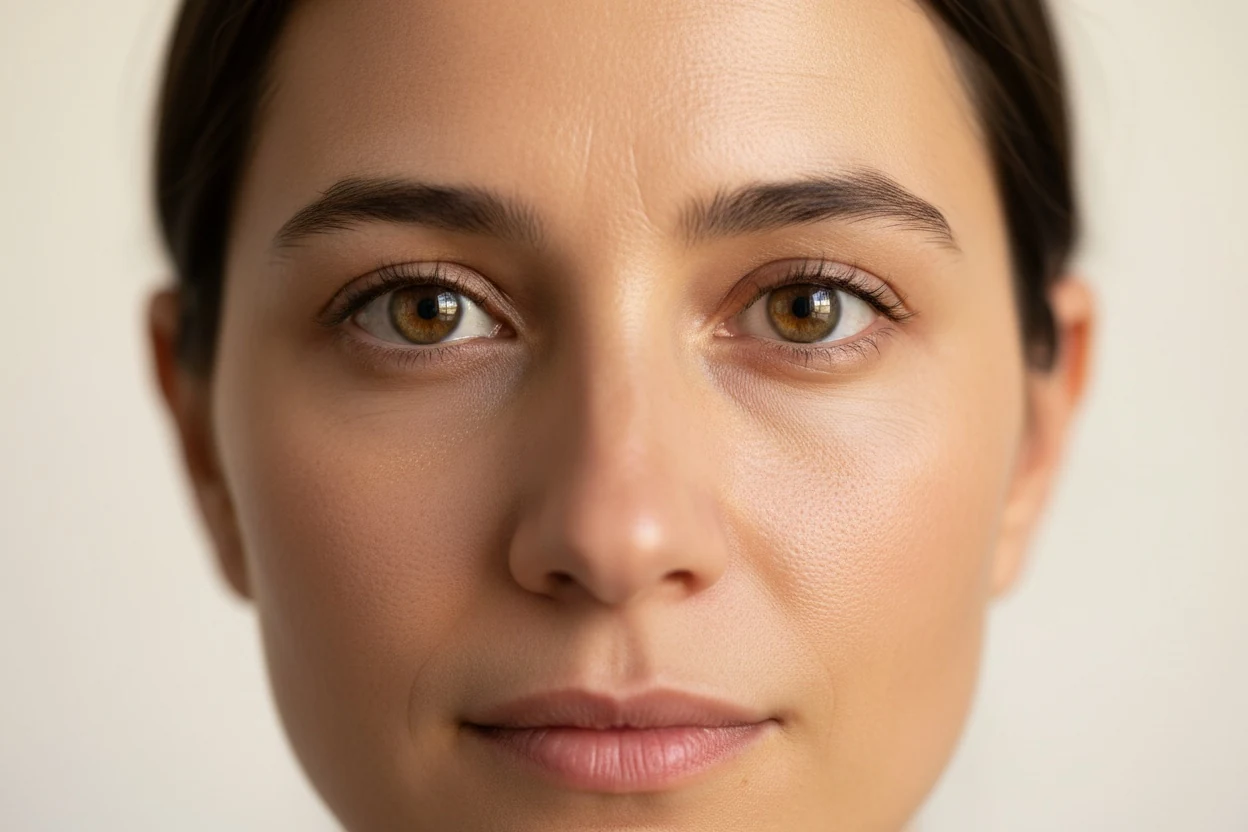
Positive Canthal Tilt
A positive canthal tilt means the outer corner of your eye sits above the inner corner. This test reads a tilt of +5° or more as positive, measuring each eye separately; the eye shape test calls an eye upturned from the same +5°.
- ≥ +5°
- positive
- Same
- cut as an upturned eye
- 2
- eyes, measured separately
- Free
- photo not uploaded
+5° and above on this test, the same cut at which the eye shape test reads upturned. The outer corner sits clearly higher than the inner corner.
The panel measures your tilt in degrees, each eye separately, and says whether it reads as positive.
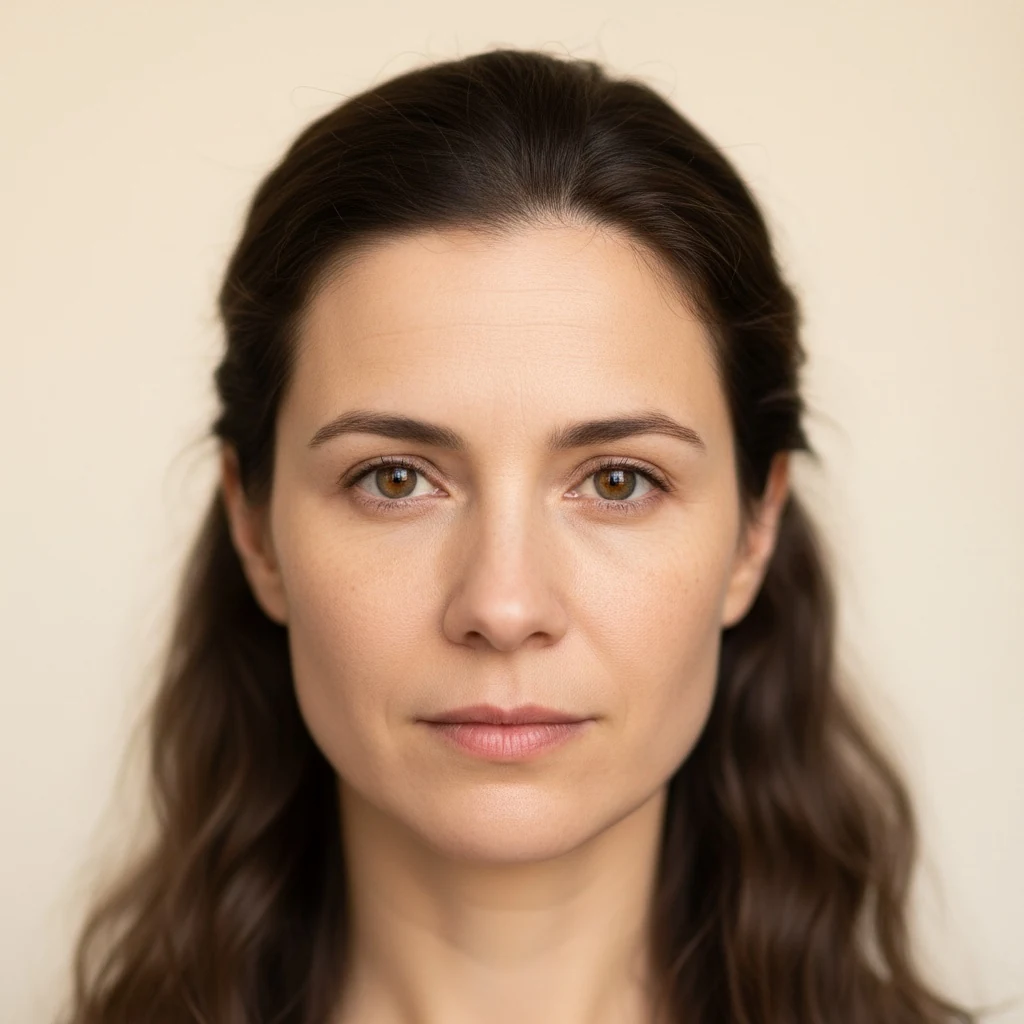 Example
Choose your own photo
Measure the angle of each eye.
Choose your own photoClick to choose a photo, or drop one here
Front-facing · Even lightingStraight-on, even lighting, at arm's length gives the most comparable reading.
Runs in your browser. Your photo is not uploaded.
What a positive canthal tilt looks like
- Outer corner clearly above the inner corner
- The upper lash line sweeps upward at the outer third without help
- A cat-eye liner reads as effortless rather than as a statement
- Labelled positive, and upturned on the eye shape test, from +5°
Positive canthal tilt means the outer corner of the eye sits above the inner one — on this site, by 5 degrees or more, the same cut at which the eye shape test reads upturned. The term comes from oculoplastic surgery, where the angle matters for planning eyelid procedures, and it reached a much wider audience through looksmaxxing vocabulary. The measurement is real and it is small: most faces sit within a few degrees of level, and the difference between a five-degree and a nine-degree tilt is not something anyone sees.
Why photos get positive canthal tilt wrong
Canthal tilt is the single most distorted measurement on this site, because it is an angle of a few degrees and tilting your head changes it directly. Lean your head five degrees toward one shoulder and, measured against the edge of the photo, one eye gains five degrees of apparent tilt while the other loses it. This is why the tool measures each eye against the line through your inner corners instead, and reports each eye separately — so a left-right gap that shows up in the result is in the face, not in the camera angle. What head tilt still cannot be removed from is up-and-down: a camera above eye level or a tipped chin changes both eyes together, and the fix for that is a photo taken at eye level.
How to tell if you have a positive canthal tilt
- Hold a straight edge horizontally between your two inner corners and see how far the outer corners sit above it.
- Almost everyone has some positive tilt. The question worth asking is how much, not whether.
- Measure relaxed and level. Raising your chin exaggerates the angle in exactly the way that lowering it erases one.
What changes a positive canthal tilt — and what does not
If you already have a positive tilt, the useful information is mostly about not losing it and not overcorrecting toward it.
Changes it
- Nothing needs to change. A positive tilt is the ordinary anatomical case.
- Softer makeup at the outer corner if the lift reads as too sharp for you.
- Treating lower lid laxity if the angle has flattened with age.
Does not
- Chasing more tilt surgically. Over-elevated outer corners are one of the recognisable signatures of an over-done eye and are difficult to reverse.
- Reading the angle as a score. It is one measurement, and a pronounced tilt on its own does not carry the meaning the internet assigns to it.
Positive canthal tilt in men
Most of the search volume around this term comes from men, and almost all of it arrives through the hunter eyes vocabulary, where positive tilt is one of four traits. It is worth separating what is known from what is claimed: the angle is measurable and stable, while the claim that it drives attraction is a community assertion with thin published support. The measurement is yours either way.
Positive canthal tilt celebrities
Positive tilt is claimed for celebrities constantly and verified almost never, because a few degrees of head tilt in a photograph creates or erases it. A red-carpet frame, shot from below with the head turned, is close to the worst possible instrument for an angle this small. Measure your own straight-on photo instead.
Positive canthal tilt — frequently asked questions
How many degrees count as a positive canthal tilt?
This site labels +5° and above as positive, and its eye shape test calls the same eyes upturned; anything from 0° up to +5° reads as neutral. The thresholds are conventions — tilt is continuous, and the numbers exist so a label can be applied at all.
Can you get a positive canthal tilt without surgery?
Not the measurement. Where the outer corner sits is set by the lateral canthal tendon, and no exercise, massage or device moves it. Eyeliner, lash placement and brow shape change how the corner reads, which is a different claim honestly made.
Is a positive canthal tilt more common in some people?
Average tilt varies across populations by a small amount, and within any population the spread is far wider than the difference between groups. Practically that means your own measurement tells you more than any group average would.
What is a positive canthal tilt?
An eye where the outer corner sits above the inner corner. In a 102-adult research set measured with this test, the middle 80% of faces sat between +1.3° and +6.0° (median +3.7°).
Is a positive canthal tilt rare?
No — it is the ordinary case. What is less common is a pronounced one, several degrees past the point where this test starts calling a tilt positive, which is visible at a glance.
What is the average canthal tilt?
Published measurements cluster in the range of a few degrees positive, with meaningful variation between populations and between measuring methods. Any single 'average' figure quoted without a method behind it is worth treating carefully.
Do I have hunter eyes if I have a positive canthal tilt?
Positive tilt is one of the traits, not all of them. Hunter eyes also involve a compact upper lid and a deep-set eye. The hunter eyes page scores the components separately.