Gummy Smile Correction: Causes, Treatments, Before and After
A gummy smile has several different causes — the gums, the upper lip or the jaw — and each is corrected differently. Here is how to tell them apart, how botox, gum contouring, lip repositioning surgery and orthodontics compare, what they cost and how long they last, and a render of a balanced smile on your own photo.
Gummy Smile Correction simulator — example render


- What it is
- Several causes, several treatments
- Botox lasts
- Commonly 3–4 months
- Typical US cost
- Toxin $200–$600; lip surgery $3,000–$6,000
- Downtime
- None for toxin; 1–2 weeks after surgery
- Upload one front-facing photo
- The render changes how much gum shows when you smile — and leaves the rest of your face alone
- Compare your before and after side by side
1 render = 1 credit
5 credits $4.99, no subscription · or Starter $7.99/month for 10. The face analysis is free.
What counts as a gummy smile?
A gummy smile is a smile that shows more upper gum than the person likes. In dental literature it is commonly described as more than about 3–4 millimeters of gum showing above the upper front teeth in a full smile. It is not a health problem, and plenty of people with a gummy smile are happy with it — it only becomes a question when someone wants to change it.
It is a dynamic trait: it appears in a smile, not at rest. A gummy smile vs a normal smile is often the difference of a few millimeters of lip movement, which is also why photos of it are so inconsistent.
What causes a gummy smile?
There are four common causes, and many people have more than one. Identifying which is the whole point of an assessment, because the treatments do not overlap much.
| Cause | What it looks like | Treatment usually discussed |
|---|---|---|
| Gum covering too much tooth (altered passive eruption) | Short, square-looking teeth with a lot of gum above them | Gum contouring or crown lengthening |
| Very mobile upper lip | Normal teeth and lip length at rest; the lip rises unusually high in a smile | Botox or lip repositioning surgery |
| Short upper lip | Teeth and gum visible even with the lips relaxed | Assessed alongside the other causes; lip length itself is hard to change |
| Excess vertical growth of the upper jaw | The whole upper jaw sits low; a long lower face | Orthodontics, sometimes jaw surgery |
Why some people have a gummy smile comes down to how their jaw grew, how their teeth erupted and how their lip muscles move — traits that tend to run in families.
Gummy smile treatments compared
| Treatment | Best suited to | How long it lasts | Downtime |
|---|---|---|---|
| Gummy smile botox | A mobile upper lip | Commonly 3–4 months | None |
| Lip repositioning surgery | A mobile upper lip, for a longer-lasting change | Long-lasting; relapse is reported | Swelling and soft diet for 1–2 weeks |
| Gum contouring / crown lengthening | Gum covering too much tooth | Long-lasting when bone is reshaped too | Tender gums for days to weeks |
| Orthodontics (often with TADs) | Upper front teeth sitting too low | Long-lasting with retainers | Months to years of treatment |
| Jaw surgery | Skeletal excess of the upper jaw | Permanent | Weeks; major surgery with orthodontics before and after |
Gummy smile botox
A small dose of botulinum toxin — a few units, far less than a forehead treatment — is placed in the muscles beside the nose that lift the upper lip. The lip rises less when smiling, so less gum shows. It takes effect over several days, is commonly quoted at three to four months, and is the most common way people try a correction first because it wears off.
Lip repositioning surgery
Gummy smile surgery on the lip removes a strip of the lining inside the upper lip and stitches the lip lower, limiting how far it can rise. There is no external scar. Swelling and a soft diet for one to two weeks are commonly reported, and some relapse over time is described in the literature, which is worth asking about.
Gum contouring and crown lengthening
When the teeth are a normal size but hidden under gum, gum contouring removes the excess gum, sometimes with a laser. When the bone sits too close to the gum line as well, crown lengthening reshapes the bone too, so the gum does not grow back to its old position. This is done by a dentist or periodontist and is the treatment that changes tooth length rather than lip movement.
Lip filler or lip flip for a gummy smile?
Lip filler for a gummy smile adds volume to the upper lip so it covers slightly more gum. A lip flip is a small toxin dose in the lip muscle that rolls the lip outward. Both are offered for mild cases; neither targets the muscles that lift the lip, and both are less established than gummy smile botox. A lip lift works in the opposite direction — it shortens the lip and shows more tooth — so it is not a gummy smile treatment.
Gummy smile botox before and after: how to read the photos
Botox gummy smile before and after photos are easy to fake without meaning to, because the size of a smile changes gum show more than the treatment does.
- The same smile. A broad grin in the before and a polite smile in the after shows nothing about the treatment. Look at how much of the lower teeth show — it should match.
- Both smiles full. The fair comparison is maximum smile in both frames.
- The smile still looks like a smile. A flattened, stiff or uneven upper lip in the after is the over-treated result.
- Timing. Toxin photos at two weeks show the peak effect; the same result at three or four months looks different.
- Tooth length in gum work. For gum contouring, check that the teeth look longer and the gum line even — not just that less pink shows.
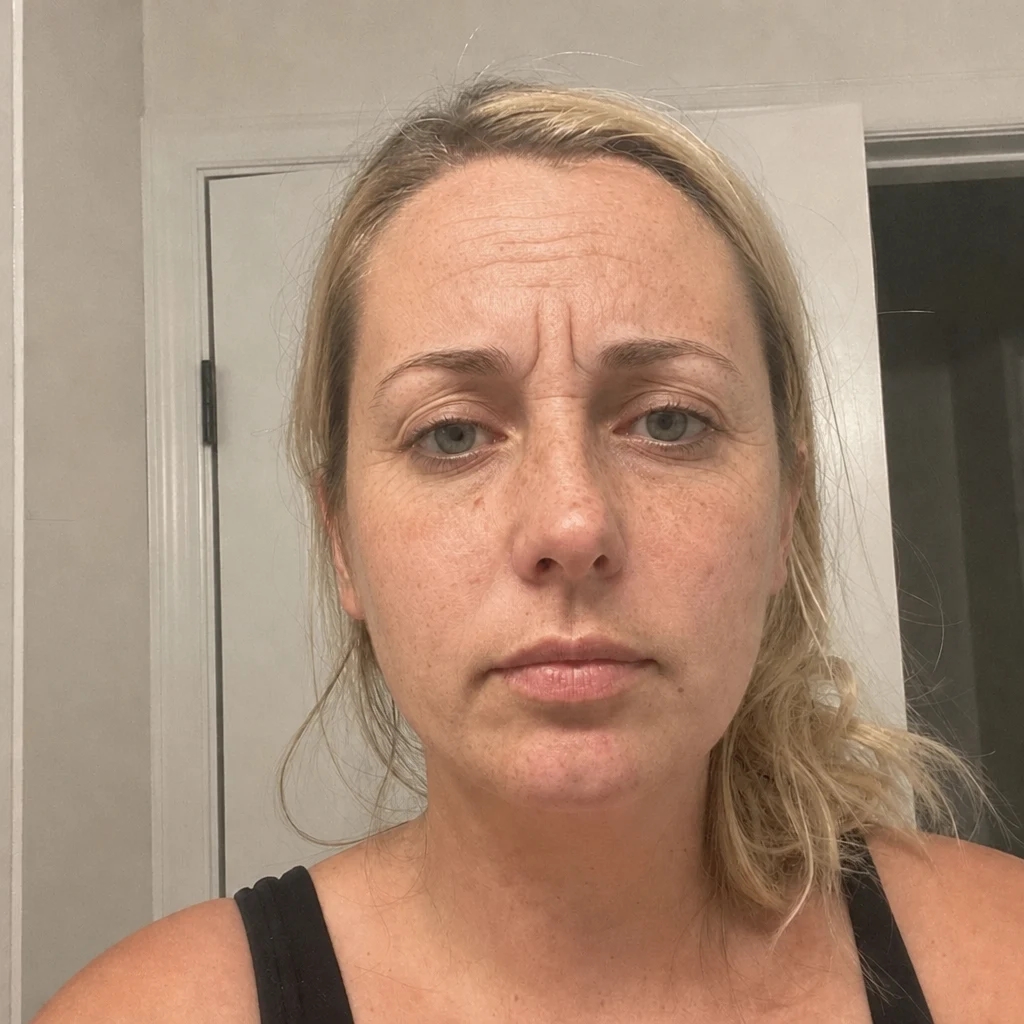
Before — generatedAfter — simulatedSee a gummy smile correction on your own face
Run this simulationGummy smile correction cost
In the United States, gummy smile botox is commonly quoted at roughly $200–$600 a session, repeated every few months to keep the effect. Lip repositioning surgery is roughly $3,000–$6,000. Gum contouring, crown lengthening and orthodontics vary widely with how many teeth are involved and how long treatment runs, so quotes are the only reliable figure there.
The cheapest option per visit is not always the cheapest over time: toxin is a recurring cost, and treating the wrong cause — botox for a gum-line problem — costs money without changing much.
Gummy smile correction risks and side effects
- Botox: an uneven smile if one side responds more, and an upper lip that looks too long or moves stiffly, flattening the smile. These wear off with the toxin, which is the argument for starting with a low dose.
- Lip repositioning: swelling, tightness and altered sensation in the lip, and relapse of some of the correction.
- Gum contouring and crown lengthening: tenderness, temporary sensitivity, and gum that regrows if bone was not addressed when it needed to be.
- Orthodontics and jaw surgery: the long treatment times and risks of those treatments in general, far larger commitments than the gummy smile itself.
Gummy smile simulator: what the render can and cannot show
The gummy smile correction simulation reduces how much gum shows in a smile on your photo, so the smile reads balanced between lip, teeth and gums. It works on the photo you give it, so it is only meaningful with a full smiling photo — a relaxed face has no gum show to change.
It is one of the least informative simulations on the site, and worth saying so. A render cannot tell which of the four causes you have, and the same picture could come from botox, gum contouring or orthodontics. What it can do is show whether less gum is a change you actually want. The resting length of the upper lip is one factor in gum show, and the philtrum tool measures the groove above the lip against the upper lip in a relaxed photo — a region measurement, not a diagnosis of a gummy smile.
The groove from the base of the nose to the lip, measured against the upper lip — one resting proportion behind how much tooth and gum a smile shows.
Measure your philtrumQuestions to ask your dentist about a gummy smile
- What is causing my gummy smile — the gum line, lip movement, lip length or the jaw — and how did you tell?
- If you suggest botox, how many units and where, and what happens if it changes my smile in a way I do not like?
- Would gum contouring or crown lengthening apply instead, and would I need a periodontist for it?
Alternatives to gummy smile correction



How the gummy smile correction simulation works
Your photo is analysed for the landmarks that matter to this procedure, and the render changes how much gum shows when you smile while leaving the rest of your face alone. That constraint is the hard part — a generic image model will happily redraw your whole face and hand you a stranger who looks better.
The render works on a resting photograph. A gummy smile only exists in a smile, so this is one of the procedures where the simulation is least informative — take a smiling photo to a consultation instead.
It is an illustration of a plausible direction, not a prediction of your result and not a medical opinion. What it is genuinely good for is finding out whether you want the change at all — plenty of people render one, find the difference smaller than they imagined, and stop there.
Measure your face before a gummy smile correction simulation
The free analysis tools measure symmetry, facial proportion and face shape, and tell you which measurements sit outside the reference range. Choosing a procedure from that is a much better starting point than choosing one from a photo you saved.



Gummy Smile Correction simulator — frequently asked questions
Can a gummy smile be corrected permanently?
Sometimes. Gum contouring with bone reshaping, orthodontics and jaw surgery are long-lasting when they match the cause. Lip repositioning lasts but can partly relapse. Botox is temporary by design.
Is gummy smile botox worth it?
It suits people whose gum show comes from a mobile upper lip and who want to see the change before anything permanent. It does little for gum covering the teeth, and it has to be repeated every few months.
How long does gummy smile treatment last?
Toxin is commonly quoted at three to four months. Surgical and dental corrections are designed to be long-lasting, though lip repositioning can partly relapse.
Can you fix a gummy smile naturally?
There is no well-supported exercise that reduces it. Some people learn to smile with less lip lift in photos, which changes how the smile looks when posed but not the underlying cause.
Does a gummy smile get better with age?
Often somewhat. The upper lip commonly lengthens and loses some muscle tone with age, so less upper tooth and gum shows in both rest and smile.
Is a gummy smile genetic?
The traits behind it — jaw growth, lip length and how the teeth erupted — are largely developmental and tend to run in families, but it is not a single inherited feature.
Is the gummy smile correction simulator free?
The face analysis is free and needs no account. A rendered simulation costs credits because it runs on a GPU — $4.99 buys five and does not require a subscription.
How accurate is an AI gummy smile correction simulation?
It is an illustration of a plausible outcome, not a prediction of your result. Real outcomes depend on your anatomy, the dentist and how you respond. Treat it as a conversation starter for a consultation, not a promise.
Do you keep my photo?
The free measurements never leave your browser. A simulation does send the photo to a rendering service, which is why it asks for explicit consent first, and you can delete the result from your dashboard at any time.
Can I show this to a dentist?
Yes, and that is the most useful thing to do with it. Bringing a picture of the direction you want is far more precise than describing it in words.
Other lips & mouth simulations





This page is not medical advice and we are not clinicians. A simulation cannot tell you whether a procedure is appropriate for you, what it costs, or what the risks are. Those questions belong with a qualified dentist.