Eye Shape Detector
Eye shape is not one label but 4 independent measurements, and this detector reports each: lid space (hooded below 0.20 of eye width), canthal tilt (upturned from +5°, downturned below 0°), eye height against width (round from 0.36) and the gap between the inner corners (wide-set above 1.27 eye widths, close-set below 1.1). Quizzes disagree because each picks one axis and calls it the shape.
- 4
- measurements
- 10
- named shapes
- 3
- not readable from the front
- Free
- photo not uploaded
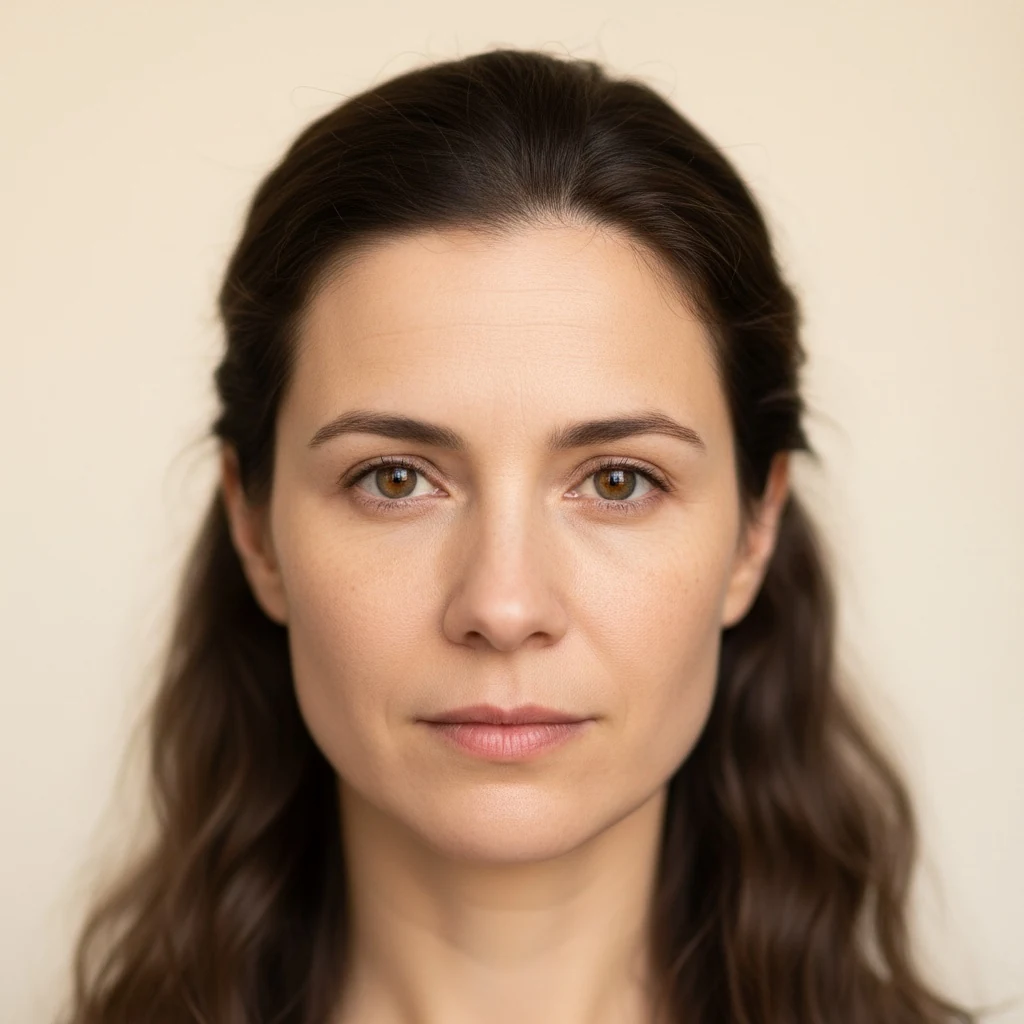 Example
Choose your own photo
Discover your eye shape and proportions.
Choose your own photoClick to choose a photo, or drop one here
Front-facing · Even lightingStraight-on, even lighting, at arm's length gives the most comparable reading.
Runs in your browser. Your photo is not uploaded.
What is my eye shape, and why do quizzes disagree?
- A hooded eye shows less than about a fifth of its width as lid space between the lash line and the crease.
- In a 102-adult research set measured with this test, the middle 80% of faces had a canthal tilt between +1.3° and +6.0° (median +3.7°).
- An aperture ratio at or above 0.36 reads as round rather than almond.
- Deep-set, protruding and monolid cannot be measured from a front-facing photo, and this tool says so instead of guessing.
See what a change would actually look like
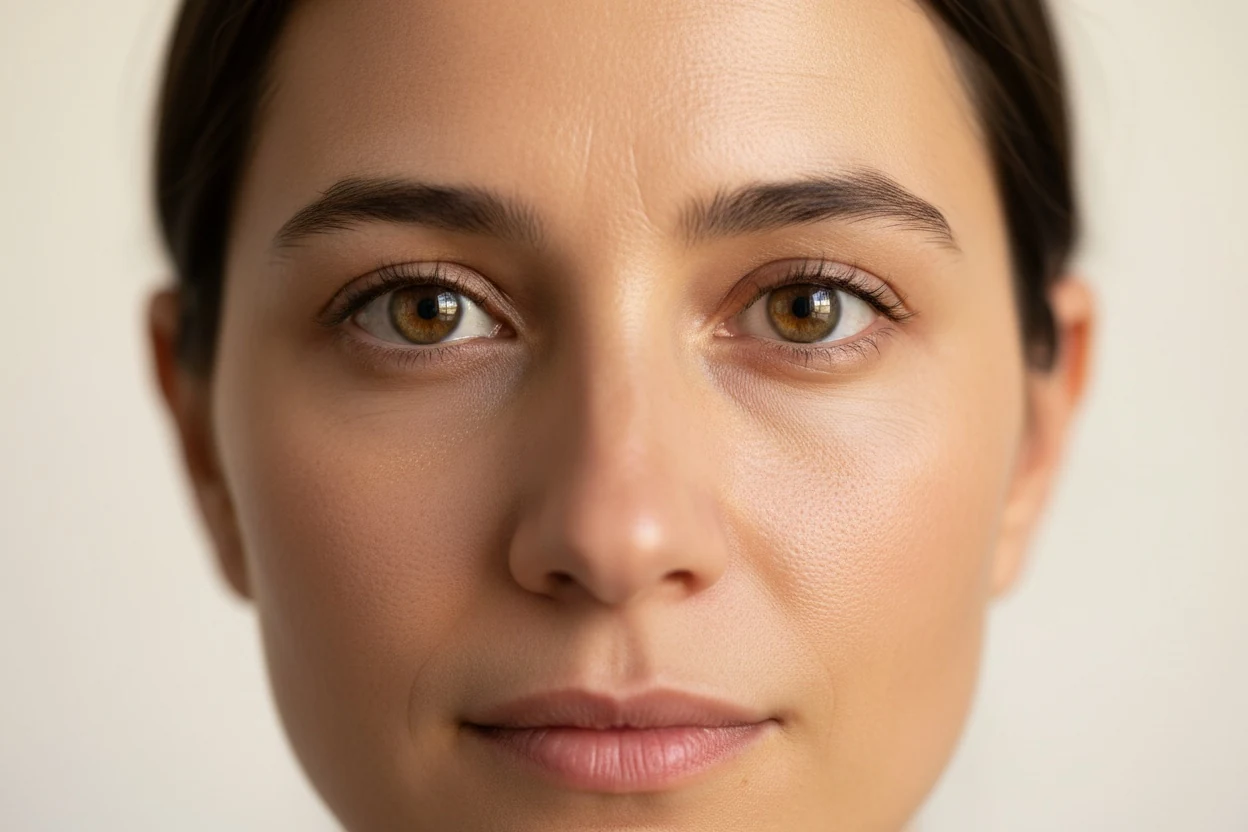
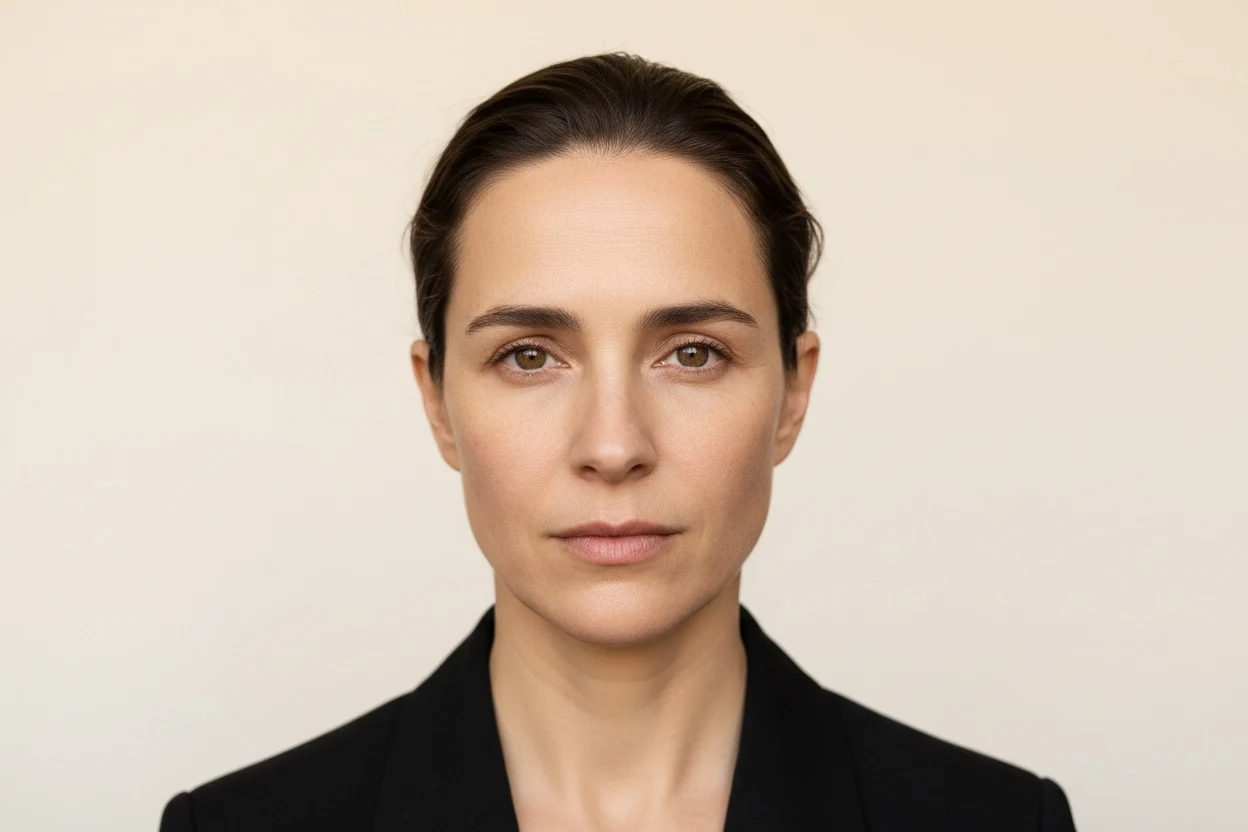
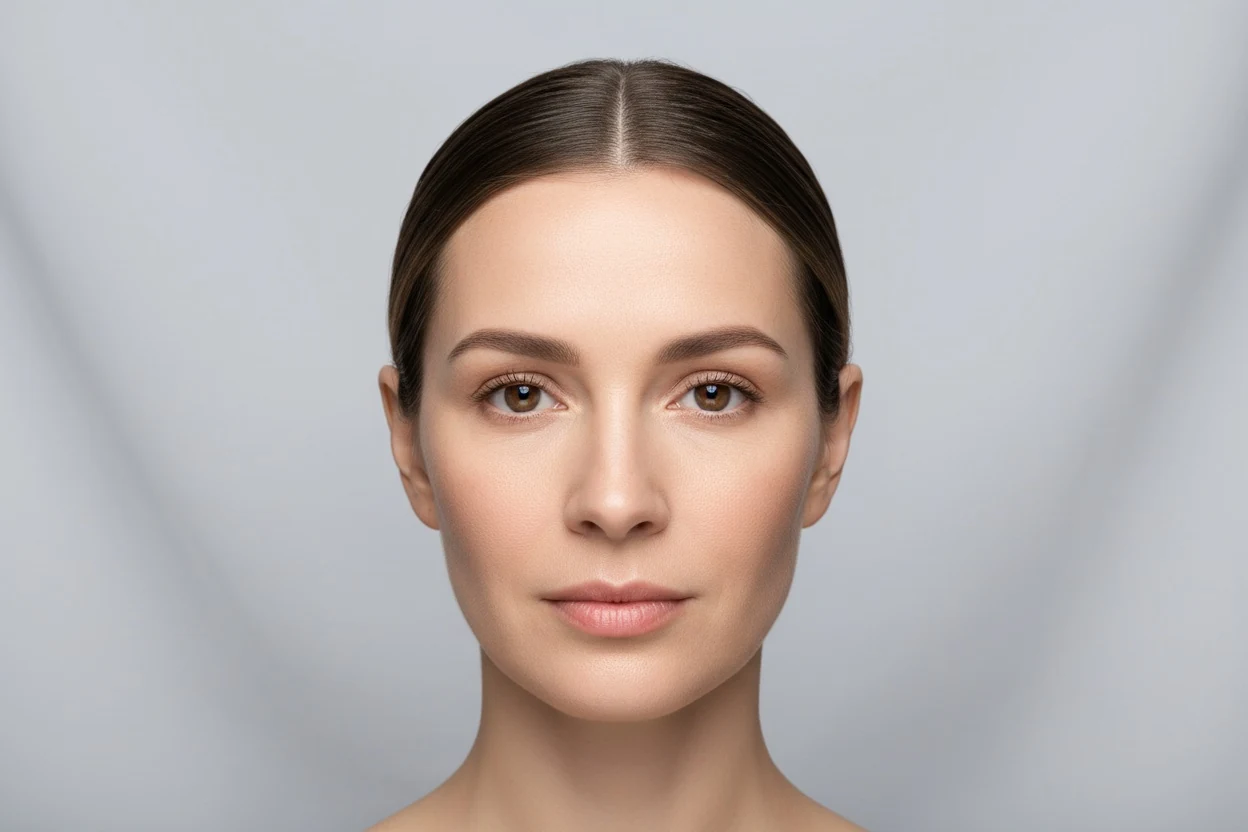
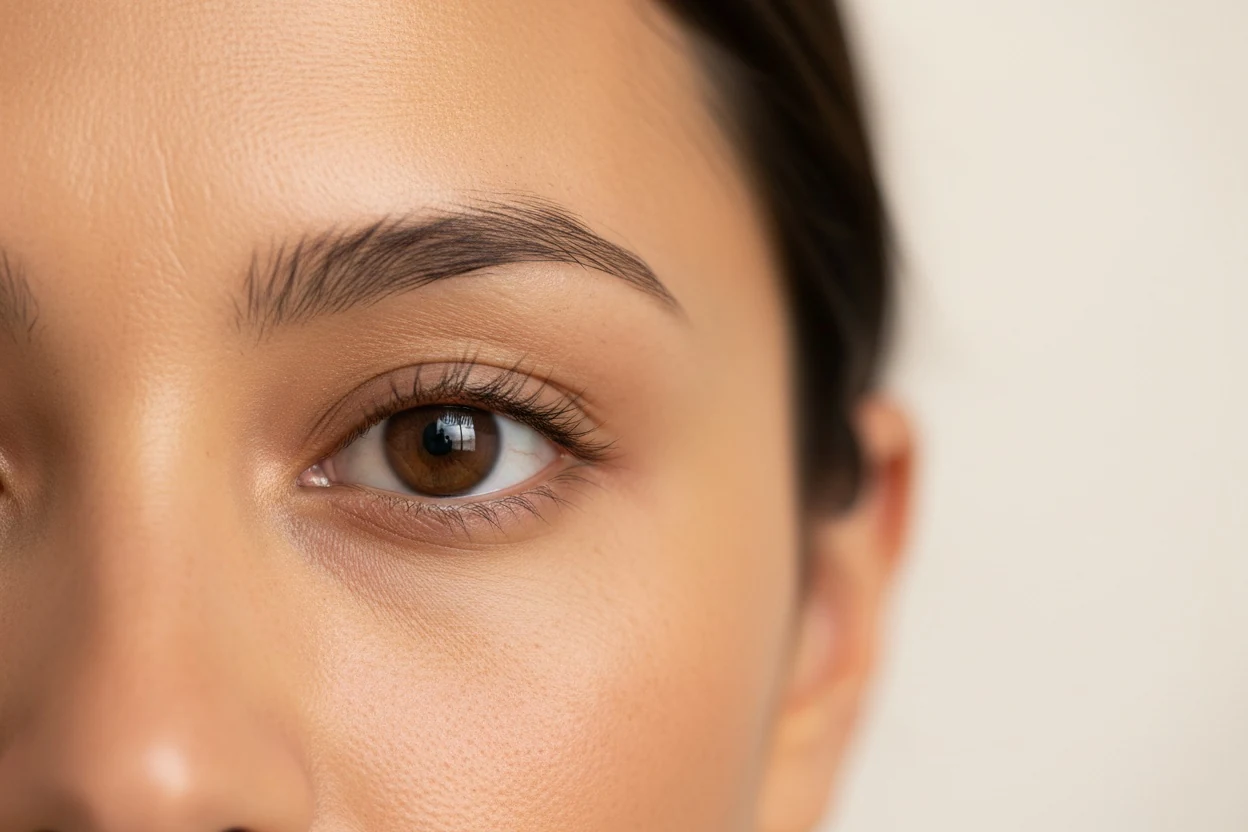
These are the renders that act on what this page measures. Each one below was generated by the same model that runs on your own photo — labelled examples on another face, so you can see what the procedure changes before you spend anything.
Blepharoplasty
Blepharoplasty · AI example
Blepharoplasty. A different possibility.
Tap the photo to enlarge. AI visualisation, not a prediction. Both images are AI generated.
Changes upper and lower eyelid skin.
What it does →Ptosis Correction
Ptosis Correction · AI example
Ptosis Correction. A different possibility.
Tap the photo to enlarge. AI visualisation, not a prediction. Both images are AI generated.
Changes upper eyelid height.
What it does →Tear Trough Filler
Tear Trough Filler · AI example
Tear Trough Filler. A different possibility.
Tap the photo to enlarge. AI visualisation, not a prediction. Both images are AI generated.
Changes the hollow under your eyes.
What it does →
Every “after” above is an AI simulation on a sample face, not a photograph of a surgical result — it shows the direction a procedure moves a face, not an outcome anyone achieved and not a prediction of yours. Where a frame reads “Before · AI example”, the before image is generated too: the same portrait with the condition that procedure treats added, because none of the source photographs had it. Run one on your own photo.
What is my eye shape? The four measurements that answer it
Eye shape gets discussed as though it were one label, and it is not. It is at least four independent things, and a face can score differently on each. How much mobile lid shows decides hooded against crease-visible. The angle from your inner corner to your outer corner decides upturned against downturned. Height against width decides round against almond. The gap between your inner corners decides wide-set against close-set.
That is why two eye shape quizzes give you two different answers for the same face. They each pick one axis, call it the shape, and drop the rest. This detector reports all four separately, with the raw numbers next to them, so you can see which of your traits is pronounced and which is borderline.
How to tell your eye shape without a quiz
Everything the detector does can be done in a mirror, and it is worth knowing how. For lid space, look straight ahead without raising your brows and see whether any mobile lid shows between your lash line and your crease. For tilt, hold a pen horizontally between your two inner corners and see whether the outer corners sit above or below it. For aperture, check whether white shows above or below your iris. For spacing, compare the gap between your inner corners against the width of one eye.
The detector's contribution is precision rather than insight: a tilt you would call roughly level reads as +3.4°, and a lid space you would call borderline gets a number you can compare against your other eye.
What an eye shape analyzer cannot measure from a photo
Two of the ten commonly listed eye shapes are not visible from the front, and every tool that reports them anyway is telling you something it does not know.
Deep-set and protruding are depth traits. The face mesh reports a depth coordinate, but it is relative to the camera and not on the same scale as the horizontal and vertical ones, so a prominence figure derived from it would be precise-looking and meaningless. Your profile in a mirror answers it in two seconds.
Monolid and hooded produce identical front-view measurements, because both hide the crease. Landmark geometry sees that no lid space is visible; it cannot see whether there is a crease under the fold. Closing your eye settles it — a hooded eye reveals a crease, a monolid does not.
Canthal tilt, measured in degrees rather than argued about
The angle between your inner and outer corners has become the single most discussed facial measurement online, largely without anyone measuring it. In a 102-adult research set measured with this test, the middle 80% of faces sat between +1.3° and +6.0° (median +3.7°). At or below zero is what beauty writing calls downturned and what the looksmaxing community calls a negative canthal tilt — the same measurement in two vocabularies.
The detector gives the figure to a tenth of a degree and reports each eye separately, because a two or three degree difference between sides is common and a single averaged label hides it.
Eye shape and makeup: what the measurement actually changes
The reason eye shape is searched so heavily is not curiosity, it is that eye makeup technique is written per shape and most of it contradicts itself across sites. The measurements sort that out: hooded technique works above the fold because the lid surface is not visible when the eye is open; monolid technique builds a gradient because there is no crease to place anything in; close-set technique moves everything outward and wide-set technique moves it inward.
Each of the ten shape pages carries the technique for that trait, along with the mirror test that confirms you have it.
Tips for an accurate eye shape reading
- Look straight into the camera at eye level. Looking up or down rotates the corner-to-corner line and manufactures a tilt that is not there.
- Keep your brows relaxed. Raising them lifts a hood and can turn a hooded eye into a reported crease-visible one.
- Neutral expression — widening your eyes even slightly raises the aperture ratio toward round.
- Even lighting, with no heavy eye makeup. Liner along the lash line shifts the landmarks it sits on.
- Remove glasses. Frames and lens distortion both move the corner points.
Eye Shape Detector — frequently asked questions
Is this eye shape detector free?
Yes, with no account. The four measurements and the full breakdown are free, and your photo never leaves your device.
How accurate is an AI eye shape test?
The measurements are precise; the labels are cut points on continuous scales. An eye at 0.35 aperture is called almond and one at 0.37 is called round, and there is no real difference between them. That is why the numbers are shown alongside the labels.
Why did another eye shape quiz give me a different answer?
Because most quizzes report a single label from a single axis, and pick a different axis from each other. One will call you hooded, another downturned, and both can be right about a face that is both.
Can it tell if I have a monolid?
No, and it says so. A monolid and a hooded eye give identical measurements from the front — both hide the crease. Close your eye in a mirror: a hooded eye shows a crease, a monolid does not.
Does it measure canthal tilt?
Yes, in degrees, for each eye separately. The tilt figure is the same measurement behind the downturned and upturned labels.
Does the photo get uploaded?
No. The face mesh model downloads into your browser and the measuring happens on your device. Nothing is transmitted and nothing is stored.